
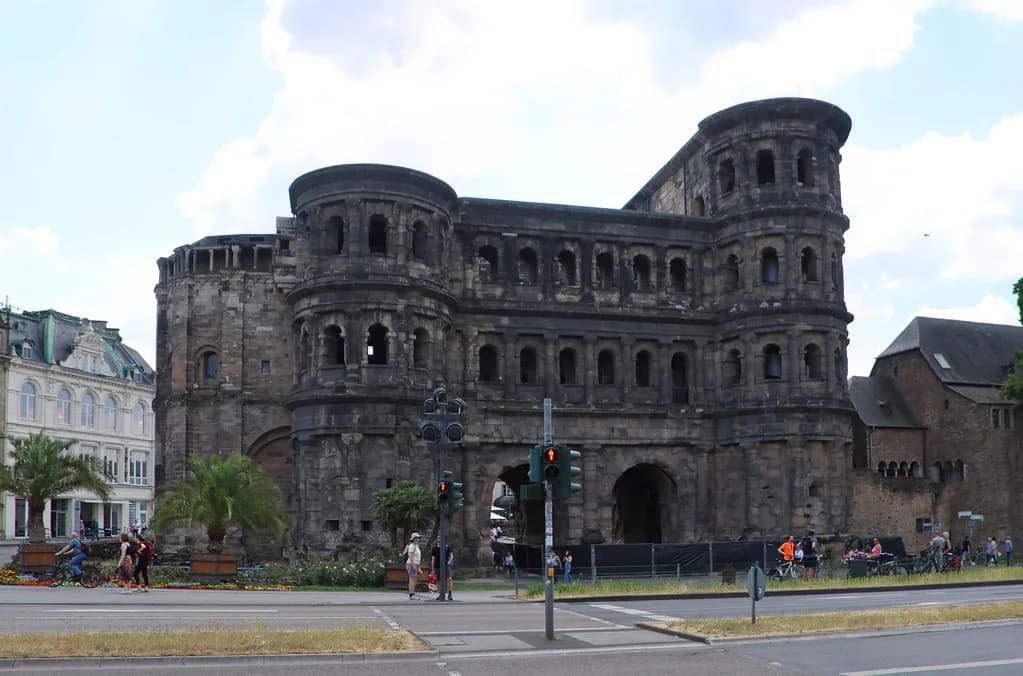
Trier rewards a slower pace than most travellers give it. The old town is compact and walkable, so a single day usually collapses into a rush between the Porta Nigra and the Hauptmarkt, with the Roman baths and amphitheatre squeezed into whatever time remains. Three days lets you separate the headline monuments from the quieter Roman sites and still leave room for a day along the Moselle. The structure below is a suggested shape, not an official route or a timed schedule.
One practical detail shapes everything else: Trier's Roman monuments are administered as individual ticketed sites, so a plan built on entering several of them should be costed site by site. The tourist information office publishes the current opening times, admission and any combined pass, and that is the page to check before you travel. Do not rely on older blog figures, because hours shift with the season.
Why Three Days Suits Trier Better Than One
Trier's Roman remains are not concentrated in a single archaeological zone. The Porta Nigra anchors the north edge of the old town, the Hauptmarkt and the two adjacent churches sit a short walk south, and the Imperial Baths, amphitheatre and Barbara Baths lie at different edges of the centre. Treating them as one loop is what makes day trips feel hurried.
A one-day visitor typically covers the gate, the square and one bath complex, and leaves the rest for another trip. If your time is tighter than three days, a short break built around the old town core may fit better than trying to add a Moselle excursion. The difference is not more headline sights but quieter ones and a countryside day.
Think of each day as having a centre of gravity rather than a timetable. Day one belongs to the old town, day two to museums and the less-visited Roman sites, and day three to the Moselle. If weather or energy disrupts the order, swapping days two and three causes the least damage.
Day 1: Porta Nigra and the Old Town Core
Start at the Porta Nigra, the grey Roman gate that dominates the approach to the pedestrian centre. The structure is free to admire from the outside, but going inside means a ticket and a climb through winding staircases to the upper walkways. Treat the interior as a separate decision from simply seeing the gate, and check the current admission and seasonal closing time before you go.
From the gate, walk south into the Hauptmarkt, the main square with its fountain and surrounding historic facades. It functions as the natural midpoint of the day rather than a sight in itself, which is why it works well as a pause between the gate and the churches. The square is also where you will most notice seasonal crowds, so leaving slack here pays off.
Trier Cathedral and the Liebfrauenkirche stand side by side just off the square, and the cathedral is described as the oldest in Germany, with Roman foundations beneath later additions. Both are free to enter and neither takes long to walk through, which makes them an easy pair to combine. Remember that free entry to the churches says nothing about the ticketed Roman monuments elsewhere in the city.
Keep day one deliberately loose. The gate, square and churches sit within a short walk of each other, so the temptation is to bolt on another site in the afternoon. Resist it: queueing at the Porta Nigra and lingering in the churches usually consumes more time than expected, and the museum block is better served by a fresh start the next morning.
Day 2: A Museum Block and the Quieter Roman Sites
Build the second day around one or two collections rather than a museum crawl. Trier's museums are separate institutions with their own admission, so assuming that one ticket opens a whole complex is a common and expensive mistake. Pick the subject that genuinely interests you, check that museum's own published hours, and give it a proper block of time.
For many visitors the hands-on Roman sites are the more memorable half of the day. The Imperial Baths allow you to walk through underground service corridors, and the amphitheatre lets you cross the arena floor and descend into the passages beneath it. Both are ticketed separately and both have seasonal closing times, so verify current details on the operator's site rather than trusting an old figure.
The Barbara Baths are the wildcard. They are among the largest Roman bathing complexes known, but their visiting arrangements have been less predictable than those of the amphitheatre or the Imperial Baths, and it is worth asking at the tourist information office whether they are open to individual visitors before you walk out. Treat a successful visit as a bonus rather than the plan's foundation.
The trade-off is straightforward. Adding the Barbara Baths costs you an hour or more of walking and may return nothing more than an exterior view, whereas spending that time inside the Imperial Baths or the amphitheatre is almost certain to be rewarded. If access looks uncertain on the day, drop the detour and use the time for a slower museum visit instead.
If the weather closes in, this is the day to move forward. The museum block works in rain, and so do the underground corridors at the baths, which is why day two is the natural rainy-day swap. Push the Moselle excursion to whichever of the remaining days looks driest.
Day 3: A Moselle Excursion to the Roman Villa Borg
The Roman Villa Borg in Perl-Borg is a reconstructed Roman country estate rather than a ruin. The site combines a rebuilt manor house, a bath suite, gardens, an archaeological museum and a Roman tavern, all presented as an open-air archaeology park. It is a full-day outing in spirit, so keep the rest of the day light.
The operator publishes a seasonal pattern that should drive your planning more than any fixed schedule. The villa is closed in December and January, closed on Mondays, and runs shorter hours in February, March and November than in the main April to October season. Because those seasons determine whether the site is open at all, confirm the current pattern on the operator's page before committing the day.
Travel arrangements deserve the same caution. The villa's operator does not publish a specific bus, train or journey time from Trier on the page consulted here, so ask the operator or the tourist information office which connections currently run rather than assuming a service exists. Building the day around a confirmed transfer protects you from arriving at a closed gate.
If the villa is closed or the connections do not suit, the Moselle valley still offers plenty. A gentler alternative is to follow the river itself, either on foot or by boat, and keep the day local. That option costs nothing to arrange and can be decided on the morning.
How to Decide on Tickets and Passes
Trier offers a combined ticket for its Roman monuments, and whether it saves money depends entirely on how many ticketed sites you actually intend to enter. Write down your list first, check each site's individual admission on the tourist information page, then compare the total against the pass. Anyone entering only the Porta Nigra and one bath complex may find the pass unnecessary.
Do not carry outdated admission figures in your head. Prices and the exact coverage of any combined pass change, and individual monument prices are not stable enough to quote from memory. The tourist information office is the authoritative place to check what each ticket includes and how long a pass remains valid.
Treat free and paid access as two separate questions throughout the city. Cathedral and church interiors are generally free, while the Roman monuments and the museums charge separately. Mixing the two categories in your planning is how itineraries quietly become more expensive than expected.
What Three Days Buys You That Two Does Not
The extra day does not buy more headline attractions; it buys the quieter ones and a change of scene. Three days lets you include a site like the Barbara Baths without sacrificing the Imperial Baths, and it leaves room for the river valley. That is a different kind of trip from a compressed city break.
It also makes the itinerary resilient. With three days, a washout costs you one rearrangement rather than the whole plan, and an unexpectedly long museum visit does not push the Roman sites off the schedule. Two days can absorb neither comfortably.
Across the river, Luxembourg City is close enough to appear on some regional itineraries, but it belongs to a separate trip rather than this one. Keep three days in Trier focused on Trier and the Moselle, and save the cross-border excursion for a longer stay.
Plan Your Visit
Three days in Trier works best as a loose shape: the old town and its gate on day one, a museum block plus the accessible Roman sites on day two, and the Moselle on day three. Keep the Barbara Baths as an optional detour and the Villa Borg as a day that depends on confirmed opening and transport. None of this is an official route, and the order can change without spoiling the trip.
Before you travel, settle three things: current opening times and admission at the tourist information office, the Villa Borg's published season, and how you will reach Perl-Borg. Those checks take minutes and prevent the two disappointments that ruin a Trier itinerary, a closed gate and an unexpected ticket price. Everything else can be decided on the day.
Frequently Asked Questions
Is three days too long for Trier?
For a pure checklist of the main monuments, yes, three days is generous, because the old town is compact and walkable and the headline sights sit close together. The extra time is what allows you to add quieter Roman sites, a proper museum block and a day along the Moselle. If you only want the gate, the square and one bath complex, a shorter stay will feel sufficient rather than rushed.
Can you visit the Barbara Baths as a normal visitor?
Visiting arrangements have been less predictable than at Trier's other Roman sites, and it is unclear from the sources consulted here whether the baths are routinely open to individual visitors or ticketed like the amphitheatre. Ask at the tourist information office before walking out, and treat a visit as a bonus rather than a fixed stop. Plan the day so that losing this detour does not spoil the rest of the schedule.
Do you need a ticket for every Roman monument in Trier?
The Roman monuments are administered individually, so entering several usually means paying at each one unless you buy a combined pass. Church interiors are generally free, which is a separate matter from the ticketed Roman sites and museums. Because prices and pass coverage change, check the current details with the tourist information office rather than relying on older figures.
Is the Roman Villa Borg a realistic day trip from Trier?
It is a substantial outing rather than a quick stop, and its opening pattern is the main constraint: the operator publishes a winter closure and a Monday closure alongside shorter hours outside the main season. The operator's page consulted here does not list a specific bus, train or journey time from Trier, so confirm current connections with the operator or the tourist information office. Build a fallback into the day in case the schedule does not work.
What should you do in Trier if it rains?
Move the museum block and the underground Roman corridors earlier, since both work indoors or beneath ground. The Imperial Baths in particular keep visitors occupied under cover for a while. Push the Moselle excursion to whichever remaining day looks drier, and confirm opening times before setting out, because seasonal hours vary through the year.
How does a three-day Trier itinerary differ from a one-day visit?
A single day concentrates on the Porta Nigra, the Hauptmarkt and one or two nearby monuments. Three days spreads those across a gentler first day, adds a deliberate museum block and the less-visited Roman sites on the second, and reserves the third for the Moselle valley. The difference is pace and range rather than a longer list of headline attractions.


