Mainz packs Roman ruins, a Romanesque cathedral and carnival culture into a compact, walkable centre, so the lesser-known corners are rarely far from the famous ones. That density is the point: you can drift from a quiet terrace above the Roman Theatre into lanes that feel residential within a few minutes. The suggestions below are a walking framework, not a fixed route, and atmosphere descriptions draw on visitor reporting rather than a single official itinerary.
A practical approach for this city is to treat free open spaces as your default and treat interiors as separate stops that need their own checking. Squares, the citadel grounds and the cathedral's inner courtyard let you set the pace without committing to an admission decision. For anything ticketed, confirm details with the operator before you travel, because visitor accounts describe arrangements that may not reflect the current situation.
Why These Corners, Not the Headline Sights
Mainz is often described as feeling lived-in rather than curated, with students using the same squares as visitors and wine taverns spilling into side streets. The city's compact layout means you can link several quiet points without a transport plan. A useful first move is simply to pick a direction from the cathedral and let the lanes decide your order. Browsing the city's landmark guides can help you decide which corners to prioritise before you set out.
Visitor reports emphasise that many of the most enjoyable stops are free, which changes how you budget your time rather than your money. The trade-off is that free corners have no opening hours to anchor your day, so a paid interior or a timed museum slot is a better spine for the itinerary. Build the walk around one fixed stop and treat the rest as flexible.
The Citadel Terrace and the Roman Theatre View
Start at the Citadel, where the grounds read more like a large park with historic military buildings scattered through it than a formal monument. Some structures host exhibitions and cultural events, but the reliable payoff is the terrace overlooking the Roman Theatre and the wider skyline, with the cathedral's pale red towers visible above the rooftops. One visitor account describes starting a morning here on a clear day and enjoying the atmosphere and views before the old town filled up. The Mainz Citadel visitor guide goes into more detail about the individual buildings on the site.
Treat the terrace as a viewing point rather than a ticketed attraction, and set your expectations accordingly: you are there for the angle over the city, not for an exhibit. If time is short, this is the corner to keep and the scattered buildings to skip. Check the Citadel's own information for anything event-related before you go, since programming changes.
Roman Theatre Remains: What You Can Actually See
The Roman Theatre underlines how significant this stretch of the Rhine once was, and the preserved remains still convey the scale of the original structure. You cannot walk among every part of the ruins, so the experience is closer to reading a site from its edges than exploring it from within. Allow a short pause here rather than a long stop.
Because the ruins sit near the City Park, the natural sequence is Citadel first, theatre second, park third, all on foot. Visitor accounts note this ordering works well because the park becomes a rest rather than an extra destination. If your time is tight, view the theatre from the terrace above and continue.
Stadt Park: Gardens, Small Animal Enclosures and a Slower Pace
Stadt Park blends a conventional city park with gardens, leisurely paths and small animal enclosures, and visitor reports describe spending far longer there than planned. A rose garden area is a natural pause, and the park is one of the easiest free stops to fold into a quiet day. Expect the animal areas to be a small bonus rather than a zoo-scale attraction.
The practical decision here is where the park sits in your day. Placing it after the Roman Theatre keeps you moving downhill into the old town instead of retracing steps, and it absorbs the middle of the day when squares are busiest. If you only have a half day, cut the park rather than the Altstadt lanes.
Quieter Altstadt Lanes and Squares
The Altstadt rewards wandering without too much structure, with narrow streets, church towers and small squares opening unexpectedly between buildings. What makes it feel different from a purely touristic core is that locals and students use the same spaces, so the atmosphere changes street by street. Pick two or three lanes away from the main flow and let the squares surprise you. If you would rather start from a defined route, the Mainz old town walking route gives you a spine to deviate from.
One planning gain from this approach is flexibility on timing: the lanes cost nothing and need no booking, so they fill gaps between ticketed stops. The trade-off is that without a landmark anchor you may circle the same block twice. Choose a single orientation point, such as the cathedral or Liebfrauenplatz, and use it to recentre yourself.
Fastnachtsbrunnen and Reading Carnival Culture Out of Season
Fastnachtsbrunnen is a compact introduction to Mainz's carnival identity, referencing traditions that are deeply tied to the city. Outside carnival season the fountain still gives its square a playful tone, which makes it worth a deliberate pause rather than a passing glance. It is a free, quick stop that works well between the Altstadt lanes and the cathedral.
Carnival itself transforms the city, so visiting in a normal week gives you the quieter version of the same square. If your trip is built around carnival dates, plan your walking order around crowds rather than sights. Otherwise, use the fountain as a short cultural marker on the way to Liebfrauenplatz.
St. Stephan's Blue Chagall Windows
St. Stephan's looks understated from the outside, and that is exactly why the interior lands as a surprise. The church is known for blue stained-glass windows created by Marc Chagall, and visitor accounts describe the interior walls taking on a calm blue glow. On bright days the effect is more pronounced, so the payoff depends partly on light.
Because this is an interior, it is also the stop most likely to have its own visitor conditions, so confirm arrangements with the church or the city's tourism information before you build your day around it. Slot it into an Altstadt wander rather than treating it as a separate trip. If you are short on time, choose this over a second fountain stop.
The Relocated Gutenberg Museum: Separate Sites, Separate Tickets
Visitor reporting from late 2024 describes the Gutenberg Museum as having temporarily moved into the Natural History Museum building while the original site undergoes renovation, with prominent signage marking the change. The same account notes that you buy the Gutenberg Museum ticket itself rather than a combined ticket with the Natural History Museum. Treat this as reported by a visitor account, not as a permanent arrangement.
The collection reportedly includes two original copies of the Gutenberg Bible alongside printing demonstrations and interactive exhibits, but demonstrations can finish or pause, so do not plan your visit around catching one specific session. Because location and admission details are exactly the kind of thing that changes, verify the current address and ticket scope with the operator before you set out. Do not assume one ticket covers every museum in the complex.
Marktplatz am Dom and the Marktbrunnen
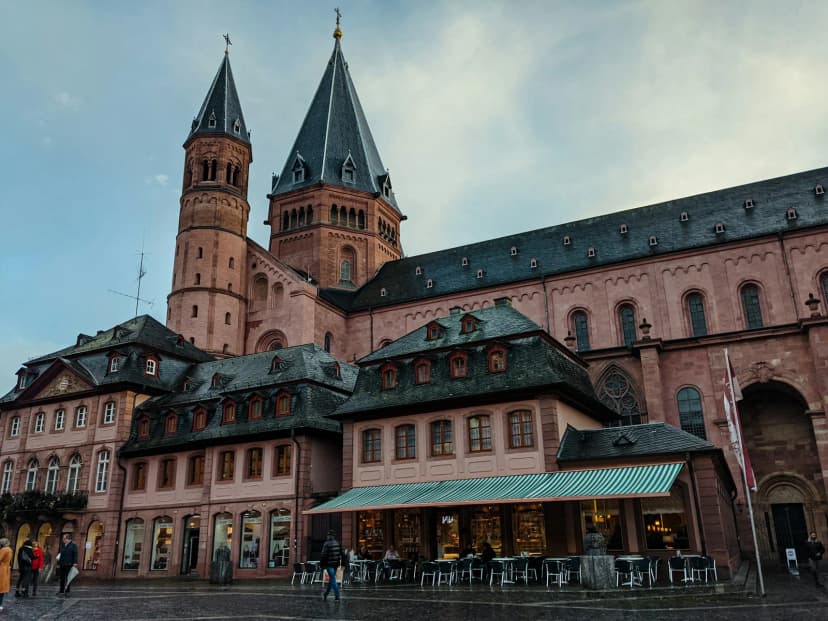
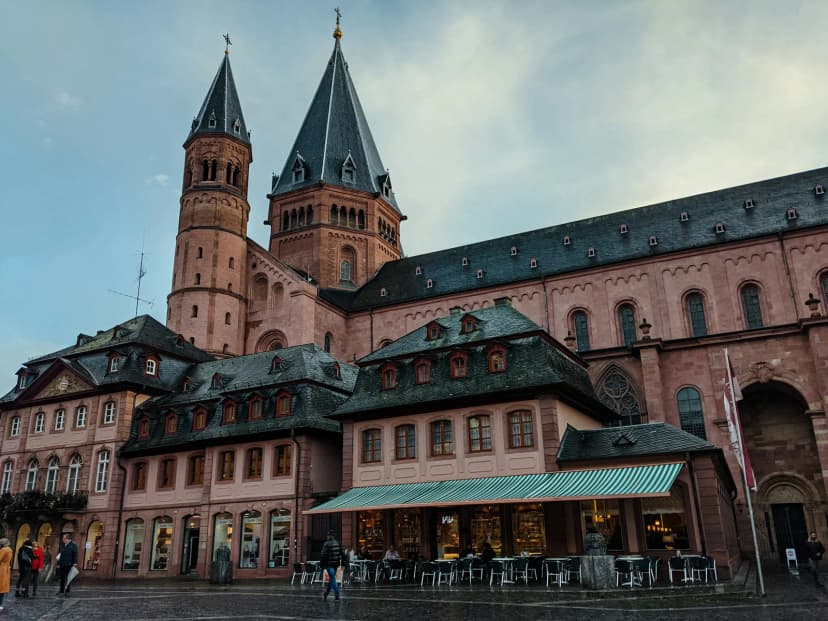
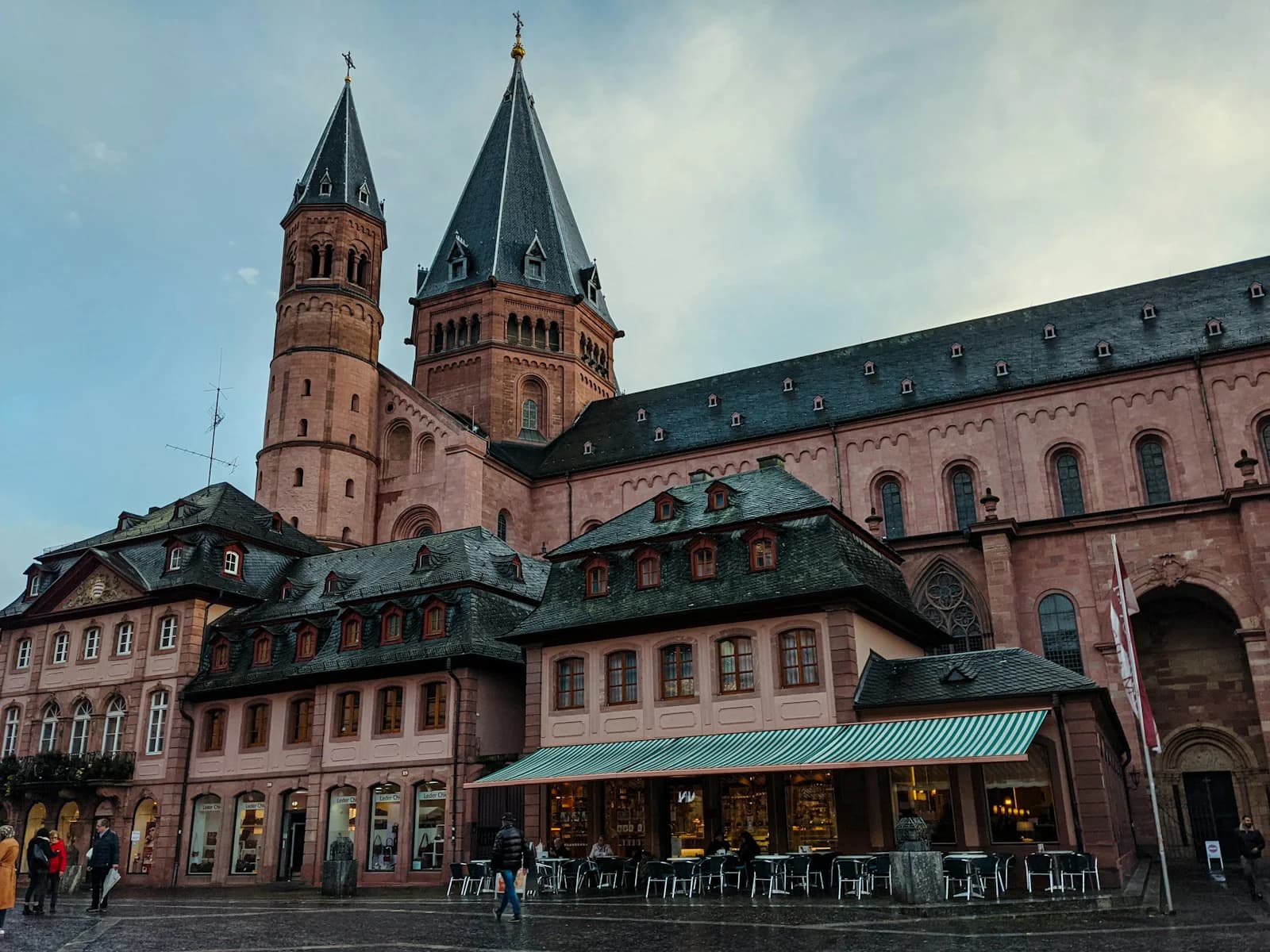
The reconstructed market square beside the cathedral is a natural place to slow down, with cafes and pastry shops spread across it and constant movement around the cathedral. Within the same square, the Marktbrunnen is easy to combine with a cathedral visit and repays a short look at its Renaissance detailing. It works as a pause between the busy lanes and the cathedral interior.
This square is the best candidate for a mid-walk break because everything around it is free and unstructured. The trade-off is that weather changes quickly here, so keep it as a flexible stop rather than a fixed appointment. If the square is crowded, shift to the cathedral's inner courtyard and return later.
Mainz Cathedral and Its Inner Courtyard
Mainz Cathedral is the landmark you cannot miss in the old town, built of pale reddish sandstone and crowned by six towers that shape the skyline. Visitor accounts recommend sitting quietly inside rather than rushing through, and the chapels and statues reward that slower approach. The inner courtyard then comes as an unexpected contrast, with grass and flowers creating a calm pocket behind the heavier Romanesque architecture.
The courtyard is the corner most walkers skip, which is precisely why it fits a hidden-gems itinerary. Use it as a reset before continuing to Liebfrauenplatz, and keep the cathedral as your orientation point for the whole day. Check the city's information if you want details such as service times before you visit.
Nagelsäule on Liebfrauenplatz: A Small Monument Most Walkers Miss
Behind the cathedral on Liebfrauenplatz stands the Nagelsäule, a column from the World War I era, completed in 1916, that locals covered with nails as part of a fundraising effort for soldiers. It is a small, easily passed marker tucked into the square, which makes it a perfect deliberate pause rather than a destination. Read it as wartime memory rather than spectacle.
Because it sits on a route you are almost certainly already walking, it costs you only a minute and adds a layer most visitors never register. Pair it with a lap of Liebfrauenplatz before turning back toward the market square. If you are rushing to a timed museum slot, save it for the return leg.
Suggested Walking Framework: Pair Corners by Mood, Not by Clock
A workable half day runs from the Citadel terrace down to the Roman Theatre remains, then into Stadt Park before entering the Altstadt. From there, let the lanes carry you to Fastnachtsbrunnen, then to St. Stephan's, then to the market square and cathedral courtyard, finishing at Liebfrauenplatz. This order trades efficiency for atmosphere, and it keeps the free stops in the flexible middle of the day.
If you would rather have a structured first pass through the centre, a self-guided walking route gives you a spine to deviate from. The main decision is whether the Gutenberg collection is a must for you, because it is the stop most likely to consume a fixed block of time and to require its own verification. Everything else can be reordered freely.
Fitting These Corners Into a Weekend, a Day Trip or a Rhine Stopover
For a short Rhine stopover, keep to the cathedral, the market square and one Altstadt loop, and treat the Citadel as an optional add-on if you have an extra hour. With a full day, add Stadt Park and the Roman Theatre and slow the pace. Across a weekend, split the quieter corners from the headline ones so you are not repeating the same streets twice.
Visitor accounts suggest two nights suit the city better than one, largely because the pleasure is in the atmosphere rather than a count of sights. If you only have an afternoon, resist adding the relocated museum to an already full walk. Decide between interiors and wandering, and commit.
Mistakes to Avoid and What to Verify Before You Go
The most common planning errors are over-scheduling, assuming a single ticket covers every museum in a complex, and chasing claims about the most authentic corner. Atmosphere descriptions here are drawn from visitor reporting, not from official grading, so treat superlatives with suspicion. Build in slack and let one stop run long.
Because hours, admission prices, renovation status and combined-ticket rules all change, confirm the specific details for each interior with the operator or the city's tourism information before you travel. The city's own pages and the tourism office are the right places to check addresses and visitor rules. For the Gutenberg collection in particular, verify the current location rather than relying on older reports.
Plan Your Quiet Mainz Walk
The pattern that makes Mainz work for hidden gems is simple: one fixed, verified interior as an anchor and everything else free and movable around it. Start high at the Citadel for the view, drop into the Roman Theatre and the park, then let the Altstadt, the Chagall windows, the market square, the cathedral courtyard and the Nagelsäule fill the rest. Keep the order loose and the planning concrete.
Before departure, confirm current visitor details for any interior you intend to enter, including the relocated Gutenberg collection, and leave the free squares unplanned. That balance keeps the day calm and avoids wasted detours. If you want a ready-made sequence to adapt, compare the city's walking resources with your own list of corners.
Frequently Asked Questions
Are Mainz's hidden gems free to visit?
Several of the corners described here are open spaces with no admission to arrange, including the citadel grounds and terrace, the Roman Theatre viewing area, Stadt Park, the Altstadt lanes, the market square, the cathedral's inner courtyard and Liebfrauenplatz. Interiors are a different matter: churches and museums can have their own visitor conditions and any charges, so treat free grounds and paid interiors as separate categories and confirm details with the operator before you go.
How long does a quiet-corner walk in Mainz take?
As a suggestion rather than an official figure, a compact version covering the Citadel terrace, the Roman Theatre, the Altstadt lanes and the cathedral courtyard can fill a comfortable half day at a relaxed pace. Adding Stadt Park and the Chagall windows stretches it closer to a full day, especially if you pause for a break at the market square. Visitor reports suggest the city suits slow wandering, so allow slack rather than scheduling each stop.
Which lesser-known Mainz sights suit a short Rhine stopover?
With only a few hours, keep to the centre: the market square and Marktbrunnen, the cathedral and its inner courtyard, the Nagelsäule on Liebfrauenplatz, and a short Altstadt loop. If you have one extra hour, add the Citadel terrace for the skyline view over the Roman Theatre. Skip the park and any ticketed interior rather than rushing, and verify current visitor details for anything you plan to enter.