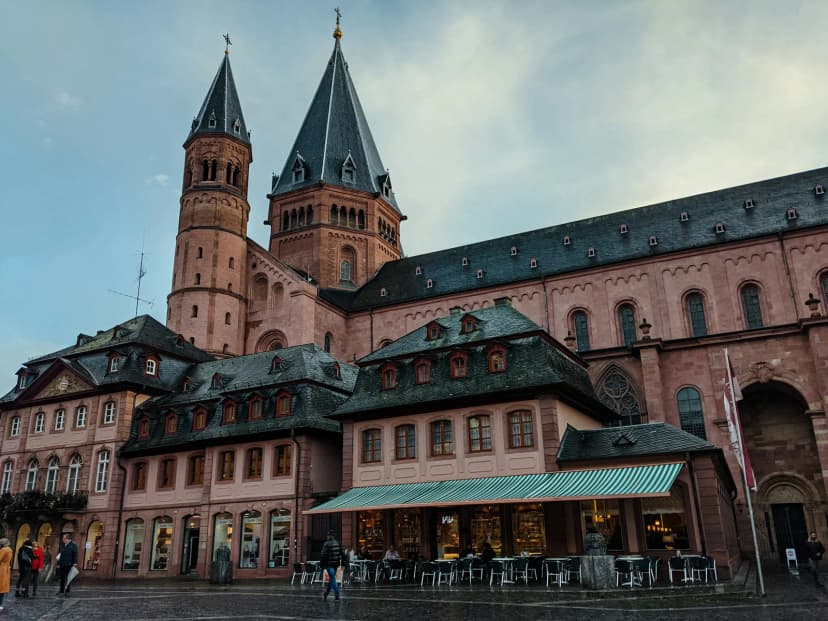
Two days in Leipzig divides naturally into two contrasting halves. The centre is compact and largely walkable, so churches, arcades and museums can be strung together without much planning. The southern edge, by contrast, needs a deliberate trip out and back for one enormous monument. For wider planning, see Leipzig city travel guides. For landmark-level detail, see Leipzig landmark visitor guides.
A suggested shape that works for most visitors: give the first day entirely to the centre on foot, and reserve the second for the south and west. That split is editorial advice rather than an official city recommendation, and it holds up because the old town's stops sit within minutes of each other while the southern ones do not.
One concrete detail worth front-loading: the Forum of Contemporary History, which covers twentieth-century German social and political history with a focus on the GDR and reunification, is described in one route write-up as a free museum, which is what makes it a sensible anchor for the end of day one.
How to Split Two Days in Leipzig
The practical split is geographic rather than thematic. Keep one day inside the ring where the Markt, the two big churches and the arcades sit within walking distance of each other, and give the other day to the south and west, where the distances are longer and the stops are more spread out.
It also matters that you choose what to pay for. A city-centre day can be built largely from free or low-cost stops, while a southern day naturally includes at least one ticketed interior. Decide early whether you are collecting interiors or treating them as optional extras, because that decision changes how much you can fit in.
If your time is tighter than two full days, compressing the centre into a single pass and cutting the southern day is the cleaner compromise; the reverse leaves you with long transfers and little time on foot. Our one day in Leipzig itinerary covers the centre-only version if you want to compare, and the 3 days in Leipzig itinerary adds breathing room for the canal district and the parks.
Suggested, Not Confirmed: What You Still Need to Check
Nothing in this plan assumes a fixed timetable. The order of stops is a suggestion based on how the city's geography fits together, not an official route published anywhere, and you should treat museum opening days, exhibition rotations and ticket scope as things to confirm on the operator's own page shortly before you go.
Two decisions are especially worth verifying rather than guessing: whether a monument's grounds and its interior are ticketed separately, and whether an immersive venue's current show is the one you actually want to see. Where an attraction publishes its own information, that page is the only reliable source for what is included and what is not.
Transport is the other moving part. The centre is walkable, but the southern stops are not, so check current connections on the local transit operator's journey planner rather than relying on any line numbers quoted in older write-ups. Building one flexible slot into each day absorbs the surprises that a fixed schedule cannot.
Day 1 Morning: St. Nicholas Church, the Old Stock Exchange and the Markt
Start at St. Nicholas Church, Leipzig's largest and oldest church, whose interior is notably different from its plain exterior, with French-classicism influences and distinctive palm-shaped columns. It is best known as the starting point of the peaceful revolution in the GDR. Wanderlog's entry for the church highlights its role in the events of 1989 in Leipzig, which led to the fall of communism in Central and Eastern Europe.
From Nikolaikirchhof it is a short walk to the Old Stock Exchange, whose Renaissance facade sits in deliberate contrast to the buildings around it. Continue to the Markt, where the Old Town Hall anchors the square and the market takes place on Tuesdays and Fridays. The square also holds the tourist information point, where guided tours begin.
Day 1 Midday: Bach at St. Thomas Church and the Mädlerpassage Decision
St. Thomas Church is where Johann Sebastian Bach served as cantor for 27 years and where his remains lie, which makes the building the single most important music-history stop in the city. Wanderlog groups St. Thomas Church with the surrounding old-town sights as the core of a first day, and its entry for the church notes that construction began in 1212 and that the Thomanerchor tradition is central to its identity.
Then comes a genuine either-or. A Bach-focused museum stop goes deeper into the composer's life and manuscripts, while the Mädlerpassage arcade gives you the historic shopping-passage experience and the cellar restaurant named after Goethe's Faust. If your interest is the music itself, take the museum; if you want the nineteenth-century arcade, take the passage. Doing both in the same block of time usually means shortchanging one.
The arcade is a covered route, so it doubles as shelter in bad weather, and you can walk through without committing to anything. If your plans hinge on a specific museum, confirm current opening days on the operator's site before building the afternoon around it.
Day 1 Afternoon: The Forum of Contemporary History
The Forum of Contemporary History is the natural afternoon anchor for day one, because it gives shape to the twentieth-century German story you will have already touched on at St. Nicholas Church. Its displays deal with the social and political developments of the twentieth century and the transformation after reunification, and the route write-up describes it as a free museum, which is what makes it a low-cost pairing with the morning's churches.
Because it is a permanent exhibition rather than a temporary one, it absorbs as much or as little time as you give it. Allow enough space that you are not rushing the second half to make a dinner booking. If you have any interest in how the peaceful revolution developed rather than just where it started, this is the stop that explains the mechanics.
Day 1 Evening: Dinner on Karl-Liebknecht-Straße
The centre empties out in the evening in a way that makes dinner there pleasant but a little flat. Karl-Liebknecht-Straße, the long avenue running south of the centre, spreads the city's restaurant choice across a much wider range, and the route write-up notes that it includes several fully vegan restaurants. It also has the Spoon Family neon sign, a well-known photo stop between the Hohe Straße and Leipzig Südplatz tram stops.
Treat the street as your evening base once rather than both nights. It is long, so pick a stretch before you commit to walking it, and check whether the places you like are open on the evening you plan to go. If the atmospheric cellar restaurant in the arcade is more appealing than a neighbourhood dinner, that is equally valid; just decide in advance.
Day 2 Morning: The Völkerschlachtdenkmal Trade-Off
The Monument to the Battle of the Nations commemorates the 1813 clash that marked a turning point in the Napoleonic Wars, and its sheer scale is the reason it eats a morning rather than an hour. Wanderlog includes it among the city's defining sights, and notes that the monument stands 91 metres tall with an observation deck offering views over the city.
The monument's grounds are one thing and its paid interiors another. Tickets are sold separately from its surroundings, so decide whether you are there for the exterior and the atmosphere, for the interior exhibitions, or for both. Check the operator's current information for opening arrangements and what a ticket includes, because the observation deck and the Forum 1813 museum are distinct experiences.
This is also the day's biggest decision point. It is more than a quick detour: plan on a dedicated trip out, which means building a buffer rather than assuming you can slot it into a spare hour between other stops. Our Völkerschlachtdenkmal Leipzig visitor guide covers the monument's layout and how it sits relative to the places around it, so you can decide before committing.
Day 2 Midday: Should You Add the Panometer?
The Panometer is a converted cylindrical gasometer that houses a giant 360-degree panorama, backed by sound and lighting effects. The catch is that it is essentially exhibition-dependent: its value to you depends almost entirely on what is on show when you visit, because the format stays broadly the same while the subject changes completely.
That makes it a poor second stop if you are already short on time, and a strong one if the current show interests you. The honest approach is to check the current exhibition and whether it is genuinely the kind of spectacle you want before deciding. If you are lukewarm on the subject matter, skip it and give the extra hours to Plagwitz instead.
Day 2 Afternoon: Plagwitz and the Cotton Spinning Mill
Plagwitz is the western, post-industrial half of your second day, and the Cotton Spinning Mill is its centrepiece: a former cotton spinning factory now transformed into a cultural centre with galleries, studios, workshops and event spaces. One account of the district reports that guided tours run on Fridays and Saturdays, while the factory grounds and galleries can be visited individually and free of charge; treat both entry and tour availability as things to confirm before you travel.
Because the site is a working arts quarter rather than a single museum, it is worth deciding in advance whether you want to wander the grounds and galleries on your own or join a guided tour. Galleries within a complex like this often keep their own hours and can be between exhibitions, and not every part of the site is open at all times. The Plagwitz Leipzig walk pairs well with the mill because the canal-side streets around it are pleasant in their own right and need nothing booked.
Day 2 Late Afternoon: Kunstkraftwerk and the Canal
Kunstkraftwerk, another former industrial powerhouse converted into a venue for contemporary art and immersive exhibitions, is described in the account of the district as a short walk from the Cotton Spinning Mill. It is a ticketed, exhibition-dependent stop, so the same logic applies: check what is on before you go, since the value sits in the current show rather than the building alone.
The Karl-Heine canal is the low-cost highlight of the district. You can walk the towpaths without entering a single building, and the Saxon Wool Yarn Factory, a vast Wilhelminian-era industrial complex now converted largely to apartments, is worth viewing from the outside and from the bridges over the water. Since it is residential, the exterior is the visit; the interiors are not open to casual visitors.
Bridge viewpoints and canal-side paths are the district's real appeal, and they cost nothing. Many walkers continue towards Clara-Zetkin Park, the city's main green space with walking paths, greenery and lakes, for an easy end to the afternoon. Clara-Zetkin Park is part of a collection of parks and forest preserves near the city centre, including Johannapark, Palmengarten, Volkspark, Scheibenholz and Albert Park, according to Wanderlog.
Where Two Days Is Not Enough
Leipzig's outlying pulls, from the zoo to the Old National Library and Gohlis Palace, simply do not fit a two-day plan that also covers the south. Pick one day's theme and accept the omissions. If you want the fuller version, the 3 days in Leipzig itinerary adds a proper Plagwitz day and time for the green spaces; a fourth day opens up lake excursions and the wider region.
If you have only 48 hours, cut in this order: drop the Panometer and Kunstkraftwerk first, then reduce the Forum of Contemporary History to a whistle-stop, then simplify your evening. What you keep is the centre on foot and the monument, which are the two experiences that define the city. If comparing German city breaks, our 2 days in Berlin itinerary and 2 days in Dresden itinerary show how differently nearby cities structure similar timeframes.
Practical Decision Checklist
Before you commit to a schedule, check current opening days and any seasonal variation for every interior you plan to enter. Museum closures, gallery rotations and reduced hours are routine in smaller venues, and a single closed door can undo a carefully sequenced afternoon. Where an operator publishes a calendar, trust that over any itinerary, including this one.
Group stops geographically and keep one flexible slot per day. Pay for interiors deliberately rather than by default: the centre's churches and squares cost nothing to look at, and the southern monument's grounds and its ticketed interiors are separate purchases. Confirm what each ticket covers before you buy, particularly where a monument and an adjacent museum are marketed together.
The Honest Two-Day Version
Two days in Leipzig works if you accept the trade-off at the centre of this plan: one day on foot in the old town, one day spent deliberately in the south. The centre gives you the dense, walkable version of the city, with the churches, the Markt and the contemporary-history exhibition all within easy reach of each other.
With a third day, Plagwitz stops being an afternoon squeeze and becomes its own proper outing, and you gain room for the parks and the further-flung sights. Either way, verify opening days, ticket scope and transport before you go, and treat the ordering above as a framework to adapt rather than a schedule to follow.
Frequently Asked Questions
Is two days in Leipzig enough?
It is enough for the essentials: the old town's churches, arcades and the Forum of Contemporary History on one day, and the southern monument with a taste of Plagwitz on the other. What it does not allow is a relaxed pace, time in the parks, or a proper look at the city's outer museums and the zoo. If you want any of those, add a third day or accept that you are sampling rather than covering the city.
Is two days in Leipzig better spent in the centre or in Plagwitz?
Give the centre the larger share, because that is where the density is and it repays walking. Plagwitz works well as half of the southern day, paired with the Völkerschlachtdenkmal, but it does not need a full day on a first visit. If industrial architecture and contemporary galleries are your main interest, the balance flips and it is worth building a whole afternoon around the canal and the former factories.
How far apart are the centre and the Völkerschlachtdenkmal?
They are in different parts of the city: the monument sits in the south-east, well outside the compact old town, and the Plagwitz canal district lies to the south-west. The centre itself is walkable, but you should plan a deliberate trip by public transport or taxi to reach the monument rather than expecting to stroll there. Check current connections on the local transit operator's journey planner, since the routes quoted in older guides may not reflect today's service.
Is the Cotton Spinning Mill free to visit?
Access arrangements vary and not every gallery within the complex keeps the same days, so confirm with the site before you travel. One route write-up describes the grounds and galleries as freely accessible, but that is not something to rely on without checking current operator information. Treat both entry and tour availability as things to verify, especially if the mill is the main reason for your Plagwitz afternoon.
Do I need to book tickets in advance for the two days?
For the churches and the Markt, no booking is involved; they are part of the fabric of the old town. For ticketed interiors such as the monument's paid sections and the immersive venues, decide before you go whether the current offering interests you, and check the operator's own page for how tickets are sold. Building a flexible slot into each day means a sold-out or closed interior does not derail the whole plan.