

There's no ticket for Maria Luisa Park, because there's nothing to buy — entry is free, every day, with no barrier and no time slot. The park is open from 8:00am to 10:00pm from November through March, and stays open until midnight from April through October. The only things inside that do cost money are optional: a horse-drawn carriage ride, the Museum of Popular Arts and Customs on Plaza de América (€1.50 unless you're an EU citizen or a student), and a handful of guided bike or Segway tours that loop through it.
This guide covers exactly what's free versus what isn't, current 2026 hours, how long to actually budget, and how to get there without wasting time. It's part of our full Seville attractions guide.
What Is Maria Luisa Park?
Maria Luisa Park started as the private gardens of the Palacio de San Telmo before Infanta María Luisa Fernanda de Borbón donated part of the grounds to the city of Seville in 1893. Ahead of the 1929 Ibero-American Exposition, French landscape architect Jean-Claude Nicolas Forestier redesigned the space, drawing on the Alhambra and Seville's own Alcázar gardens for its fountains, tiled benches, and shaded avenues of orange and palm trees.
Architect Aníbal González built several exposition structures directly inside and around the park's edges, most famously the Plaza de España at its northern corner and the Plaza de América, home to two of Seville's museums today. What's left is a genuinely large green space — wide gravel avenues, ceramic-tiled fountains, and quiet corners that feel far removed from the crowds a few minutes' walk away at the cathedral.
Maria Luisa Park Tickets & Prices 2026
Walking into Maria Luisa Park costs nothing — there's no gate, no ticket booth, and no timed-entry booking of any kind. That covers the avenues, the fountains, the Plaza de América grounds, and the walk through to Plaza de España. If you only came for the park itself, your visit is genuinely free from start to finish.
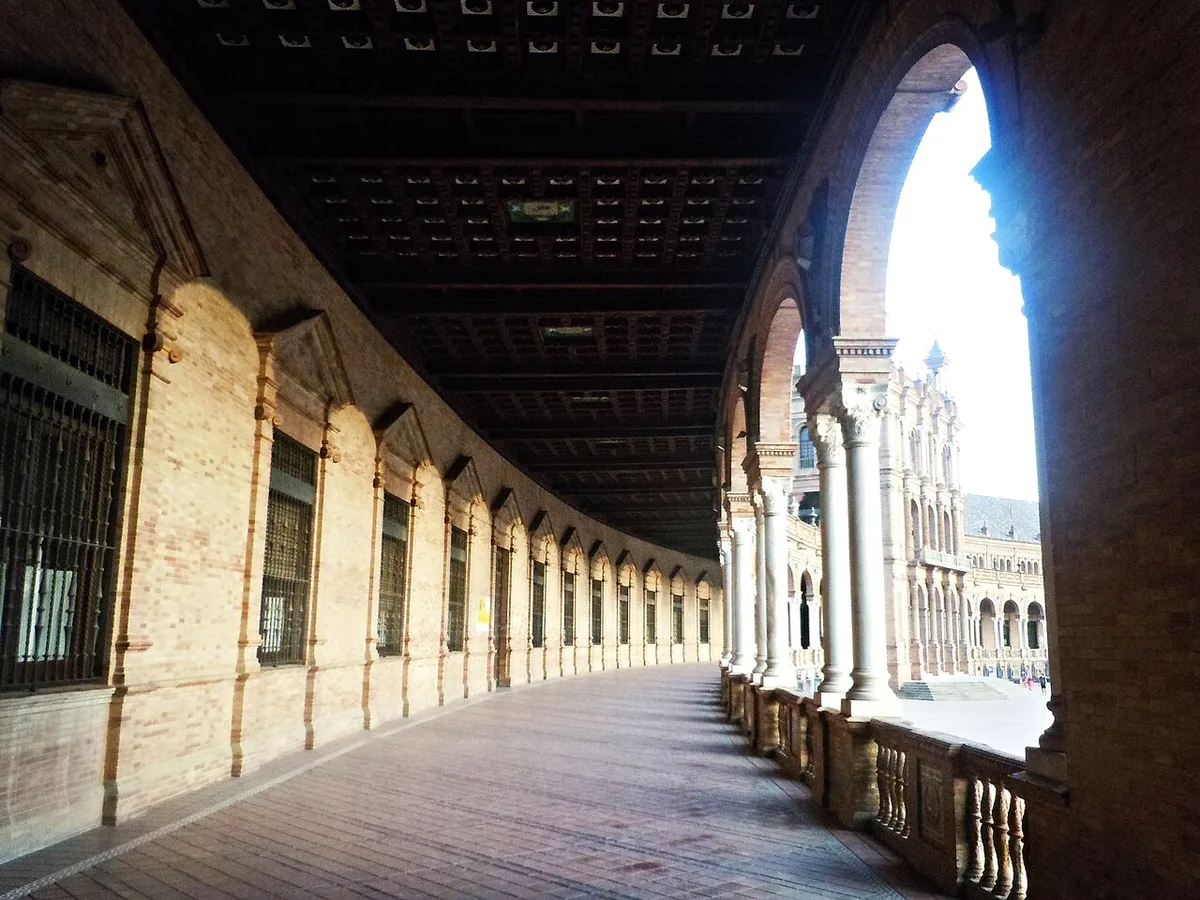
A few things inside do carry a price. The Archaeological Museum on Plaza de América is closed for renovation, with reopening planned for 2029. Across the square, the Museum of Popular Arts and Customs is open: free for accredited EU citizens and students, €1.50 for everyone else, Tuesday to Saturday 9:00am–9:00pm and Sundays/holidays 9:00am–3:00pm (Tuesday to Sunday 9:00am–3:00pm from June 16 to September 15), closed Mondays except the day before a holiday; its first floor is temporarily closed. Horse-drawn carriage rides that depart from Plaza de España are a city-licensed service rather than a ticketed attraction — agree the fare with the driver before you climb in. Third-party providers also sell guided bike, Segway, and eco tuk-tuk tours that route through the park — none of these are required to visit, they're add-ons for people who'd rather not walk or want a guide's commentary.
Because the park itself is free, a paid city pass isn't the way in here — passes earn their value on paid sights elsewhere in Seville. If you're weighing one for the rest of your trip, see our breakdown of whether the Seville Pass is worth it for how the math works out.
Opening Hours & Best Time to Go
Maria Luisa Park's hours shift with the season and are open daily, year-round, with no rest day:
- November – March (winter): 8:00am–10:00pm
- April – October (summer): 8:00am–midnight
These are the hours published by Seville's official tourism board for 2026. The park closes when the state weather agency (AEMET) issues a rain or wind warning, and the museums on Plaza de América close with it; on those days Plaza de España is reached from Avenida de Portugal through the Aragón and Navarra gates, an entrance that isn't wheelchair accessible. Spring (March–May) is the best single window: the park's orange and jacaranda trees are in bloom, daytime temperatures are comfortable, and the crowds haven't yet hit their July-August peak. Early morning, before roughly 10am, is consistently the quietest and coolest time to walk the avenues — useful advice most of the year in Seville, and close to essential in summer, when afternoon temperatures regularly clear 40°C.
How Long to Plan
Budget 2 to 3 hours to cover the park's main features properly — the fountains and shaded avenues, Plaza de América, and a walk through to Plaza de España at the northern edge. A quicker pass focused only on Plaza de España and the closest fountains can be done in under an hour, but that skips most of what makes the wider park worth the detour. Add 45 minutes to an hour if you're also going into the Museum of Popular Arts and Customs, and factor in the museum's Monday closure when you're sketching out the day. If Maria Luisa Park is one stop among several on your trip, our 2-day Seville itinerary shows where it fits alongside the cathedral and the old town.
How to Get There
The park sits directly south of the city center, bordered by Avenida de María Luisa and the Guadalquivir riverside promenade. Metro Line 1 stops at Prado de San Sebastián, a few minutes' walk from the park's northern entrances near Plaza de España. From the cathedral or Santa Cruz district, it's a flat, easy 15-20 minute walk down through the Murillo Gardens. City buses serving Prado de San Sebastián and Avenida de la Palmera also stop within a few minutes of the park's edges.
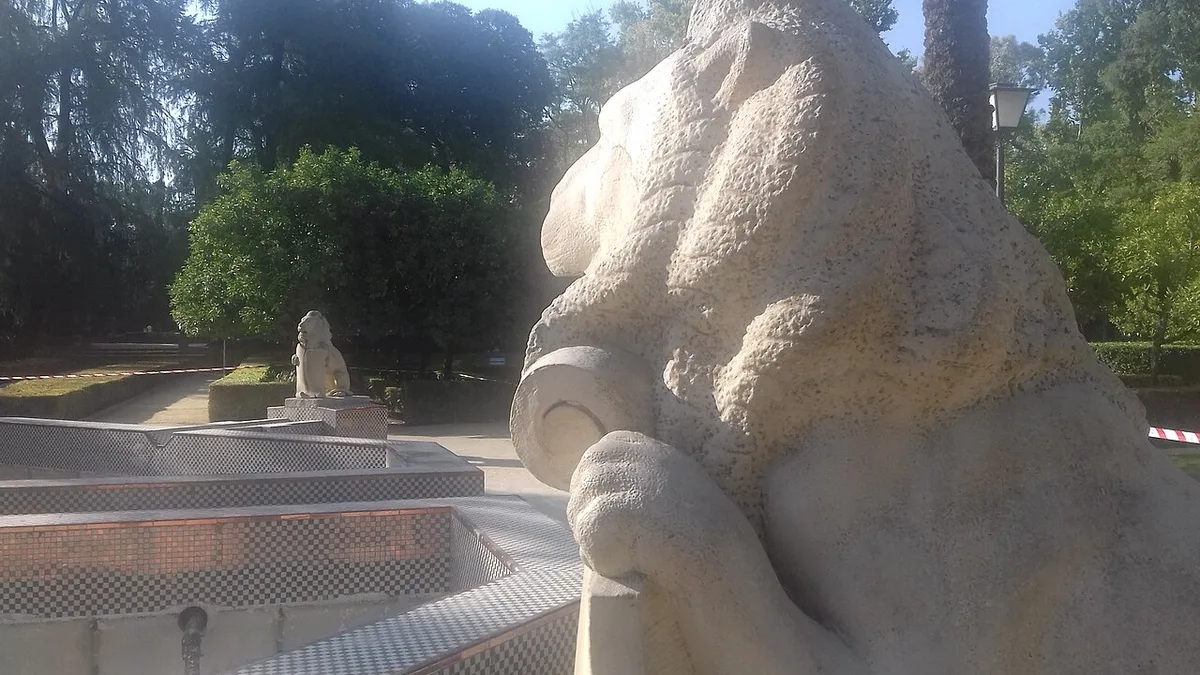
There's no dedicated visitor parking at the park itself; the nearest public car park to Plaza de América is the Muelle de las Delicias car park by the river. Given how central and walkable this part of Seville is, driving in for a single park visit is rarely worth it.
Visit Tips: Queues, Booking & Common Mistakes
There's nothing to book and no queue to plan around for the park itself — that's the biggest practical difference from Seville's paid landmarks nearby. The one mistake worth flagging is buying a "ticket" or "skip-the-line pass" for Maria Luisa Park from a third-party reseller; the park has no admission fee, so anything sold as a park ticket is really a guided tour or transport bundle, not entry itself. Read what you're actually paying for before you buy.
Bring water and wear comfortable shoes — the park is large, gravel paths get warm underfoot in summer, and shade is generous but not constant. Some of the small kiosks inside only take cash, so carry a few euros. If you want a horse-drawn carriage, agree the fare with the driver before setting off. And if the Museum of Popular Arts and Customs is part of your plan, avoid Mondays — the museum is closed that day while the park around it stays open as usual.
Nearby Attractions
Plaza de España sits directly at the park's northern corner and is, for most visitors, the single reason to walk this far south — Seville's grandest public square and a well-known Game of Thrones filming location. From there it's a straightforward walk back through the Murillo Gardens to the historic core: the Real Alcázar and Seville Cathedral and the Giralda tower sit a short walk north, both easily combined with a park visit on the same day. Central Seville is compact enough that Maria Luisa Park works naturally as either the start or the finish of a longer walking day through the old town.

Frequently Asked Questions
Is Maria Luisa Park free to visit?
Yes. There's no admission fee and no ticket of any kind to enter Maria Luisa Park — it's open to the public at no cost, every day of the year. The only things inside that cost money are optional extras like the Museum of Popular Arts and Customs (free for EU citizens), horse-drawn carriage rides, and third-party guided tours.
What are Maria Luisa Park's opening hours in 2026?
The park is open daily from 8:00am to 10:00pm from November through March, and from 8:00am to midnight from April through October, according to Seville's official tourism board. It closes when AEMET issues a rain or wind warning.
How long does it take to visit Maria Luisa Park?
Plan for 2 to 3 hours to properly cover the main avenues, the fountains, Plaza de América, and a walk through to Plaza de España. A faster pass focused only on Plaza de España can be done in under an hour, and adding the Museum of Popular Arts and Customs adds roughly 45 minutes to an hour.
Is Plaza de España located inside Maria Luisa Park?
Plaza de España sits directly at the park's northern edge, built for the 1929 Ibero-American Exposition alongside the rest of the grounds — most visitors reach it on foot through the park itself, and the two are typically visited together in the same trip.
Do you need to book anything in advance to visit Maria Luisa Park?
No. The park has no timed entry and no booking system — you can walk in at any point during opening hours. The only advance planning worth doing is for the Museum of Popular Arts and Customs (closed Mondays) or if you want a specific horse-drawn carriage or guided tour slot during peak season.
Maria Luisa Park is one of the rare Seville landmarks where the honest advice is simply to show up — there's no ticket to research, no time slot to chase, and no line to plan around. The park's own draw is real: shaded avenues, tiled fountains, and enough space to slow down after the more crowded paid sights nearby.
Go in spring if you can, arrive before mid-morning if you're visiting in summer, and treat the Museum of Popular Arts and Customs and any carriage ride as optional add-ons rather than the main event. Pair it with Plaza de España at the northern end and you've got a genuinely free half-day anchor for a 2026 Seville trip.
For current official information, see Maria Luisa Park on the official Seville tourism site and the Maria Luisa Park entry on Wikipedia.


