
As of mid-2026, a standard adult ticket to Pompeii costs around €20, and the site is open daily from 9:00 a.m., with last entry at 5:30 p.m. from mid-March through mid-October and 3:30 p.m. the rest of the year. Those numbers matter, but they're not the real question. With one, maybe two days in the Naples area, is walking ancient ruins for hours actually worth the time — or a name on a list that photographs better than it feels in person?
This guide gives a straight verdict on whether Pompeii is worth it, what to do if tickets are sold out for your dates, how long to realistically plan, and whether you need a guided tour. Prices, hours, and getting-there logistics are covered too — but as planning details, not the pitch.
What Is Pompeii?
Pompeii was a working Roman city of roughly 11,000–20,000 people until Mount Vesuvius erupted in AD 79, burying it under several meters of ash and pumice within about a day. An estimated 2,000 residents who didn't evacuate were killed, and the ash sealed the city so thoroughly it wasn't rediscovered until the 1740s.
What sets Pompeii apart is completeness, not grandeur. Bakeries still show the shape of intact ovens; bars still have wine-stain rings on marble counters; wall paintings retain much of their original color. Plaster casts — made by pouring plaster into voids left by decomposed bodies — preserve the final postures of people and animals caught in the eruption, on display at several points around the site.
Is Pompeii Worth It?
Yes — Pompeii is one of the few ancient sites that rewards visitors regardless of how much Roman history they already know going in. Nowhere else lets you walk into a 2,000-year-old bakery, bathhouse, and private home in the same afternoon and see how an ordinary Roman city actually worked, not just its temples and public buildings.
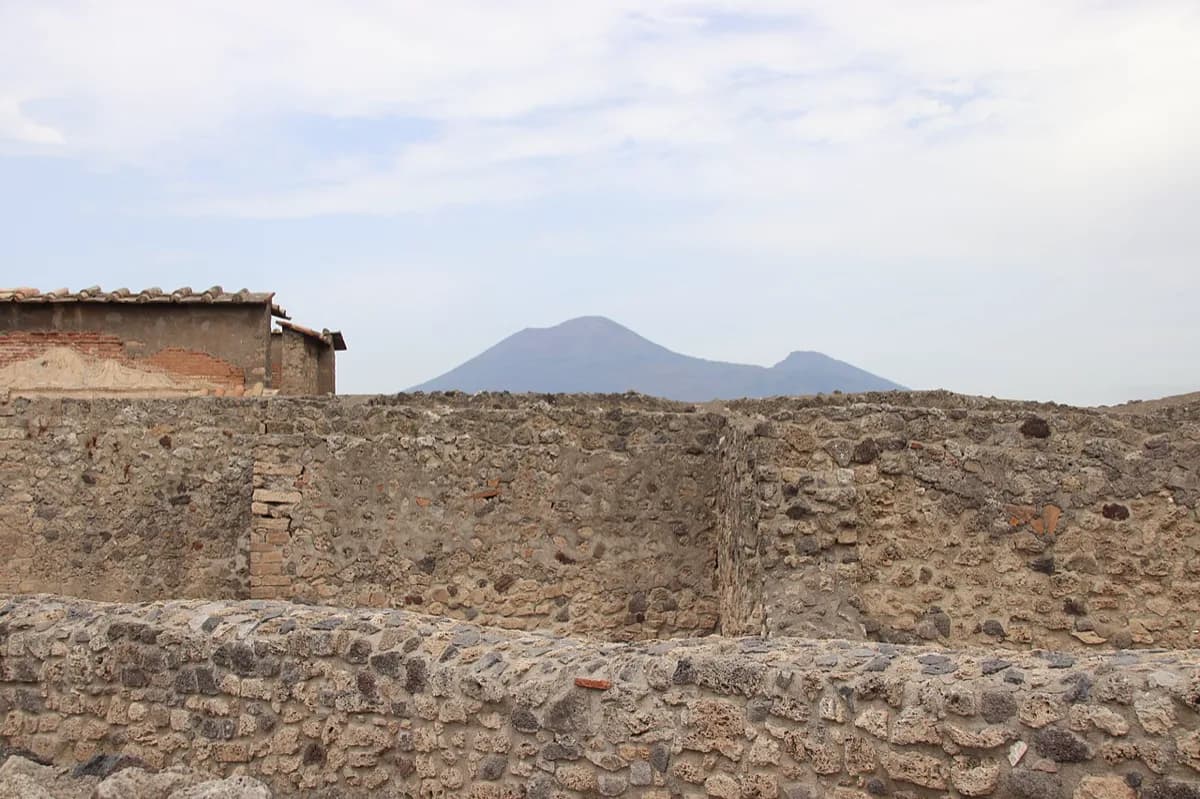
The caveat is real. Pompeii is large, mostly outdoors, and largely unshaded. In July and August, midday heat on exposed stone streets is genuinely punishing, and travelers who dislike walking in direct sun describe the visit as more endurance test than highlight. If you want the same "frozen in time" effect with far less walking and heat, a smaller neighboring site delivers it in a fraction of the time — more on that below.
The practical test: if an outdoor archaeological walk for several hours sounds engaging rather than tedious, book it — even more so if you can pair it with the artifacts excavated from the site, since most of the best mosaics and frescoes aren't at Pompeii itself but on display elsewhere in Naples. Traveling with very young children or limited heat tolerance? A shorter, shadier alternative may serve you better than a full day here.
Pompeii Tickets & Prices 2026
As of 2026, standard adult admission to Pompeii is around €20, booked through the official Pompeii Sites ticketing circuit (resold via Vivaticket) or purchased at the ticket offices and self-service kiosks at the three entrances — Porta Marina, Piazza Esedra, and Piazza Anfiteatro. EU citizens aged 18–25 pay a reduced rate of around €2. Entry is typically free for visitors under 18, for visitors with disabilities plus one companion, and for everyone on the first Sunday of every month. Since late 2024, tickets have been personalized — enter each visitor's name at booking. Confirm current prices before booking, since Italian state site fees are revised periodically.
If you're combining sites within the Pompeii archaeological park itself, a multi-site pass (around €30) covers Pompeii, Oplontis, and Stabiae. Herculaneum is a separately administered park with its own ticket, so it isn't included in that pass — budget for it on its own if you're adding that stop (see Nearby Attractions below).
Sold-out dates are common through the summer peak, when time-slot entries cap admissions at roughly 20,000 visitors a day. If your date shows no availability online, three things work. Buy at the gate — the ticket offices at all three entrances sell walk-up tickets, and the daily cap is rarely hit before early afternoon outside August; expect a line, but it moves. Book a licensed guided tour, since operators hold a separate allocation of slots that's often open when general admission shows sold out. Or check back close to your date, since slots are periodically released. What doesn't work: showing up in July or August with no plan expecting a quiet walk-up.
Opening Hours & Best Time to Visit
Pompeii is open daily, including Mondays and most public holidays. From mid-March to mid-October, gates open at 9:00 a.m. with last entry at 5:30 p.m. and the site closing at 7:00 p.m. From mid-October to mid-March, last entry moves to 3:30 p.m., with the site closing at 5:00 p.m. The park is closed only on December 25 and January 1. Confirm exact seasonal hours on the official site before you go, since they can shift slightly year to year.
For the fewest crowds, arrive right at 9:00 a.m. opening, or in the last couple of hours before close — tour groups cluster mid-morning through early afternoon. Spring and fall offer the best balance of manageable heat and reasonable crowds; midsummer combines the largest crowds with genuinely tough heat on unshaded stone streets, so an early start matters even more if that's your only window.
How Long to Plan for Your Visit
Budget a minimum of 2–3 hours for a fast, highlights-only pass covering the Forum, the Amphitheatre, and one or two well-preserved houses. For most travelers, 4–6 hours is the realistic sweet spot — enough time to see the major houses, the plaster casts, and the Amphitheatre without rushing between them, since the excavated area covers roughly two-thirds of a site spanning around 170 acres. Serious history enthusiasts who want to work through most of the excavated streets should set aside a full day.
Build in slack. Distances between sights are longer than they look on the site map — walking between the Forum and the Amphitheatre alone takes 15–20 minutes — and there's minimal shade, so factor in water and rest breaks a museum visit wouldn't require.
How to Get to Pompeii
From Naples, the Circumvesuviana train (Napoli–Sorrento line) is the standard route: board at Napoli Porta Nolana or the Circumvesuviana platform at Napoli Garibaldi, and get off at "Pompei Scavi – Villa dei Misteri" — not the separate "Pompei" stop on the mainline Trenitalia network, which is a common mix-up that leaves visitors a long walk from the entrance. The ride takes roughly 35–40 minutes and drops you right at the Porta Marina entrance.
Driving from Naples takes about 30–40 minutes via the A3 motorway, exiting at Pompei Ovest or Pompei Est; paid parking sits near all three entrances. Coming from Sorrento or the Amalfi Coast, the same Circumvesuviana line runs the other direction, making Pompeii an easy stop en route to or from Naples.
Visiting Pompeii Without a Guided Tour
You don't need a guided tour to have a good visit. The site is well signed, sells a paper map at the entrance, and offers an official audio guide and app covering the major houses and monuments — plenty of travelers do Pompeii entirely self-guided with one of those plus a bit of pre-trip reading on what they most want to see.
A guided tour earns its cost mainly for context signage can't provide — why a particular house's layout mattered, what daily life looked like in a bakery or bathhouse — rather than for logistics, since the site itself is straightforward to navigate solo. It's most useful for first-time visitors who'd rather have the history explained on the spot than research it beforehand, and it doubles as a workaround when general-admission tickets are sold out.
Visit Tips: Queues, Booking & Common Mistakes
Book your ticket in advance whenever possible, even off-season — it skips the entrance queue and locks in your date. Since tickets are personalized, bring ID for each visitor matching the booking name. Arriving right at 9:00 a.m. opening avoids both the ticket-office queue and the tour-group crush that builds through late morning. Visiting with kids? Budget shorter stretches and more water and shade breaks — see our Naples with kids guide for pacing tips.
Common visitor mistakes: getting off at the wrong "Pompei" train station instead of "Pompei Scavi – Villa dei Misteri"; underestimating the size and heat and not carrying enough water; and treating a 2-hour visit as though it covers the whole site, then missing the Amphitheatre or Villa of the Mysteries because they sit at opposite ends of the park. Wear real walking shoes — the original paving stones are uneven — and sun protection isn't optional in summer.
Nearby Attractions
Pompeii anchors a cluster of Vesuvius-related sights worth combining into a longer trip. Herculaneum, a smaller Roman town buried by the same eruption, is better preserved in places — wooden beams, upper floors, and even furniture survived where Pompeii's did not — and is compact enough to see well in about 2 hours, making it a strong pairing on a two-site day. Mount Vesuvius itself is climbable via a marked crater-rim trail from a shuttle stop near Ercolano, for travelers who want to see the volcano that caused all this.
Many of Pompeii's actual mosaics, frescoes, and everyday objects are not on-site at all — they're in the Naples National Archaeological Museum, which pairs naturally with a Pompeii day if you're basing yourself in Naples. For more of what the city offers beyond its ruins, see our Naples attractions hub, or plan the wider trip with our day trips from Naples guide, which sequences Pompeii against Naples's other easy day-trip options so you're not backtracking.
Frequently Asked Questions
Is Pompeii worth visiting?
Yes, if an outdoor archaeological walk through a nearly complete ancient Roman city sounds engaging — nowhere else shows how an ordinary Roman city worked in the same afternoon. It's a genuinely tough visit for travelers with limited heat tolerance or very young children, since the site is large, mostly outdoors, and largely unshaded.
What should I do if Pompeii tickets are sold out?
Buy at the gate — the ticket offices at all three entrances sell walk-up tickets, and the daily cap is rarely hit before early afternoon outside August. Book a licensed guided tour, since operators hold a separate allocation of entry slots. Or check back close to your date, since additional slots are periodically released online.
How long do you need to visit Pompeii?
Budget 2–3 hours for a fast, highlights-only pass. For most travelers, 4–6 hours is the realistic sweet spot to see the major houses, the plaster casts, and the Amphitheatre without rushing. History enthusiasts who want to work through most of the excavated streets should set aside a full day.
Do you need a guided tour to visit Pompeii?
No. The site is well signed, sells a paper map at the entrance, and offers an official audio guide and app. A guided tour adds historical context that signage can't provide and can also be a useful workaround when general-admission tickets are sold out.
Is Pompeii ever free to visit?
Yes, on the first Sunday of every month as part of Italy's "Domenica al Museo" program. Entry is also free for visitors under 18 and for visitors with disabilities plus one companion. The first-Sunday free day draws large crowds, so arrive close to the 9:00 a.m. opening.
Pompeii earns its reputation for travelers who want to see how an actual Roman city worked, not just its temples — the completeness of an entire buried town is unmatched anywhere else, and 4–6 well-planned hours is enough to see why. For travelers short on time or heat tolerance, Herculaneum delivers a similar effect in a fraction of the time.
Either way, book ahead if you can, arrive at the 9:00 a.m. opening if you're chasing a quiet morning, and treat a sold-out date as a routing problem — a guided tour, a gate walk-up, or checking back for released slots are all real paths in, not dead ends.
For the latest official information, see the Pompeii Archaeological Park official site and Pompeii on Wikipedia.