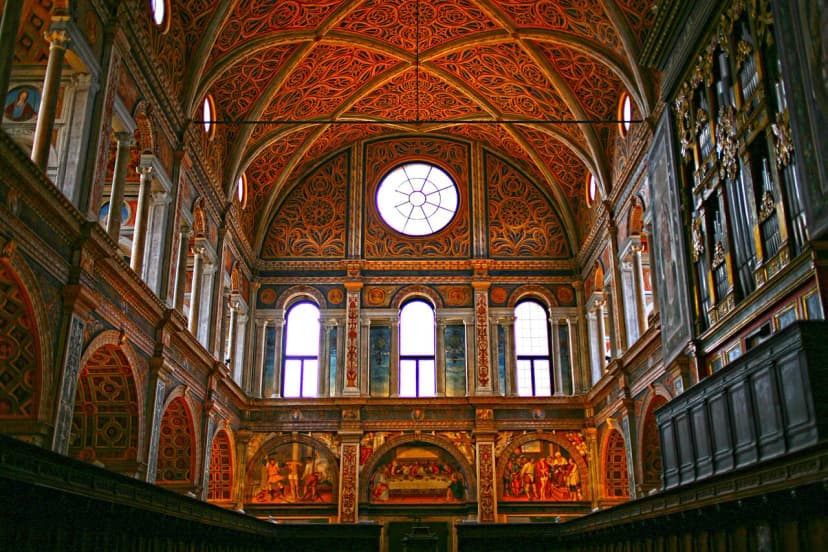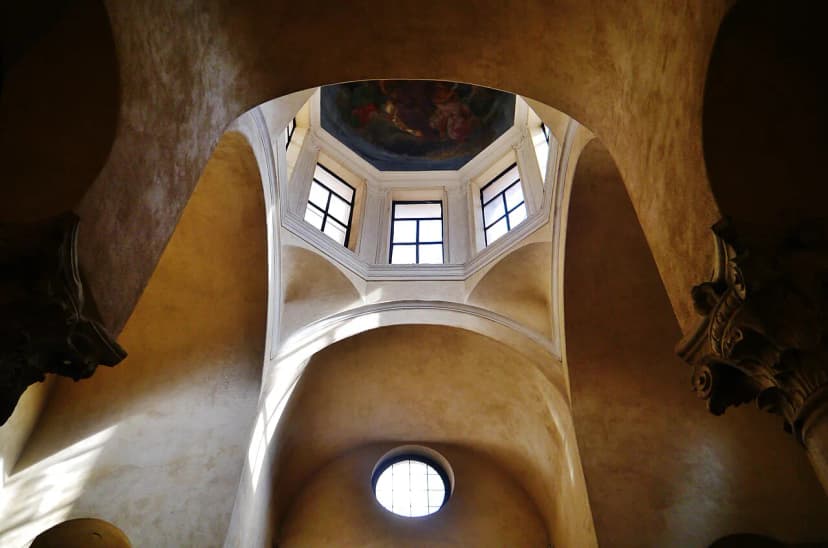

Santo Stefano — the medieval complex Bologna locals call the Sette Chiese, or Seven Churches — costs nothing to enter. Admission is free, with only a voluntary donation requested at the door. According to hours posted directly by the complex (last updated 25 May 2026), it's open to visitors Tuesday through Sunday, roughly 9:30 a.m. to 7 p.m. with a midday break, and closed to tourist visits entirely on Mondays.
That combination — genuinely free entry to one of the city's most atmospheric religious sites, tucked into a quiet piazza a short walk from Bologna's main sights — makes Santo Stefano one of the better value stops in the historic center. This guide covers what's actually left of the original seven churches, the current 2026 hours, and how to plan a visit around the one day it's closed.
What Is Santo Stefano?
Santo Stefano is a cluster of interconnected religious buildings on Piazza Santo Stefano, built up over centuries rather than constructed as a single church. Locally it's known as Sette Chiese (Seven Churches) or Santa Gerusalemme (Holy Jerusalem) — tradition holds that Petronius, Bologna's 5th-century bishop, built the earliest structure on the ruins of a pagan temple to Isis, deliberately designing it to echo the Church of the Holy Sepulchre in Jerusalem. That Jerusalem connection is why the complex carries its "Holy Jerusalem" nickname to this day.
Of the original seven structures, four survive as a connected visiting route today. The Church of Saints Vitale and Agricola is the oldest part, dating to the 4th–5th century and dedicated to Bologna's two protomartyrs, with Roman-era mosaic floors and early medieval sarcophagi still visible inside. The Church of the Holy Sepulchre is a circular building built to recall the actual tomb in Jerusalem — for centuries it held the remains of St. Petronius himself, though those were moved to Basilica di San Petronio in 2000. The Church of the Trinity, also known as the Martyrium, houses the world's oldest known life-size sculpted nativity group, carved in the late 13th century and painted in 1370. Linking them is the Courtyard of Pilate, home to the Catino di Pilato — an 8th-century limestone basin popularly (if inaccurately) said to be where Pontius Pilate washed his hands — and a 14th-century stone rooster referencing Peter's denial. A Benedictine cloister with a double-tiered loggia, built between the 10th and 13th centuries, is considered one of the finest surviving examples of Bolognese Romanesque architecture.
The complex was largely rebuilt by Benedictine monks in the 10th and 11th centuries after being devastated in a Hungarian invasion in the early 900s, which is why most of what's standing today reads as Romanesque rather than the original 5th-century construction.
Santo Stefano Bologna Tickets & Prices 2026
There is no admission ticket. Entry to the entire complex — all four surviving churches, the Courtyard of Pilate, and the Benedictine cloister — is free, with a donation requested to support the site's upkeep (the parish's own signage frames it as "belonging also means caring for it"). There's no online booking system and no timed-entry requirement, since entry costs nothing to reserve.
Private guided tours of Santo Stefano are sold by third-party operators such as GetYourGuide and Viator, sometimes bundled with a nearby food tasting or a wider historic-center walk. Pricing on those varies by operator and season, so check current rates directly on the booking platform if a guided visit interests you — the basilica itself doesn't sell or require one.
The one paid-adjacent detail worth knowing: the crypt is reserved strictly for prayer and meditation, and guided tours are not permitted inside it regardless of ticket type.
Opening Hours & Best Time to Visit
Per the complex's own posted hours (updated 25 May 2026), the visiting hours for the monument are: Tuesday to Friday, 9:30 a.m.–12:30 p.m. and 2:30–7 p.m.; Saturday, 9:30 a.m.–12:30 p.m. and 2:30–7:30 p.m.; Sunday and holidays, 9:30 a.m.–12:30 p.m. and 3–7:30 p.m. Monday is a full closure for tourist visits — the only access that day is to the Church of the Crucifix for evening Mass, from 6 to 7:30 p.m. Because these are religious buildings still in active use, treat the schedule as subject to change around major feast days and confirm current hours on the official site before building your day around it.
Early morning right at the 9:30 opening, or the last hour before evening closing, are the quietest windows — Santo Stefano draws far fewer crowds than Piazza Maggiore or the Two Towers, but tour groups do pass through mid-morning and early afternoon. Since it's a working parish, expect some areas to be off-limits or reduced-access during Mass times, which run at 8:30 a.m. (suspended in August) and 6:30 p.m. on weekdays, and 9:30 a.m., 12 p.m., and 6:30 p.m. on Sundays.
How Long to Plan for Your Visit
Most visitors move through the four churches, the Courtyard of Pilate, and the cloister in 30 to 45 minutes. If you want to read the informational panels in each church, sit for a few minutes in the cloister, or photograph the Adoration of the Magi sculpture group in the Church of the Trinity without rushing, budget closer to an hour. It's a compact site — nothing here requires the half-day some of Bologna's larger attractions demand.
How to Get to Santo Stefano
Piazza Santo Stefano sits well within Bologna's pedestrianized historic center, at Via Santo Stefano 24. From Piazza Maggiore, it's roughly a 10-minute walk southeast along Via Santo Stefano itself. From the Two Towers at Piazza di Porta Ravegnana, it's an even shorter 5- to 10-minute walk along the same street, making the two easy to combine in one loop through the old town.
From Bologna Centrale train station, plan on a 20- to 25-minute walk, or a short bus ride toward the center. Bologna Centrale connects to Florence in about 35 minutes and Milan in around an hour by fast train. From Bologna Guglielmo Marconi Airport, the Marconi Express monorail reaches Bologna Centrale in roughly 7 minutes, after which it's a walk or bus into the historic center. Cars aren't practical here — the surrounding streets are largely restricted to permitted traffic, and walking is the simplest way to get around once you're in the center.
Visit Tips: Queues, Booking & Common Mistakes
The most common mistake is showing up on a Monday expecting the complex to be open — it's the one day tourist access is closed, aside from the evening Mass. Since the site is free and doesn't take reservations, there's no ticket to book in advance and generally no queue to plan around, unlike ticketed sights elsewhere in the city.
As with other active Italian churches, dress modestly — shoulders and knees covered is the standard expectation for entry. If you're visiting with a group larger than 20 people, the complex asks that you use headsets for any spoken explanations rather than talking loudly inside; groups over 40 are asked to enter in separate waves so as not to crowd the smaller interior spaces. And because Mass is said daily, be prepared for parts of the church to be off-limits to sightseeing during scheduled services — check the Mass times above and plan your visit around them if you want unrestricted access to every area.
Nearby Attractions
Santo Stefano sits close to several of Bologna's other major sights, all walkable in one loop through the historic center. The Two Towers at Piazza di Porta Ravegnana are a 5- to 10-minute walk north, and Piazza Maggiore, the city's main square, is about 10 minutes northwest. Basilica di San Petronio, which now holds the relics of the bishop credited with founding Santo Stefano, sits on that same square and makes a natural pairing with a Santo Stefano visit. For a full day that strings these together, see our one-day Bologna itinerary, and for more lesser-visited spots like this one, check our hidden gems in Bologna guide.
Frequently Asked Questions
Is Santo Stefano Bologna free to visit?
Yes. Entry to the entire complex — all four surviving churches, the Courtyard of Pilate, and the Benedictine cloister — is free, with a voluntary donation requested to support the site's upkeep. There is no admission ticket and no online booking required.
What are Santo Stefano's opening hours in 2026?
Per hours posted by the complex (updated 25 May 2026): Tuesday to Friday 9:30 a.m.–12:30 p.m. and 2:30–7 p.m.; Saturday 9:30 a.m.–12:30 p.m. and 2:30–7:30 p.m.; Sunday and holidays 9:30 a.m.–12:30 p.m. and 3–7:30 p.m. The complex is closed to tourist visits on Mondays.
How many of the original seven churches still stand?
Four of the original structures survive as a connected visiting route today: the Church of Saints Vitale and Agricola, the Church of the Holy Sepulchre, the Church of the Trinity (Martyrium), and the Church of the Crucifix, which now serves as the main entrance. The Courtyard of Pilate and a Benedictine cloister connect them.
How long should I spend visiting Santo Stefano?
Most visitors need 30 to 45 minutes to walk through the four churches, the Courtyard of Pilate, and the cloister. Budget closer to an hour if you want to read the informational panels and spend time with the nativity sculpture group in the Church of the Trinity without rushing.
Is Santo Stefano open on Mondays?
Not for tourist visits. The complex is closed to sightseeing on Mondays, with the sole exception of the Church of the Crucifix, which opens from 6 to 7:30 p.m. for evening Mass. Plan a Tuesday-through-Sunday visit if you want to see the full complex.
Santo Stefano rewards the kind of traveler who's willing to slow down for 30 minutes in a quiet courtyard rather than rush between the city's biggest names. It's free, it's rarely crowded compared to Piazza Maggiore or the Two Towers, and the layered history — a 5th-century foundation legend, Lombard-era relics, a Romanesque cloister, and a 700-year-old sculpted nativity — is unusually dense for a site that costs nothing to enter.
Plan around the Monday closure, arrive early or late in the day for the quietest visit, and pair it with the nearby Two Towers or Piazza Maggiore for an easy half-loop through Bologna's old town. Confirm current hours directly on the official site before you travel, since they're tied to a working parish schedule that can shift around religious holidays.
For the latest official information, see the Santo Stefano official hours and contact page and the Santo Stefano, Bologna overview on Wikipedia.