
4 min
Erfurt: Landmark Visitor Guides
Plan Erfurt with landmark visitor guides, practical itinerary choices, family ideas and links to researched city guides and attraction details.
Explore by interest
Continue browsing practical erfurt advice and trip-planning ideas from across Europe.
Decision-ready travel
Researched by our editorial team
Plan Erfurt with landmark visitor guides, practical itinerary choices, family ideas and links to researched city guides and attraction details.

Fischmarkt is the square most Erfurt visitors cross without planning to. It holds the 1880s Neo-Gothic Rathaus, the Der Römer statue placed in 1591, Renaissance-style facades and trams that run straight across it. Sitting at the Krämerbrücke end of the old town, it makes a practical walking base.
The Hirschgarten is Erfurt's first public green space, laid out beside today's State Chancellery in the 18th century. It is free, publicly accessible and close to the Angerbrunnen tram stop. This guide covers its history, the playground, getting there and how it fits into an Erfurt visit.

The Krämerbrücke in Erfurt is a stone bridge from 1325 that still carries houses, workshops and shops. This guide covers what you see on the crossing, why the walk itself is free, what the house 31 exhibition adds, and how to fit the bridge into an Erfurt old-town day.
Erfurt's Museum für Thüringer Volkskunde is the city's everyday-history museum, where rural dress, painted furniture and village life sit alongside changing exhibitions. This guide explains what to see, how the ticket works across the municipal museums, opening hours, family programming and how to pair it with Erfurt's other history collections.

The Stone House on Benediktsplatz is the secular building in Erfurt's medieval Jewish heritage group, inscribed by UNESCO alongside the Old Synagogue and the Mikveh. This guide explains what survives from around 1250, what you can read from the exterior, and how to verify interior access before you travel.

The Wartburg rises above Eisenach, west of Erfurt, combining a UNESCO-listed medieval castle, Luther's hiding place and Thuringian Forest views in one outing. This guide separates the free grounds from the ticketed interiors, explains how to reach the hill from Eisenach, and flags the 2027 building works that will restrict access.

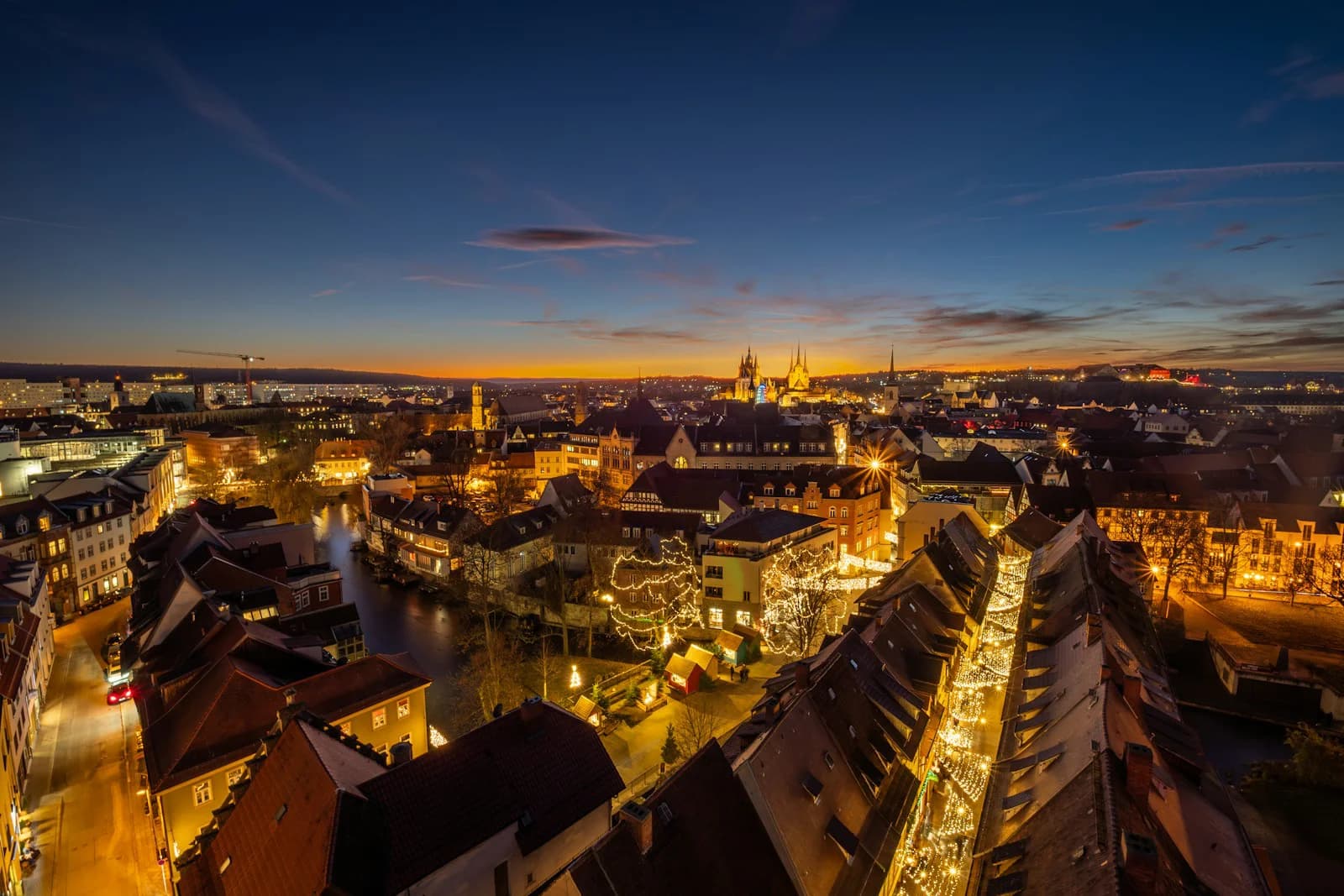
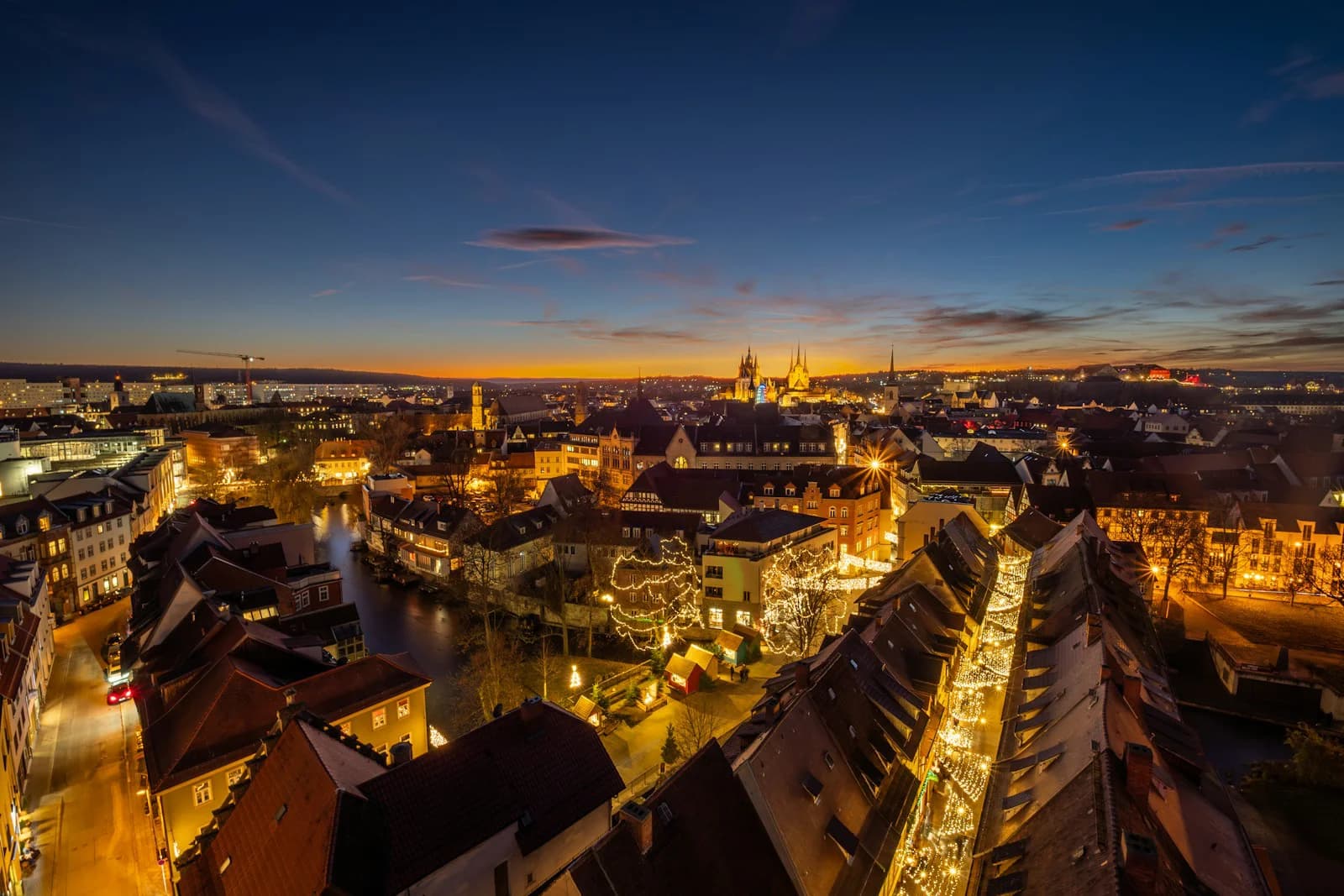
Erfurt rewards viewpoint hunters with a skyline of spires, a baroque fortress above the rooftops and a tower climb that frames the Merchants' Bridge. This guide compares each option by effort and reward, separates free open-air squares from paid climbs, and suggests how to combine several views in one unhurried afternoon.

Erfurt sits at the centre of Thuringia, which makes it a practical base for car-free day trips to Wartburg Castle, Weimar, Gotha, the Rennsteig and the Saale-Unstrut wine country. This guide compares half-day and full-day options, separates free grounds from ticketed interiors, and explains how to check live connections and fares rather than trusting printed times.

Erfurt's old town compresses a cathedral hill, a market square and an inhabited medieval bridge into a compact, walkable core. This self-guided route orders those stops sensibly, separates free church interiors from ticketed museums, and shows where to add detours without overfilling a single day.

Erfurt's headline museums pull in different directions, so the right first pick depends on your interest and your available day. This guide compares art, everyday life, Jewish heritage and Reformation history, then explains how separate tickets and weekly closing days shape a realistic plan.

Erfurt's compact old town makes wet weather manageable rather than miserable, because most of the best indoor stops sit within a short walk of each other. The trick is knowing which interiors are free, which need a ticket, and which hours you can rely on. This plan sequences the Municipal Museum, the citadel, church interiors and covered passages into a single rainy day.