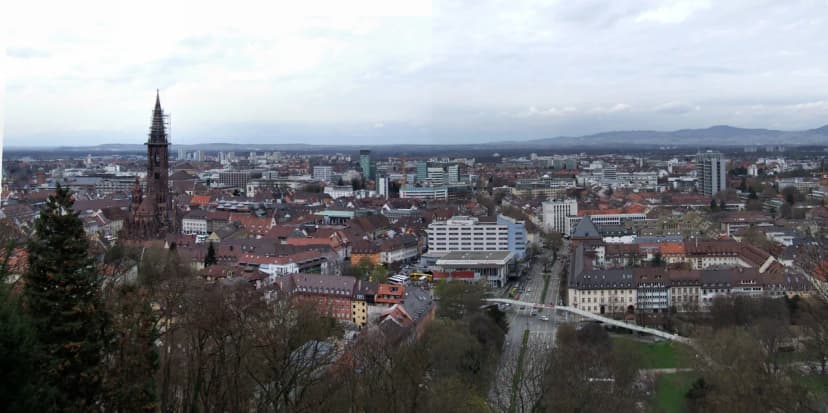
Erfurt's Altstadt packs an unusual amount of medieval substance into a compact core: a cathedral hill, a market square with a Renaissance town hall, and a bridge with houses still standing on it. That density is why walking works better than riding, because the interesting parts sit minutes apart rather than stops apart.
One commercial operator, WeGoTrip, sells a self-guided audio route through this same ground and advertises it as a 5 km walk taking about two hours. Treat that as one company's product description rather than an official city duration, since the pace is entirely yours once you set out.
This route is built as a half-day core with optional additions, so you can stop early at the market square or keep going up to the citadel. For a wider look at what the city offers beyond the old town, the Erfurt: Itineraries and City Travel Guides page sets the scene.
Start at Domplatz and Work Downhill
Begin on Domplatz, the broad square at the foot of the cathedral hill, because the two headline churches sit at the top and the rest of the old town falls away below them. Doing the climb first means the remainder of the walk is downhill or level, which matters on cobblestones.
The square itself changes character through the year, hosting markets and seasonal events rather than serving as a static monument. If a market is running, walk its edges first and save the church interiors for when you want to be indoors.
Erfurt's official tourism pages list the cathedral, St. Severus, the Merchants' Bridge and the Petersberg Citadel among the city's principal sights, which confirms this cluster as the natural spine of a first walk. Use that listing to sanity-check your order before you set out.
The Domberg Pair: Cathedral and Severikirche
Erfurt Cathedral, also called Dom St. Marien, is the larger of the two churches on the hill and the one most visitors enter first. Admission to the cathedral interior is free, which makes it an easy stop even on a tight schedule.
Do not assume that free entry extends to everything in the building. Tower access and any guided visits are separate arrangements with their own conditions, so check at the entrance rather than planning around a climb you may not be able to make.
Severikirche stands directly beside the cathedral, its three spires forming the silhouette you see from the square below. Access arrangements at St. Severi have varied, so treat entry as something to confirm on the day instead of a guaranteed part of the route.
Between the two churches, the Domstufen steps are the classic viewpoint and the reason this hill works as a starting point. Look back down at the square before descending, because the perspective changes completely once you are level with the rooftops.
Downhill to Fischmarkt and the Rathaus
From the cathedral hill the route drops into the market square, where the Rathaus and the Der Römer statue anchor one of the busiest corners of the old town. Trams cross this area, so keep an eye out when you step off the pavement to take photos.
Visitor reviews consistently name Anger, Fischmarkt, Domplatz and the Krämerbrücke as the standout spots in the Altstadt, and note that simply wandering the streets is rewarding in itself. That is a useful reminder that the square is a rest point, not a checklist item to rush.
The square's edges are lined with cafes and restaurants, which makes it the sensible place to break the walk in half. Sit facing the town hall if you want the best light on the facades, and use the pause to decide whether the citadel is still realistic.
If you prefer a structured sense of the square before you arrive, the Fischmarkt Erfurt visitor guide covers what sits around it and how the tram traffic interacts with pedestrian space. Reading it beforehand saves you from being surprised by the crossing.
Krämerbrücke: Walking the Inhabited Bridge
The Krämerbrücke is the image most people associate with Erfurt: a stone bridge lined with timber-framed houses and small shops, still in use as a street. Cross it on foot rather than treating it as a photo stop, because the experience is the enclosed corridor of houses rather than the bridge deck alone.
For the postcard view, find the lane that drops down to the riverside behind the bridge. From below you see the timber houses stacked above the Gera and understand how the structure actually works, which the street-level walk alone does not show.
Shops and cafes occupy the bridge houses, so opening patterns vary by business rather than by any single bridge-wide schedule. Wander, note what is open, and do not build your timing around a specific shop unless you have confirmed it directly.
The Krämerbrücke Erfurt visitor guide is worth skimming before you go if you want the bridge's layout in your head in advance. It also helps to know which end you are approaching from, since the surrounding streets are narrow and easy to overshoot.
The Ägidienkirche Tower: A Climb to Treat as Optional
At one bridgehead, the Ägidienkirche tower offers a small viewing platform above the old town, reached by old wooden stairs that are steep and not suited to everyone. The entrance sits underneath the covered part of the bridge, which is why many walkers miss it entirely.
Opening is the weak point of this plan. One detailed visitor account describes arriving for the advertised opening time, waiting more than half an hour at a closed door, and only succeeding on a return visit in the afternoon.
The practical response is to pass the tower twice: once on your way across the bridge and once on the way back. If the door is open on either pass, climb; if not, continue without rearranging your day, because the rest of the route does not depend on it.
Detours: Petersberg Citadel and the Jewish Heritage Ensemble
The Petersberg Citadel is the biggest optional addition, a sprawling baroque fortress on the hill above the old town. The grounds are free to wander and give the best wide views back across the cathedral and St. Severus, so they are worth the climb even if you skip everything indoors.
Ticketed areas within the citadel, including its exhibition spaces, are separate from the free grounds, so decide what you actually want before committing time. One traveller found the exhibition quick to move through while still rating the fortress views as unmissable, which is a fair illustration of how personal that call is.
In the old town, the Old Synagogue, the medieval mikveh and the Stone House form a UNESCO World Heritage ensemble recognised for its medieval Jewish heritage. The mikveh is a ritual bath of medieval origin discovered in a building cellar, reported at the time as being in good condition.
These sites have their own access arrangements and ticketing rather than folding into a single old-town admission. If Jewish heritage is a priority for your visit, build it in as a deliberate block of time and confirm the current visiting arrangements rather than treating it as a five-minute photo stop.
Museums on the Route and How Ticketing Works
Erfurt's municipal museums are separate institutions with separate admissions, so a stop at one does not grant entry to the next. The Stadtmuseum Haus zum Stockfisch is one of them, housed in a late Renaissance building and covering the city from its early history onward.
The same tourism listing records free admission on the first Tuesday of the month at the Stadtmuseum, with standard adult admission otherwise published at 6,00 EUR and reduced admission at 4,00 EUR for the stated 2026 opening period. These are the operator's published figures for a defined window, so re-check them before you rely on them.
The Museum für Thüringer Volkskunde publishes the same first-Tuesday-of-the-month arrangement with its own opening pattern, closing on Mondays and opening Tuesday to Sunday. Its adult admission is listed at 6,00 EUR and reduced admission at 4,00 EUR, again as the museum's own published information.
Crucially, the free Tuesday pattern is a published arrangement for named municipal institutions rather than a city-wide guarantee, and it is not something to assume for any other museum or church you happen to pass. Verify each site's current terms on its own page before planning around free entry.
Pacing: Half a Day Versus a Full Day
A half-day version covers Domplatz, the cathedral interior, the descent to Fischmarkt, and the Krämerbrücke, with the tower climb only if it happens to be open. That is a comfortable, unhurried sequence with time to sit in the market square.
A full day adds the Petersberg Citadel and one museum or heritage site, which is a genuinely different trip rather than a stretched version of the first. The citadel alone involves a climb and a wander across a large site, so budget for it as a block rather than an add-on.
If you are short on time, cut the citadel first and keep the bridge and market square, because those two carry the character of the walk. If you have more than a day, a 3 days in Erfurt itinerary lets you spread the museums and the citadel across separate visits.
Practical Decisions: Surfaces, Weather and Crowds
Expect cobblestones, uneven lanes and steep steps at several points, including the cathedral hill and the tower climb if it is open. Sturdy shoes matter more here than in a flat city centre, and anyone with mobility concerns should plan the hill sections deliberately rather than improvising.
The old town is compact and heavily used, so the busiest stretches around Fischmarkt and the Krämerbrücke feel very different early in the day. If you want photographs without crowds, start at Domplatz as early as your schedule allows and work downhill.
Weather changes the experience substantially because much of the route is outdoors and the church interiors are the main indoor refuge. On wet days, shorten the citadel portion and give more time to the cathedral, a museum, or the covered passage under the bridge.
For a broader view of Erfurt's landmarks and how they fit together, the Erfurt: Landmark Visitor Guides hub collects the individual sites in one place. It is a useful cross-check if you want to swap a stop in or out of this route.
Guided alternatives exist and are worth considering if you want context without reading as you walk. A guided old-town tour covers similar ground with commentary, and the official tourism site lists guided options alongside advice for visitors.
Turning the Walk into a City Break
The old town works as a single unhurried day, but Erfurt rewards a second look once you have the geography straight. Come back to the bridge in different light, or spend a morning in a museum you skipped the first time.
Erfurt also sits within easy reach of broader Thuringian sightseeing, so the walk can be the opening move of a longer regional trip. The Erfurt: Itineraries and City Travel Guides collection is the place to start when you are ready to extend it.
Whatever you decide, confirm current opening times and admission terms on each site's own page before you travel, since these change more often than the streets themselves do. For related planning, see Hirschgarten Erfurt: Free Park by the State Chancellery.
Frequently Asked Questions
Do you need a ticket to walk the Altstadt?
No. Walking the old town streets, squares and the Krämerbrücke is free, and the cathedral interior has free admission. What costs money are specific interiors and museums, so budget for whichever of those you actually choose to enter rather than for the walk itself.
Where should you start a walk through Erfurt's old town?
Start at Domplatz and the cathedral hill, because the two principal churches sit at the top and the rest of the route descends from there. Beginning uphill keeps the remainder of the walk level or downhill, which is easier on the cobblestones and helps you see the square from above before you enter it.
Can you climb the Ägidienkirche tower, and when is it open?
Visitors have reported arriving at the advertised opening time to find the door closed, sometimes waiting half an hour or more before giving up. The tower does open at times, but the opening is inconsistent enough that you should treat the climb as a bonus rather than a scheduled stop, and simply try again if you pass by later.
Is the Petersberg Citadel free, and what is ticketed there?
The citadel grounds are free to walk, and they give the widest views back over the cathedral and St. Severus. Ticketed areas, including exhibition spaces inside the complex, are separate from the grounds, so decide what you want to see before committing time on the hill.
Are Erfurt's municipal museums free on the first Tuesday of the month?
Several municipal museums publish a free-admission arrangement on the first Tuesday of the month, and individual sites list their own opening patterns alongside it. This is a published arrangement for named institutions rather than a city-wide guarantee, so check each museum's current terms before planning a visit around it.
Sources
- Erfurt: Timeless Tales of the Old Town Audio Tour | WeGoTrip
- Official event website
- ERFURT ALTSTADT - All You SHOULD Know Before ...
- Startseite: Museum für Thüringer Volkskunde Erfurt | Volkskundemuseum Erfurt
- Municipal Museum - Museums - Erfurt Tourismus
- Medieval mikvah found in Germany - Jewish Telegraphic Agency
- Erfurt Travel Guide: What to Do in The Fairytale City On a Berlin Day Trip — Blake Erik.
- 15 Fantastic Things to Do in Erfurt, Germany (+ Our Tips)