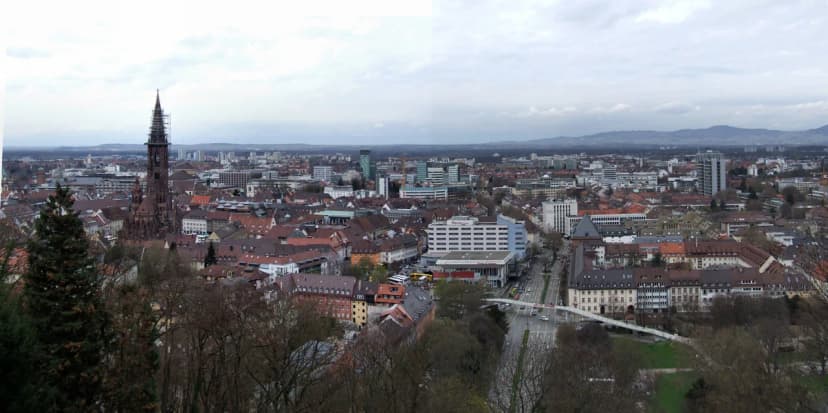
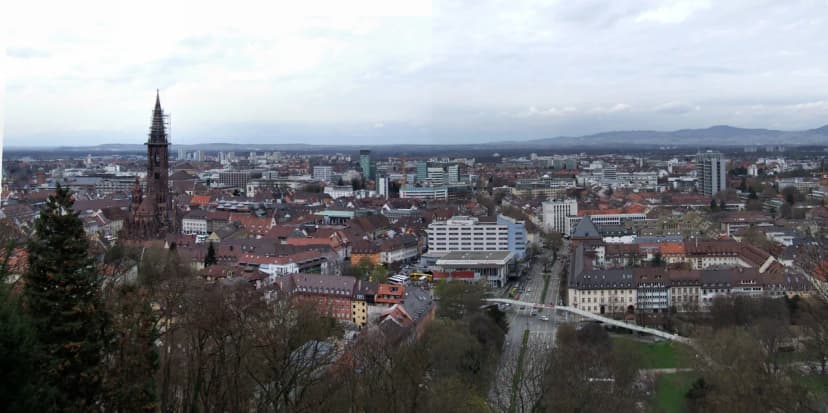
Freiburg's Altstadt is a compact old town where the walking is easy and the decisions are mostly about order and timing. The Freiburger Münster and Münsterplatz anchor the visit, with the surrounding lanes providing most of the atmosphere between the headline sights. For planning purposes only, a relaxed pass through the core lanes and the market square can be treated as a suggested couple of hours rather than an official figure.
The official tourism portal frames the Altstadt as somewhere a walk can take you from the old town lanes toward the Black Forest within minutes, and presents the Münster as the city's must-see alongside the Münstermarkt. That is a useful reality check: the old town itself is small, so the walk is never the hard part.
Why Freiburg's Altstadt Works on Foot
The old town is densely built and arranged around the Münster, which makes walking the natural way to see it. Distances between the market square, the lanes and the edges of the historic core are short enough that a wrong turn costs you a few minutes rather than a journey. That compactness is also why a rigid route matters less here than in larger cities.
Two features keep the walk interesting for an afternoon. One is the Bächle, the small open water channels that run beside the paving in much of the old town. The other is the activity on Münsterplatz, which changes the character of the square depending on when you arrive. Both reward slow movement rather than sight-by-sight ticking.
A Suggested Direction and Rough Duration
Suggested plan, not an official figure: walk from the station side of the old town toward the Münster, or reverse it if you arrive from the east. A comfortable pass through the lanes with one market stop and a break can be planned as roughly two hours. If you have only sixty to ninety minutes, cut everything except a couple of lanes and Münsterplatz.
Walking station-to-Münster means the streets grow more interesting as you go and you end on the square with the tower above you. The reverse works fine, but you start with the highlight and spend the rest of the walk comparing everything to it. Either way, keep the direction deliberate rather than zigzagging through every lane.
There is no official start point, because the old town is public space you can enter from any direction. The route below is one suggestion among many, and you can drop or reorder segments without losing the shape of the visit.
Starting Near the Station and Finding Your Bearings
Freiburg's Hauptbahnhof sits on the western edge of the centre, and the old town begins within a short walk of it. The tourism portal publishes arrival and mobility information, so check its current guidance rather than relying on a specific tram line or stop from a blog. Once you cross into the older street pattern, the pavement narrows and the pace naturally drops.
Use the first stretch to set your bearings rather than to sightsee. The Münster tower is the most reliable compass you need in these lanes; once you know which side it is on, you can wander without worrying about getting lost. If you are arriving by car, plan to park on the edge of the centre and walk in, because the old town is not designed for through traffic.
The Lanes, the Bächle and How to Move Through Them
The Bächle are the small open water channels running beside the paving in much of the old town, and they are the most distinctive thing you will step over all day. They also work as a soft guide rail, keeping you in the historic core instead of drifting toward the modern shopping streets. Watch your footing where they run close to café seating and doorways, especially in wet weather.
Freiburg's tourism portal lists Konviktstraße among its shopping and old town highlights, and it is a good example of a lane that rewards a slow pass rather than a destination mindset. The same is true of the smaller side streets connecting toward Augustinerplatz. Treat these as connectors with character rather than as stops with opening times, and you will enjoy them more.
Münsterplatz and the Freiburger Münster
Münsterplatz is the hinge of the whole walk, and it is worth separating what is free from what is not. The square and the market are public space you can cross, browse and sit in without buying anything. The Münster's interior, tower access and any museum collections attached to the church are separate arrangements, so check current terms on official channels before planning around them.
The tourism portal presents the Münster as the must-see and pairs it with the Münstermarkt, where visitors and vendors interact over local specialities. That combination is the reason to give this square real time rather than a photo stop. If you want to go inside or climb, treat it as a second visit with its own timing, and do not assume one ticket or one queue covers the tower, the interior and any nearby collection.
The Historic Gates as Waypoints
Freiburg's surviving medieval gates, including the Martinstor and the Schwabentor, are most useful as landmarks rather than as a fixed checklist. The tourism portal lists the Schwabentor among its sights, which makes it a reasonable thing to walk toward when you want a destination on the edge of the old town.
The Martinstor is the other well-known historic gate, and the guide linked here explains what survives and how to read it in the streetscape. Using a gate as a waypoint works well: pick one, walk to it, then let the lanes pull you back toward the Münster. That keeps the walk spontaneous without leaving you aimless, and you can pass through the gates at whatever point suits your direction.
Market Rhythm and Timing on Münsterplatz
The Münstermarkt changes the feel of the square depending on when you arrive. On market mornings the space is busy with stalls and vendors, which is when the tourism portal suggests tasting something local and talking to the people running the stands. Later in the day the square becomes quieter. Neither version is better, but they are different experiences.
Because market days and hours can change with season and weather, confirm the current pattern on the tourism portal before building your day around it. The holiday and market schedule is published there rather than on third-party listing sites. This is one of the few things on this walk worth checking in advance rather than discovering on arrival.
Taking a Break Without Losing the Route
The tourism portal highlights small local cafés, beer gardens and regional specialities, which is a more reliable starting point than picking a terrace at random. Choose a spot where you can see the lane or square you just walked through, so the pause is part of the route rather than a detour from it. Shaded squares and church-adjacent benches are the free alternative when you do not want a sit-down stop.
If you are walking in summer, plan your break for the middle of the day rather than the end, when the lanes are hottest and you are most likely to rush the last stretch. Comfortable shoes with some grip matter more here than in a modern city centre, because old town paving is often cobbled and uneven.
How Much Time to Give the Walk, and How to Shorten It
Suggested timing only: a comfortable loop through the lanes with one market pass and a Münsterplatz pause runs about two hours at an easy pace. Add an interior visit, a museum or a long lunch and you are looking at most of a day. These are planning estimates rather than official figures, so tune them to your own pace and interests.
The short version is simple: station side, two or three lanes, Münsterplatz, done. Skip the gates and any museum interior and you can cover the essential character of the Altstadt in roughly an hour. The long version adds a gate, a proper break and a walk out toward the Schlossberg if the weather is clear.
What to Skip and What to Save for Another Day
Skip any attempt to see every old town lane in one pass; they start to blur and you remember less, not more. Save the museums for a separate visit, especially if you are also planning to see the Münster interior, since each has its own arrangements.
Save the Schlossberg climb for a day with good visibility, since the value there is the view rather than the path itself. Guided tours with a fixed itinerary are worth considering if you want interpretation, but they trade flexibility for structure. If your priority is photographing quiet lanes, a self-guided walk gives you more control over timing.
Commercial self-guided tour products exist for the old town, but their contents vary widely and they are products to evaluate rather than descriptions of the city. One example of a self-guided tour product for old town Freiburg illustrates how differently these can be packaged. Check what any paid option actually includes before committing.
Extending the Walk: Schlossberg and City Edges
The Schlossberg rises directly above the old town, and the tourism portal presents it as a viewpoint with the Münster in frame. Paths up are short but steep in places, so treat the climb as an add-on rather than part of the core route. Go when the light is good, because the payoff is the panorama.
If you have a full day, the portal's day-trip framing includes the Black Forest, Kaiserstuhl vineyards and the Dreiland region, all reachable from the city. Pair one of those with a morning Altstadt walk rather than trying to do both properly in the same afternoon. The old town deserves to be the main course on the day you walk it.
Practical Notes: Surface, Crowds and Weather
Old town paving is often cobbled and uneven, and the Bächle run flush with the walking surface, so watch the ground more than usual, particularly in wet weather. Cafés and shops generally sit at ground level along the main lanes. For a general overview of what the city offers, including landmark contexts beyond the old town, the hub linked here is a useful index.
Crowds concentrate around Münsterplatz and the main shopping lanes, and they thin sharply in the side streets. Early mornings and later afternoons are generally calmer than the middle of the day, and market activity adds people to the square, so expect the busiest window to overlap with market hours.
Accessibility and Arrival Questions to Check Before You Go
The tourism portal maintains an accessibility section covering the city, which is the right place to check specific needs such as step-free routes and accessible facilities. Local conditions on cobbles, gradients and old buildings can differ from modern standards, so verify rather than assume. If accessibility is central to your plan, contact the tourist information office directly before your visit.
Rather than memorising tram lines or stops, check the tourism portal's arrival and mobility pages on the day, since services and recommendations change. Walking in from the station is straightforward and lets you slide into the lanes without an intermediate step. Build in a buffer if you are on a schedule, because the last stretch on foot is the slowest part.
Making a Day of It: Pairing the Walk with Other Stops
If this walk is your only full day in the city, a One Day in Freiburg plan can help you sequence the old town with the Schlossberg or a museum without overloading the afternoon. Treat any itinerary as a menu rather than a contract. The old town walk works best when it is the spine of the day rather than one item on a checklist.
Viewpoints are the natural add-on if the weather cooperates, and the best viewpoints in Freiburg are mostly above the city rather than inside it. Climbing to one of them after the walk gives the lanes you just crossed a shape you cannot see from ground level. Save it for a clear day and go slowly.
Plan Your Freiburg Altstadt Walk
The Freiburg old town walking route works because it does not need to be complicated: start on the station side, follow the lanes and the Bächle, give Münsterplatz and the market real time, and use a gate as a landmark rather than an obligation. Two hours is a reasonable suggestion, with a shorter version available if your day is tight. Check market rhythms and any interior visit details on official channels before you go, because those are the parts that change.
Frequently Asked Questions
How long does a Freiburg Old Town walk take?
As a suggestion rather than an official figure, allow about two hours for the lanes, a pass through the Münstermarkt and a pause on Münsterplatz at an easy pace. A shorter version covering just the lanes and the square fits into roughly an hour. Add time if you plan to visit the Münster interior, a museum or a viewpoint above the city, since each has its own arrangements.
Is a self-guided walk better than a guided tour in Freiburg?
It depends on whether you want flexibility or interpretation. A self-guided route lets you linger in the lanes and adjust around market activity, which suits the compact Altstadt well. A guided tour can add context and local knowledge, but you follow the group's pace and order. Check what any specific tour actually includes before deciding.
Where does the Freiburg Altstadt route start and end?
The suggested direction starts near the station side of the old town and finishes around Münsterplatz, so the Münster tower is the final view. You can easily reverse it if you arrive from the east. There is no official start point, since the old town is public space you can enter from any direction.
Do I need a ticket to walk the Altstadt or see the Münster?
Walking the old town lanes, crossing Münsterplatz and browsing the market are free public activities. The Münster's interior, tower access and any museum collections are separate arrangements, so check the current terms with the operator before you plan around them. Do not assume a single ticket covers everything in the area.
What should I skip on a Freiburg old town walk?
Skip trying to cover every lane and every museum in one pass. Save museum interiors and any tower climb for a dedicated visit, and save the Schlossberg for a clear day when the view justifies the climb. Keeping the walk focused on the lanes, the Bächle and Münsterplatz gives you a better sense of the place.