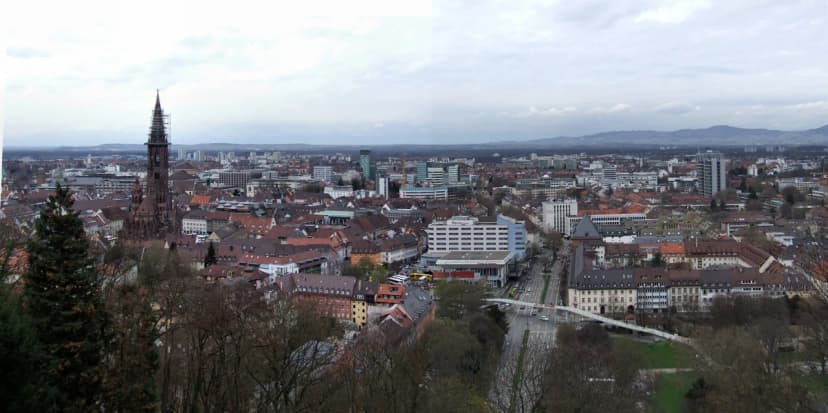
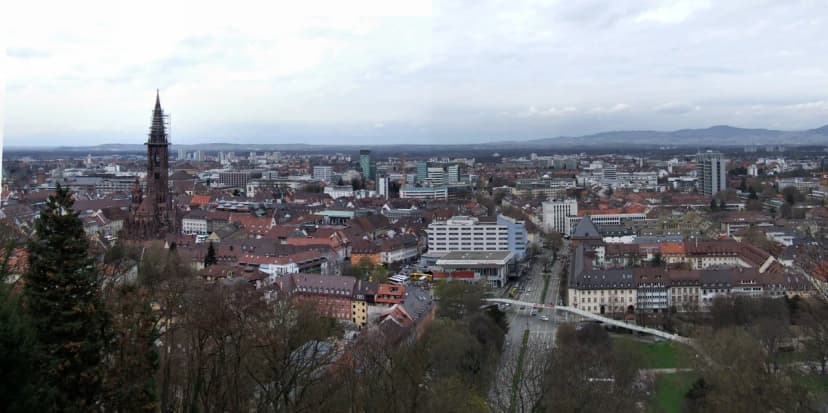
Freiburg packs an unusual amount into a compact centre: a Gothic minster at the middle, lanes threaded with water channels, and Black Forest trails beginning within minutes of the shops. That density is exactly why a single day can feel satisfying rather than rushed, provided you resist the urge to add Schauinsland or a cross-border trip.
The official tourism portal describes the city's signature moments as watching the sun over the Münsterturm and eating a Lange Rote at the Münstermarkt, and it highlights how a walk through the Altstadt leads into the Black Forest in minutes. Use that as your loose theme for the day rather than a stopwatch.
This itinerary is a suggested order, not an official schedule. Treat the timings as a frame you stretch or compress, and verify current opening hours, market days and any entry fees before you travel. A two-hour window for the old town core, excluding the Schlossberg, is a reasonable editorial estimate for a first visit.
Why Freiburg Works as a One-Day Stop
Freiburg began as a fortified town of free citizens in 1120, and the surviving Altstadt still reads as a walkable whole rather than a scatter of separate sights. The minster sits at its centre, so you can orient yourself around one landmark and let the lanes do the rest.
The practical advantage is that most of the day needs no transport planning. The main station sits west of the old town and is within easy walking distance, so you can step off a train and be among the sights without working out a tram.
If you want a wider frame for what to see and how the city's districts fit together, the Freiburg city guide collects the itineraries and themed walks that sit alongside this one.
How to Set Your Own Start Time
The single most useful anchor for a one-day visit is the Münstermarkt. It occupies the square around the minster, and one widely cited account describes it as running every morning except Sundays, with flowers, produce and hand-crafted toys on both sides of the church.
That morning rhythm is the reason to start early rather than aim for a fixed clock time. Market days and hours can change with the season, so confirm the current pattern through the tourism portal before you build your morning around it.
A workable suggestion is to arrive at Münsterplatz mid-morning and let the market set your pace. If you are travelling from Basel, one visitor account describes the regional train taking about an hour, which still leaves the market window intact.
Morning Stop 1: Freiburger Münster
The Münster is the Catholic Cathedral of Our Lady, built between roughly 1200 and 1330, with a spire that rises about 380 feet. Inside hang nineteen bells, the oldest dating to 1285, and the structure survived the 1944 bombing with little damage.
One source describes the church as one of the free things to see in Freiburg, meaning you can step inside without buying a ticket. Treat that as reported rather than guaranteed, and check the cathedral's current visitor information for any separate charge attached to towers, crypts or exhibitions.
The important distinction is between the free interior and anything ticketed elsewhere in the city. Freiburg's museums and attractions set their own admission, so do not assume one ticket covers the minster plus a museum later in the day.
If climbing for a view appeals, the minster tower and the city's other high points are covered in the Freiburg viewpoints guide, which is the better page when the panorama matters more than the interior.
Morning Stop 2: Münstermarkt Food and Browsing
The market is not only a place to look; it is where the day's first real decision happens. On the north side of the church runs a long row of vendors selling German sausages, the kind of stall where lunch can quietly arrive before noon.
The other side of the square is worth a slow look upward. The Historical Merchants' Hall, a striking red building, faces the market from the south side of Münsterplatz.
Browsing here is cheap entertainment, but it is also the best place to gauge how busy the centre is. If the stalls are thick with people, plan your old town walk for slightly later and let the crowd thin.
Midday: Old Town Lanes on Foot
The Altstadt is small and walkable, which is precisely why it rewards wandering rather than a strict route. Konviktstraße is the shopping lane most often singled out, and the tourism portal uses it as one of the city's defining images.
Look down as well as ahead: the Bächle are man-made water channels that run along the lanes, diverted from the Dreisam River from the 13th century to supply water for fighting fires and for livestock. The flow is shallow but constant, so watch your step while you are reading a map or a shop window.
Local legend adds a playful warning: anyone who steps into the water is said to be destined to marry a Freiburger. Treat it as a story rather than a rule, but it explains why residents are so attached to what began as practical infrastructure.
If you prefer a defined line through the lanes rather than aimless turns, the self-guided Freiburg Old Town walking route orders the streets and squares into a single loop.
Gates and Squares: Schwabentor, Martinstor and Rathausplatz
Two surviving gates frame the old town's history. The Schwabentor has stood since 1250 as part of the fortifications, and its paintings carry two stories worth knowing before you look up: a travelling merchant on the town side, and St George, the city's patron, on the outer face.
The merchant legend is a good one to repeat to a companion: a man arrived with two barrels of gold to buy the town, only to find his wife had taken the gold and filled the barrels with sand. Inside the gate, a small figurine museum called the Zinnfigurenklause occupies part of the tower.
The Martinstor dates officially to 1238, with research suggesting its beams may be older still, and its clock and plaque commemorate the burning of three witches in 1599. The painting that once adorned it was removed in 1951, so do not expect the same decorated face as the Schwabentor.
Rathausplatz pairs the bright red Old Town Hall with the New Town Hall, built in the mid-1500s as a duplex and used by the university for three centuries until 1901. The square is also where you will find the tourist information office, making it a sensible place to confirm any detail before the afternoon.
Lunch Decision: Lange Rote or a Sit-Down Meal
The fastest satisfying lunch in the centre is a Lange Rote, a foot-long sausage served in a baguette with sautéed onions. The tourism portal names it among the city's culinary signatures, and it is the natural companion to a market morning.
The trade-off is simple. A market sausage costs you standing room and a few minutes, leaving the whole afternoon for the Schlossberg, while a sit-down meal in the Altstadt buys comfort and a proper table at the price of an hour or more.
If you choose the sit-down option, look for the regional staples rather than an international menu: Brezels, Spätzle, Flammkuchen and sausages with kraut are the dishes most associated with a Freiburg lunch. Menus and prices change, so check the board outside before committing.
Afternoon: Schlossberg by Foot or Funicular
Freiburg sits at the base of the Schlossberg on the western edge of the Black Forest, so the climb begins almost where the old town ends. Trails start near the Schwabentor, and one visitor account notes that many were not marked but picture plaques of the Schlossbergturm with arrows pointed the way.
The reward at the top is the Schlossbergturm, a 114-foot observation tower with 360-degree views over the region. That height is what turns a pleasant wooded walk into a genuine viewpoint stop, so it is worth deciding in advance whether you want the tower or only the terrace.
If your legs are flagging, the Schlossbergbahn funicular links the old town to the forest as a lower-effort alternative. Choose the funicular for the ascent and walk down, or the reverse if you want the climb while you are fresh.
Operating seasons and hours for the funicular are not fixed year-round, so check the current status before you rely on it. If the weather is poor or the lift is not running, the old town's indoor options fill the afternoon instead.
A suggested duration of two to three hours for the ascent, the tower and the descent is a reasonable planning estimate, not an official timing.
Alternative Afternoon if the Weather Turns
The Augustinermuseum is the obvious rainy-day substitute, housed in a former monastery and holding art from the Middle Ages to the 19th century. One source notes that it charges a small entry fee, which is why this page treats it as a separate ticketed stop rather than part of a combined minster visit.
Freiburg has other indoor and green options beyond the museum, including the Colombipark, Stadtgarten, Seepark and the botanical garden. None require a timed ticket in the way a special exhibition might, but opening arrangements for gardens and museums do vary, so confirm before setting out.
The tourism portal also maintains a wet-weather tips section, which is the simplest way to see what is currently recommended rather than relying on a list assembled in a different season.
If You Still Have Energy: A Brewery Stop
Freiburg's brewing culture is close at hand. Hausbrauerei Feierling first opened in 1877 near its current location on Augustinerplatz, and its large, lively beer garden is the headline feature rather than the brewery building itself.
Two other names are useful to know. Ganter is a family-run brewery founded in 1865 with a bar on Münsterplatz, and Martin's Brau opened in 1989 in the Markthalle and produces seasonal small-batch beers alongside its standard range.
Booking and tour availability are not something you can assume from a brewery's history, so decide this on the day. A beer garden needs no reservation in the way a timed tour does, which is why this stop works best as an open-ended finish rather than a fixed appointment.
How to Pace the Day Honestly
The first thing to cut when the day runs late is the Schlossberg ascent, because the old town and the minster are the core of the visit and the viewpoint is the bonus. Keep the climb only if you have a clear two-hour window and reasonable weather.
The second thing to resist is the temptation to bolt on the Black Forest. The Schauinsland cable car and the surrounding trails deserve their own day; folding them into a one-day plan is how a relaxed itinerary becomes a forced march.
If you find yourself wanting more time, that is a signal to add a day rather than to speed up. The Two days in Freiburg itinerary spreads the same core sights across a more comfortable rhythm and adds the second layer of the city.
Getting Around and Orienting
Almost everything in this plan sits inside the old town, so you can leave public transport out of the calculation. The main station is west of the centre and within easy walking distance, which means a day trip can begin on foot rather than with a ticket machine.
For a wider orientation before you walk, use the Freiburg landmark visitor guides to see how the minster, the gates and the hillside fit together on the map.
If you are comparing German city breaks, the one day in Dresden itinerary shows a similarly compact old-town sequence built around a river rather than a hillside, which is a useful contrast when you are deciding where to spend a short trip.
Where the Day Ends
The tourism portal suggests a sundowner with a view over Freiburg, and the Münster square at dusk is the simplest version of that. The minster facade and the market square change character as the stalls pack away, so it is worth returning even if you started there.
Freiburg also sits within the Dreiland region, with the Rhine and the French border a short distance west and Basel reachable by rail. The tourism portal states that the train from Freiburg to Basel takes the same time as reaching the other side of the Rhine in France, roughly an hour, which makes a cross-border extension feasible on a following day rather than within this one.
If you are already planning the next stage of a longer trip, the Three days in Freiburg itinerary covers the fuller version of the city, including the outlying options that this single day deliberately leaves out.
Plan Your Visit
A one-day Freiburg itinerary works because the city concentrates its best moments within a short walk. Anchor the morning on the Münstermarkt, treat the minster interior and any museum as separate visits, and decide on the Schlossberg once you know how much energy and daylight remain.
Before you travel, confirm the current market days, the funicular's operating status and any admission charges, since these details change with the season. The tourism portal and the city's own pages are the places to check, and the Freiburg landmark visitor guides keep the visitor guides for individual sights in one place.
Frequently Asked Questions
How many days should you spend in Freiburg?
One well-planned day covers the Münster, the market, the old town lanes and a Schlossberg viewpoint, and it is enough for a first visit. Two days let you add a museum or a slower walk without rushing, while three days open up the Black Forest and the surrounding wine country. If your main interest is hiking rather than the city, plan the extra days as separate trips rather than squeezing them into the same itinerary.
Is the Münster free to enter and is the Münstermarkt open every day?
One visitor account describes the church interior as free to enter and the market as running every morning except Sundays, but those details are reported rather than guaranteed for the current year. Treat any ticketed element such as a tower or special exhibition as separate from the church itself. Check the cathedral's current visitor information and the tourism portal before you build your morning around the market.
Should you walk up the Schlossberg or take the Schlossbergbahn?
Walk if you have the energy and the weather is decent, because the trails begin close to the Schwabentor and the reward at the top is the Schlossbergturm's wide view. Take the funicular if you want the view without the climb, or ride up and walk down. Operating seasons and hours vary, so confirm the lift is running before you rely on it, and switch to a museum or the old town if conditions turn.
Where should you eat lunch in Freiburg on a one-day visit?
The market square is the fastest option: a Lange Rote from the sausage row on the north side of the minster keeps the afternoon free for the Schlossberg. A sit-down meal in the Altstadt costs more time but gives you a table and a wider menu. Menus and prices change, so check what is posted outside rather than planning around a figure you read elsewhere.
How far is Freiburg from the Swiss border?
Freiburg sits in the Dreiland region close to the French and Swiss borders, and the tourism portal places nearby France within an hour and the train to Basel in Switzerland at about the same duration. That makes a cross-border extension realistic as a separate day rather than an addition to a one-day city plan. Schedules and routes change, so confirm current connections before you commit to a border-hopping itinerary.