Last updated August 2026: free things to do in Córdoba start with a well-timed alarm and comfortable shoes. Córdoba's old town rewards early risers and patient walkers, from the no-charge window at the Mezquita-Cathedral to state museums that waive admission for EU citizens. This guide sorts the truly free sites from the just-a-few-euros ones, with the exact hours, ages, and tickets each option requires.
Free Things to Do in Córdoba: The 8:30 AM Mezquita Window
Mezquita-Cathedral carries Córdoba's biggest admission fee, and its free morning window is the best trade in town. Standard admission costs €13. From Monday to Saturday, the doors open without charge between 8:30 AM and 9:30 AM. Visitors must leave once the paid ticketing window starts at 9:30 AM. No group tours or loud talking are allowed during that hour, so the space stays quiet enough for real photography. Sunday hours and holiday closures can differ, so confirm the current schedule before building a morning around it. Solo travelers and photographers gain the most from this slot, since it rewards people moving quietly on their own. Travelers wanting a narrated visit can book a paid daytime or evening tour with an audio guide instead. That free hour includes no signage or guide, so context is left up to you. Build a full day around this early start using the one-day Córdoba itinerary.
- Days: Monday–Saturday
- Free window: 8:30–9:30 AM
- Standard ticket: €13
- Rules: no group tours, no loud talking
Free Museums and the EU Citizen Advantage
State-run museums in Córdoba price entry by EU residency, not nationality alone. Archaeological and Ethnological Museum, first opened in 1965 inside the Páez de Castillejo palace, waives its fee for EU citizens. Non-EU visitors pay €1.50. A 2011 expansion uncovered a Roman theatre beneath the building, and its ruins now sit along the same free viewing route for EU visitors. Caliphal Baths, the Baños del Alcázar Califal hammam rediscovered in 1903, waive admission for visitors 65 and over. Casa Sefarad and Casa Andalusí, both inside the Jewish Quarter, typically charge a small entry fee rather than opening free. Synagogue of Córdoba, one of the last surviving medieval synagogues in Spain, offers free entry for EU citizens, giving budget travelers a no-cost stop covering similar Sephardic history nearby. For more offbeat museum picks near this stretch of the old town, see the offbeat Córdoba guide.
Seniors 65 and over unlock free palace-interior access alongside the Caliphal Baths, whereas EU citizens gain complementary museum galleries, so both groups can build distinct paths to a zero-entry day.
- Archaeological & Ethnological Museum — EU citizens: free / non-EU: €1.50
- Caliphal Baths — free for visitors 65+
- Synagogue of Córdoba — free for EU citizens
- Casa Sefarad & Casa Andalusí — small paid fee

Senior Travelers: Free and Reduced Entry After 65
Córdoba rewards travelers over 65 more than most guides mention. Caliphal Baths drop admission entirely for visitors in that age bracket, as noted above. At the Alcázar de los Reyes Cristianos, a ticket kiosk near the entrance prices palace tickets by age, and travelers over 65 have reported being issued free tickets on the spot. Bring a passport or national ID as proof of age at both sites. Neither perk appears to require advance booking beyond the same-day kiosk process. Policies like these shift without much notice, so confirm current age thresholds and required documents at the ticket desk before counting on either discount. Bell Tower and Archaeological and Ethnological Museum, by comparison, don't carry a published senior discount, so the EU-citizenship rule is the only fee waiver that applies there. EU citizens over 65 can stack both discounts: free museum entry by residency, and free entry by age at the baths and Alcázar.
Public Heritage That Costs Nothing
Several of Córdoba's landmark sights charge no admission at any time of year. Roman Bridge crosses the Guadalquivir River and lines up the clearest angle on the Mezquita's bell tower. Sunrise and sunset both work well, since crowds thin at those hours. At the bridge's far end stands the Calahorra Tower, home to the paid Museo Vivo de Al-Andalus, worth noting even though it falls outside this guide's free list. Calleja de las Flores, the flower-lined lane framed by the bell tower, fills up by mid-morning. Arrive early, or return in the evening, for a quieter look. A few streets over, Calleja del Pañuelo stays calm even when its more famous neighbor is packed. Judería, Córdoba's Jewish Quarter, rewards aimless walking through its maze of whitewashed lanes. No ticket or fixed route is needed; the neighborhood itself is the free attraction. Puerta de Almodóvar is the best-preserved of the city's surviving medieval gates, alongside Puerta de Sevilla and Puerta del Puente. Wall segments between them stay free to walk. Away from the main tourist path, three more no-cost stops reward a detour. Roman Temple ruins, built in the 1st century and originally dedicated to Emperor Claudius, stand mid-street behind modern buildings. Visitors cannot go inside, but the marble columns are lit after dark for photos. Albolafia Water Wheel, a short walk from the Roman Bridge, once lifted river water up to the Caliphal Palace and still turns today. Street art fills gaps between old stonework, with murals reworking Córdoba's Roman, Moorish, and Christian layers onto modern walls. Families hunting for Córdoba's carved statues can look for the philosopher Averroes and the Children Reading sculpture, both free public art. A fuller statue-hunting and bridge-walk route sits in the Córdoba with kids guide. For a longer list of free and low-cost evening options once the heat breaks, see the Córdoba at night guide.
- Roman Bridge — best at sunrise or sunset
- Calleja de las Flores & Calleja del Pañuelo — go early or evening
- Judería — self-guided wandering
- Almodóvar Gate & city walls — always open
The Patios: Timing Your Free Visit
Córdoba's courtyard patios need timing more than money. Patios Festival, recognized by UNESCO, runs each May, and more than 50 privately owned patios open free to the public that month alone. That is the only time the full network opens without charge. Outside May, most patios either close to visitors or charge a small fee. Patio 40 on Calle San Basilio, run by a local family, stays open beyond festival season. It offers one of the more consistent year-round visits. A multi-patio ticket covering four courtyard homes costs €5.50, a workaround close enough to free for a tight budget. Palacio de Viana packs twelve interlinked patios under one paid ticket; it rewards a repeat visit once you've covered the free options, but it charges admission year-round.
Like the Mezquita's 8:30 AM free slot, Córdoba's patio access hinges on timing: May opens patios free during the UNESCO festival, but outside that season visitors pay €5.50 for a multi-patio ticket or miss the full seasonal display.
Alcázar Gardens: Free Year-Round
Gardens at the Alcázar de los Reyes Cristianos stay free to enter year-round. Only the palace interior and its recovered mosaic murals require a separate ticket. Budget travelers can walk the sculpted hedges and fountains without paying anything. Senior travelers should also check the age-based ticket kiosk near the entrance, covered in more detail above.
Free Walking Tours and the Artisan Quarter
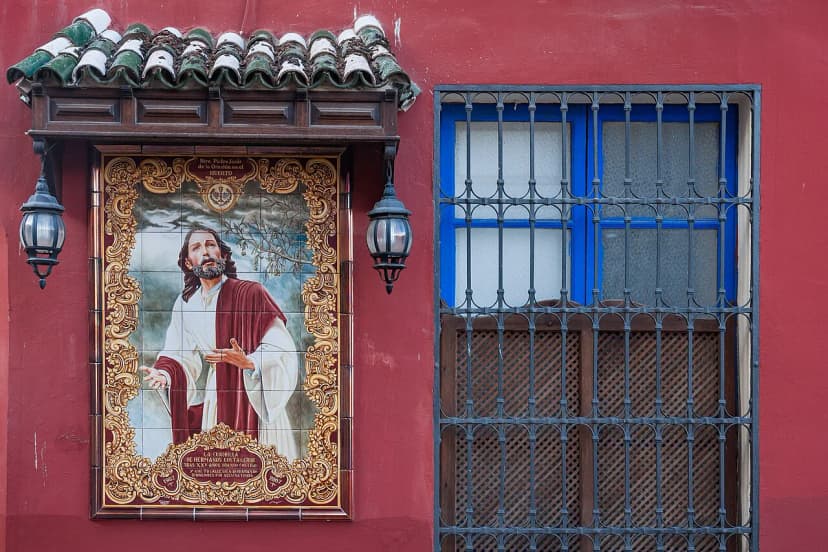
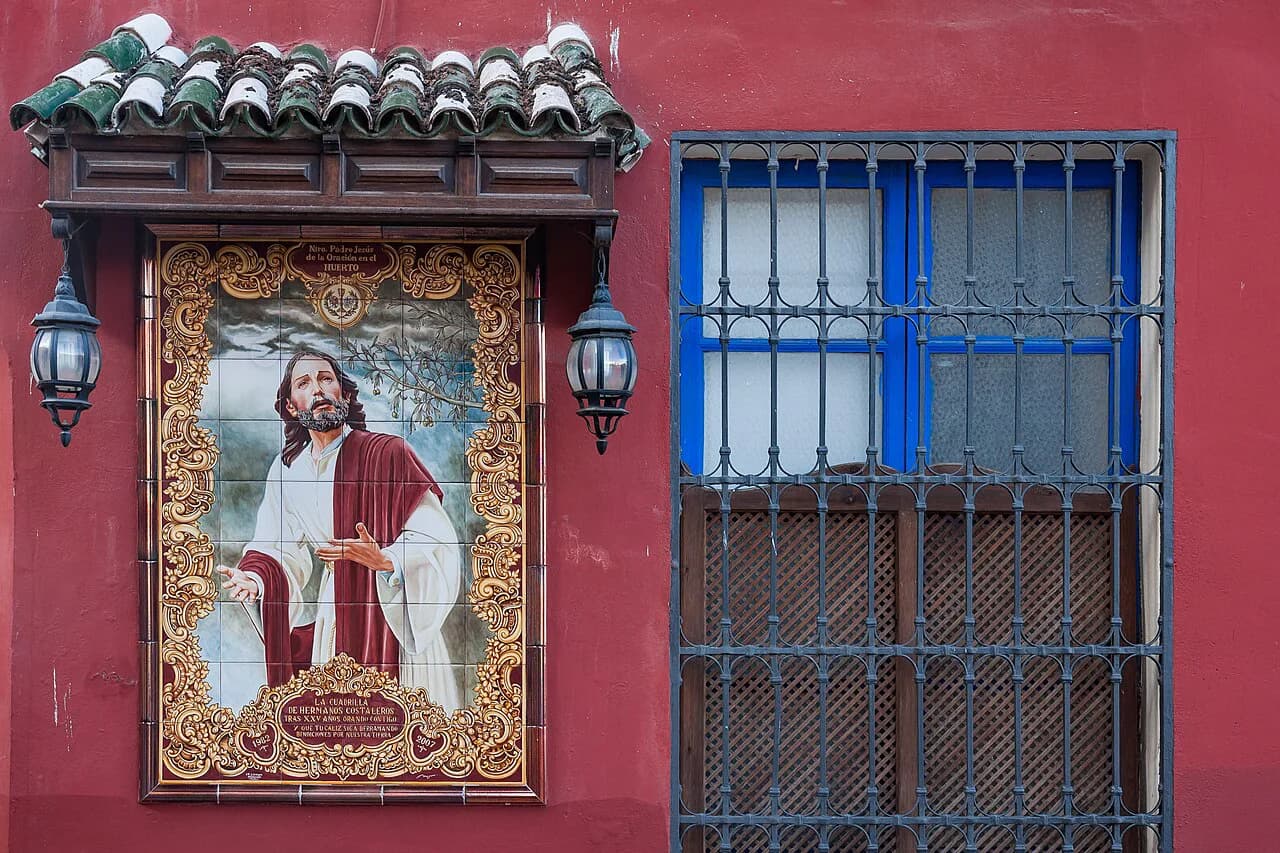
Free, tip-based walking tours cover Córdoba's old town in about two hours and typically depart once daily, often in the early afternoon. Routes weave through the Mezquita surroundings, the Judería, and the Roman Bridge. Guides work for tips rather than a fixed fee, so confirm the current meeting point when booking. Zoco Municipal de Artesanía, a workshop-and-gallery space for local ceramics and leather, costs nothing to browse even without buying. Hand-painted tile plaques, called azulejos, cover walls across the old town. Some mark former pharmacies; others display salmorejo recipes in ceramic. Spotting them turns an ordinary walk into a scavenger hunt. None of these three stops need a ticket or a set schedule, which makes them easy to slot between the timed free-entry windows elsewhere in this guide.
- Free walking tours — tip-based, roughly two hours
- Zoco Municipal de Artesanía — browse without buying
- Azulejo tiles — spot pharmacy and recipe plaques around the old town
Walking vs. Driving in Córdoba's Old Town
Córdoba's historic center was built for horses and carts, not modern cars, and its streets reflect that. Once you find a parking spot, typically in a signed or underground lot near the edge of the old town, leave the car there for the rest of the visit. Every free site in this guide clusters within the same walkable core. That core holds the Mezquita, the Judería, the Roman Bridge, and the main free museums, all within a few blocks of each other. Walking between them costs nothing and avoids the one-way lanes and dead ends that catch drivers unfamiliar with the layout. A rental car adds cost, through fuel and parking fees, without saving meaningful time inside that walkable core. Public transport exists for trips beyond the old town, but the free-admission sites covered here rarely require it.
Budget Eating: The Salmorejo Test and Mercado Victoria
Salmorejo, Córdoba's cold tomato soup topped with jamón and boiled egg, works as a reliable gauge of a menu's honesty. A fair local bowl costs well below the marked-up tourist-menu price near the Mezquita entrance. Mercado Victoria, a market hall built inside a 19th-century pavilion, groups several food stalls under one roof. Budget travelers can piece together a full meal there for less than a sit-down restaurant tab. Travelers with an extra day can pair this walking route with the day trips from Córdoba guide for more low-cost options beyond the center.
Córdoba Free and Nearly-Free Prices at a Glance
A full day built entirely around this guide's free stops costs €0 in admission. Free stops that reach that total include the 8:30 AM Mezquita window, free-for-EU museum galleries, the Judería walk, and the Roman Bridge. Add the Bell Tower climb or a multi-patio ticket, and the day still totals under €10 in admission fees. Use the table below to compare the regular admission price against the free or reduced option for each site in this guide.
| Site or Experience | Regular Price | Free or Reduced Option |
|---|---|---|
| Mezquita-Cathedral | €13 | Free Mon–Sat, 8:30–9:30 AM |
| Bell Tower (Torre del Alminar) | €3 | No free option |
| Archaeological & Ethnological Museum | €1.50 (non-EU) | Free for EU citizens |
| Caliphal Baths (Baños del Alcázar Califal) | Standard admission | Free for visitors 65+ |
| Alcázar de los Reyes Cristianos gardens | Free | Palace interior priced separately |
| Multi-patio ticket (4 patios) | €5.50 | Nearly-free alternative outside May |
| Roman Bridge, Judería, Almodóvar Gate, Roman Temple, Albolafia Water Wheel | Free | Free year-round |
Frequently Asked Questions
Is the Mezquita-Cathedral really free every day?
No, the free window runs Monday through Saturday, 8:30 to 9:30 AM. Standard admission is €13 outside that hour. Sundays and religious holidays can follow a different schedule, so confirm the current calendar before visiting.
Do you need to book the free Mezquita slot in advance?
Recent visitor accounts suggest no reservation is required; arriving a few minutes before 8:30 AM is enough to join the queue. Group tours and loud talking are not permitted during the free hour, so it suits solo travelers and photographers best.
Is the Bell Tower free to climb?
No, climbing the Torre del Alminar costs €3 for 147 steps. It remains one of the few paid stops worth the small cost, given the rooftop view over the Mezquita and the Guadalquivir River.
Are the Alcázar gardens free to visit?
Yes, the gardens at the Alcázar de los Reyes Cristianos stay free year-round. A separate ticket covers only the palace interior, so check current ticketing for any resident or senior exemptions.
Do EU citizens get free museum entry across Córdoba?
Several state-run sites, including the Archaeological and Ethnological Museum, waive admission for EU citizens while charging non-EU visitors €1.50. Bring ID that confirms EU residency to the ticket desk.
Is May the only time to see Córdoba's patios for free?
May is the only month when the full network of 50-plus private patios opens without charge, during the Patios Festival. Outside that window, Patio 40 on Calle San Basilio stays open, and a multi-patio ticket covering four courtyards costs €5.50.
Is it easy to park in Córdoba's old town?
Not really; streets were built for horses, not modern cars, and lanes narrow quickly near the center. Park once in a signed or underground lot at the edge of the old town, then walk. Every free site in this guide sits within the same walkable core.
What's the cheapest way to eat well in Córdoba?
Order salmorejo away from the streets directly around the Mezquita, where tourist-menu markups are steepest. Mercado Victoria is another low-cost option, with stalls that let you piece together a meal for less than a sit-down restaurant tab.
Does the free Mezquita hour run on public holidays?
Not reliably. Special events and religious holidays can close the building to the free window or shift hours entirely, so confirm the schedule for your travel dates before planning around it.