Last updated September 2026. Milan has a reputation for expensive design and pricey aperitivos, but many of its free hidden gems in Milan cost nothing more than the walk to reach them. This guide covers frescoed churches, a flamingo-filled private garden, and quiet courtyards, all free to visit, with exact addresses, metro stops, and opening-hour trade-offs for each stop.
Your Quick Guide to Milan's Free Hidden Gems
Use this table to match each stop to the time you have today. Every entry costs €0 to enter; the few paid add-ons in Milan, like the Duomo rooftop, are flagged separately later in this guide. Group nearby stops, like the Quadrilatero del Silenzio cluster or the near-Duomo walk, to cover several free sights in one outing without backtracking. For the complete citywide roundup beyond this budget-focused list, see the Milan free sights overview.
| Free Stop | Neighborhood | Time Needed | Vibe | Entry Cost |
|---|---|---|---|---|
| San Bernardino alle Ossa | Piazza Santo Stefano | 15-20 min | Spooky | €0 |
| Milan's Walk of Fame | Corso Europa | 10 min | Nostalgic | €0 |
| Piazza Mercanti | Near Duomo (M1/M3) | 15 min | Medieval, quiet | €0 |
| Casa Museo Boschi di Stefano | Corso Buenos Aires area | 45-60 min | Artistic | €0 |
| Villa Invernizzi flamingos | Via Cappuccini | 10 min | Curious | €0 (sidewalk view) |
| San Maurizio al Monastero Maggiore | Corso Magenta | 30 min | Artistic, quiet | €0 |
| Cimitero Monumentale | Piazzale Cimitero Monumentale | 1-2 hours | Reflective | €0 |
| Pirelli Hangar Bicocca | Bicocca | 1-2 hours | Contemporary art | €0 |
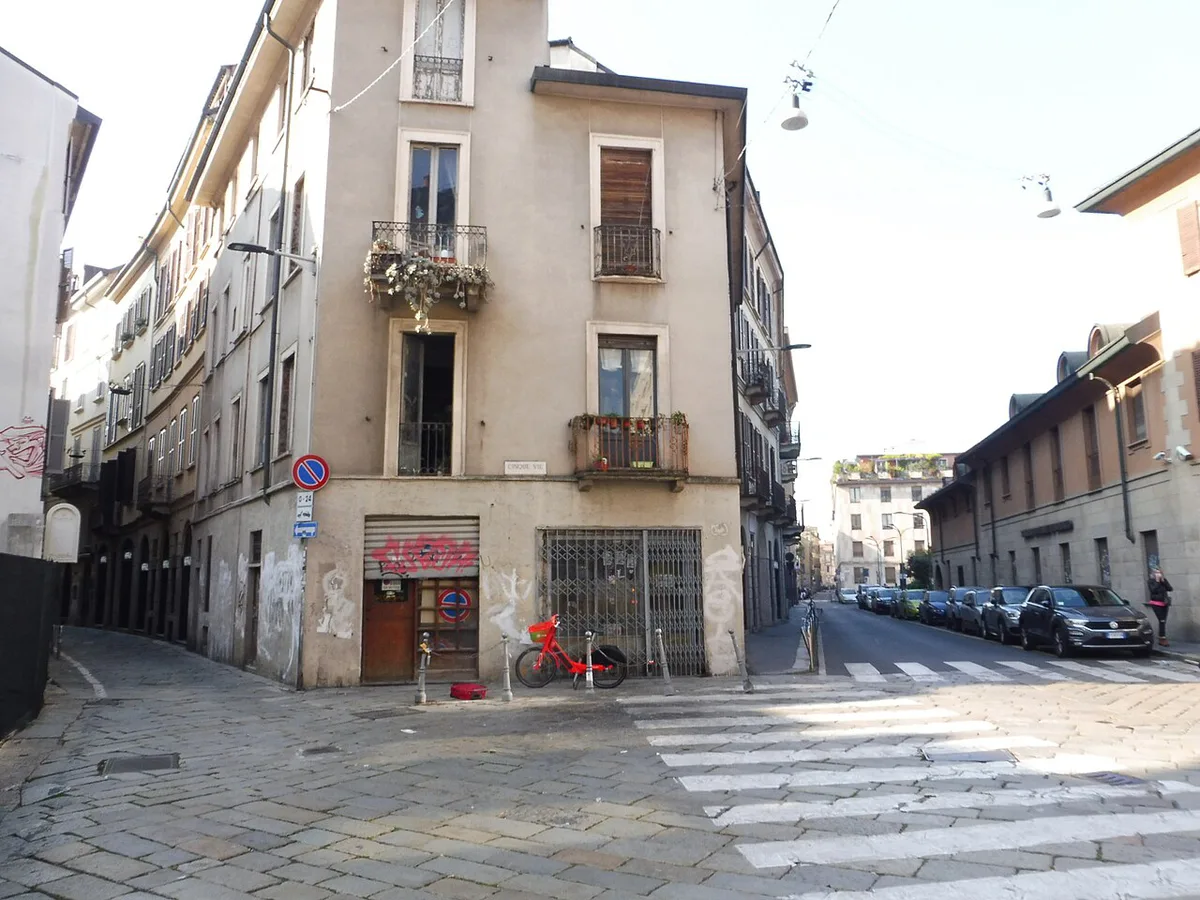
Free Hidden Gems Near the Duomo You'll Walk Right Past
Most visitors photograph the Duomo, then head straight into the Galleria, and miss several free details within a five-minute walk. Look at the left side of the cathedral's central gate for a statue called New Law, carved in 1810 by Camillo Pacetti; it closely resembles the Statue of Liberty. Check current facade access on the Duomo di Milano official site before your visit.
Corso Europa holds Milan's Walk of Fame, a run of celebrity name plaques from the 1990s and 2000s. From there, the walk continues to Piazza Mercanti, the medieval square most visitors skip for the Galleria's mosaics.
About 500 meters from the Duomo and Teatro alla Scala, eight Renaissance giants guard the facade of Palazzo Leoni-Calchi on Via degli Omenoni 3. Sculptor Leone Leoni built the house in 1542 and decorated it with these carved figures, nicknamed the Omenoni. Viewing the facade from the street costs nothing, and the walk between all four near-Duomo stops takes well under an hour.
- New Law statue — Duomo's facade, left of the central gate, sculpted 1810, free to view.
- Milan's Walk of Fame — Corso Europa, plaques from the 1990s-2000s, free.
- Piazza Mercanti — near M1/M3 Duomo, Palazzo della Ragione and Loggia degli Osii, free.
- House of the Omenoni — Via degli Omenoni 3, eight carved giants on the facade, free to view.
Free House Museums and Private Gardens
Corso Buenos Aires hides one of Milan's richest free art collections. Casa Museo Boschi di Stefano, a former private residence donated to the city in 1974, displays more than 300 works at Via Giorgio Jan 15. That total is a fraction of the original collection, which ran past 2,000 pieces before the donation. Confirm opening days before visiting, since house museums here often close early in the week.
Palazzo Morando pairs an 18th-century palace with a rotating fashion and costume collection. Entry to its permanent galleries costs €0; ask staff whether a current temporary exhibit adds a separate charge. That free-entry policy has held across recent seasons per current guides, but check the palace's own listings before you go, since municipal museums occasionally adjust hours or add ticketed exhibits.
Villa Invernizzi hides a colony of pink flamingos behind its hedges at Via Cappuccini 7. Since the villa stays private, plan on viewing the birds through the street-side fence rather than entering the grounds.
Corso Venezia 11 hides another free courtyard: enter through the Baroque door to reach what's now called Piazza del Quadrilatero, the former Archbishop's Seminary courtyard connecting Corso Venezia to Via Sant'Andrea. It costs nothing to walk through, even though the surrounding shops sit inside Milan's luxury shopping quarter.
Villa Necchi Campiglio sits near the M1 Palestro stop in the Quadrilatero del Silenzio. Its house-museum interior, built in the 1930s, needs a paid, timed ticket. The garden, though, can be appreciated without entering the house. Locals often describe that garden as home to the city's first private swimming pool.
- Casa Museo Boschi di Stefano — Via Giorgio Jan 15, 300+ works, free entry.
- Palazzo Morando — free permanent galleries; verify any temporary-exhibit surcharge.
- Villa Invernizzi — Via Cappuccini 7, flamingos visible from the sidewalk only, free.
- Piazza del Quadrilatero — enter via Corso Venezia 11, connects to Via Sant'Andrea, free to walk through.
- Villa Necchi Campiglio — near M1 Palestro, garden free, house tour paid and timed.
Architectural Oddities Hidden in Quiet Streets
Via Serbelloni 10 hides Ca' de l'Oreggia, a bronze ear-shaped intercom sculpted by Adolfo Wildt in the 1930s beside the door of Palazzo Sola Busca. It sits a few steps from Villa Necchi Campiglio, so pair the two on one short walk. In the Maggiolina district, Via Lepanto holds the last two surviving igloo-shaped houses, built by engineer Mario Cavallè as temporary postwar housing near the M5 Marche or Istria stop. For more street-level finds nearby, including current murals, see the Porta Venezia and Isola guide.
Via Lincoln, a narrow private street just over a kilometer from the Quadrilatero del Silenzio, is lined with low terraced houses painted in bright colors. Locals live behind those facades, so keep visits to a quiet walk-through rather than a photo session on private steps. Continue to Corso XXII Marzo, near the Suffragio market, for a mural honoring St. Ambrose the beekeeper, one of the newer street artworks in this part of the city. Seeing it costs nothing beyond the walk from Via Lincoln.
On Via Carlo Poerio 35, red brick and three-pointed gables mark a house nicknamed the Dutchman. It's one of sixteen identical 770 houses built worldwide and, per local guides, the only one still standing in Europe.
- Ca' de l'Oreggia — Via Serbelloni 10, bronze ear intercom by Adolfo Wildt, free to view.
- Igloo Homes of Maggiolina — Via Lepanto, near M5 Marche/Istria, two original units remain, free.
- Via Lincoln — narrow private street, brightly painted facades, free to walk (respect residents).
- St. Ambrose mural — Corso XXII Marzo, near the Suffragio market, free to view.
- 770 House ('the Dutchman') — Via Carlo Poerio 35, free to view from the street.
Milan's Free Sacred Spaces and Silent Courtyards
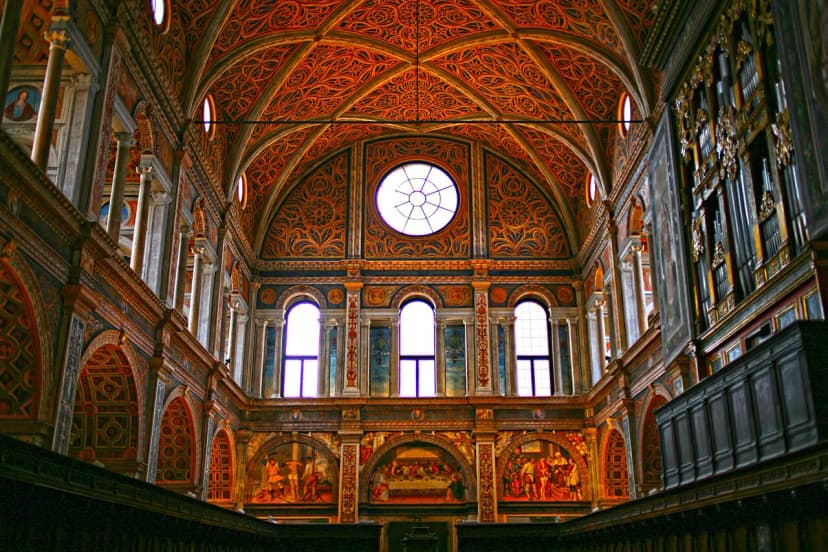
San Maurizio al Monastero Maggiore, on Corso Magenta, covers nearly every wall in fresco and costs €0 to enter. Some call it the Sistine Chapel of Milan for the density of its painted surfaces. For a fuller guide to courtyards and chapels like this one, see the hidden churches and courtyards guide.
San Bernardino alle Ossa asks more courage. Enter through the gate on what was once called the Stretta dei morti, now Vicolo di San Bernardino, off Piazza Santo Stefano. Inside, an ossuary chapel is walled floor to ceiling in skulls and femurs collected since the 1200s, when the nearby cemetery ran out of space. Visit if dark history interests you, but skip it with small children who spook easily in dim, bone-lined rooms.
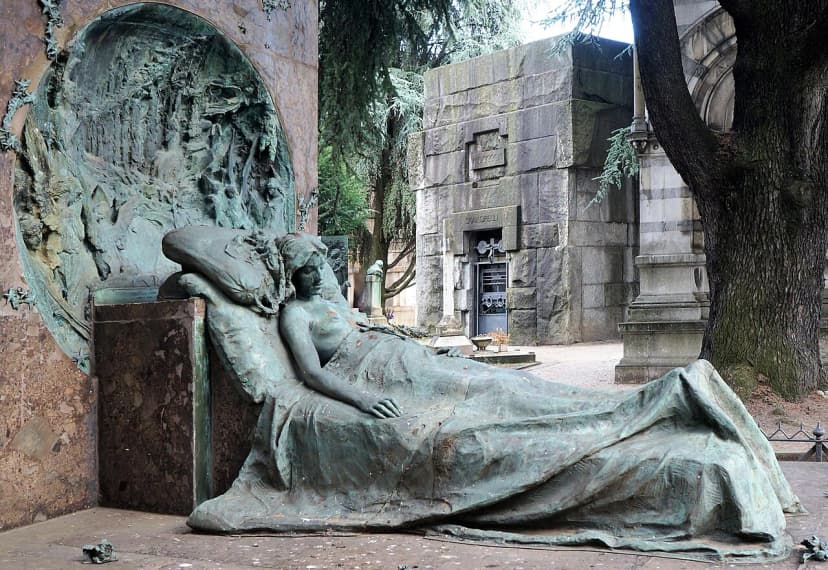
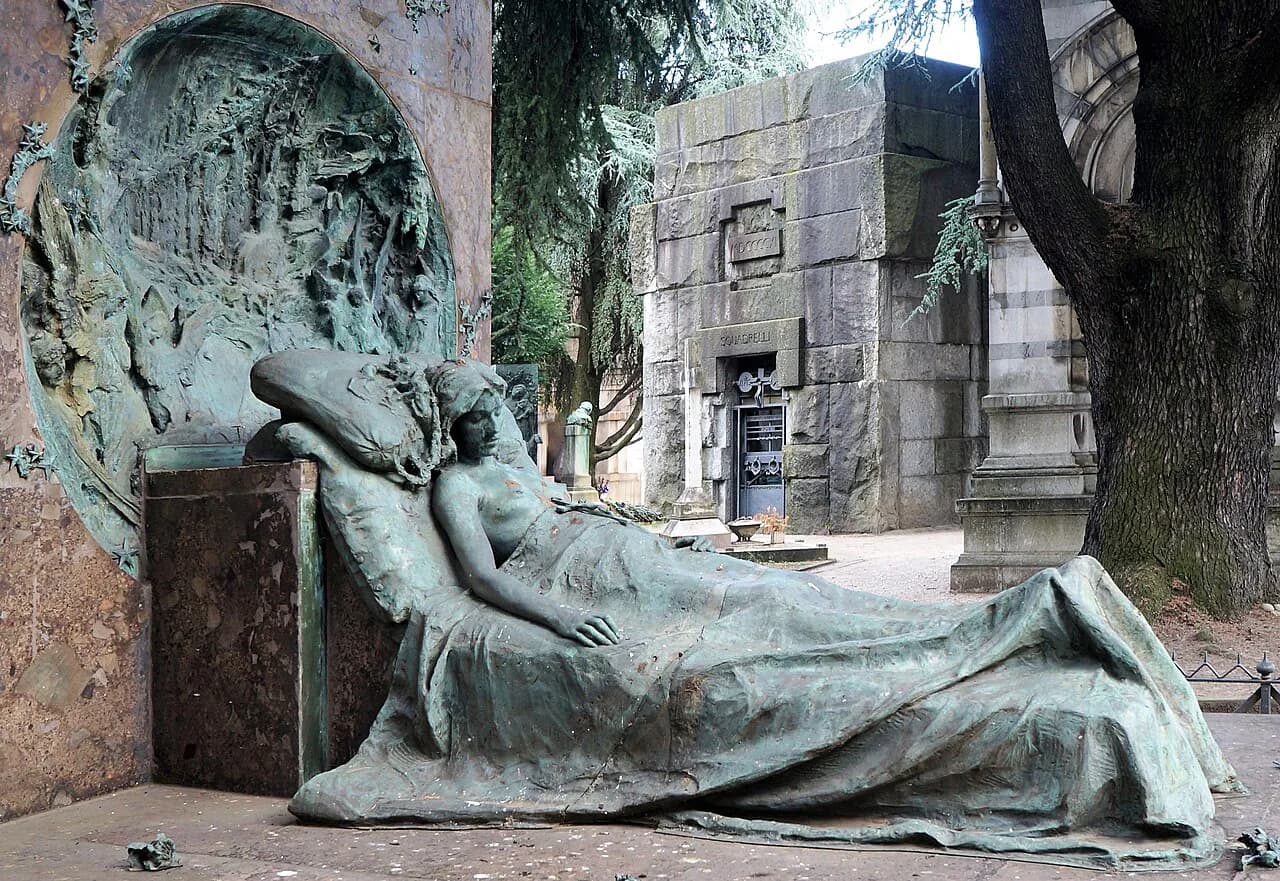
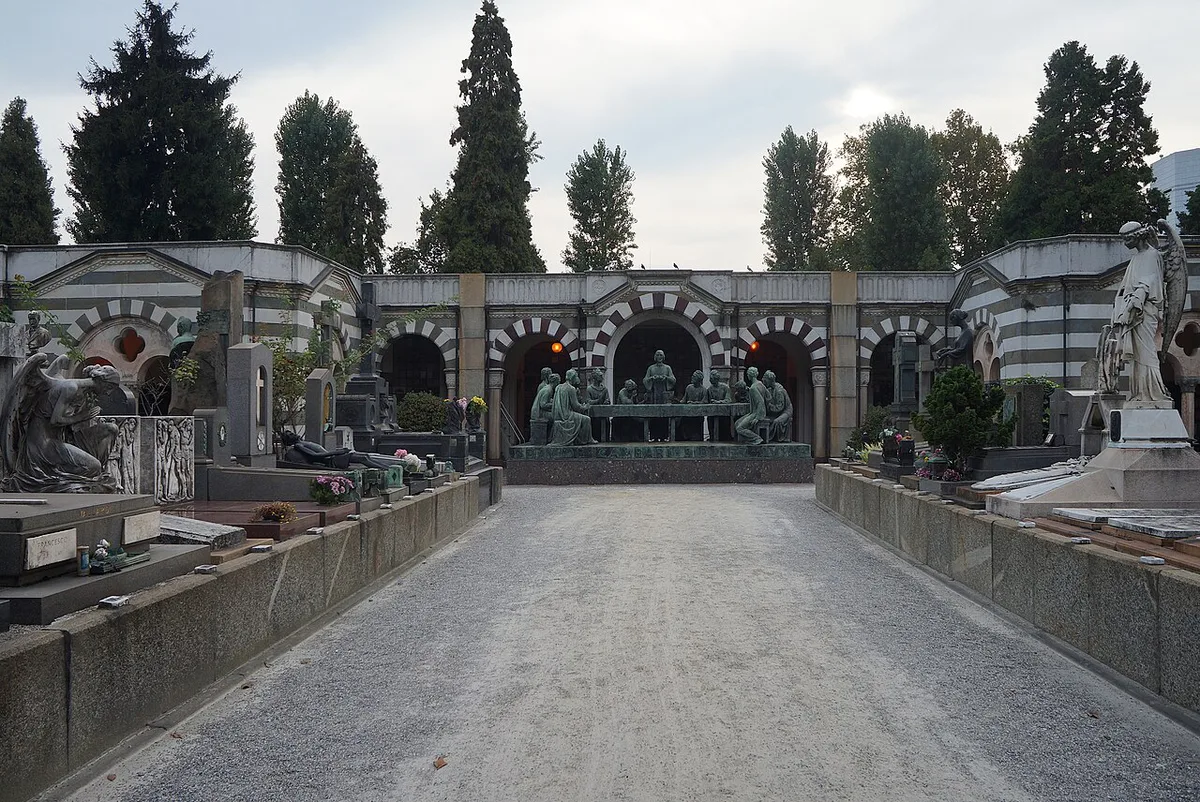
Cimitero Monumentale functions as an open-air sculpture museum, free to wander, with elaborate tombs and small temples across its grounds. Composer Arturo Toscanini, writer Alessandro Manzoni, and actress Franca Rame are among the notable figures buried here. Budget an hour or two if you want to see the more sculptural sections rather than rush through.
Giuseppe Verdi is buried with his wife inside the Casa di Riposo per Musicisti, the retirement home he founded for musicians, at Piazza Michelangelo Buonarroti 29. Ring at the door and ask for la cripta; staff will buzz you into the garden first, then through to the tomb itself, and there's no charge to visit.
Two more free legends sit within walking distance for travelers who enjoy dark history. Palazzo Acerbi, at Corso Porta Romana 3 near the M3 Missori stop, carries a 1630s legend about a resident said to be the devil incarnate, plus a cannonball embedded in its facade from the 1848 Cinque Giornate uprising. Outside the Romanesque Basilica di Sant'Ambrogio, near the M2 Sant'Ambrogio stop, a broken stone column is said to bear two holes left by the devil's horns. Both are free to view from the street.
- San Maurizio al Monastero Maggiore — Corso Magenta, fully frescoed interior, free.
- San Bernardino alle Ossa — enter via Vicolo di San Bernardino off Piazza Santo Stefano, ossuary chapel, free.
- Cimitero Monumentale — open-air sculpture museum, free, allow 1-2 hours.
- Giuseppe Verdi's tomb — Piazza Michelangelo Buonarroti 29, ask for la cripta, free.
- Palazzo Acerbi — Corso Porta Romana 3, 1848 cannonball in the facade, free to view.
- Devil's Column, Basilica di Sant'Ambrogio — near M2 Sant'Ambrogio, free to view.
Modern Milan: Free Contemporary Art and Skyline Views
Pirelli Hangar Bicocca, a converted industrial space in the Bicocca district, hosts large-scale contemporary art installations at no charge. Exhibitions there change regularly, so two visits months apart can show entirely different installations, and admission stays free either time. It sits farther from the center than the rest of this list, so plan a dedicated afternoon rather than folding it into a Duomo-area walk. Piazza Gae Aulenti, by contrast, sits close to the center and costs nothing to visit. Ride the escalator up for a free view of the UniCredit Tower, Italy's tallest building, and the plant-covered Bosco Verticale towers next door.
Both Cimitero Monumentale and Pirelli Hangar Bicocca need 1-2 hours to explore fully; pair centuries of sculpture with contemporary installations at no cost.
How to Plan a Free Hidden-Gems Day in Milan
Many of Milan's free churches and courtyards close for a midday riposo, typically shutting in early afternoon before reopening later. Check same-day hours before you plan a church-heavy route. Group the Quadrilatero del Silenzio stops together. Villa Necchi Campiglio, Ca' de l'Oreggia, and Villa Invernizzi all sit within a few minutes of the M1 Palestro stop, making a single loop practical.
Casa Rossi's octagonal courtyard on Corso Magenta is not always open to the public, so treat entry as a bonus rather than a guarantee, and never push past a closed gate. When it is open, the five-story facade frames a perfect octagon of sky above the inner courtyard. If the itinerary stretches toward the canals, the Navigli district guide covers the Darsena and its free evening waterside walk.
Some Milan sights are worth the entrance fee even on a tight budget. The Duomo rooftop terraces charge admission beyond the free ground-floor visit; check current pricing and time slots on the Duomo di Milano official site before you queue. History-minded travelers might also pay for a look at the Codex Atlanticus, Leonardo da Vinci's manuscript collection held at the Veneranda Biblioteca Ambrosiana, a short walk from the Duomo. Branca Museum & Distillery offers free tours, but only with an advance reservation, and most tour slots run in Italian rather than English. Visiting in April adds a bonus: Milan Design Week fills the city with free exhibitions and pop-up installations that month, on top of every stop in this guide.
If a multi-city Italian rail trip is on the itinerary, Bologna's under-the-radar sights follow the same free-first approach as this guide. So does the quieter side of Florence.
- Churches and courtyards often close for a midday riposo; check same-day hours.
- Casa Rossi's courtyard is not always open to the public.
- Branca Museum & Distillery requires an advance reservation, even for the free tour.
- Duomo rooftop terraces are paid; the ground-floor visit and facade viewing stay free.
Frequently Asked Questions
Is Milan expensive for budget travelers?
Milan carries a reputation for high prices, but many of its best sights cost nothing to see. The Duomo's Gothic facade, Castello Sforzesco's courtyards, and every stop in this guide are free to enter in 2026. A full day of sightseeing is possible without buying a single ticket.
What is the best free museum in Milan?
Casa Museo Boschi di Stefano stands out for scale: it shows more than 300 works inside a donated private residence at no charge. Palazzo Morando is a close second, with free fashion and costume galleries inside an 18th-century palace. Confirm opening days for both before visiting, since house museums often close early in the week.
How much time should you budget for a free-sights day in Milan?
Plan two to three hours for the Quadrilatero del Silenzio cluster, covering Villa Necchi Campiglio's garden, Ca' de l'Oreggia, and Villa Invernizzi's flamingos. Add another hour or two at Cimitero Monumentale if sculpture interests you. The near-Duomo cluster fits into well under an hour combined.
Are these spots accessible by metro?
Most of these stops sit within walking distance of a metro exit. Villa Necchi Campiglio and Ca' de l'Oreggia are near M1 Palestro, and the Igloo Homes are near M5 Marche or Istria. The near-Duomo cluster is served by M1 or M3 Duomo. Confirm the closest exit using Milan's transit map before you set out.
Do you need to book anything ahead of time?
Branca Museum & Distillery offers free tours, but only with an advance reservation, and most tour slots run in Italian rather than English. Villa Necchi Campiglio's house-museum interior also needs a paid, timed ticket if you want to go beyond the free garden. Everything else on this list, including the churches, courtyards, and street-level oddities, needs no booking at all.