Last updated September 2026, this guide to hidden churches in Milan focuses on sacred interiors most visitors walk past without noticing. Behind plain stone facades on Corso Magenta and Via Torino sit Renaissance frescoes, an illusion apse, and a bone-lined chapel. Each site below includes opening hours, entry costs, and the nearest Metro stop, so you can build a short route between them.
Why Milan's Best Churches Hide Behind Plain Facades
Milan's church facades rarely announce what waits inside. Many read as flat stone or brick, built to blend into office blocks and shopping streets rather than draw attention. Step through an unmarked door, though, and a private cortile or courtyard often opens onto centuries of fresco work.
Most visitors spend their limited hours in the queue at the Duomo di Milano official site, then move toward the Galleria. That leaves the churches covered here close to empty most mornings.
Milan also follows the Ambrosian rite, a liturgical tradition tied to Saint Ambrose. That shifts some Mass times and feast dates from the rest of Italy's calendar. Institutions such as the Veneranda Biblioteca Ambrosiana hold manuscripts connected to that tradition, a useful stop if the liturgical history interests you. For a broader survey of the city's overlooked corners, the Milan courtyards and cloisters guide covers non-religious sites in the same spirit.
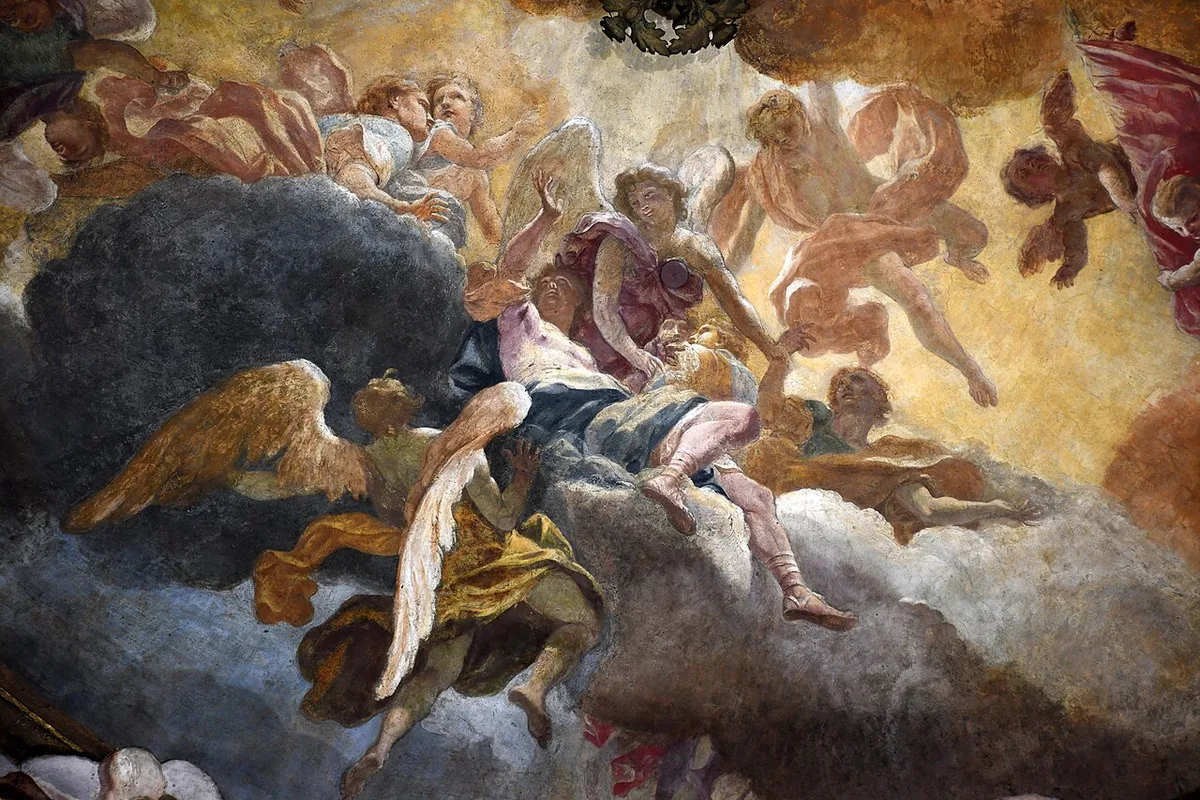
The Hidden Churches in Milan Worth a Detour
Five churches anchor this guide, each reachable by Metro without a long walk. The table below lists entry fees, the main reason to visit, and the nearest station, so you can slot two or three into an afternoon.
| Church | Entry Fee | Primary Draw | Suggested Visit | Nearest Metro |
|---|---|---|---|---|
| San Maurizio al Monastero Maggiore | Free | 16th-century Lombard frescoes | Linger for the frescoes | Cairoli |
| San Bernardino alle Ossa | Free | Bone-lined ossuary chapel | Quick, quiet detour | Duomo |
| Santa Maria presso San Satiro | Free | Bramante's illusion apse | Quick, close look at the apse | Duomo |
| Sant'Eustorgio (Portinari Chapel) | €6 for the chapel | Devil-horned Madonna fresco | Linger in the chapel | P.ta Genova |
| Santa Maria Incoronata | Free | Two churches joined in 1484 | Quick stop | Moscova |
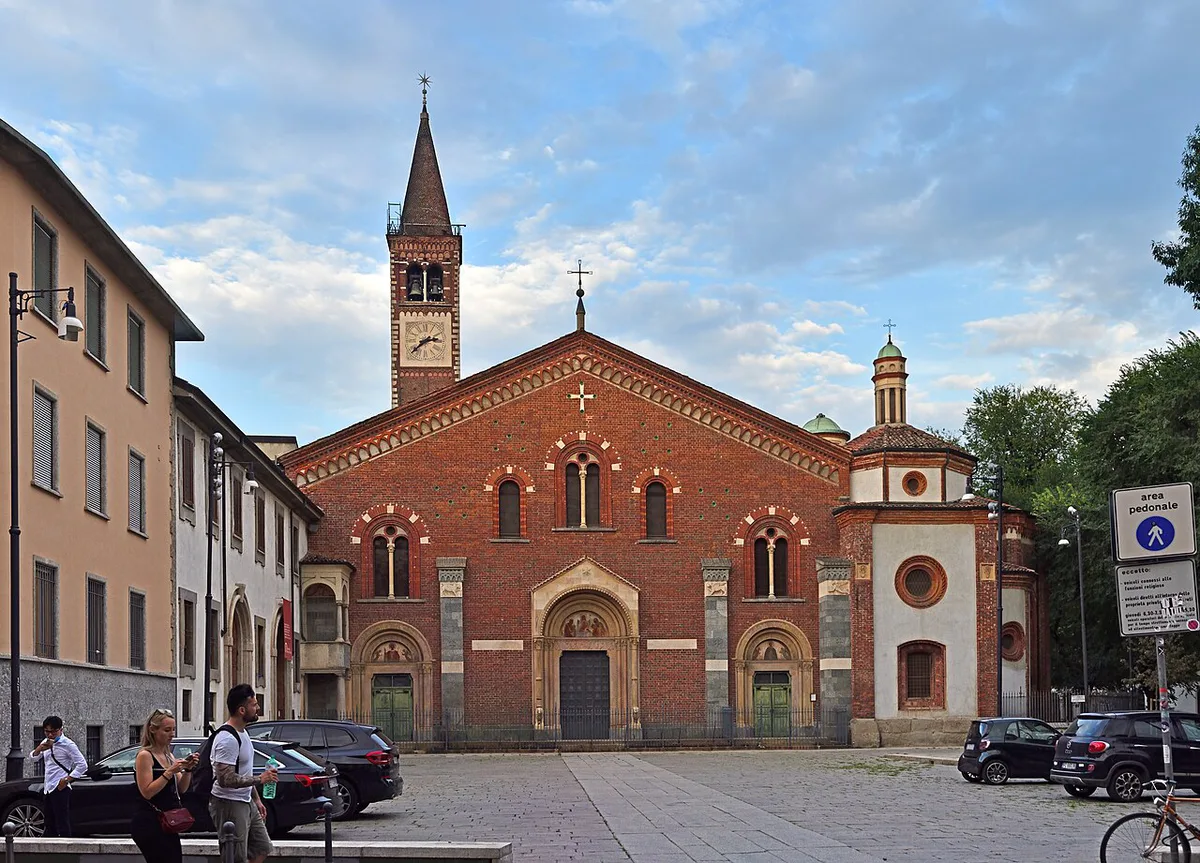
San Maurizio al Monastero Maggiore: Frescoes Behind a Convent Wall
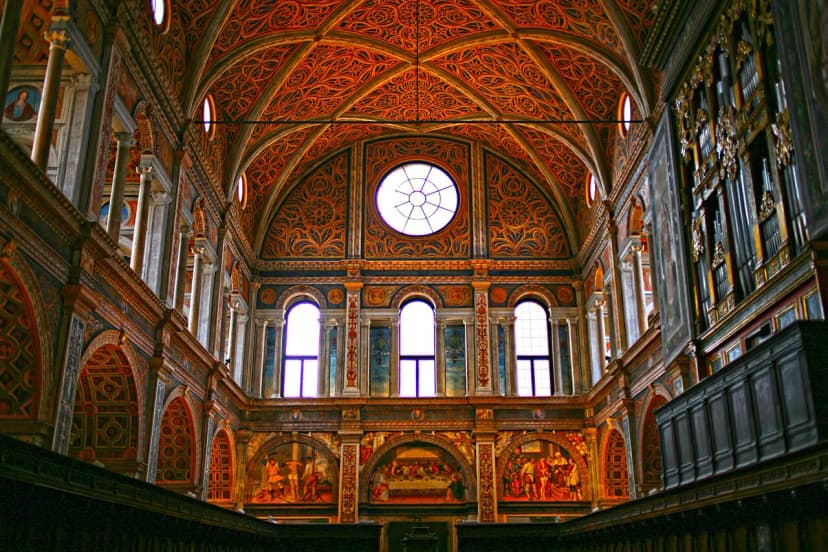
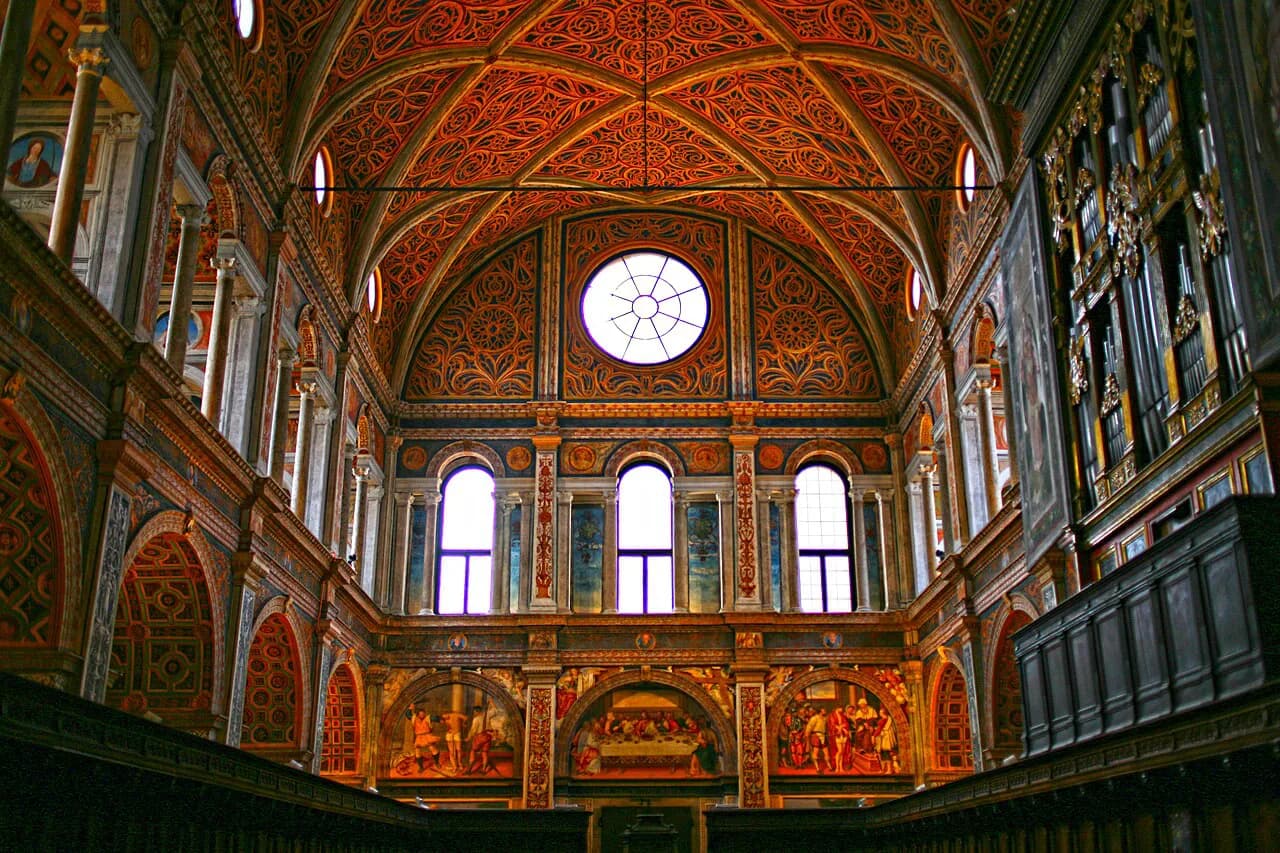
San Maurizio al Monastero Maggiore sits at Corso Magenta 15, a short walk from the Cairoli and Cadorna Metro stops. The plain exterior gives no hint of what is inside. A wall of 16th-century Lombard frescoes covers the nave, painted by Bernardino Luini, a student of Leonardo da Vinci. Look for the Noah's Ark scene, where two unicorns file in among the animals.
A stone partition wall splits the nave in two. It once separated the public congregation from the cloistered nuns of the convent that funded the paintings, daughters of Milan's wealthiest families. Entry is free, and the church opens Tuesday through Sunday, 9:30am to 7:30pm.
San Bernardino alle Ossa: The Bone Chapel Near Piazza Santo Stefano
San Bernardino alle Ossa sits beside the larger Basilica di Santo Stefano, near Piazza Fontana. It began as a hospital, founded in 1127 by the nobleman Gotifredo da Bussero. A cemetery permit followed in 1184, and the hospital added its own ossuary by 1210.
Locals nicknamed it casa degli ossi, the House of Bones. Behind a small side chapel, a corridor leads to a room where human skulls and bones cover the walls and ceiling behind wire mesh. Milan's Sinhalese Catholic community manages the church today, and entry is free with a donation box near the ossuary door. Nearest Metro access is the Duomo stop, on the red and yellow lines.
Santa Maria presso San Satiro: Bramante's Illusion on Via Torino
Santa Maria presso San Satiro stands at Via Torino 17, tucked into Milan's busiest shopping street. Duke Galeazzo Maria Sforza commissioned the church in the 15th century. City planners then refused to let architect Donato Bramante extend the apse over the street behind it.
Bramante solved the problem with paint and geometry. The real space behind the altar measures about 97 centimeters, roughly 3 feet. Carved and painted perspective tricks make it read as a corridor some 9 meters, or 30 feet, deep. Step to either side of the center aisle and the illusion collapses.
The church opens Monday through Saturday, 9:30am to 5:30pm, and Sunday, 2:00pm to 5:30pm. Entry is free, and the nearest station is Duomo. Both this illusion apse and the bone chapel across town sit within a few minutes of the cathedral. See the guide to churches near the Duomo for the full walking order.
Sant'Eustorgio and the Portinari Chapel's Devil-Horned Madonna
Sant'Eustorgio stands at Piazza Sant'Eustorgio 1, in the Porta Ticinese neighborhood near the Navigli canals. This basilica dates to the early Christian era, but the main draw is the Portinari Chapel, added later. It is dedicated to the Dominican friar Pietro da Verona, who worked against heresy in the 13th century.
Inside the chapel, a fresco on the right wall shows a version of the Virgin Mary with a pair of small horns. Local tradition calls it the Miracle of the False Madonna. Legend says the devil disguised himself as Mary but forgot to hide the horns.
Chapel entry costs €6, the most recently published rate. Hours run Tuesday through Sunday, 10:00am to 6:00pm. Nearest Metro access is P.ta Genova, on the green line. Pair the visit with the canal-side courtyards of Navigli a few minutes' walk away.
Santa Maria Incoronata: The Twin Church on Corso Garibaldi
Santa Maria Incoronata occupies Corso Garibaldi 116, near the Moscova Metro stop on the green line. Duke Francesco Sforza had the first building consecrated in 1451 to mark his coronation as Duke of Milan. His wife, Bianca Maria Visconti, then asked for a second, matching church next door as a symbol of their marriage. Builders joined the two structures into one complex in 1484. A humanist library with its own frescoes and arcades sits inside the joined complex. Entry is free.
Santa Maria alla Porta: War Damage Behind a Side Chapel
Santa Maria alla Porta sits on Via Santa Maria alla Porta, close to the Cairoli Metro stop. On the right side of the building, exposed brick and broken stonework mark the site of the former Madonna dei Miracoli Chapel. Bombs destroyed that chapel in 1943. Renovation work in 2013 uncovered a marble floor beneath the rubble, along with a fresco known locally as Mary with the Apron. Funding for a full restoration has not been secured, so the floor remains under protective covering. Entry to the main church is free.
Planning Your Route: Hours, Siesta Closures, and Dress Code
Many Milanese churches close for a midday break, often between roughly 12:30pm and 2:30pm. Check each site's listed hours before building a route, since a locked door at lunchtime is the most common planning mistake. Small parish schedules can shift with little notice, so confirm the day's hours if possible.
Many churches close for siesta between 12:30pm and 2:30pm. Santa Maria presso San Satiro stays open 9:30am to 5:30pm on weekdays—the only major option with hours through the midday break.
Dress rules follow the same standard as most Italian churches. Cover your shoulders and knees before entering, regardless of gender. Bring a scarf or light jacket even in summer, since a bare-shoulder top can get you turned away at the door.
Group your route by neighborhood rather than by name. San Maurizio, San Satiro, and Santa Maria alla Porta all sit within the Corso Magenta and Duomo cluster. Santa Maria Incoronata sits north toward Brera, while Sant'Eustorgio sits south toward the Navigli canals. Most of these sites are free, a detail covered in more depth in the guide to Milan's no-cost attractions.
Travelers continuing an Italy itinerary can extend the same approach elsewhere. Bologna rewards the same wandering. See the Bologna covered porticoes guide for a comparable route. Florence offers its own version too, covered in the Florence artisan workshops guide.
Mistakes to Avoid at Milan's Hidden Churches
A few habits separate a smooth visit from a frustrating one.
- Most churches close at midday and shut entirely on Mondays, including San Maurizio and Sant'Eustorgio.
- The plainest facades often hide the richest interiors, so do not judge San Maurizio or San Satiro from the street.
- Carry small coins for the light boxes that illuminate frescoes in dim side chapels.
- Do not skip the €6 Portinari Chapel fee at Sant'Eustorgio. The devil-horned Madonna fresco is the reason to visit.
Frequently Asked Questions
Are Milan's hidden churches free to visit?
Most are free. That includes San Maurizio al Monastero Maggiore and San Bernardino alle Ossa. It also includes Santa Maria presso San Satiro and Santa Maria Incoronata. Sant'Eustorgio's Portinari Chapel is the exception, with the most recently published rate at €6.
When do these churches close for the midday break?
Many close somewhere in the window between roughly 12:30pm and 2:30pm. San Satiro is a partial exception, staying open Monday through Saturday from 9:30am to 5:30pm. Check each church's posted hours before planning a tight schedule, since exact break times shift by site.
Is there a dress code for visiting?
Yes. Cover your shoulders and knees before entering any of these churches, regardless of gender. A light scarf or jacket works well even in the warmer months, since staff can turn away bare shoulders at the door.
How do you get between the churches without a car?
The Metro covers all five main sites well. San Maurizio sits near the Cairoli stop. San Satiro is close to Duomo station. Sant'Eustorgio sits near P.ta Genova. Santa Maria Incoronata is close to Moscova. Walking between the main clusters takes only a few minutes.
Which hidden church in Milan should you prioritize with limited time?
San Maurizio al Monastero Maggiore offers the deepest reward for the shortest walk from the Duomo. Its fresco cycle rivals anything in the city center, and entry costs nothing. If the macabre draws you more, San Bernardino alle Ossa sits just as close to the cathedral.