
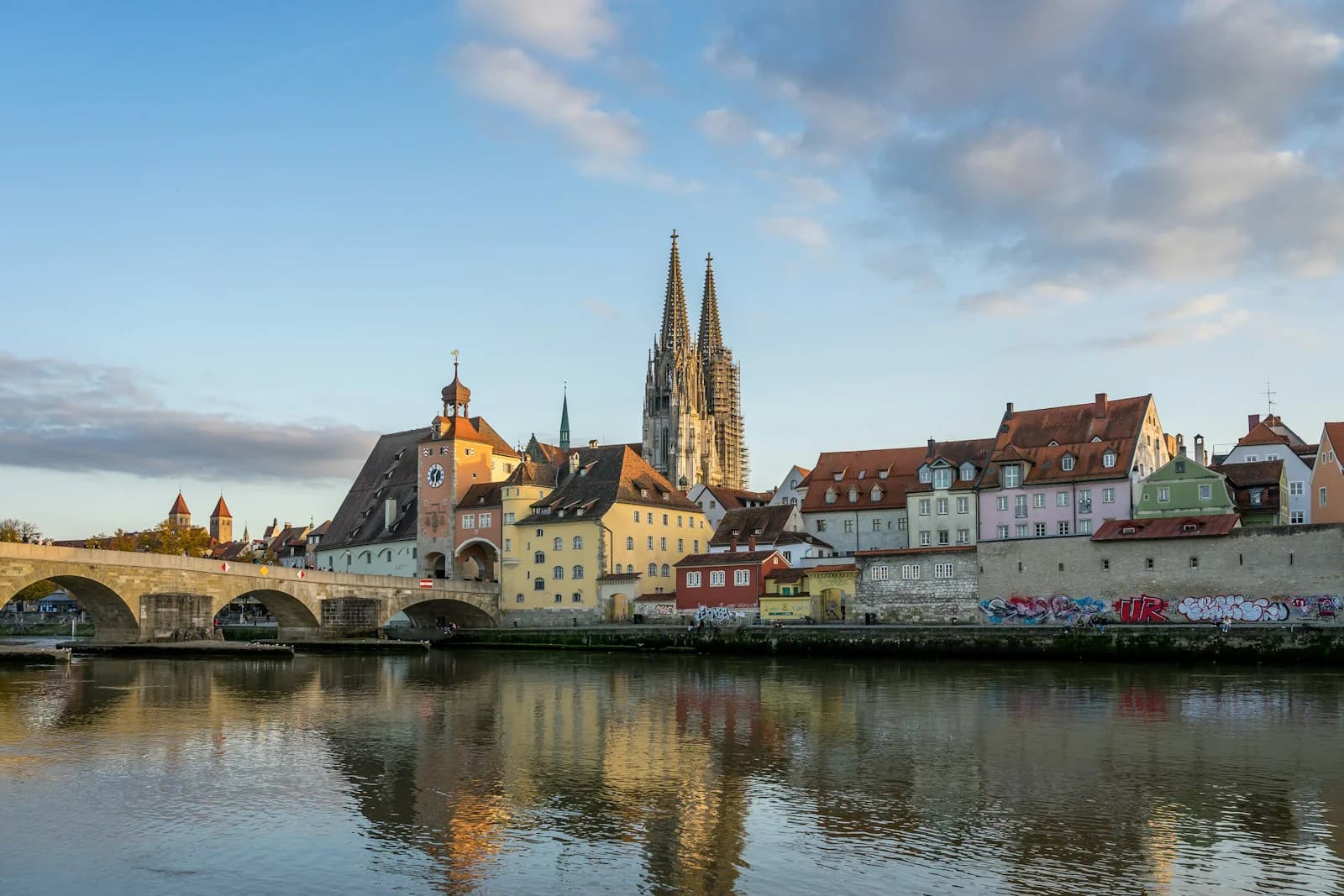
Regensburg rewards a three-day stay because its UNESCO listing covers two linked pieces: the medieval Old Town and the smaller district of Stadtamhof across the river. The city also sits at the Danube's northernmost point, which is why the river shapes so much of the walkable centre. Three days lets you cover the Roman and medieval core properly, give the museums real time, and still keep one day flexible for a site outside town.
A workable suggestion is one day for the Roman and medieval core, one day for the cathedral and the museums, and one day for either a slower in-city loop or a trip to the Walhalla or Kelheim area. Treat that split as planning advice rather than an official recommendation, because it is a judgment based on what the tourism office lists as the city's highlights. Booking platform Viator notes that one day covers most historic sights and that two days allow time to relax, which is a useful sanity check on how much you can compress.
What Three Days Actually Buys You
The first two days are non-negotiable if you want the headline sights: the Old Town lanes, the Stone Bridge, the cathedral and at least one treasury or museum. Day three is the flexible one, and how you use it depends on whether you prefer depth in the city or a single outing beyond it. Framing the trip that way prevents the common mistake of over-scheduling the middle day and arriving at the cathedral too tired to look up.
The tourism office publishes a 16-highlights list that includes the cathedral, the Old Town and Stadtamhof, the Stone Bridge, the Altes Rathaus, Schloss Thurn und Taxis, the House of Bavarian History, the Schottenportal St. Jakob, the Ostentor, the World Heritage Visitor Centre, Haidplatz and the Danube's northernmost point. Using that list as the backbone keeps your plan anchored to a primary source rather than to a random blog ranking. If you only have one day, a tighter version of the same route works, so it is worth deciding early whether you are building a 3-day or a shorter trip.
Day 1: The Roman and Medieval Core
Start on the north side of the centre, where the Porta Praetoria survives as the former north gate of the Roman legion camp. The camp was founded in 179 AD as Castra Regina, and the gate's stone blocks are among the few Roman remnants north of the Alps that still stand in place. Because the masonry is built into later buildings near the cathedral, it is easy to walk past it; look for the inscription rather than a freestanding ruin.
From there the natural line runs to the Stone Bridge, the twelfth-century crossing that links the Old Town to Stadtamhof and remains the most recognizable structure in the city. Cross it on foot, look back at the skyline, then return through the lanes toward the Altes Rathaus and Haidplatz, where the Perpetual Diet met and where the old town hall still anchors the square. Allow more time than you expect here, because the streets between these points are the attraction as much as the monuments. For wider planning, see Day Trips from Regensburg by Train, Bus and Boat.
A short, low-commitment stop that pays off on day one is the World Heritage Visitor Centre at Weisse-Lamm-Gasse 1, which the Limes Road association describes as free to enter and stocked with take-away plans you can use for the rest of the trip. Its permanent exhibition covers the medieval trading city and the Perpetual Diet that shaped urban life from 1663 to 1806. Pairing it with a stop at Tourist Information on Rathausplatz 4, open Monday to Saturday morning through early evening and Sunday from morning to mid-afternoon, gives you both orientation and paper maps.
Day 2: Cathedral and the Two Treasuries
Give the morning to St. Peter's Cathedral, the Gothic landmark dedicated to St. Peter and home of the Regensburger Domspatzen choir. It sits a minute or two from the Porta Praetoria, so the previous day's Roman stop and this day's cathedral visit overlap geographically; that is fine, because the interior rewards a slower second look. Check service times and any access restrictions at the door before you plan the rest of the day around it.
Then choose between two separate collections rather than assuming one ticket covers both. The Cathedral Treasury, in the former episcopal residence at Krauterermarkt 3, concentrates on medieval and modern goldsmith work, including a French-made enamel box with roughly eleven thousand gold stars and the small Parisian butterfly reliquary. Important caveat: the tourism office states the treasury is expected to be closed until May 2026, and the Museen in Bayern entry currently lists it as closed, so verify its status before building day two around it.
The Thurn und Taxis Princely Treasury is a different museum with a different ticket, housed in the Alte Marstall at Emmeramsplatz 6 and administered as a branch of the Bavarian National Museum. Its strength is furniture, porcelain, tobacco boxes, gold and silver valuables, and one of the last authentic rifle chambers, all reflecting a dynasty based in the city since 1748. The branch page gives Thursday to Sunday and public holiday hours of 11 a.m. to 4 p.m. for its published windows, notes closure periods between January and late March 2026, states that the ground floor is accessible, and allows photography without flash, tripods or selfie sticks.
If your legs still work, the House of Bavarian History on the Danube is the strongest afternoon add-on. Its foyer holds a multivisual panorama show that the tourism office says is free to visit, while the permanent exhibition upstairs with around a thousand exhibits and thirty staged presentations is the ticketed part. Published hours are Tuesday to Sunday 9 a.m. to 6 p.m. with Monday closed, and the operator cautions that deviations are possible, so confirm the day's times on the museum's own site. Museen in Bayern lists extensive inclusive features here, including step-free access to public areas, a wheelchair-accessible WC, tactile guidance and German sign language offerings.
Day 3 Option A: Out of Town, Walhalla or Kelheim
The Walhalla is listed roughly nine kilometres from Regensburg, near Donaustauf, and the Befreiungshalle sits above Kelheim at about twenty kilometres; both figures come from a historic-sites listing rather than from a transport operator, so treat them as approximate. The same source places nearby Weltenburg Abbey in the same regional cluster, which explains why Kelheim functions as a half-day or full-day anchor rather than a quick detour. Because distances vary between sources, plan around your own confirmed transport rather than around a single number.
Before committing, work out whether you will travel by car, by scheduled service or by an organised excursion, and check current connections directly with the operator. This itinerary deliberately does not give bus routes, train times or boat schedules, because those change and need to be confirmed on the day. If a fixed return is important to you, a guided day trip removes the uncertainty at the cost of flexibility; if not, an independent outing usually gives you more time at the site itself.
If you would rather stay in the city, the same day can absorb the quieter corners: Stadtamhof's small-scale streets, the Ostentor as one of Germany's finer Gothic city gates, and the Schottenportal St. Jakob, all named on the tourism office highlights list. A tower climb at the Dreieinigkeitskirche, also listed, adds a rooftop view without leaving the centre. Decide between the two options by weather and energy on the morning itself rather than locking it in weeks ahead.
Day 3 Option B: A Slow In-City Day and Guided Tours
A slower third day works well if you use the river as the spine: walk the Danube banks, cross to Stadtamhof, and use the bridges as viewpoints rather than as transit. Regensburg's riverside lanes and islands give you the panorama the city is known for without a ticket. If photography matters to you, plan the light rather than the distance, since the classic shots depend on where the sun is rather than on how far you walk.
If you want a guide, the tourism office publishes group walks led by certified guides with stated durations and group prices rather than per-person rates, which is why they suit parties of up to twenty or twenty-five people. Catalogue examples include an everyday-life walk behind the city's facades at about two hours for a maximum of twenty participants, and shorter one-and-a-half-hour walks on street names, on squares, and across seven bridges. Because the prices apply per group and are subject to availability, email or call the tourism office to confirm what is running on your dates.
Two throne-room style visits can also fill this day if the treasuries were closed on day two. Schloss St. Emmeram publishes daily visiting times for the palace and cloister at fixed intervals through the afternoon, plus separate opening hours for the treasury and Marstall on Thursday to Sunday, and those times are the ones to check on the house's own site. Because those are the family's published slots rather than a rolling schedule, align them before you buy anything else.
Free Versus Ticketed, and Splitting Days by Weather
Separate free ground from paid interiors when you plan: outdoor ground and courtyards cost nothing at the Stone Bridge, the Porta Praetoria or the riverbanks, and the House of Bavarian History's foyer panorama is free even though the exhibition above is not. The World Heritage Visitor Centre is free according to the Limes Road listing, which makes it a strong wet-weather fallback in itself. Each ticketed interior has its own admission, so budget for separate entries rather than assuming a combined pass.
Cold-weather descriptions for January, with averages around minus four to two degrees Celsius, come from an aggregator and are useful only as a packing hint, not as a forecast. Check a proper forecast shortly before you travel and move the indoor stops to whichever day looks wettest. Splitting the itinerary this way costs nothing and protects the two visits you most care about.
For onward travel in and around the city, rely on published local transport information rather than on this plan, and verify connections the day before if you have a fixed ticket to catch. Walking is the default for the Old Town because the sights sit close together, and mixing in public transport is a decision you make from current timetables.
What to Skip Without Breaking the Plan
If you are short on time, drop one treasury rather than both museums, and drop the day trip before you drop the Old Town walk. The route survives losing any single stop because the streets between the highlights carry much of the experience on their own. The same logic applies to a shorter stay: a 2 Days in Regensburg version of this plan simply removes the flexible third day.
This plan deliberately excludes restaurant, bar, hotel and river-cruise recommendations, and it does not publish opening times we cannot attribute to the operator. Use the tourism office's gastronomy and events pages for current food and programming, and the operator pages for anything that could be cancelled on short notice. That habit keeps you from arriving at a closed door.
Plan Your Visit
Build the trip around the tourism office's highlights, then confirm each ticketed interior against the operator that runs it. Verify the Cathedral Treasury's reopening status, the Thurn und Taxis hours and closure windows, and the House of Bavarian History's daily times before you commit. If you are extending a Germany trip, the same structure works for other cities, including a 3 days in Berlin itinerary or a 3 Days in Dresden itinerary.
Frequently Asked Questions
Is three days too long for Regensburg?
No, three days is comfortable rather than excessive. Viator's own note says one day covers most of Regensburg's historic sights and two days allow time to relax, so three days gives you room for both treasuries, the House of Bavarian History and a flexible third day. Whether you spend that third day in the city or on a nearby site such as the Walhalla or Kelheim is a personal choice rather than a scheduling necessity.
Which treasury should I choose if I only have time for one?
Choose the Cathedral Treasury if you want medieval goldsmith work, including the enamel box and the butterfly reliquary. Choose the Thurn und Taxis Princely Treasury if you prefer furniture, porcelain, tobacco boxes, gold and silver objects and an authentic rifle chamber. They are separate collections with separate admissions, so a ticket for one does not cover the other. Note that the tourism office states the Cathedral Treasury is expected to be closed until May 2026, so check its status before planning around it.
Is the House of Bavarian History free?
Partly. The tourism office says the multivisual panorama show in the foyer is free to visit, while the permanent exhibition upstairs with roughly a thousand exhibits is ticketed. Published hours are Tuesday to Sunday, 9 a.m. to 6 p.m., with Monday closed, and the operator cautions that deviations are possible. Check the museum's own site for the day you plan to visit, and note that Museen in Bayern lists extensive accessibility features including step-free access to public areas.
Can I visit the Walhalla or Kelheim without a car?
The sources used here list the Walhalla as roughly nine kilometres from Regensburg and the Befreiungshalle above Kelheim at about twenty kilometres, but they do not give bus routes or journey times, and distances vary between sources. How you reach either place by scheduled service or organised excursion needs to be confirmed directly with the transport or tour operator. If a fixed return matters, a guided day trip is the lower-risk option, while independent travel usually gives you longer at the site.
What can I do in Regensburg for free?
The World Heritage Visitor Centre is described as free to enter and provides take-away plans for exploring the World Heritage site, and the House of Bavarian History's foyer panorama is free as well. Walking the Old Town, crossing the Stone Bridge, viewing the Porta Praetoria from the street and following the Danube banks all cost nothing. Note that free grounds and foyers are separate from the paid interiors, so each ticketed collection needs its own admission.
How long are Regensburg's guided city tours?
The tourism office publishes group walks with stated durations, including one-and-a-half-hour walks on street names, on squares and across the city's bridges, and roughly two-hour walks on everyday life behind the facades and on historic criminal law. Groups are capped at twenty to twenty-five participants depending on the tour, and the published figures are group prices rather than per-person rates. Availability is limited, so email or call the tourism office to confirm what is running on your dates.
Sources
- Tourismus Regensburg: Regensburg Tourismus GmbH
- Things to do in Regensburg in January – Wanderlog
- What to do in Regensburg? The 15 Best Attractions ...
- Experience & Discover: Regensburg Tourismus GmbH
- Stone Bridge (Regensburg) Sights & Attractions - Project Expedition
- Everyday Life: Regensburg Tourismus GmbH
- Porta Praetoria, Regensburg, Germany - SpottingHistory
- Regensburg
- Cathedral treasure museum: Regensburg Tourismus GmbH
- Domschatz Regensburg (Regensburg Cathedral Treasury) - Museen in Bayern
- The Thurn und Taxis Princely Treasury - Bayerisches Nationalmuseum
- The House of Bavarian History: Regensburg Tourismus GmbH
- Haus der Bayerischen Geschichte | Museum (House of Bavarian History | Museum) - Museen in Bayern
- Home – Thurn und Taxis


