Rain in Nuremberg rarely means staying in your hotel room. The old town packs a wall of indoor options inside a compact ring of streets, so the practical question is not what to do but how to order it. Think in three levers: museums, churches and transit, each of which buys you a different amount of dry time.
A short museum block works well as a thirty-minute overview at the City Museum at Fembo House, where the exhibition A Crown - Power - History is designed to present the most important chapters of the city's history in just 30 minutes and in nine languages using a multimedia guide. That is a useful anchor on a wet afternoon because it sets context for everything you see afterward. Walking between stops is the part that gets you soaked, so chain several short indoor visits rather than committing to one long one.
Before you leave the hotel, check the operator page for the specific place you plan to visit. Museums in Nuremberg publish their own hours, ticket terms and closure notices separately, and church visitor admission is handled differently from free entry for prayer and worship. Treat any blog, including this one, as a planning prompt rather than the final word on times and prices.
Why Nuremberg works surprisingly well in the rain
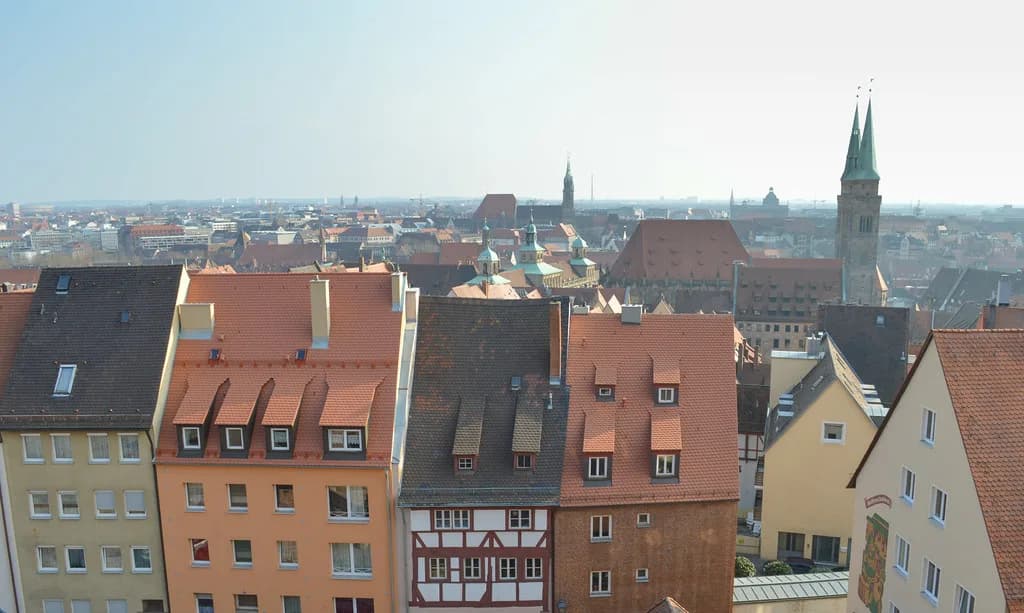
The old town is small enough that a rainy day becomes a sequence of short dashes rather than a ruined itinerary. St. Sebald's Church, the Hauptmarkt, the Toy Museum and the walk up toward the Imperial Castle all sit within a few minutes of each other. That density lets you duck inside, dry off, and reassess the sky before committing to the next move.
Nuremberg is also a city where the indoor stops carry real substance rather than being places to hide. The Hauptmarkt is a working market square on weekdays, not just a Christmas postcard, so a quick pass through the stalls is a legitimate rain break. From there, churches and museums are close enough that an umbrella and a willingness to move in fifteen-minute bursts will get you through most of a wet day.
First move: check the operator page before you leave the hotel
Municipal museums, churches and the zoo each publish their own visiting terms, and those pages are where current hours and prices live. The City Museum at Fembo House, for example, publishes separate information for opening hours, admission, disabled access and guided tours. Checking one page per intended stop takes a few minutes and prevents a wet walk to a closed door.
Note the distinction between free access for worship and paid visitor admission. At St. Sebald's, prayer, devotions, worship services and pastoral care are free of charge, while visitor admission for adults and guided tours are separate arrangements. If your aim is quiet shelter and a look at the interior, that distinction changes what you pay and how you plan the stop.
Municipal museums in the old town: how a day ticket actually works
The City Museum at Fembo House offers a day ticket upgrade that lets you visit other municipal museums on the same day for a supplement on top of your admission. This is the single most useful ticketing fact for a rainy day in Nuremberg, because it turns one indoor stop into several. The supplement applies to municipal museums, not to everything with a museum label in the city.
Special guided tours fall outside that arrangement. Costumed tours, the medieval Lochgefängnisse prisons, the Historischer Kunstbunker art bunker, and the education programs at the Documentation Centre and Memorium Nuremberg Trials are not included in the day ticket terms. If your rainy-day plan includes those sites, budget them as separate visits with their own admission and their own time slots.
A day ticket at one museum is not a shared ticket for the Documentation Centre or the Memorium. Treat the municipal museum cluster as one system and the memorial sites as another, and check each operator's page for current terms. That keeps you from arriving at a second site assuming your ticket covers it.
Fembo House in detail: a strong wet-afternoon anchor
The City Museum at Fembo House occupies the last surviving large Renaissance merchant's house in Nuremberg, built between 1591 and 1596 and named after a later owner, the art dealer Georg Christoph Franz Fembo. It has housed the city museum since 1953. The building itself, with its historic rooms and baroque details, is part of why the visit holds up when the weather keeps you inside.
The permanent exhibition has been undergoing a staged redesign, and at one point the third and fourth floors were closed to visitors while work proceeded. Exhibits were moved to lower floors so the museum remained visitable, but a partially closed building is a real constraint. Check the redesign page and the visitor information before you go so you know which floors and displays are currently open.
Museum visitors can still see important exhibits during the remodeling, and the large city model was relocated so it stays on view. If your rainy-day plan leans on a full tour of the building, build in flexibility. A shorter visit that covers one or two floors is a realistic option when parts of the house are closed for work.
Churches as rain shelter with substance
St. Sebald's is Nuremberg's oldest city parish church, begun around 1215 as a Late Romanesque basilica and later widened in the Gothic style. It was destroyed in World War II and reconstructed in 1957. Inside, the bronze tomb cast by Peter Vischer and his sons between 1508 and 1519 houses the shrine of St. Sebaldus and is the reason many visitors step in even on a dry day.
The tomb itself repays a slow look. It combines a shrine holding the saint's remains with an open three-bay architectural frame, so it reads as both micro-architecture and goldsmithing at once, mixing Gothic, Renaissance and even Byzantine motifs. That makes the church a genuine indoor sight rather than simply a place to wait out a shower.
St. Lorenz across the river is a separate visit, not a repeat of St. Sebald's. The two churches have different interiors, different art and different relationships to the street around them, and St. Lorenz sits on a busy shopping street rather than a market square. If you have time for only one church, pick based on which part of the old town you are already in.
The basic accessibility information for St. Sebald's states that it is fully wheelchair accessible. For opening times, admission and guided tour arrangements, use the operator page, since those are the details most likely to change with the season and the church calendar.
Beyond the old town: a longer indoor block
The Documentation Centre on the former Nazi Party Rally Grounds and the Memorium Nuremberg Trials are substantial indoor visits, each deserving its own time slot rather than being squeezed into one afternoon. Both sit away from the old town and deal with difficult history, so they work better as a deliberate half-day than as a quick rain stop. Check the operator pages for current opening hours and terms before you travel out.
The Neues Museum in the city centre is a modern art and design museum with a curved glass facade and a spiral staircase that draws as many photos as the collection. It sits near the Handwerkerhof crafts courtyard behind the station, which makes it easy to pair with a walk from the Hauptbahnhof. Opening hours there should be confirmed on the museum's own page, since third-party listings can lag behind.
The Germanisches Nationalmuseum is the largest museum of cultural history in Germany, with a collection of well over a million objects and a former monastery inside its walls. It is the natural candidate for a long rain block if you want one stop to absorb an entire afternoon. Visiting the Germanisches Nationalmuseum in Nuremberg is worth reading before you go so you know which collections matter to you.
When the rain eases: the zoo as a swim-or-skip call
Nuremberg Zoo is a landscape zoo on the Schmausenbuck in the Lorenzer Reichswald, covering roughly 67 hectares with around 280 species. It moved there from its earlier site at the Dutzendteich to make way for the Nazi Party Rally Grounds. Most of the visit is outdoors, which makes it a weather-dependent option rather than a default rainy-day pick.
The zoo does have indoor houses, including the manatee house and the Aqua Park, and the operator publishes its own opening hours and admission prices. Those figures should be taken from the zoo's page on the day you plan to go. If the forecast is drizzle rather than downpour, a partial visit focused on the indoor houses can work; in steady rain, save it for a dry window.
Getting around dry: trams and the U-Bahn
Nuremberg's tram and U-Bahn network is best treated as rain transport, not as sightseeing. Use it to skip the wettest stretches between the station, the old town and the outlying memorial sites rather than to tour the city from a window. Which line to take and what a ticket costs should come from the local transit operator's current information, not from an old blog post. A dedicated guide to local connections and ticketing is the right place to sort out those details before you travel.
The NÜRNBERG CARD is worth thinking through rather than buying reflexively. The operator describes it as covering free entry to included museums and sights, discounts at participating partners, and free travel on public transport in Nuremberg, Fürth and Stein within Zone A, typically over two days. It also notes free admission at the zoo for card holders, who should use the main entrance rather than queueing at a ticket counter. Whether it pays off depends on how many included municipal museums and transport trips you actually stack into that window.
A single museum day ticket can be a better deal if you are staying in one part of town and only visiting municipal museums. Compare both options against your actual plan before buying either. The card only wins when your itinerary genuinely matches what it covers.
Food and drink as an intentional rain break
Franconian inns and coffee shops are a legitimate part of a rainy-day plan rather than just filler. A sit-down meal of Nuremberg sausages, Sauerbraten or Krustenschäufele buys you an hour of dry time and a real sense of the region. Pretzel stalls around the old town are the quick option when you want a snack without losing momentum.
For a slower break, the historic rooms of a traditional inn or a specialty coffee shop work better than a chain cafe. The point is to treat the stop as a scheduled block in the day, not an emergency retreat. If you are planning more than one day in the city, a full Nuremberg itinerary 1 day can help you decide which meals deserve the time.
A suggested half-day and full-day rain plan
For a half-day, start at the City Museum at Fembo House, use the multimedia overview to orient yourself, then walk the short distance to St. Sebald's for the Vischer tomb and a dry look at the interior. Finish with a coffee or a market pass if the rain has eased. This sequence keeps you inside the old town and minimizes exposed walking. It is a suggestion, not an official schedule.
For a full day, add a second museum block in the afternoon, then choose between the Germanisches Nationalmuseum for a long indoor stay or a tram ride out to the Documentation Centre and Memorium for a heavier historical half-day. Both are substantial. Trying to do the memorial sites and a major museum in the same afternoon usually means rushing one of them.
If you are in the city for longer, an itinerary 3 days gives you room to split the old town, the memorial sites and a weather-dependent stop like the zoo into separate days. A rainy day is easier to absorb when it is not your only day. 3 Days in Nuremberg sets out a structure you can shuffle around the forecast.
What to Confirm on the Day
Check the operator page for each museum, church and the zoo on the morning of your visit. Hours, admission and any closure notices are published there, and they can change with the season or with renovation work. Build in one flexible slot so you can move a stop when the sky briefly clears.
Treat the old town as a chain of short indoor blocks rather than one long commitment. Leave room for a dry window to walk the castle hill or the river bridges, which are the parts of Nuremberg you will most want to see without rain in your face. The Spielzeugmuseum and the surrounding Nuremberg Old Town streets are easy to fold into that structure if you want a lighter, family-friendly block.
Frequently Asked Questions
What can you do in Nuremberg when it rains all day?
Plan a sequence of short indoor stops in the old town rather than one long visit. The City Museum at Fembo House, St. Sebald's Church and the Germanisches Nationalmuseum are all close enough to reach in brief dashes. For a heavier half-day, the Documentation Centre and the Memorium Nuremberg Trials are indoor visits that deserve their own time slot. Check each operator's page for hours before you set out.
Is the City Museum at Fembo House worth visiting on a rainy day?
It is one of the most useful indoor anchors in the old town. The exhibition A Crown - Power - History is designed as a compact multimedia overview of the city's story, and the building itself, a Renaissance merchant's house, is part of the appeal. Parts of the house have been closed during a staged redesign, so check the museum's visitor information and redesign page before you go.
Do you need a ticket for St. Sebald's Church in Nuremberg?
Prayer, devotions, worship services and pastoral care are free of charge. Visitor admission for adults and separate guided tours are charged, and the church publishes its own opening hours by season. If you only want to step in from the rain and look at the interior, the free-access side may cover what you need. Confirm current terms on the operator page.
Does a municipal museum day ticket cover the Documentation Centre and Memorium Nuremberg Trials?
No. The day ticket supplement at the City Museum at Fembo House lets you visit other municipal museums on the same day, but special guided tours, the medieval prisons, the Historischer Kunstbunker and the education programs at the Documentation Centre and Memorium are outside that arrangement. Treat the memorial sites as separate visits with their own admission and their own time slots.
Is Nuremberg Zoo a good rainy-day option?
It is a weather-dependent choice rather than a default rain plan, because most of the visit is outdoors across a large landscape site. The indoor houses, including the manatee house, can carry a partial visit in light rain. Check the zoo's own page for current opening hours and admission before deciding, and save it for a dry window if the forecast is steady rain.
Is the Nürnberg Card worth it if you are mostly staying indoors?
It depends on how many included museums and public transport trips you actually stack into its validity window. The card covers free entry to included museums and sights, discounts with participating partners, and free travel on public transport in Nuremberg, Fürth and Stein within Zone A. If your rainy day is one or two municipal museums, a single museum day ticket may suit you better. Compare both against your real plan.