Düsseldorf's rainy-day advantage is geography: the Old Town, the Königsallee canal and the museum cluster around the Hofgarten and the Rhine sit close enough together that a wet afternoon can be done mostly on foot with one or two short hops. The Maritime Museum in the Schlossturm at Burgplatz is a natural first stop because it is small, central and self-contained.
A source-dated visitor account describes interactive exhibits there on Rhine shipbuilding, trade and river ecology, model ships, and a short film shown in English, with a cafe at the top of the tower overlooking the river. Those details are historical reporting rather than a current guarantee, so confirm them with the operator. As a rough planning suggestion, not an official duration, allow about two hours if you read the displays and stop in the cafe.
Quick answer: the best indoor options at a glance
If you want one decision made fast, pick between breadth and modernity. The Kunstpalast suits travellers who want a mixed collection and are happy to spend a long block in one building. The Kunstsammlung Nordrhein-Westfalen splits its modern art across two separate buildings, K20 and K21, so a rainy day still involves moving between addresses rather than staying in one dry shell.
Photography and pop-culture fans should look at the NRW-Forum, and first-time visitors who mainly want to stay dry near the river can combine the Maritime Museum with churches, market halls and covered shopping streets. Whatever you choose, check the operator's own page before leaving your hotel, because exhibitions, closures and opening days change without any obligation to update travel articles.
How to choose between Düsseldorf's art museums in one wet day
Think of it as a decision tree rather than a ranking. Breadth of collection points to the Kunstpalast; two-building modern art points to K20 and K21; photography and digital culture point to the NRW-Forum. Because these venues sit close to each other near the Hofgarten and the Rhine, you can usually walk between them in a single wet afternoon and only sprint for cover once.
The trap is over-scheduling. Two large collections in one afternoon leaves no room for the coat-check queue, the cafe stop, or the simple fact that you walk more slowly in the rain. A workable pattern is one big museum in the morning and one small stop after lunch, with a church or market hall as a free buffer if your energy drops or a gallery turns out to be shut. For a fuller plan, our two-day Düsseldorf itinerary shows how to order indoor and outdoor blocks.
The Kunstpalast option: breadth from Renaissance to modern
The Kunstpalast is the pragmatic rainy-day choice for anyone who does not want to commit to one genre. A visitor account of the permanent collection describes a mix stretching from the Middle Ages and Renaissance to the modern, alongside a considerable glass collection, with temporary exhibitions that change the reason to visit. One ticket block can therefore carry a long indoor stretch without repetition.
The same account describes a recently renovated hall where a large Rubens painting hangs beside a monumental golden work, arranged so the room can be viewed from a mezzanine as well as at floor level. If you want that kind of cross-period comparison, this is the museum that delivers it; if you want a tight, focused modern-art visit, the Kunstsammlung is the better fit. Check the current exhibition line-up on the museum's own site, since hangs and temporary shows change.
The Kunstsammlung Nordrhein-Westfalen option: K20 and K21 are two buildings
The single most useful thing to know about the Kunstsammlung Nordrhein-Westfalen is that K20 and K21 are not one address. A source-dated report puts the two buildings about ten minutes apart by bicycle, which means a rainy day spent on modern art still involves a wet transfer unless you switch to public transport for the hop. Plan the longer visit first and the shorter one to close the day.
The same account notes that the permanent collection on display can be relatively small, with highlights such as Picasso, Kandinsky and Warhol alongside contemporary installations, and single out K21 for a steel-net installation you can climb into. That matters for budgeting time: skipping K21 to save an hour is a real trade-off rather than a neutral choice. Confirm which spaces are currently open before deciding which building to cut.
Smaller and niche indoor stops worth checking
The NRW-Forum covers photography, popular and digital culture, and one visitor account describes it as bright and thought-provoking with a cafe good enough for coffee and cake. That makes it a strong second stop after a bigger museum, especially if you want a shorter, sharper visit rather than another encyclopedic collection. Check the current exhibition before you commit, because a single-show venue rises or falls with what is on.
Two further venues need status checks rather than assumptions. In source-dated reporting the Kunsthalle was closed during a visit, and KIT Kunst im Tunnel, the art space in the former bunker, was described as closed until January 2025; both notes are old and prove nothing about today. Look them up directly and keep a substitute ready, because a shuttered gallery in the rain is the fastest way to waste an hour.
Free and low-cost indoor-ish options
Not every dry hour has to cost money. Churches such as St. Lambertus, with its famously twisted spire, and St. Andreas in the Old Town are free to step into and are genuine historic interiors rather than filler. The Carlsplatz market gives you a browsing stop where independent stalls sell food, flowers and small goods; one practical warning from a visitor account is that many stalls there are cash only, so carry some.
Covered shopping is the other budget fallback. Königsallee, the tree-lined boulevard locals call the Kö, runs along a canal and mixes luxury boutiques with mainstream chains, so it works as a rain-safe stroll even if you buy nothing. A chocolate shop on Wallstrasse and the arcades and department stores around the centre serve the same purpose when the sky will not cooperate. Save the Rhine promenade and the parks for better weather.
Museum tickets and city cards: verify before you buy
Ticket logic in Düsseldorf is where most wet-day plans go wrong, because multi-museum products are exactly the sort of thing that gets repriced and reshaped. Older visitor reporting described an Art:Walk48 ticket giving access to several museums within a 48-hour window at a stated historical price, and separately described a city card offering access to public transport with free or discounted museum entry. None of that can be treated as a current guarantee.
The general rainy-day lists that circulate for Germany mostly cover other cities entirely, which is a reminder that broad round-ups rarely settle city-specific rules. Before buying anything, open the operator's own page for the specific museums you plan to visit and check price, participating venues and validity window. Never assume one ticket covers every building in a complex, and never assume a pass includes a named museum.
Food and drink as the rainy-day anchor
The Old Town is the obvious shelter, and it is unusually well suited to rain: a compact grid with a very high concentration of bars, pubs and restaurants, which is why it carries the longest-bar nickname. Altbier, the dark top-fermented local style, is the thing to order, and brewery taverns in the Altstadt pour it as a matter of routine rather than ceremony.
For something warmer and less beery, head to Little Tokyo near the main station. Düsseldorf has the largest Japanese population in Germany, and the streets around Immermannstrasse and Klosterstrasse form a restaurant mile of ramen shops, bakeries and supermarkets that is ideal when you want a long, unhurried lunch out of the wet. Pair either option with a market or museum cafe and you have a full indoor day without touching an outdoor attraction.
Getting around and staying dry
Düsseldorf's centre is genuinely walkable, and the practical rainy-day geography is a triangle: the Old Town and Burgplatz in the north, the Königsallee canal a few minutes inland, and the museum cluster near the Hofgarten and the Rhine. Because those points are close together, most wet-day routes can be done on foot with one or two short hops rather than a full day of public transport.
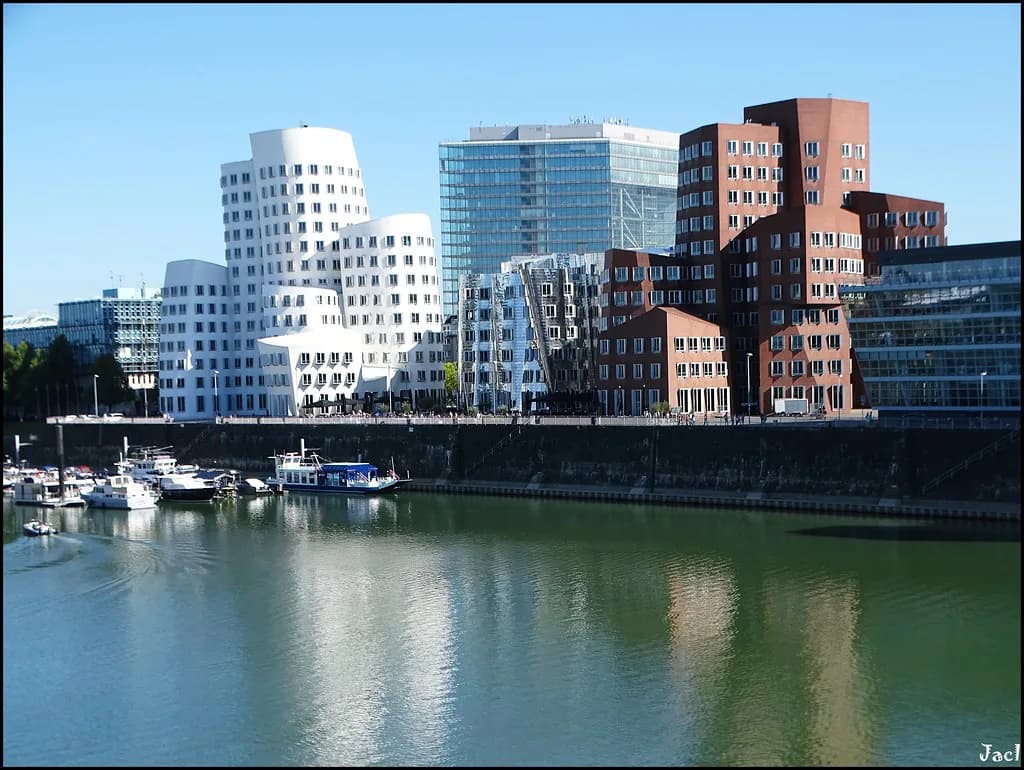
Switch to tram or metro when the rain turns heavy or when you are crossing to the MedienHafen, where the converted harbour's modern architecture and restaurants are worth a look but the walk between buildings is exposed. Metro, bus and tram information changes with works and schedules, so check the local transport operator's site on the day rather than relying on a printed plan. Shoes with grip matter more here than any clever route.
Rainy-day itinerary shapes that actually work
For a two to three hour window, choose one thing and do it properly. The Maritime Museum with the tower cafe is a natural short block, or a single paid museum with a coffee stop, and either fits around a lunch booking without rushing. Suggested durations in this article are planning aids, not official ones, because actual time inside depends on exhibitions and your own pace.
For a half day, pair one large museum with one small one and a meal in between, keeping both venues on the same side of the centre so you are not crossing the city wet. For a full wet day, string a morning museum, an Altstadt or Little Tokyo lunch, an afternoon gallery, and an early evening in a brewery tavern. If travelling with children, a shorter museum block plus a long cafe or market stop usually beats a third gallery, and our family-focused Düsseldorf ideas cover more indoor options for younger visitors.
Mistakes to avoid when it rains in Düsseldorf
The classic error is assuming everything opens on Monday. Older visitor reporting explicitly notes that museums are closed on Mondays in connection with a multi-museum ticket, and while individual venues set their own days, Monday is the one morning to check first before building a plan around a specific gallery. Verify each museum's own calendar for your date rather than trusting a general rule.
The second error is assuming a single ticket covers a whole complex. K20 and K21 are separate buildings a short ride apart, and even inside one institution different collections or special exhibitions can be ticketed differently. The third is treating a city card as an all-access pass: check exactly which museums it covers, whether entry is free or discounted, and whether transport is included, because those terms are set by the seller and change over time.
Plan Your Visit
A rainy day in Düsseldorf is a planning problem, not a lost day. Decide on one anchor museum, add one smaller indoor stop, keep a free church or market as a buffer, and check the operator's own pages for opening days, current exhibitions and ticket scope on the morning you go.
If you want to build the wet hours into a wider trip, work out how the museums fit alongside the Old Town and the Rhine promenade on a dry afternoon. Our city itineraries show how to order those days so that a single rainy stretch does not cost you the whole visit.
Frequently Asked Questions
What can you do in Düsseldorf when it rains?
Concentrate on the compact centre. Art museums such as the Kunstpalast and the Kunstsammlung Nordrhein-Westfalen keep you indoors for hours, the Maritime Museum in the Schlossturm is a short, self-contained stop, and the NRW-Forum covers photography and popular culture. Between visits, churches like St. Lambertus, the Carlsplatz market and the shopping along Königsallee give you dry places to walk. End the day in an Old Town brewery or in a Little Tokyo restaurant, and the weather barely affects the plan.
Which Düsseldorf museums are best for a rainy day?
It depends on what you want from the hours. Choose the Kunstpalast if you prefer one broad collection spanning several centuries with changing temporary shows. Choose the Kunstsammlung Nordrhein-Westfalen if you want modern art, but remember that K20 and K21 are separate buildings rather than one venue, so you will move between addresses. Choose the NRW-Forum for a shorter, focused visit built around photography, digital work and pop culture. Check each museum's current programme before deciding, because what is on display changes.
Is the Düsseldorf City Card worth it for museum entry?
That depends on what you plan to visit and what the card's current terms are. Visitor reporting has described the card as covering public transport with free or discounted entry to museums, sometimes with inconsistent details about individual venues, and such products are repriced and reshaped regularly. Add up the museums you will realistically enter, check whether each is free or discounted under the card, and compare that total with the card price on the official city tourism site before buying. If you already hold a nationwide transport ticket, the transport element may be worth less to you.
Are Düsseldorf museums closed on Mondays?
Many are, and older visitor reporting specifically flags Monday as a closing day for museums covered by a multi-museum ticket. Individual institutions set their own opening days, and some stay open on Mondays or shift their rest day elsewhere, so a general rule is not safe. Check the specific museum's own website for your exact date before you build a rainy-day route around it, and have a church, market or shopping alternative ready in case your first choice is shut.
What is free to do indoors in Düsseldorf?
Entering the city's historic churches, including St. Lambertus with its twisted spire and St. Andreas in the Old Town, costs nothing and gives you a genuine interior to explore. Browsing the Carlsplatz market stalls and walking the Königsallee and central shopping streets are also free, though you will spend money if you buy. Museum interiors are generally ticketed, and any pass-based discounts should be verified with the operator rather than assumed.
How long do you need for the Kunstpalast or Kunstsammlung Nordrhein-Westfalen?
Plan a suggestion, not a guarantee: roughly two to three hours for one large collection if you want to see the main displays without rushing, plus time for coats, tickets and a cafe stop. The Kunstsammlung needs extra allowance because K20 and K21 sit in different buildings, so a visit to both involves travel time between them. If your day is short, pick one building and see it properly rather than sprinting through two.