Cologne rewards a wet day better than most German cities because so much of what you came to see sits indoors and close together. The cathedral, the Old Town, the Rheinauhafen waterfront and the city's main museum cluster occupy a compact band on the left bank of the Rhine, so a rainy plan can work as a chain of short walks rather than a transport project. This guide treats route order and visit lengths as editorial suggestions, not official timings, and points you to the operators' own pages for anything that changes.
The practical logic is simple: pick two or three stops for a half day and three or four for a full one, then accept that rain will slow you down. Slippery cobbles, queues at cloakrooms and the time it takes to shed umbrellas and wet coats eat into any schedule. A useful starting point is the collection of Cologne landmark visitor guides, which is where you'll find the details of individual sights before you commit to a route.
Why Cologne Works Well in the Rain
Cologne Cathedral stands directly beside the main station, which means an arriving traveller can step from a platform into a dry nave within minutes. A travel writer who visited Cologne in 2022 noted that the cathedral is free to enter but that climbing the tower is a separate paid matter, with the tower fee to be checked on the cathedral's own website. The Old Town, the Rhine promenade and the Hohenzollern Bridge all radiate from the same small area, so you never need to commit to a long outdoor crossing.
Expansion is the other advantage: whichever direction the weather pushes you, there is usually an indoor option within walking distance. The riverside lanes around the cathedral are dense with churches, covered passages and places to sit out a shower, and Gross St. Martin, a Romanesque church with excavated Roman material visible beneath it, stands a short walk north of the cathedral in the Old Town.
Cologne Cathedral in the Rain: Free Interior Versus the Tower Climb
The cathedral is the one Cologne sight that genuinely works in a downpour, because the building itself is the attraction. According to a 2022 visitor account, entry to the cathedral itself is free, while climbing the tower involves paying a small fee, so a free-interior visit does not cover the tower climb. The tower climb involves open stairwells and exposure to the weather, which is worth weighing when rain is driving sideways. Because events around the cathedral can alter access, check the cathedral's own website for current opening information rather than relying on an older guide.
The decision for a wet day usually comes down to stamina rather than money. If you are travelling with children, are short of time or simply want to stay dry, the interior alone can absorb an hour comfortably: look for the medieval stained glass, the choir screen and the sheer scale of the nave. If the climb is the priority, save it for a clearer slot later in your stay rather than forcing it in poor conditions.
The surrounding area gives you easy dry options while you decide. The Hohenzollern Bridge and the riverside promenade sit immediately outside, and the Old Town begins a short walk north; the details of how those pieces fit together are mapped out in the Cologne landmark visitor guides, which is a sensible next read if you want to link the cathedral to the museum cluster.
Gross St. Martin and the Roman Remains Beneath It
Gross St. Martin is the sleeper pick of a wet Cologne day: a Romanesque church a few minutes' walk from the cathedral, with excavated Roman material visible beneath it. The Romano-Germanic Museum, which documents the site, states that 1970s excavations in the war-damaged church revealed the remains of an ancient water basin and large storehouses known as horrea, and that some of the results are now on display, including parts of the water basin and the surrounding walls of the former square near the choir of the modern crypt. Pillar remains and the outer walls of the storehouses, with their external supporting pillars, can also be seen incorporated into the walls. Further visitor details appear in Römisch-Germanisches Museum Köln | BENEATH GROSS SANKT MARTIN'S CHURCH.
The site has a longer story than the church above it. Gross St. Martin's roots reach back through centuries of rebuilding, destruction and restoration, and the church has stood at the heart of Cologne and its religious life since the medieval period, with war damage leaving only parts of the eastern triconchos and nave walls intact before reconstruction. It is worth noting that the building is a working church rather than a museum, so visit respectfully and expect prayer services to take priority at certain times.
The Chocolate Museum at the Rheinauhafen
The Chocolate Museum is the most obviously wet-weather-friendly paid attraction in Cologne, because almost everything worth seeing is under a roof. According to NRW Tourism, inside you get the cultural history of chocolate from Aztec and pre-Columbian material through Baroque porcelain and silver to industrial machinery, plus digital and interactive stations covering cocoa growing, supply chains and production. The walk-in tropical house with its cocoa tree, the glass chocolate factory and a three-metre chocolate fountain where visitors can taste the flowing chocolate are the parts people remember.
Small tastings run through the visit, including freshly produced Nappos handed out by a robot and guided formats such as 100% Chocolate and the Little Chocolate School; combination tastings pair chocolate with beer, wine or whiskey. The NRW Tourism listing shows daily opening from 10:00 to 18:00, but these times are published for a specific period and can be revised, and admission prices are set by the operator. Check the museum's own website for the day you plan to visit rather than trusting a printed guide. Mid-morning or mid-afternoon slots tend to be calmer than the middle of the day, which matters when everyone else in Cologne has the same rainy-day idea.
The location does double duty. The museum sits at the Rheinauhafen, a short riverside walk south of the Old Town, so you can combine it with a glance at the Rhine without exposing yourself for long. The full Cologne Chocolate Museum guide covers what to prioritise if you are short on time, and the wider Rhine River context is worth understanding before you commit to a waterfront walk in bad weather.
The Romano-Germanic Museum Question
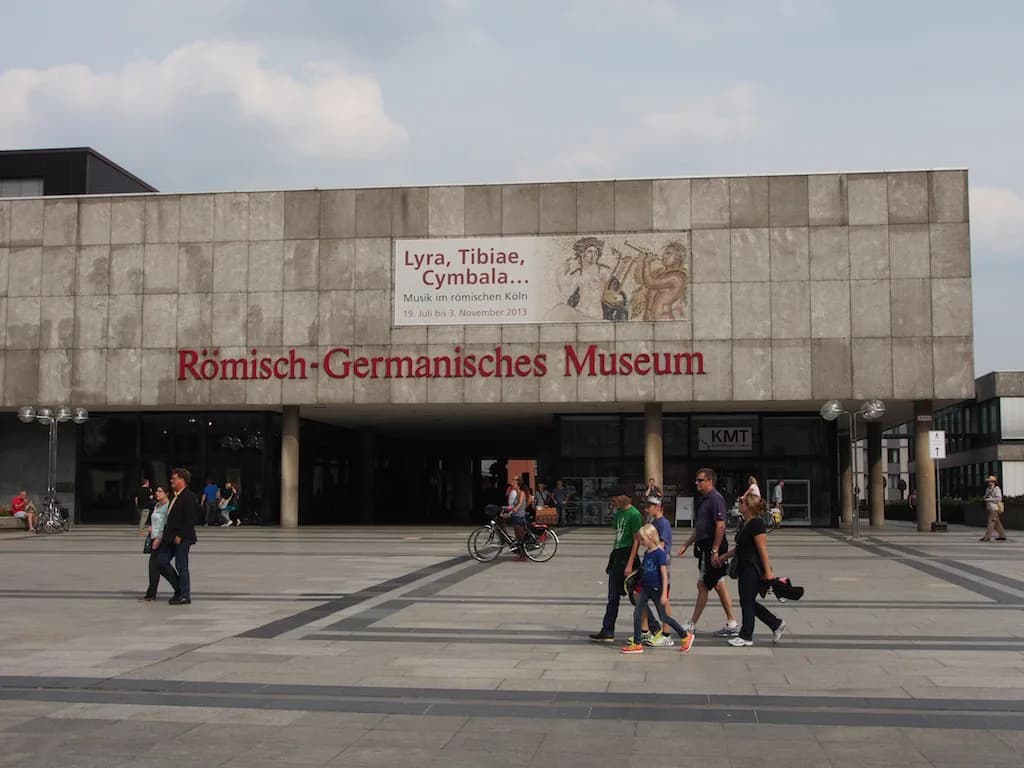
Anyone planning a Roman-themed rainy day needs to know that the Romano-Germanic Museum's exhibition building is undergoing a complete refurbishment. The architecture practice behind the renovation states that the building, opened in 1974, is in a poor state of repair and that the project covers roughly 11,430 square metres of gross floor area; no completion date has been published. Plan around the closure rather than expecting to walk in.
The good news is that the museum's responsibility extends well beyond its own walls. According to the museum, it acts as protector of historical monuments and is responsible for more than a hundred archaeological remains in situ across Cologne, including the Ubier Monument, stretches of the Roman city wall, the harbour road and sewer, and the archaeology beneath churches such as Gross St. Martin and St. Severin. Those sites sit out in the city, but the underground material beneath Gross St. Martin in particular fits neatly into a wet day because it is indoors.
Treat the refurbishment as a reason to reshuffle rather than a reason to skip Roman Cologne. Check the museum's own site before travelling for any interim displays, pop-up exhibitions or alternative venues, since these change; nothing in an older guide should be taken as proof that a given space is open.
Cologne Zoo's Indoor Houses as a Wet-Weather Wildcard
Cologne Zoo is a real option in rain, but only if you accept that you will get wet between buildings. Rhein-Taler, the regional discount scheme that lists the zoo among its partners, notes that the zoo was founded in 1860 and is home to around 12,000 animals from more than 700 species, and lists the indoor houses: an aquarium with around 70 tanks arranged geographically, a terrarium with an insectarium, a Jungle House for great apes, a Rainforest House, a Madagascar House and the Clemenshof farm. The elephant park and the hippodrome add Africa-focused exhibits, though the hippodrome mixes indoor and outdoor viewing. Related guide: Cologne Zoo.
The critical detail for a rainy day is timing. The same Rhein-Taler listing gives a seasonal pattern of summer hours from 9:00 a.m. to 6:00 p.m. (March 1 to October 30) with the last admission and ticket office closing at 5:30 p.m. and the animal houses shutting at 5:45 p.m., and winter hours from 9:00 a.m. to 5:00 p.m. (November 1 to February 28) with last admission at 4:30 p.m. and animal houses closing at 4:45 p.m.; Christmas Eve and New Year's Eve follow a shorter 9:00 a.m. to 2:00 p.m. pattern. Because these figures are published for a specific period and can be revised, confirm them on the zoo's own site before you go, and budget your indoor time so you are not caught outside when the houses close.
Budgeting also means accepting the geography. The zoo sits north of the centre on Riehler Strasse, so it is a deliberate trip rather than a spur-of-the-moment stop, and the walking between houses is the main exposure. If the forecast is a steady drizzle rather than a downpour, the density of indoor exhibits makes it worthwhile; in driving rain, the cathedral and Chocolate Museum combination is the safer use of a day.
Fallback Indoor Options and Combining Stops Sensibly
If you want a third or fourth stop, the Old Town itself is part shelter: the area around the cathedral and the riverside lanes is dense with churches, covered passages and places to sit out a shower. The 4711 Dufthaus in the Glockengasse draws more than 100,000 visitors a year, according to the brand's own website, and offers a tour of the brand's history, a scent seminar where you blend your own cologne, and a scent menu covering the ingredients. Admission, tour schedules and seminar availability are set by the house, so check the 4711 site directly before building a day around it.
For a lower-effort wet afternoon, a brewery and Kölsch stop is a legitimate part of a Cologne plan rather than a consolation prize, and the Cologne breweries and Kölsch guide explains how the city's beer halls work. German Sunday closure is also worth factoring in: a 2022 visitor account notes that many stores, including some supermarkets and certain restaurants, remain closed on Sundays, so a wet Sunday leans even more heavily on churches, museums and riverside walks than a weekday does.
The golden rule for a wet Cologne day is not to cross the city twice. Group the cathedral, Gross St. Martin and the Old Town on one side; keep the Chocolate Museum and the Rheinauhafen together; and treat the zoo as a standalone half day. A two days in Cologne itinerary or a 3 days in Cologne itinerary gives you more room to absorb a washed-out morning without losing the trip, and both are worth reading before you lock in a plan.
Practical Wet-Weather Logistics
Rain gear matters more than transport planning here. A compact umbrella, a water-resistant outer layer and shoes with grip handle cobbles better than anything else you can pack, and a small dry bag for a phone and camera prevents an expensive afternoon. Museums and churches commonly have cloakrooms or umbrella stands, but capacity varies; arrive with gear you can carry rather than expecting storage.
Getting around is straightforward if you accept the compact geography. Cologne's centre is walkable, and the main station sits under the cathedral, so rail arrivals and departures stay dry; beyond that, the city's public transport is the sensible fallback when the rain turns heavy, and routes and timetables are published by the local operator. What you should not do is rely on a specific line or journey time copied from an outdated blog.
Finally, verify before you travel. Prices, opening hours and any renovation work are the details most likely to have changed, and a rainy-day plan built on stale information tends to collapse at the first locked door. The cathedral, the Chocolate Museum, Cologne Zoo, the 4711 Dufthaus and the Romano-Germanic Museum all publish their own visitor information, and those pages are the only reliable places to confirm what is open on the day you are in the city.
Plan Your Visit
A wet day in Cologne is a planning problem, not a ruined trip. Anchor the morning around the cathedral, add Gross St. Martin for Roman context you can see indoors, and keep the Chocolate Museum for the afternoon when the rain is at its heaviest. Treat the zoo as a separate half day, and drop the Romano-Germanic Museum's main building from any Roman-themed route until the refurbishment finishes.
Check the operators' own pages for hours and prices before you set out, and be prepared to swap the order of stops if a queue or a shower changes the maths. The rest of Cologne's indoor network, from the landmark visitor guides to the longer city itineraries, is there to fill the gaps if you find yourself with a spare wet afternoon.
Frequently Asked Questions
Is Cologne Cathedral free to enter on a rainy day?
Entry to the cathedral's ground-level interior is free, while climbing the tower is a separate paid ticket, so one ticket does not cover the other. Because events around the cathedral can change access and the tower climb involves exposed stairwells, confirm current opening information on the cathedral's own website before you go. If staying dry is the priority, the free interior on its own justifies the visit.
What can you do indoors in Cologne when it rains?
The cathedral, Gross St. Martin with its Roman remains, the Chocolate Museum at the Rheinauhafen, the Cologne Zoo's indoor houses and the 4711 Dufthaus all work in wet weather. Group stops by area rather than criss-crossing the city: cathedral and Old Town on one side, Rheinauhafen on the other, the zoo as a separate trip. Verify opening hours with each operator on the day.
Can you still see Roman remains in Cologne while the Romano-Germanic Museum is closed?
Yes. The museum's exhibition building is undergoing a complete refurbishment with no published completion date, but the institution also protects more than a hundred archaeological monuments in situ across the city. The excavated water basin and storehouse remains beneath Gross St. Martin are the most convenient indoor option for a wet day, and other monuments such as the Roman city wall and the Ubier Monument can be seen around the centre.
Is the Chocolate Museum a good rainy-day choice?
It is one of the best, because the exhibition, the walk-in tropical house, the glass chocolate factory and the chocolate fountain are all indoors, and tastings are built into the visit. It suits families and anyone who wants a long, absorbing stop rather than a quick look. Check the museum's own website for current admission prices and daily hours, since these change.
Which Cologne museums are best for a rainy day with kids?
The Chocolate Museum and Cologne Zoo's indoor houses are the strongest picks, because both combine hands-on interest with shelter. The zoo's aquarium, terrarium, Jungle House, Rainforest House and Madagascar House let you move between buildings with only short outdoor stretches, but note that animal houses close earlier than the grounds, so plan your route backwards from closing time.
Are shops and restaurants open in Cologne on Sundays?
German Sundays are generally treated as a day of rest, and many shops, some supermarkets and certain restaurants stay closed. Treat that as general context rather than a guarantee about any specific business, because individual operators differ. A wet Sunday is therefore a good day for churches, museums and riverside walks, and a bad day for an improvised shopping plan.