Two days in Bremen work well because the best-known landmarks sit within a short walk of one another. The market square, Böttcherstrasse, the Schnoor quarter and the Schlachte promenade on the Weser can be linked without long transfers, and the compact centre means less time moving and more time looking. Treat every timing in this plan as a suggestion you can stretch or drop.
This itinerary covers free public streets and squares first, then flags the places that usually need a ticket or a pre-booked tour. Your two days can stay entirely in the centre or trade an afternoon for the Viertel, a park, or a half-day outside town. If you want alternatives around this route, start with the wider Bremen City guide.
Before You Go: What to Book or Verify
Several old-town sights are free to approach from the street, but their interiors follow separate rules. Bremen's town hall was built from 1405 to 1410 and is still used by the senate and the mayor, so interior access depends on guided tours rather than open doors. Book any tour you want before you travel and check the operator's page for current days and times.
Museum collections and cathedral interiors vary too, and one ticket rarely covers an entire complex or every building on a street. Verify prices, opening hours and ticket scope on each site's own page rather than trusting a third-party listing. This keeps your plan accurate even when seasonal schedules change.
Day 1 Morning: Marktplatz, Town Hall, Roland, and the Town Musicians
Start at the market square, where the town hall, the Bremer Roland and the Town Musicians statue sit within sight of one another. The town hall exterior is the Renaissance showpiece, and the building has stood since the early fifteenth century, though it later gained a New Town Hall addition. Walk the square slowly first and note which entrances you may want to revisit.
The Town Musicians statue is smaller and more tucked away than the fairy tale suggests, because the four animals are not depicted life-size and the bronze sits somewhat hidden on one side of the town hall. Visitors traditionally clasp the donkey's front legs with both hands for luck, which is also why those legs look polished. Keep this stop short and let the square itself carry the morning.
A suggested ninety minutes is enough for the square and its statues if you are not joining a tour. If you do want the interior, slot the town hall tour here and let it set the pace for the rest of the morning. The Bremer Roland stands in front of the town hall as a symbol of civic rights and independence, so it is worth a proper look rather than a passing photo.
Day 1 Midday: Böttcherstrasse and the Paula Modersohn-Becker House
Böttcherstrasse is a short street running from the market square down toward the river, and it is easy to miss because the narrow entrance comes up suddenly. Since 1931 art, culture and crafts have concentrated in a row of individually designed brick buildings. Walk it once for the architecture, then decide whether you want to return for a specific interior.
The Paula Modersohn-Becker House holds a museum devoted to the painter's life and work, and it is the strongest reason to give this street its own slot. If you care about her painting, budget an unhurried visit here instead of treating the street as a photo stop. The house is also a striking piece of expressionist architecture that was controversial when it was built.
Do not assume a single ticket covers every building on Böttcherstrasse, because the street mixes shops, studios and at least one ticketed museum. Check each venue separately if you plan to go inside more than one. If you want a wider shortlist of collections to compare, our guide to Bremen museums worth visiting can help you choose.
Day 1 Afternoon: The Schnoor Quarter at an Unhurried Pace
The Schnoor quarter is Bremen's best-known historic knot of lanes, with small houses strung tightly together and some alleys so narrow you can almost touch the facades on both sides with outstretched arms. It is genuinely compact, so an hour or two is realistic rather than an entire afternoon. Wander without a checklist, look up at the half-timbered facades, and accept that the district is small.
Because the Schnoor is quick to walk, pair it with something else rather than padding it out. A short detour toward the river, a coffee stop, or the walk back through Böttcherstrasse all work well. If your trip is shorter, the One day in Bremen itinerary compresses the same ground differently.
Cobblestones are the norm through the Schnoor, so comfortable shoes matter more than any other packing decision. The lanes are narrow and busy in the middle of the day, and quieter early or late. If you are still shaping your first day, the Bremen City landmark hub collects visitor guides for the individual sights here.
Day 1 Evening: The Schlachte Promenade on the Weser
The Schlachte is Bremen's riverside promenade on the Weser, in the middle of the city, and it works best as a slow end to a walking day. The embankment was Bremen's main harbour for centuries, and its name goes back to the Low German word for the wooden piles that once reinforced the riverbank. Today the strip is lined with places to sit, drink and watch the water.
Late afternoon or around sunset gives you softer light and a calmer atmosphere before any evening crowd builds. You can simply walk the promenade, or sit and turn the hour into an early evening stop. Either way, leave time to look for the historic lion heads placed beneath the Wilhelm-Kaisen-Brücke, which once decorated an older Weser bridge.
If you want to extend the evening beyond the river, our Bremen at night guide covers how the centre shifts after dark. Keep the return walk short if you have an early start, since day two has more ground to cover.
Day 2 Morning: St Peter's Cathedral and the Tower Choice
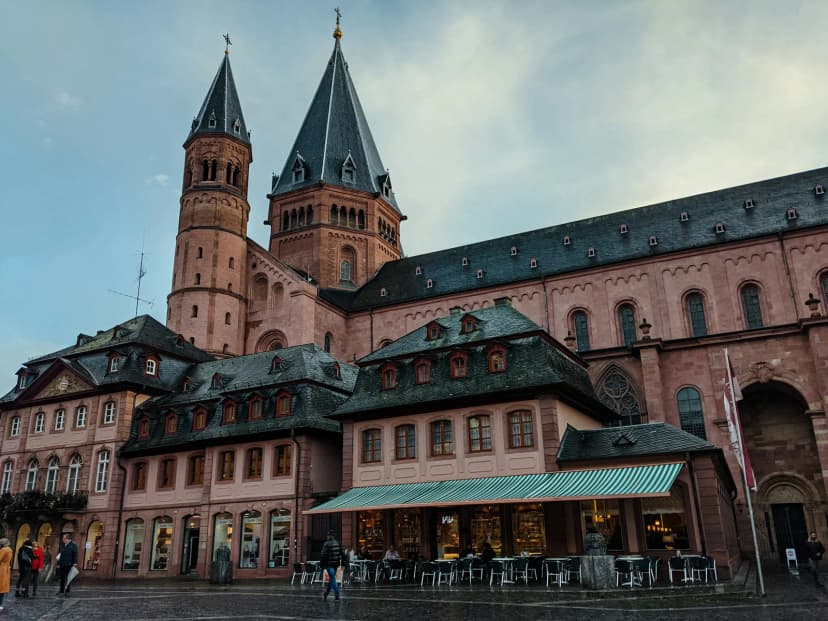
St Peter's Cathedral anchors the east side of the market square and dates back to the eleventh century, which makes it the oldest major building on your two-day route. The real decision is whether you want the interior, the tower climb, or neither, because each takes different time and effort. Pick one rather than assuming you will do both.
The twin towers rise in a blend of Gothic and Romanesque styles, and climbers are rewarded with a view over the old town's red rooftops, but the climb takes energy and time. The interior, by contrast, is a quiet stop and pairs better with a slower morning. Opening hours and any tower charges change with the season, so confirm both on the cathedral's own page before you commit.
In the cathedral courtyard you will see the spitting stone linked to the execution of Gesche Gottfried in 1831, a small historical detail that makes the square feel less tidy and more lived in. Allow roughly an hour if you are only doing the interior. Add more if you climb.
Day 2 Option A: The Wallanlagen Ramparts and the Windmill
The Wallanlagen follows the line of Bremen's old defensive walls and now works as a green loop through the city centre. Its landmark is a former coffee mill that sits within the former ramparts and now houses a restaurant, so you can walk it as a short park circuit or stop partway for a coffee. This is a good way to trade street time for trees without leaving the centre.
The mill is one of the most photographed sights in Bremen and appears quickly once you are on the ramparts. Some sections near the main station can feel quiet at off hours, so walking the loop during the day is the simpler choice. A suggested sixty to ninety minutes covers the loop comfortably.
If spring is your season, the ramparts and their magnolias are a strong reason to slow down and extend the loop. Otherwise treat the Wallanlagen as a flexible filler that fits either morning or late afternoon. You can shorten it at several points and rejoin the old town quickly.
Day 2 Option B: Choosing a Museum That Fits Your Interests
If the weather turns or you want a slower day, museums are the obvious substitute for outdoor sightseeing. Kunsthalle Bremen holds a broad collection spanning more than 700 years of art history in addition to temporary exhibitions, so check what is on before you commit an afternoon. Weserburg focuses on international contemporary art in a historic building on the Weser and leans heavily on changing shows.
Choose between them by interest rather than by proximity, because a short trip is a poor time to browse a collection you do not care about. Check each museum's own site for current opening days, temporary closures and ticket scope before you go. Do not assume a combined ticket covers both venues or every floor of a building.
If you already know you want more art than two days allow, the Three days in Bremen itinerary adds room for a second museum and a slower pace. For this trip, one afternoon museum is usually enough.
Day 2 Afternoon: The Viertel District
The Viertel is Bremen's neighbourhood east of the centre, stretching from Sielwall to Sankt-Jürgen-Strasse, and it feels different from the old town. Independent shops, cafes and small food spots fill its streets, which makes it a good counterweight to the historic centre. It is the kind of area you stroll rather than tick off.
Plan the Viertel as a wandering block of two to three hours, with no fixed stops required. It works for a late lunch, an afternoon of browsing, or both, and it is easy to leave early if you are tired. Skip it without regret if the old town still has corners you want to see.
Because the Viertel is residential as well as commercial, keep your expectations relaxed and simply follow whatever street looks interesting. Shops and cafes keep their own hours, so check individual listings if a particular place matters to you. Treat any recommendation as a starting point rather than a fixed plan.
Half-Day Alternative: Parks and Outer Districts
If you would rather trade an old-town loop for green space, Bremen has several options outside the centre. Bürgerpark sits behind the main train station and offers a large area for walking, resting or simply sitting outside. The Rhododendron Park is another option, and it peaks in spring when its flowering plants are at their best.
Farther out, the Maritime Meile in Vegesack covers Bremen's maritime history around the old harbour and its museum harbour. That is a half-day trip rather than a quick detour, so use it only if shipping and port history genuinely interest you. Admission rules and opening days differ between the sites there, so confirm before travelling.
For a shorter break with less travel, the riverside promenade remains the easiest green-ish pause in the centre. Public transport reaches all of these areas, so a car is not required for a two-day visit. Pick one outer option at most and keep the rest of the day flexible.
Practical Notes: Walking, Weather, and Free Versus Paid
The core of this itinerary is walkable, which is why two days works without a car or a transport pass. Free public spaces such as the market square, the Schnoor lanes, the Schlachte promenade and the Wallanlagen carry no ticket, while the town hall interior, museums and the cathedral tower generally do. Budget accordingly and keep a card ready for small entries.
Cobblestones run through much of the old town, so footwear matters more than any other packing choice. German weather shifts quickly, so a compact umbrella and a light layer are worth carrying even on a promising morning. If rain sets in, swap an outdoor block for a museum rather than pushing through.
Nothing on this route depends on a fixed timetable except tours and museum hours, so confirm those on the day. Local transport coverage and any ticket you buy should be checked against current network information rather than assumed. That keeps the plan resilient when one stop takes longer than expected.
Accessibility and Pacing: How to Shorten the Route
If two full days feel like too much, cut in this order: the outer district, the second museum, then the tower climb. The market square, the Schnoor and the river promenade form the shortest version of the trip and still cover Bremen's signature sights. Keep the cathedral as an optional stop rather than a fixed one.
Pacing matters more than coverage here, because the old town is small enough that rushing only creates backtracking. Build in a mid-afternoon break at your accommodation or a cafe rather than pushing straight through. Two relaxed days will show you more than a packed checklist.
Anyone with limited mobility should check each site's own access information before travelling, since historic buildings vary widely. Cobblestones and narrow lanes are the main practical limits in the Schnoor. Ask directly at the venue if you need specifics, because published details change.
Plan Your Visit
Two days in Bremen is enough to see the old town properly and still leave room for one change of scene. Day one stays with the market square, Böttcherstrasse, the Schnoor and the Weser; day two chooses between the cathedral, a museum, the ramparts or the Viertel. Suggested timings are starting points, not fixed appointments.
Before you travel, confirm opening hours, tour availability and ticket scope for anything you plan to enter. Official city pages and each venue's own site are the reliable places to check, especially for volatile details. Then let the walkable centre do the work for you.
If you find yourself wanting a third day, the Three Days in Bremen itinerary extends the same plan outward. For now, keep your two days loose, wear shoes that handle cobblestones, and leave space for the parts of Bremen that are not on any list.
Frequently Asked Questions
Is two days enough time to see Bremen?
Yes, for the historic centre. The market square, Böttcherstrasse, the Schnoor and the Schlachte promenade all sit close together, so a single day can cover them at a brisk pace. Two days let you add one museum, the cathedral tower or the Wallanlagen and Viertel without hurrying. Anything beyond that starts to depend on how much time you want in collections rather than on geography.
Do you need a car to get around Bremen for two days?
No. The old-town sights are walkable from one another, and public transport covers the outer districts, parks and any half-day trip you might add. A car mainly creates parking and access problems in the compact centre. If you plan to visit Vegesack or a park outside the centre, check current local transport connections rather than relying on memory.
What should you do in Bremen if it rains?
Move a museum to the front of the day. Kunsthalle Bremen and Weserburg both work as rainy-day anchors, and the town hall interior is another indoor option when tours are running. Keep one outdoor block flexible so you can swap it for a longer lunch or a cafe stop. Confirm each venue's current opening days before setting out, since these vary by season.
Is the Schnoor quarter worth visiting, and how long does it take?
It is worth seeing, but it is small. The lanes are compact, so an hour or two is a realistic visit rather than a half day. Treat it as one block of your itinerary and pair it with something nearby, such as Böttcherstrasse or the river promenade. Comfortable shoes help, because the surface is largely cobblestone.
Which Bremen museums fit a short trip?
Kunsthalle Bremen suits visitors who want a broad art collection plus temporary exhibitions, while Weserburg focuses on international contemporary art in a riverside building. Both depend on what is currently on show, so check each museum's own page before you commit an afternoon. Do not assume one ticket covers multiple venues or an entire complex.
Can you do a half-day trip from Bremen without a car?
Yes. Parks such as Bürgerpark and the Rhododendron Park are reachable without a car, and the Maritime Meile in Vegesack can be visited by public transport. Treat any of these as a half day, not a quick add-on, because travel time eats into your remaining hours. Check current connections and opening days before you go.