
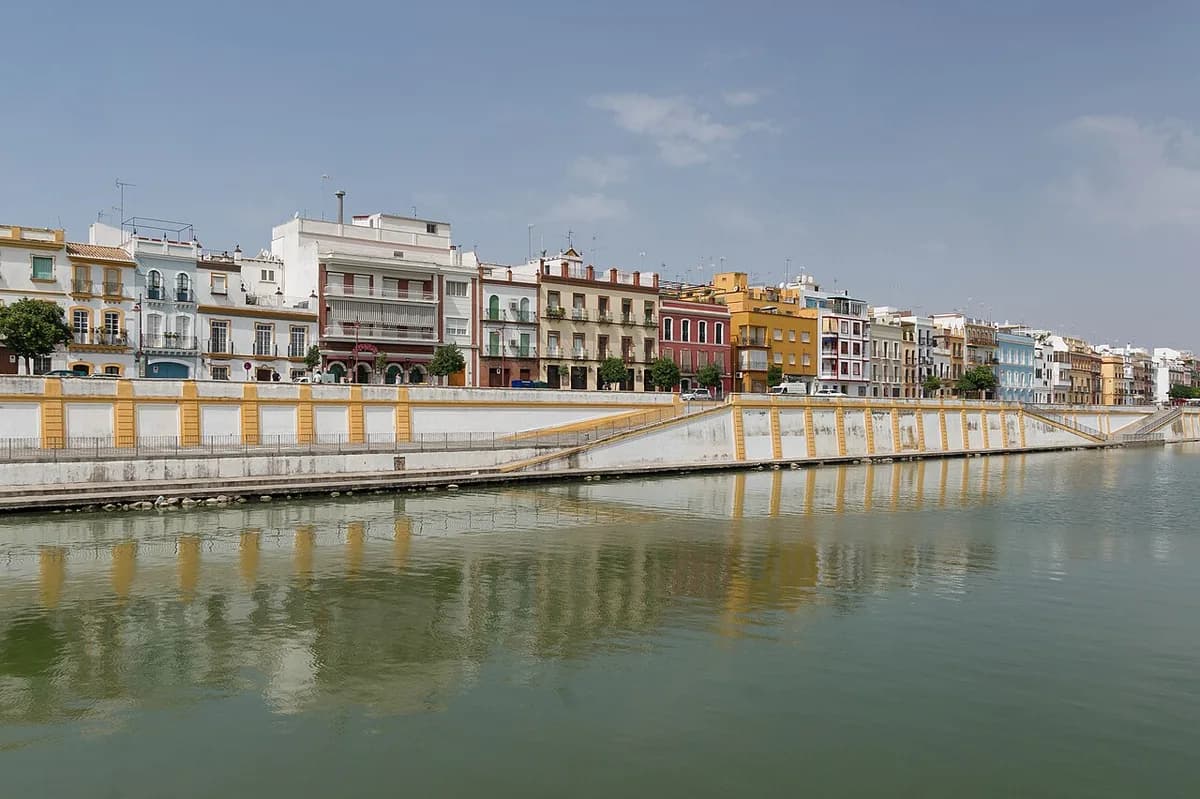
The short answer on "Triana tickets" is that there isn't one — Triana is a public riverside neighborhood, not a gated site, so walking its streets, crossing the bridge, and browsing the market cost nothing. What people searching for tickets and prices usually mean is the handful of paid experiences inside it: the Centro Cerámica Triana museum charges €2.10 general admission as of mid-2026, and a Teatro Flamenco Triana show runs from roughly €25. The Mercado de Triana itself is free to enter, with market stalls open Monday to Saturday from 9:00am to 2:30pm and closed on Sundays.
This guide breaks down exactly what costs money in Triana, what's free, current hours for the market and its paid attractions, and how to plan a half-day visit. It's part of our full Seville attractions guide.
What Is Triana?
Triana is the neighborhood on the west bank of the Guadalquivir River, directly across from Seville's historic center and connected to it by the Puente de Isabel II — a cast-iron bridge completed in 1852 that most visitors simply call the Triana Bridge. For centuries this was a working-class quarter of sailors, potters, and dockworkers, distinct enough from the city on the other bank that locals still talk about "crossing over to Triana" as its own kind of trip, even though it's only a few minutes' walk from the cathedral.
Two industries defined the neighborhood historically. Triana was Seville's shipbuilding and sailors' district — many of the crew on Spain's transatlantic voyages, including some of Magellan's expedition, were Triana natives, and the barrio kept close ties to the Americas trade for centuries. It was also, and still is, Seville's ceramics quarter: potters here produced the glazed tiles (azulejos) found across Andalusian buildings and exported them as far as colonial Mexico and Peru, a tradition documented today at the Centro Cerámica Triana. Alongside the pottery, Triana is one of the neighborhoods most closely tied to the origins of flamenco, particularly around the old Cava de los Gitanos area — a heritage that's why the barrio still has more flamenco venues per block than almost anywhere else in Seville.
Tickets & Prices 2026
There's no admission charge to enter Triana — it's an open city neighborhood, and the streets, the bridge, and the riverside Calle Betis promenade are free to walk at any time. What visitors actually pay for are individual sights and experiences inside it:
- Mercado de Triana (market): Free to enter and browse. You only pay for what you buy at individual stalls or restaurants.
- Centro Cerámica Triana (ceramics museum): €2.10 general admission, €1.60 reduced rate for visitors under 25, students, and those over 65. Entry is free for Seville residents, children under 16, visitors with disabilities plus one companion, and anyone holding a Real Alcázar ticket.
- Castillo de San Jorge (Inquisition history site beneath the market): Free entry, including free audio guides, with no booking required.
- Teatro Flamenco Triana (flamenco show): Tickets typically run from around €25–29 for the roughly one-hour show, booked through the venue or resellers like GetYourGuide and Viator. Prices vary by seating and season.
- Guided walking tours: Small-group Triana tours (market visits, flamenco-history walks, tapas crawls) generally run from about €12 for a short flamenco-focused walk up to €70+ for a longer tour with tastings included.
If you're weighing whether a citywide sightseeing pass is worth it for a trip that includes Triana, see our breakdown of whether the Seville Pass is worth it — Triana's own paid sites are cheap enough that a pass rarely pays off for this neighborhood specifically.
Opening Hours & Best Time to Go
Triana as a neighborhood has no opening or closing time — it's public streets. The hours that matter are for its market and paid sites:
- Mercado de Triana stalls: Monday–Saturday 9:00am–2:30pm, closed Sundays and holidays
- Mercado de Triana restaurants/bars: Monday–Saturday 9:00am–5:00pm and 6:00pm–midnight (bars open until 1:00am April 15–September 15); Sundays and holidays 10:00am–5:00pm
- Centro Cerámica Triana: Tuesday–Sunday 10:00am–8:00pm, last entry 7:00pm; closed Mondays and reduced to 10:00am–3:00pm on December 24, December 31, January 5, and during Holy Week and the April Fair
- Castillo de San Jorge: Tuesday–Sunday, roughly 10:00am–2:30pm, closed Mondays
The best time to visit is a weekday morning, when the market is fully stocked and the neighborhood is at its most authentic — arrive by 10am to see it in full swing before the midday lull. If you want the market itself, avoid Sundays entirely, since the stalls are closed and only a handful of restaurants stay open. Evenings, especially after 8pm, are when Calle Betis and the streets around the market fill up for tapas and, if you've booked ahead, flamenco.
How Long to Plan
Budget 2 to 3 hours for a solid first visit: enough time to walk the bridge, wander the market, browse the ceramics shops on Calle Alfarería and Calle Antillano Campos, and pop into the Centro Cerámica Triana or Castillo de San Jorge. Add a sit-down lunch or tapas stop and that stretches comfortably to half a day. If you're also booking an evening flamenco show at Teatro Flamenco Triana, plan for a separate return trip in the evening — the show itself runs about an hour, but most visitors pair it with dinner in the neighborhood beforehand, adding 2–3 hours total.
How to Get There
Triana is a genuinely short trip from central Seville. From Plaza Nueva or the Cathedral, it's a flat 10–15 minute walk across the Puente de Isabel II — no transport needed for most itineraries based in the historic center. If you'd rather not walk, several city bus routes, including the C1 and C2 orbital lines, cross into Triana over the river bridges; the closest Metrocentro tram (T1) stop is Plaza Nueva, from which it's the same short walk over the bridge. There's no dedicated visitor parking for the neighborhood — central Seville's narrow streets make driving impractical, and the nearest public parking is in the historic center near Puerta de Jerez.
Visit Tips: Queues, Booking & Common Mistakes
The most common mistake is showing up on a Sunday expecting a market — the stalls are closed, so if the market is your main reason for crossing the river, go Monday through Saturday morning. The second most common one is treating Triana as a quick 20-minute photo stop; the neighborhood rewards slower wandering through the ceramics streets and riverside promenade well beyond the market itself.
Book flamenco tickets at Teatro Flamenco Triana at least a few days ahead in peak season (spring and autumn), since the venue is small and evening shows do sell out. The Centro Cerámica Triana and Castillo de San Jorge rarely need advance booking — walk-in is normally fine given their modest visitor numbers, but both close on Mondays, so don't plan a Monday visit around them. If you're buying ceramics as souvenirs, prices and quality vary a lot between the tourist-facing shops near the bridge and the working studios further down Calle Alfarería — it's worth walking a few extra blocks before buying.
Nearby Attractions
Once you've crossed back over the Puente de Isabel II, Seville's major sights are all within easy walking distance of each other. The Real Alcázar and its gardens sit about 20 minutes on foot from the bridge, through the old town. Seville Cathedral and the Giralda tower are a similar distance and make a natural pairing with the Alcázar on the same walk. A little further southeast, Plaza de España is roughly a 25–30 minute walk from Triana, or a short taxi ride if you're combining it with an evening flamenco show back across the river.
Frequently Asked Questions
Frequently Asked Questions
Is there an entrance fee to visit Triana in Seville?
No. Triana is an open public neighborhood, not a ticketed site, so walking its streets, crossing the bridge, and browsing the Mercado de Triana are all free. The only costs are for specific paid experiences inside it, like the Centro Cerámica Triana museum (€2.10) or a Teatro Flamenco Triana show (from around €25).
What are the opening hours for Mercado de Triana?
Market stalls are open Monday to Saturday from 9:00am to 2:30pm and closed on Sundays and holidays. Restaurants and bars inside the market keep longer hours — 9:00am to 5:00pm and again 6:00pm to midnight Monday through Saturday, and 10:00am to 5:00pm on Sundays.
How much does it cost to visit the Centro Cerámica Triana?
General admission is €2.10, with a €1.60 reduced rate for under-25s, students, and visitors over 65. Entry is free for Seville residents, children under 16, visitors with disabilities and their companion, and anyone with a Real Alcázar ticket. The museum is closed Mondays.
How long does it take to visit Triana?
Plan for 2 to 3 hours to walk the bridge, browse the market, and see one of the ceramics sites — enough for a proper first visit without rushing. Add a meal or an evening flamenco show and that easily stretches to a half day.
What is the best time to visit Triana?
Weekday mornings are best if the market is the priority — arrive by 10am while stalls are fully stocked and before the midday lull. Avoid Sundays if you want the market, since it's closed. Evenings after 8pm are best for tapas and flamenco, once the neighborhood picks back up.
Triana is one of the few entries on a Seville tickets list that genuinely doesn't need a ticket — the neighborhood itself is free, and the paid sites inside it (a €2.10 ceramics museum, a flamenco show from around €25) are modest by Seville standards. The real planning question isn't price, it's timing: go on a weekday morning if the market matters to you, and stay into the evening if flamenco and tapas are the goal.
Cross the Puente de Isabel II from the historic center, budget half a day if you can, and check the Centro Cerámica Triana and Teatro Flamenco Triana hours directly before you go, since museum schedules shift around Holy Week and the April Fair in 2026.
For current hours and prices, see the Mercado de Triana official hours page and the Centro Cerámica Triana official visitor information.