Since February 2, 2026, visitors need a €2 ticket to step up to the Trevi Fountain's inner basin — the barrier-close vantage point most postcard photos are taken from. Standing back in the piazza to view and photograph the fountain from a short distance remains free. Tickets for the inner perimeter are valid daily from 9:00am to 10:00pm, with an 11:30am start on Mondays and Fridays.
The fountain sits at the heart of the historic center, a few minutes' walk from Rome's other headline attractions. It's the most-visited free monument in the city, which means the new ticketing rule catches a lot of travelers off guard — along with the crowding, pickpocket risk, and coin-toss etiquette that come with a piazza this small and this popular. This guide covers exactly what the new ticket costs, who's exempt, when to go, and how to see the fountain properly without wasting half a morning in line.
What Is the Trevi Fountain?
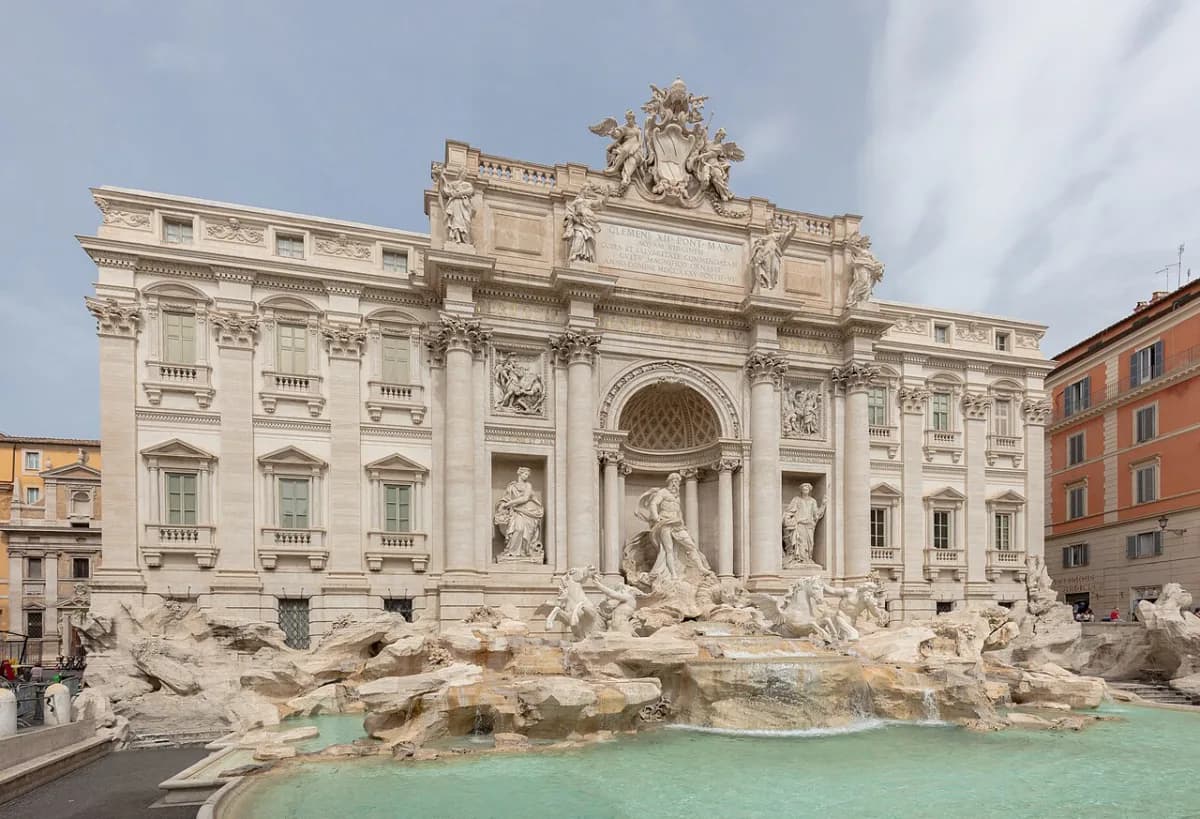
The Trevi Fountain is Rome's largest Baroque fountain, standing nearly 26 meters high and 49 meters wide at the junction of three streets (the "tre vie" that likely give the fountain its name). It was designed by architect Nicola Salvi in 1732 and completed in 1762 by Giuseppe Pannini, after Salvi's death, under commission from Pope Clement XII. The fountain marks the terminal point of the Aqua Virgo, an aqueduct originally built by Marcus Agrippa in 19 BC that still supplies the water flowing through it today — one of ancient Rome's few aqueducts still functioning in its original role.
The central sculptural group depicts Oceanus riding a shell-shaped chariot pulled by two sea horses — one calm, one agitated — guided by tritons. Coins tossed into the water are collected each day and donated to Caritas Roma, a Catholic charity that funds services for the city's needy, a practice the municipality formalized in the early 2000s.
Trevi Fountain Tickets & Prices 2026
As of February 2, 2026, a €2 ticket is required for tourists and non-residents to enter the fountain's inner basin — the fenced perimeter closest to the water, where the classic close-up photos are taken. Viewing and photographing the fountain from further back in the piazza remains free; the fee applies only to the barriered close-approach zone.
Free entry to the inner basin applies to Rome and Metropolitan City residents (with ID), children under 6, people with disabilities and one accompanying companion, licensed tour guides with a valid badge, and holders of a valid Roma MIC Card. Everyone else pays the flat €2 rate regardless of age or nationality.
Buy tickets online through the official Fontana di Trevi site, in person at Rome's Civic Museums and Tourist Info Points, or at authorized retailers (cash or card). Tickets are also sold at the entrance itself, card payment only. Pre-purchased tickets are open-dated — no fixed date or time slot — but are non-refundable and non-transferable, so buy close to your visit rather than far in advance. If you're bundling several paid sites into your trip, our guide to whether a Rome city pass is worth it can help you plan the rest of your admissions — note that the Trevi basin fee is separate and isn't bundled into typical sightseeing passes.
Opening Hours & Best Time to Visit
The ticketed inner-basin area is open daily from 9:00am to 10:00pm, with last entry at 9:00pm. On Mondays and Fridays, opening is delayed to 11:30am. A handful of Mondays in summer 2026 (July 6, July 20, August 3, August 17, and August 31) have a further-delayed 2:00pm opening for maintenance — worth checking the official site before you plan around a Monday visit. Hours can also shift on short notice for public-order reasons, so confirm current hours on the official ticketing site the day before you go.
The fountain itself is illuminated and visible from the piazza around the clock — no ticket is needed just to look at it from a normal viewing distance, even outside the 9am–10pm ticketed window. For the calmest experience, arrive right at opening or after 9pm: the piazza is genuinely tiny relative to how many people want to be in it, and by mid-morning through early evening in high season it's shoulder-to-shoulder. Late evening, after most tour groups have moved on, is when the fountain is at its most photogenic anyway, lit against the dark travertine facade.
How Long to Plan for Your Visit
Most visitors spend 15–20 minutes taking in the fountain and getting photos from the piazza. If you buy the inner-basin ticket, add another 10–15 minutes for the queue and the closer vantage point, bringing a typical stop to 30–45 minutes total. Because the piazza is small and there's genuinely one main sight to see, this isn't a site that rewards lingering the way a museum does.
Given how central it is, most itineraries fold the Trevi Fountain into a longer walking loop through the historic core rather than visiting it as a standalone trip — it pairs naturally with a morning or afternoon that also covers the Pantheon and the Spanish Steps.
How to Get to the Trevi Fountain
There's no metro station directly at the fountain. The closest stop is Barberini on Metro Line A, about a 5–7 minute walk northeast; Spagna, also on Line A, is roughly 10 minutes away on foot through the Via Condotti shopping streets. Several bus lines converge along Via del Tritone and Via del Corso a short walk from the piazza — check Rome's ATAC transit app for current routes from your starting point, since lines shift periodically.
In practice, most visitors simply walk in from elsewhere in the center: it's about a 10–12 minute walk from the Pantheon and roughly 10 minutes from the Spanish Steps. There's no dedicated parking near the piazza, and much of the surrounding historic center is a restricted traffic zone (ZTL) for non-resident vehicles, so walking or public transport is the practical option regardless of where you're staying.
Visit Tips: Queues, Booking & Common Mistakes
The single biggest crowd-avoidance move is timing: arrive before 8:30am or after 9pm. Midday through early evening in spring and summer, the piazza is packed tightly enough that simply moving through it takes effort, let alone getting a clean photo. A tightly packed piazza is also prime pickpocket territory — keep bags zipped and in front of you, and be extra alert around the fountain steps where everyone's attention is on their phone.
The most common mistake is assuming a ticket is required just to see the fountain at all — it isn't. The €2 fee only applies to the fenced inner-basin area right at the water's edge; you can still view, photograph, and enjoy the fountain for free from the surrounding piazza steps. Because tickets are open-dated rather than timed-entry, there's less urgency to book far ahead than for a timed-entry site — buying a day or two before your visit is generally fine.
The coin-toss tradition — right hand, over your left shoulder, back to the fountain — is meant to guarantee a return trip to Rome and is worth doing regardless. Wading into the water for a coin or a photo isn't: it's illegal, monitored, and carries a real fine.
Nearby Attractions
The Pantheon is about a 10–12 minute walk southwest and is the natural pairing for a Trevi visit — both sit inside Rome's compact, walkable historic core. If you're building out a longer day of ancient Rome, the Roman Forum and Palatine Hill are roughly a 20-minute walk or a short taxi ride south, best treated as a separate half-day rather than squeezed in alongside the fountain. For a different side of the city entirely, the Vatican Museums are about 30 minutes away and worth planning as their own dedicated outing. To tie the whole visit together, our 2-day Rome itinerary shows where the Trevi Fountain fits alongside the rest of the historic center.
Frequently Asked Questions
Do I need a ticket to see the Trevi Fountain?
No — viewing and photographing the fountain from the piazza is free. A €2 ticket, introduced February 2, 2026, is only required to enter the fenced inner-basin area closest to the water. Rome residents, children under 6, people with disabilities and a companion, licensed guides, and Roma MIC Card holders enter that area free as well.
How much are Trevi Fountain tickets in 2026?
The inner-basin ticket costs a flat €2 for all non-resident visitors, regardless of age (outside the free exemptions). Tickets are open-dated with no fixed time slot, but are non-refundable and non-transferable once purchased. Buy through the official Fontana di Trevi site, Rome's Civic Museums, Tourist Info Points, or at the entrance by card.
What are the Trevi Fountain's opening hours?
The ticketed inner-basin area is open daily from 9:00am to 10:00pm, with last entry at 9:00pm. Mondays and Fridays have a delayed 11:30am opening, and several Mondays in summer 2026 open even later, at 2:00pm, for maintenance. The fountain itself is visible from the piazza at any hour, ticket or no ticket.
Is the Trevi Fountain free to visit?
Yes, in the sense that matters for most visitors — seeing, photographing, and enjoying the fountain from the piazza costs nothing. The €2 fee introduced in February 2026 applies only if you want to step into the fenced area right at the basin's edge for a closer vantage point.
How long should you spend at the Trevi Fountain?
Most visitors spend 15–20 minutes at the fountain, or 30–45 minutes total if you buy the inner-basin ticket and queue for the closer view. It's a compact stop best folded into a longer walk through the historic center rather than visited on its own.
The Trevi Fountain is one of the few must-see sights in Rome that's still genuinely free to experience — the new €2 charge only buys you a few extra meters of proximity, not admission to the monument itself. Know that distinction going in, and the rest of the planning is simple: go at opening or after dark to dodge the crowds, and fold it into a walk that also covers the Pantheon and the Spanish Steps rather than treating it as a separate trip.
The ticketing rule is new as of February 2026, so older guides and blog posts may not reflect it yet. Confirm current hours and pricing on the official Fontana di Trevi site before you go.
For the latest official information, see the Trevi Fountain on the official Turismo Roma site.