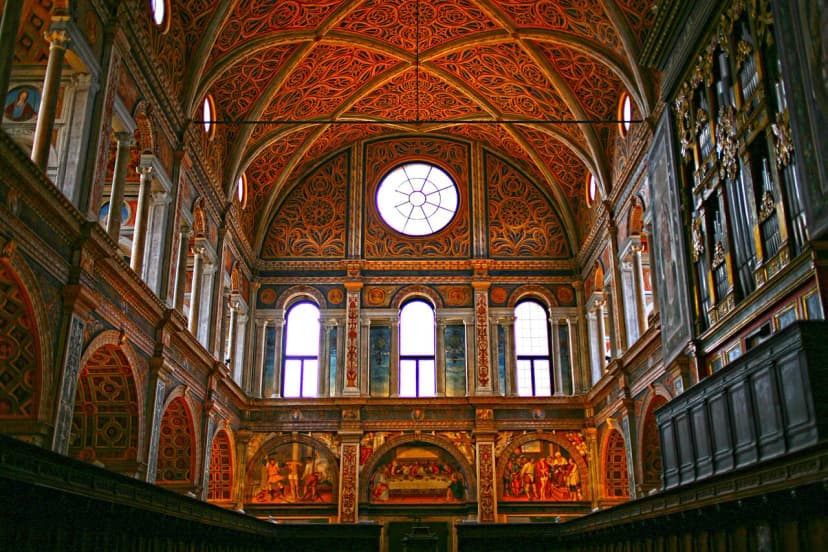

Standard entry to the Capitoline Museums costs €15 in 2026 — though a temporary exhibition running through July 19 raises full price to €20.50 — the museum opens daily at 09:30, and most visitors spend 1.5 to 2 hours moving between the two palaces and the underground gallery that looks out over the Roman Forum.
This guide covers exactly what 2026 tickets cost (including the current exhibition surcharge), when the museum is quietest, how long to budget, and what not to miss inside. It's part of our full Rome attractions guide.
What Are the Capitoline Museums?
The Capitoline Museums are widely considered the world's oldest public museum, tracing their origin to 1471, when Pope Sixtus IV donated a group of ancient bronzes — including the Capitoline Wolf — to the people of Rome. The collection opened to public view in 1734 and has been growing ever since, spanning Roman sculpture, imperial portraiture, and Renaissance and Baroque painting.
The museums occupy two palaces — Palazzo dei Conservatori and Palazzo Nuovo — facing each other across the trapezoidal Piazza del Campidoglio atop Capitoline Hill, a square and staircase designed by Michelangelo in the 16th century. The two buildings connect via an underground passage that runs through the ancient Tabularium, Rome's original state records office, which opens onto a floor-to-ceiling view of the Roman Forum below. Highlights inside include the original bronze equestrian statue of Marcus Aurelius, the Dying Gaul, the Capitoline Venus, fragments of the colossal statue of Constantine, and Caravaggio's St. John the Baptist in the Pinacoteca Capitolina picture gallery.
Tickets & Prices 2026
Pricing currently depends on whether a temporary exhibition is running. Through July 19, 2026, the museums are hosting two special shows ("Vasari e Roma" and "Angeli"), and admission is priced accordingly:
- Full price (with current exhibitions): €20.50
- Reduced price (with current exhibitions): €15.00
- Standard admission once the exhibitions close: €15.00 full / €9.50 reduced
- Free: under-18s, Rome residents (with ID), MIC card holders, and Roma Pass holders
A separate Capitolini Card covers both the Capitoline Museums and Centrale Montemartini for 7 days at €15.50 full / €11.50 reduced, with a €5.50 add-on if you also want to see the current exhibition. Audio guides cost €4 (€4 for the children's version, ages 6–12) and video guides €6. Booking online through the official Vivaticket portal adds a €1 fee; buying same-day at the ticket office skips the fee but risks a line or a sold-out slot during the exhibition period. If you're weighing a multi-attraction pass instead, our breakdown of whether the Rome Pass is worth it covers the math, since Roma Pass holders get free entry here.
Opening Hours & Best Time to Go
The Capitoline Museums are open every day of the week from 09:30 to 19:30, with last admission one hour before closing at 18:30. Special hours apply on a few dates: January 1, 2026 runs 11:00–20:00, and December 24 and 31 close early at 14:00. The museums are closed only on May 1 and December 25.
Unlike the Colosseum or Vatican Museums, the Capitoline Museums rarely see the kind of queues that require strategic timing — but the current exhibition has pushed up demand, so the first hour after opening (09:30–10:30) or the final ninety minutes before last admission are the calmest windows. As of mid-2026, confirm hours haven't shifted on the official site before you go, since holiday schedules are updated annually.
How Long to Plan
Budget 1.5 to 2 hours for a proper visit covering both palaces and the underground Tabularium passage. Art-focused visitors who want time in the Pinacoteca Capitolina picture gallery should add another 30 to 45 minutes. A fast pass hitting only the headline pieces — the Capitoline Wolf, the Marcus Aurelius statue, the Colossus of Constantine fragments, and the Forum view from the Tabularium — can be done in under an hour if you're short on time.
The museums pair naturally with a Capitoline Hill and Roman Forum morning, since both sit on the same hill. If you're mapping out a broader trip, our 2-day Rome itinerary shows where this fits alongside the rest of ancient Rome.
How to Get There
The entrance sits at Piazza del Campidoglio, reached via Michelangelo's cordonata staircase from Piazza Venezia — the easiest landmark to navigate to first. The nearest metro stop is Colosseo on Line B, roughly a 10-minute walk southeast, or several bus routes (including 51, 62, 63, 70, 81, 87, and H) stop at or near Piazza Venezia. From Termini Station, it's about a 25-minute walk or a short bus/metro combination. Driving isn't practical — central Rome's restricted traffic zones make the metro or a short walk the faster option.
Visit Tips: Queues, Booking & Common Mistakes
Book online in advance if you're visiting during the exhibition window through July 19 — same-day queues have gotten longer than usual, and pre-purchased tickets skip straight to security. Outside exhibition periods, walking up is usually fine, even at midday.
The most common mistake is skipping the underground passage between the two palaces — it's easy to miss, but it's the only place to see the ancient Tabularium foundations and get a Forum view without a separate ticket. Bring a light layer even in summer, since the underground gallery runs noticeably cooler than the open piazza. The rooftop Caffè Capitolino terrace, accessible without a museum ticket, is worth a stop for a Forum-and-dome skyline view if you have extra time. Object labels inside can be sparse, so the €4 audio guide is worth it if you want context beyond a name and date.
Nearby Attractions
The Roman Forum and Palatine Hill sit directly below Capitoline Hill and are visible from the Tabularium passage — it's the most natural next stop, either on foot down the hill or via the Forum's own entrance near the Colosseum. Piazza Venezia and the Altare della Patria monument are immediately adjacent to the museum entrance.
Heading northeast through the historic center, it's roughly a 10–12 minute walk to the Trevi Fountain, with the Pantheon along a similar route — both combine easily with a Capitoline Museums morning on a single loop through ancient and baroque Rome.
Frequently Asked Questions
Frequently Asked Questions
Is the Capitoline Museums worth visiting?
Yes, especially if you want context beyond Rome's ruins — the collection holds the original Marcus Aurelius bronze, the Capitoline Wolf, and a Forum view from the ancient Tabularium that isn't available anywhere else. It's also far less crowded than the Colosseum or Vatican Museums on most days, making it a comfortable, unhurried stop even for visitors with limited museum stamina.
How long does it take to visit the Capitoline Museums?
Plan for 1.5 to 2 hours to see both palaces and the underground Tabularium passage properly. Add 30–45 minutes if you want time in the Pinacoteca Capitolina picture gallery. A fast pass covering only the headline pieces can be done in under an hour.
Do I need to book Capitoline Museums tickets in advance?
It's recommended but not always required. During the current exhibition period through July 19, 2026, same-day queues have gotten longer, so booking online (with a €1 fee) is worth it. Outside exhibition periods, walking up to the ticket office is usually fine without a wait.
Is the Capitoline Museums included in the Roma Pass?
Yes. Roma Pass holders get free entry to the Capitoline Museums, making it a strong candidate for one of your free-entry picks if you're using a 48- or 72-hour pass. Rome residents and MIC card holders also enter free with valid ID.
The Capitoline Museums reward visitors who want more than photos of ruins — the original Marcus Aurelius statue, the Capitoline Wolf, and the Tabularium's Forum view give the ancient city a face and a vantage point that the Colosseum and Forum alone don't provide. And because it draws smaller crowds than Rome's headline sites, it's one of the easier major museums in the city to visit without rigid time-slot planning.
Check current pricing before you go, since the exhibition surcharge through July 19, 2026 changes the math, and book ahead if you're visiting during that window. Outside it, standard €15 admission and daily walk-up availability make this one of the more flexible stops on a Rome itinerary.
For current official information, see Musei Capitolini — Tickets and Videoguides and the official opening hours page.