

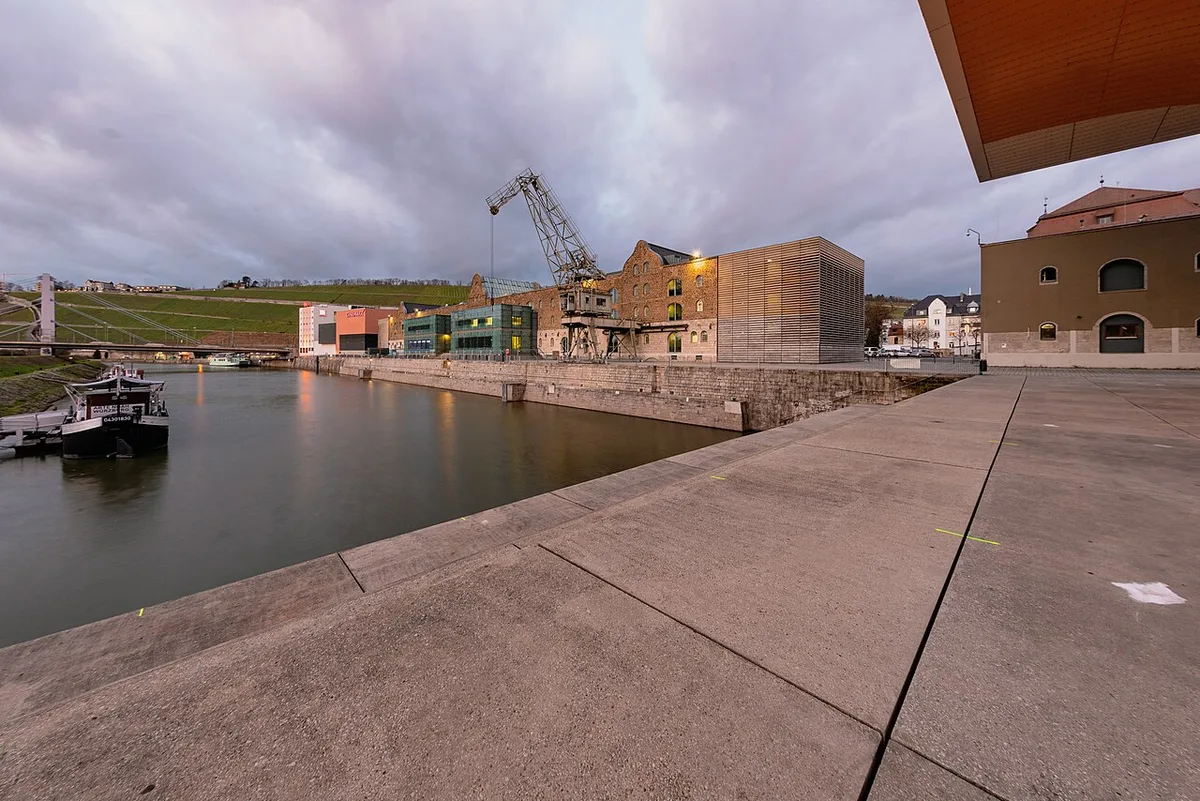
The Museum im Kulturspeicher, almost always shortened to MiK, is Würzburg's museum for art of the nineteenth to twenty-first centuries, housed in a converted granary on Oskar-Laredo-Platz at the Alter Hafen. That address matters: the building sits in the old harbour quarter north of the centre, not in the Residenz gardens and not among the old-master collections. Its identity is modern and concrete art, which makes it the counterpart to Würzburg's Riemenschneider and university museums.
The operator publishes hours for the week: Monday is closed, Tuesday runs 13 to 18, Wednesday to Sunday 11 to 18, and the third Thursday of each month stays open until 21. Plan around the Monday closure first, because it removes a whole day from most weekend-trip itineraries. Hours and holiday exceptions are the kind of detail that shifts, so confirm on the operator page shortly before you travel.
An afternoon here is a reasonable suggestion, not an official duration, and it suits travellers who want twentieth-century art rather than princely interiors. If you are deciding which of Würzburg's museums deserves your limited time, the city's own museum listings set out what each collection actually holds. Read those descriptions before you commit, because the city's museums are not interchangeable.
What the MiK Is, and What It Is Not
The MiK presents art from the nineteenth to the twenty-first century in a historic grain store refitted with modern architecture, and that combination is the point of the place. It is not a treasury, not a prince-bishop's residence, and not the setting for Würzburg's medieval sculpture. Travellers who arrive expecting gilded rooms and Riemenschneider carvings will find contemporary concrete art instead.
Within the city's museum landscape, the MiK holds the modern and contemporary position alongside the Museum am Dom, which the city lists as closed until 2028 for rebuilding work. That closure removes one alternative for modern-art visitors from the current programme. If modern art is your priority, the MiK is the venue to build a day around.
The museum also sits at the centre of a small art cluster at the harbour rather than standing alone. The Galerieschiff ARTE NOAH, the floating gallery of the Würzburg art association, occupies the cultural harbour directly behind the Kulturspeicher and shows contemporary art several times a year between March and November. Checking both programmes before a harbour afternoon can turn a single museum stop into a fuller art visit.
The Setting: Oskar-Laredo-Platz and the Alter Hafen
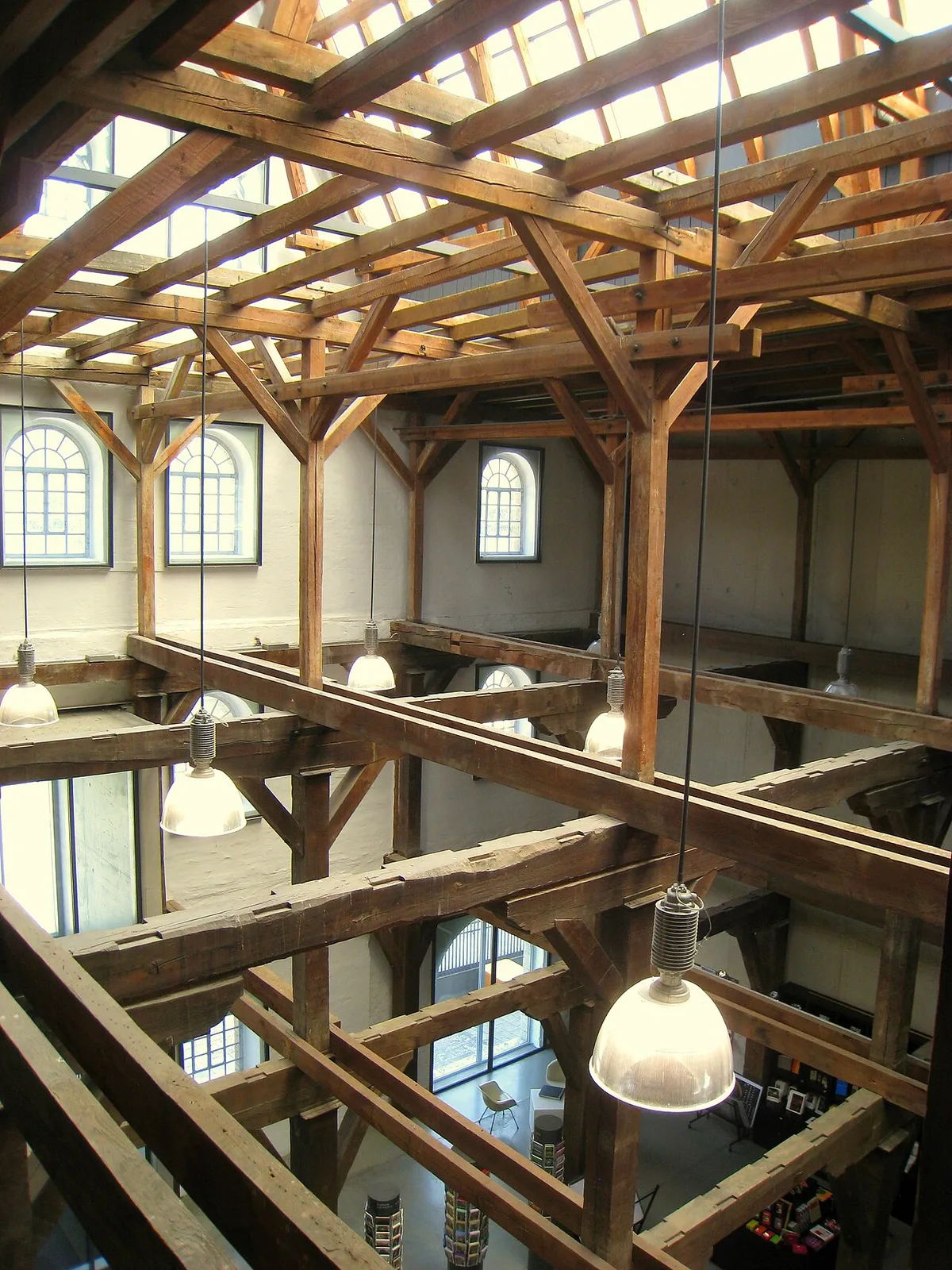
The museum's address is Oskar-Laredo-Platz 1 in Würzburg, on the old harbour. The building began life as a granary, and the conversion keeps that industrial scale while inserting modern exhibition architecture. Knowing this in advance helps you read the interior: the spaces were made for storage, not for courtly display, and the art is shown on those terms.
Because the museum stands in the harbour quarter rather than the historic core, it works naturally as one stop on a walk rather than a standalone detour. The city's own tourism pages group the harbour's cultural venues together, which is a useful way to sequence an afternoon. Build the walk around the harbour and the river, then decide whether the museum is your first or last stop.
If you are coming from the classic Würzburg sights, the Residenz and the old bridge sit in a different part of town, so treat a harbour visit as its own block of time. A walk across the old bridge and through the centre towards the harbour gives the day a clear shape. The old bridge itself is worth its own stop rather than a rushed crossing.
Opening Hours and the Monday Closure
The operator's published hours are Monday closed, Tuesday 13 to 18, Wednesday to Sunday 11 to 18, with the third Thursday of the month open until 21. Those hours favour late mornings and early afternoons from Wednesday onward and give Tuesday visitors a shorter window. Check them again close to your date, because seasonal and holiday adjustments are common at municipal museums.
The monthly late Thursday is the most useful slot for travellers who want to spend a full day elsewhere and still see the collection. It is also the evening when a special exhibition can be absorbed without rushing. Because the third Thursday falls on a different date each month, look it up rather than assuming a fixed day.
Monday closures affect planning more than they appear to, because they remove the first day of many short trips. If Monday is your only free day in Würzburg, use it for the city's outdoor sights and shift the museum to Tuesday afternoon or later in the week. Public holiday openings are not something to assume, so verify before travelling on a holiday.
The Collection: Peter C. Ruppert and Concrete Art
The museum's signature holding is the Sammlung Peter C. Ruppert, devoted to concrete art in Europe after 1945. The city's museum listing frames it as concrete art in a unique setting, alongside the museum's own description of a collection of hundreds of works by hundreds of European artists. That gives the museum a defined identity rather than a general survey, and it is why the MiK attracts visitors with a specific interest in geometric abstraction and constructive art.
The collection is being re-presented in stages, and the second part has been on view since 27 June 2026, with the emphasis on relief works and the Zurich Concretes. The city's listing confirms that focus and frames the Zurich group as a highlight of this instalment. There is no published end date for this part of the re-presentation, so treat it as an ongoing presentation rather than a run you must catch by a deadline.
This staged approach rewards return visits, since each part brings different rooms of the Ruppert collection forward. Concrete art is not always easy for newcomers, and the relief focus gives a concrete visual thread to follow through the galleries. If you have time for only one floor, ask on arrival which spaces currently hold the Ruppert presentation.
Carl Grossberg and the 2026 Exhibition Programme
The major special exhibition of the 2026 season is the Carl Grossberg retrospective, subtitled Sachlich, Magisch, Visionär, running from 26 September 2026 to 17 January 2027. The city lists around 50 paintings with town and village views alongside roughly 100 works on paper, marking Grossberg as a notable painter of Neue Sachlichkeit. The artist lived until 1940 in Sommerhausen in Lower Franconia, which is why the museum frames him as a modern artist rooted in the region.
Grossberg's objective, sometimes uncanny painting gives the museum a different register from the geometric concrete art upstairs. If your taste runs to interwar realism rather than abstraction, this is the exhibition to plan around during its run. It also makes the museum a stronger winter target, since the dates stretch into January 2027.
The museum's own programme includes accompanying events, and individual dates should be read from the operator's current listings rather than from any older page. Evening events tied to an exhibition come and go, so check the programme for the week you are in town. The city's event calendar is another place to cross-check what is scheduled while you are there.
Collection, Special Exhibitions and Ticket Scope
The museum runs on two tracks: the standing Ruppert collection presentation and the temporary exhibitions in separate spaces. Because these are distinct programmes, do not assume that one admission arrangement covers every part of the building at every moment. Ask at the desk or check the operator page for what your visit includes before you pay.
Prices, concessions and any combined tickets are published by the operator and can change between seasons. Rather than relying on older figures, look up the current admission information on the operator site or ask the tourist information service in the Falkenhaus. That is also where you can confirm whether a special exhibition carries separate conditions.
The same caution applies to guided tours, group arrangements and any booking requirements, none of which should be assumed. The museum publishes visitor information during opening hours, and the operator page is the authoritative place to check. If a detail is not published, telephone or email the museum rather than guessing from an outdated listing.
How the MiK Differs from Würzburg's Other Museums
Würzburg's museums divide by period and subject, and choosing well matters more here than in cities where one institution dominates. The Museum für Franken holds the largest Riemenschneider collection in the world, while the Martin von Wagner Museum at the university spans five thousand years of images from antiquity to modernity. The MiK's twentieth- and twenty-first-century focus places it at the opposite end of that spectrum.
For a fuller picture of the city's historic architecture and its UNESCO-listed palace, the Residenz is the standard reference point and deserves its own visit. The palace's court church is a separate focus within that complex and a reminder that Würzburg's heritage sights are not one single ticket either. Splitting the city into a heritage day and a modern-art day keeps both experiences from blurring.
Smaller venues fill in the gaps: the Siebold Museum on the Japan researcher Philipp Franz von Siebold, the Röntgen memorial with the original laboratory, the Jewish Museum Shalom Europa, and the Spitäle gallery by the old bridge among them. The city's museum overview lists them with short descriptions, which is the quickest way to decide what else fits your interests. None of these substitutes for the MiK if concrete art is the goal.
Practical Planning Before You Go
Treat the operator page as the single source for hours, current exhibitions and visitor information, and re-check it in the days before your trip. Municipal museums adjust for holidays, installation periods between exhibitions and special events, and those changes rarely reach third-party listings quickly. A quick look the morning you plan to go is the simplest safeguard.
Accessibility arrangements, guided-tour times and any reservation rules are published by the museum and should be confirmed directly rather than inferred. If you need specific facilities, contact the museum before your visit so you can plan around what is actually available. The city tourism pages also carry general accessibility information for Würzburg, but the museum itself confirms its own building.
Pair the museum with the harbour and, in season, with the floating gallery behind it, then leave time for the walk back through the old town. Allow more time than you think if the Grossberg retrospective is on, since a hundred works on paper take longer than they sound. Build the rest of the day around that reality rather than around an optimistic schedule.
Plan Your Visit
The Museum im Kulturspeicher is the right stop in Würzburg for concrete art, interwar realism and twentieth-century work in an industrial harbour setting. Plan around the Monday closure, watch for the monthly late Thursday, and check the operator page for the current exhibition mix before you go. If both the Ruppert presentation and the Grossberg retrospective are on, give the museum a proper half day rather than a hurried hour.
Build the rest of the day from the harbour: the old bridge and the city centre are a short walk away, and the Residenz makes a natural counterpart on a heritage-focused day. Booking, prices and accessibility details change, so confirm them with the museum or the tourist information service rather than trusting an old listing. That single habit prevents most wasted trips.
Frequently Asked Questions
Is the Museum im Kulturspeicher open on Mondays?
No. The operator's published hours list Monday as closed, with Tuesday running 13 to 18, Wednesday to Sunday 11 to 18, and a late opening until 21 on the third Thursday of each month. Because holiday and seasonal adjustments happen, check the museum's own page for the week you plan to visit rather than relying on a fixed assumption.
What kind of art can you see at the Museum im Kulturspeicher?
The museum focuses on art from the nineteenth to the twenty-first century, with its signature holding being the Sammlung Peter C. Ruppert, a collection of European concrete art made after 1945. Temporary exhibitions add other positions, including painting of Neue Sachlichkeit in the 2026 programme. It is the modern and concrete art venue in Würzburg rather than a collection of old masters or medieval sculpture.
Which exhibitions are on at the Kulturspeicher in 2026?
The city's exhibition listings give the Carl Grossberg retrospective, subtitled Sachlich, Magisch, Visionär, as running from 26 September 2026 to 17 January 2027, and the second part of the Ruppert collection re-presentation as on view since 27 June 2026, focused on relief and the Zurich Concretes. Programme details change, so check the museum's own listings before travelling for a specific exhibition.
How does the Kulturspeicher differ from Würzburg's other museums?
Würzburg's other major museums cover different ground: the Museum für Franken holds the world's largest Riemenschneider collection, and the Martin von Wagner Museum spans antiquity to modernity. The Kulturspeicher occupies the modern and contemporary position, and the Museum am Dom is listed as closed until 2028 for rebuilding work. If concrete art and twentieth-century painting are your interest, the Kulturspeicher is the city's matching venue.
Where is the Museum im Kulturspeicher located?
It stands at Oskar-Laredo-Platz 1 in Würzburg, in the Alter Hafen quarter on the old harbour, in a converted granary. That places it outside the immediate historic core around the Residenz and the market, so it is best treated as part of a harbour-side walk. The Galerieschiff ARTE NOAH, a floating gallery, sits in the cultural harbour behind the museum and is worth checking in season.


