The Spielzeugmuseum Trier was for years a familiar name in family itineraries for Germany's oldest city, but the situation changed. The operator now states that the museum is closed for an indefinite period because of necessary building work. No reopening date is published, so any page still describing the museum as open should be treated as out of date. Confirm the closure notice before you build a day around the address. For wider planning, see Trier With Kids.
Trier itself remains workable for families because the old town packs Roman monuments, churches and museums into a compact, walkable area. Use the city's tourist information service for current opening times and family programmes instead of cached listings. A few minutes of checking before you travel is worth more than a saved itinerary that sends you to a locked door.
What the Toy Museum Was, and Why It Appeared in Family Plans
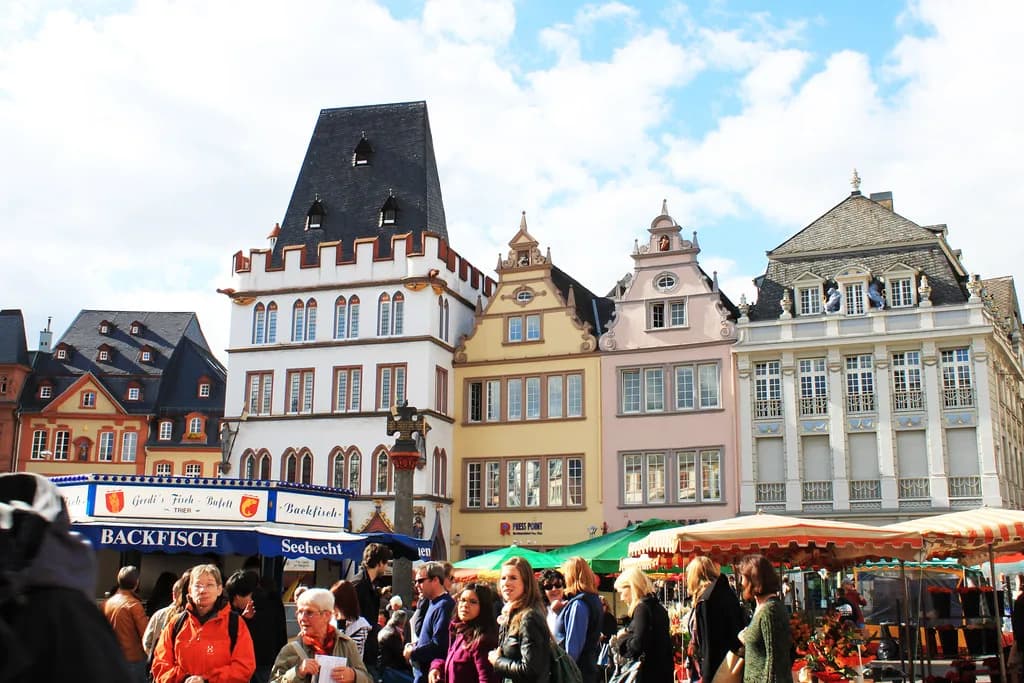
The museum stood at Hauptmarkt 14, on Trier's main market square, which made it unusually convenient for families already walking the old town. Parents could pair the market, the Porta Nigra and a toy collection without a bus ride or a long walk with small children. That central position still helps with orientation, because the surrounding streets, cafés and squares remain part of any family day. The closure mainly changes what you do indoors, not the shape of the walk.
The Eifel tourism portal describes a collection of toys spanning more than a hundred years, with tin toys, railways, dolls and dollhouses, toy shops, teddy bears, steam engines and rocking horses. A regional family-culture page adds that Rolf and Heidi Scheurich began assembling the collection and opened the exhibition in Trier in 1989 with more than 5,000 objects spread across 500 square metres and two floors. A separate Rhineland-Palatinate tourism listing says the association Trierer Spielzeugmuseum e.V. took over the museum in 2010. Those details come from third-party pages, so treat them as historical description rather than current visitor information.
Current Status: Closed for an Indefinite Period
The operator's own website states that the Spielzeugmuseum Trier e.V. is closed for an indefinite period, that the reason is necessary building work on the building, and that the notice was last modified on 25 December 2025. There is no published reopening date, so nobody can responsibly promise one. The same notice thanks visitors, friends and sponsors for thirty-five years of support, which suggests this is not a short seasonal break. Check that page shortly before you travel rather than trusting a search snippet.
Aggregator and tourism listings update slowly, so pages still describing the museum as open with specific hours are common. A schedule on a third-party site is not confirmation that doors are unlocked, and the operator's closure notice takes precedence. The practical step is to open the museum's site, check whether the closure notice is still the newest item, and only then decide whether the address belongs in your route. For broader questions about the city, the Tourist-Information Trier publishes its own service hours, with Monday to Saturday 09:30 to 18:00 and Sunday 10:00 to 17:00 listed there.
What Children Used to See Inside
Dated descriptions explain why the museum worked for young children. The Eifel tourism page mentions dolls and dollhouses, toy shops, teddy bears, steam engines and rocking horses among the displays. A family-culture listing records dolls from early ceramic examples to modern play dolls, tin figures arranged in battle order and in village scenes, a space landscape with robots, spaceships and UFOs, and board and learning games on the upper floor. That range matters for planning a similar visit elsewhere, because it shows children respond to variety, not just one type of exhibit. Treat all of it as a description of what was on display, not a promise for a closed building today.
The best-known feature was a small village scene with Steiff animals that moved on wooden wheels and leather belts. According to the family-culture listing, it was designed for the Nuremberg toy fair in 1962 and later animated in a care home before coming to the museum. A visitor account from 2019 mentions working models such as a carousel and trains, dolls up to life size, and large numbers of cars and plush animals. That account describes a child who lost her tiredness within minutes of entering, which says something about the draw for young visitors. It does not mean exhibits can be touched or played with now, since no current handling or play offer is published.
Old Prices and Opening Hours Are History Now
Tourism portals still carry dated admission figures. The Eifel listing shows adults at 5.00 euros, youths aged 11 to 18 at 2.50 euros, children aged 4 to 11 at 2.00 euros, free entry for children under 4 and a family card for 2 adults plus up to 3 children at 12.00 euros, together with a Tuesday to Sunday 11:00 to 17:00 schedule closed on Mondays. A separate Rhineland-Palatinate tourism listing, last updated on 30 December 2023, gives adults at 6.00 euros, reduced 4.50 euros, youths aged 11 to 18 at 3.00 euros, reduced 2.50 euros, and children aged 4 to 10 at 2.50 euros, reduced 2.00 euros.
None of those numbers can be quoted as valid 2026 admission because the museum is not selling tickets. They describe a museum that was open in earlier years, and the differing figures between two portals show how quickly such listings drift. If a page presents them as current, that is a sign it has not been maintained. For any open museum in Trier, verify the ticket scope on that museum's own site, because the city's collections do not share one combined admission. The Karl Marx House, the Rhineland State Museum and the Roman monuments each set their own entry rules.
Rainy-Day Alternatives That Still Work for Families
Trier has enough indoor material to fill a wet morning without the toy museum. The Rhineland State Museum near the Porta Nigra pairs Roman archaeology with the Trier gold hoard, and the Karl Marx House offers a compact house museum closer to the river. Both sit inside the old town, so you can move between them without a car and retreat to a café when the rain eases. Check each museum's own page for current hours, since these collections keep their own calendars and ticket rules. For more wet-weather ideas, see Trier on a Rainy Day.
The underground passages at the Imperial Baths are a different kind of indoor stop, since much of the experience is below ground and sheltered by the site itself. One travel account describes tunnels that feel like dungeons and notes that a light helps, though current access and hours should be confirmed before you rely on a particular route. Combine that with a short walk through the Palace Gardens, which works in light rain and lets children burn off energy between museum stops. Two indoor anchors per day is usually enough; tired children handle a shorter, better-paced plan.
Pairing the Market Square With Roman Sights
The Hauptmarkt is the natural hinge for a family walk. The market cross, the fountain dedicated to St Peter and the surrounding façades are visible from the square, and food stalls and cafés sit within a few steps. From there, the Porta Nigra is a short stroll in one direction and the cathedral and Church of Our Lady in another. This compact geography means the loss of one museum costs you a single stop, not the whole day. Build the plan around the square and you can swap stops as weather or energy dictates.
Roman sites add variety that children often respond to better than expected. The amphitheatre lets you walk into the arena and down toward the cellar where animals and prisoners were once held, and the Barbara Baths ruins come with a boardwalk and information panels above the remains. Both involve climbing, open space and imagination, which is a useful counterweight to glass cases. Check current access and hours per site rather than assuming one ticket covers every Roman monument in the city. For more detail, see the Trier Amphitheater visitor guide.
Practical Family Logistics in Central Trier
Most of what a family wants sits within a walkable old town, with the main station at the edge and the Porta Nigra as the obvious first landmark from the station side. That reduces the need for buses or taxis, which matters when you are carrying bags or pushing a buggy over cobbles. Distances between the market, the cathedral and the riverside are short enough to split a day into two or three comfortable blocks. Wear shoes with grip, because paving around the Roman sites and market is uneven.
Plan two-hour stretches with a sit-down break rather than a packed schedule, since museum fatigue hits younger children quickly. In its open years, the toy museum covered roughly 500 square metres across two floors according to the family-culture listing, and visitor accounts suggest about an hour was enough for a comfortable walk-through. That is an editorial estimate, not an official duration, and it no longer applies while the museum is closed. For open sites, allow more than you think for Roman ruins with tunnels and stairs. Carry a light rain layer and small snacks, then leave the afternoon loose enough to cut a stop.
Plan Around the Closure, Not the Listing
The honest summary is that Trier's toy museum is not a stop you can currently plan on. Its operator states an indefinite closure for building work, with the notice last modified on 25 December 2025, and no reopening date has been published. Older listings that still show Tuesday-to-Sunday hours and a few euros' entry describe a museum that was open in earlier years. Confirm the status yourself before you travel, then put your family time into the Roman sites, the market square and the museums that are actually receiving visitors.
Be sceptical of any page presenting the museum as bookable, since a past listing does not prove tickets are on sale today. If a reopening is announced, it will appear through the operator and the city's tourist information channels first. Until then, treat the address as a point of orientation on a walk through the old town, not as a destination with a door to open. A well-verified plan is the only plan worth carrying when travelling with children. Further visitor details appear in Home - Tourist-Information Trier.
Frequently Asked Questions
Is the Spielzeugmuseum Trier still open?
No. The museum association states on its own website that the Spielzeugmuseum Trier is closed for an indefinite period because of necessary building work, and that notice carries a last-modified date of 25 December 2025. No reopening date is published, so treat any page that still describes the museum as open as out of date, and check the operator's site again shortly before your trip.
Why did the Toy Museum in Trier close?
The operator attributes the closure to necessary building work on the building. The notice does not give a schedule for that work and does not say when or whether the museum will reopen. Anyone who tells you a fixed reopening month is guessing.
How much did the Spielzeugmuseum Trier cost to visit?
Tourism listings from its open years carried an adult ticket in the region of five to six euros, with lower rates for teenagers and younger children and a family card. Those figures are historic only. They are not valid 2026 admission, and the museum is not selling tickets while it is closed. Check the operator and the city tourist information for any future price list.
What could children see inside the toy museum?
Dated descriptions list more than 5,000 objects across roughly 500 square metres, including dolls from early ceramic examples onward, tin toys, model and steam railways, dollhouses, tin figures, a space display and a small animated village with Steiff animals. A visitor account from 2019 also mentions working models such as a carousel. All of this describes what was on display; no current handling or play offer is published.
Is it a good rainy-day option for families in Trier?
Not now, because the museum is closed indefinitely. For wet weather, the Rhineland State Museum and the Karl Marx House are indoor options in the old town, and the underground passages of the Imperial Baths are largely sheltered. Check each site's own page for current hours and ticket rules, since they do not share one admission.
What can families do instead in Trier?
Combine the Hauptmarkt with the Porta Nigra, the cathedral and the Church of Our Lady, then add one indoor museum and one Roman site such as the amphitheatre or the Barbara Baths. Two well-paced blocks with a sit-down break usually work better than a packed schedule. Verify hours and access per site rather than assuming a single ticket covers the Roman monuments.