The southern bridge tower of Regensburg's Steinerne Brücke holds a museum that its operator calls the smallest in the city, and that scale is the single most important thing to understand before climbing it. The bridge itself is open ground: you can walk its full length between the old town and Stadtamhof without paying anything. The tower is a separate, ticketed room-sized exhibition, so the useful question is not whether the bridge is worth visiting, but whether the tower deserves part of a day that is already full of medieval architecture.
Regensburg's old town and Stadtamhof together form a UNESCO World Heritage site, and the Stone Bridge is one of the structures that earned the listing. The city is compact enough that the tower sits within easy walking distance of the cathedral and the Danube promenade, which makes it a natural add-on rather than a destination that needs its own half-day. For planning around landmarks across the city, the Regensburg: Landmark Visitor Guides collection is a sensible starting point.
Why the Stone Bridge tower matters: three towers once stood here
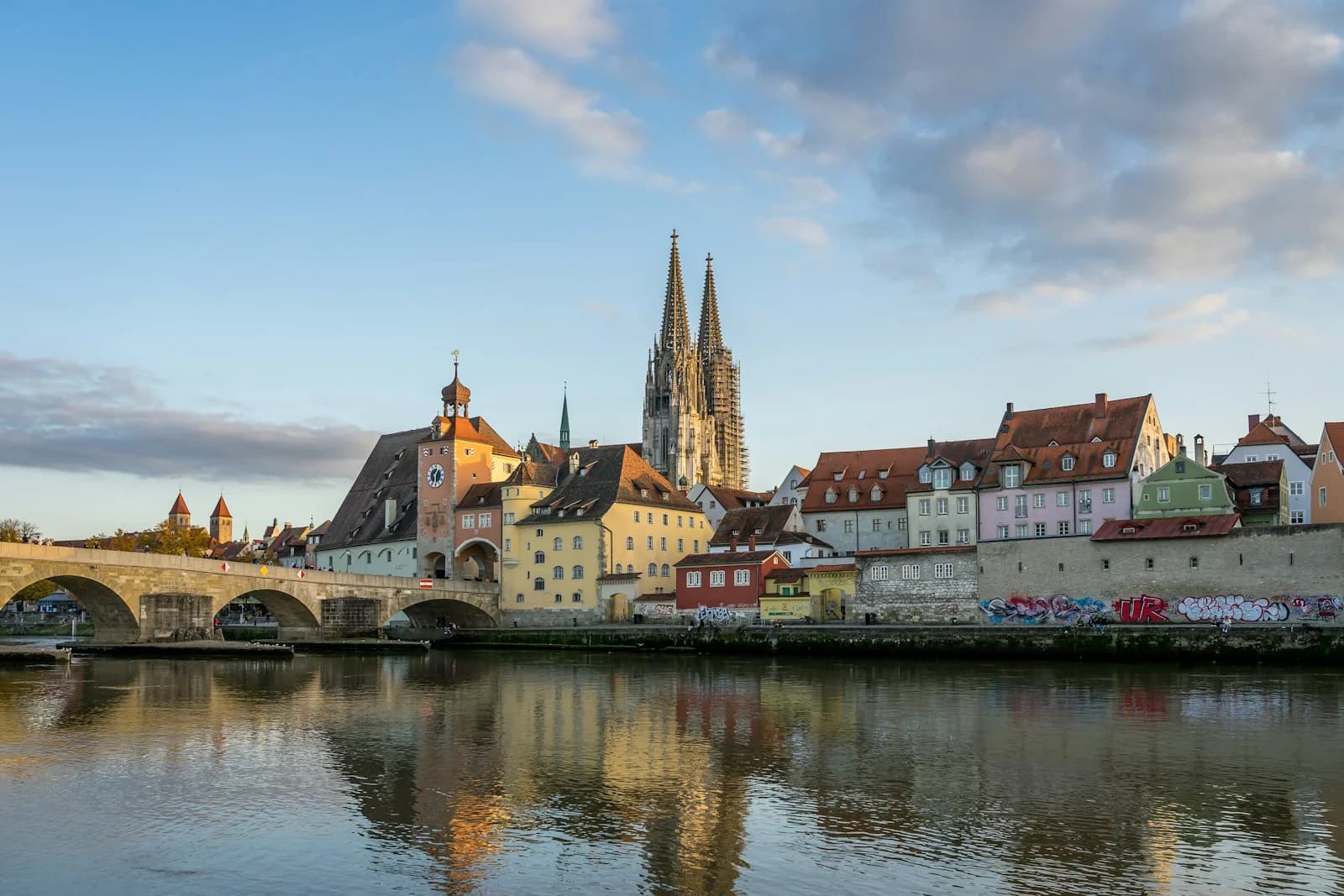
The Stone Bridge was not built with a single tower but with three: one at each end and one at the midpoint. Only the southern tower still stands today, which is why the Brückturm is the one structure on the bridge that preserves this part of its original silhouette. The bridge arch and tower belong to a phase of city expansion around 1320, roughly two centuries after the bridge itself was begun.
That surviving-tower detail shapes how you should read the museum: it is not a general bridge exhibition but a record of the one fragment of the bridge's defensive architecture that visitors can still enter. The bridge is presented by the city as a medieval engineering landmark, and the tower is the part of it you can climb inside rather than only look at. City-wide context on what else competes for your time sits in the Regensburg: Itineraries and City Travel Guides hub.
What the Brückturm Museum actually contains
The museum was set up in 2000 and occupies the tower's interior with three main strands. The first is documentation and evidence relating to the construction period of the Steinerne Brücke, with the bridge's history traced from 1146. The second is the tower clock's original mechanism, which the operator records as having struck for the first time on 22 July 1652 at three in the afternoon.
The third strand is the human one: the tower guard lived directly under the roof in two small rooms with a kitchen, and those former living quarters are part of what you walk through. That mix of engineering record and everyday domestic space is what separates the Brückturm from a conventional museum. Budget a short stop rather than an afternoon; a suggested twenty to forty minutes covers the displays plus the view, though that timing is a planning suggestion and not an official figure.
The tower also has a social history that goes beyond guarding. Debtors were once locked in the tower and begged for coins by lowering a fishing rod from the window to collect money toward their debts. That story reframes the museum as a small social-history stop as much as a bridge-engineering one.
The view from the top: south over the old town, north to Stadtamhof
The real payoff of the climb is the outlook from the guard's former rooms. Looking south you see the historic city over its rooftops; looking north the view runs across the Danube and along the Stone Bridge toward Stadtamhof. This is a different perspective from the flat panorama you get standing at bridge level, which is the strongest argument for paying to go up rather than simply walking across.
Stadtamhof, on the northern bank, only became part of Regensburg in 1924 and is now a district of cafés and greenery on the far side of the water. Because the museum sits at the southern bridgehead, the natural route is to see the tower first, then cross the bridge and explore the northern bank afterward. The free crossing means the two banks belong to the same outing rather than two separate trips.
Free versus paid at the bridge
Walking the Stone Bridge costs nothing, and that has been true for years: a 2020 report on the bridge listed the crossing as always open and free, and the bridge now serves primarily as a pedestrian and bicycle route between the old town and Stadtamhof. The museum in the southern tower is a separate, small per-person admission rather than part of any bridge-wide ticket, so do not expect one payment to cover the whole structure.
The operator publishes an admission figure on its visitor page, but that page is undated, so the amount should be treated as indicative rather than confirmed for any given season. Check the operator's own visitor information shortly before you go, and do the same for the season: the published opening months and daily hours come from the same undated page, so they may not match what you find on the ground.
Do not assume the tower is open in a particular month, on a holiday, or during any works period; no current source confirms that. If your trip depends on getting inside, confirm directly with the operator before building a day around it. Free alternatives nearby carry no such uncertainty, and the free things to do in Regensburg overview is useful for balancing a day that leans on paid interiors.
Practical decisions: season, ticket scope and group tours
Treat the tower as one item in a cluster of separate admissions rather than a single bridge ticket. The cathedral treasury museum, for example, publishes its own normal and reduced rates and its own opening hours, and the House of Bavarian History runs on its own schedule, with a free panorama show in its foyer. Assuming one ticket covers several of these is the most common planning error in this part of the city.
The operator states that guided tours for groups are arranged by prior registration rather than offered on a walk-up basis, and that a group tour carries its own fee on top of admission. If you are travelling as a group, that means contacting the museum in advance; a solo or couple visit, by contrast, is simply a matter of turning up during opening hours.
Access is another point where the available material stops short: nothing confirms step-free entry, a lift, or wheelchair access to the tower interior, and a historic bridge tower with a climb should be assumed to involve stairs until the operator says otherwise. Ask before you plan around it. For visits shaped by weather rather than access needs, the rainy day guide covers how to combine indoor stops when the Danube weather turns.
Who should skip the Brückturm, and where to go instead
Skip the tower if you are expecting a full-scale museum with galleries, labels in several languages and a substantial collection. The operator itself describes the Brückturm as the smallest museum in Regensburg, which is an accurate warning rather than modesty. Go if you want the tower's clock, its construction documents, its guard's quarters and its rooftop-level view in one compact stop, and you are comfortable with a very small space.
For deeper bridge and city history, the Historisches Museum Regensburg holds the wider archaeological and cultural collections, including Roman finds from the legion camp that preceded the medieval city. That is the place to go when the tower's handful of rooms leaves you wanting more.
Other towers and viewpoints around the old town offer comparable panoramas without a bridge theme, and several churches and municipal buildings in Regensburg run their own tower ascents. If the view is the goal rather than the clockwork, compare those options before committing to the Brückturm. One nearby building with a long civic history is the old town hall, covered in this Regensburg Altes Rathaus visitor guide if you want an interior to pair with a bridge walk.
Combining the tower with both banks in one day
A workable sequence is to start on the southern bank at the tower, walk the bridge north into Stadtamhof while the light is good, and return to the old town for the afternoon. The bridge sits beside the House of Bavarian History on the Danube, so the two can share a morning without any transport between them. Keep the tower as a short fixed piece of the day rather than something that expands to fill it.
If you want a longer excursion, boat trips run from the Danube and memorial sites such as the Befreiungshalle Kelheim day trip from Regensburg sit further upriver, but both consume most of a day and should not be stacked on top of a dense old-town schedule. Choose one anchor for the day and let the tower be the smaller stop it is. The Museum of Bavarian History is the logical indoor counterpart when the weather turns.
If your interests run to Roman rather than medieval Regensburg, the Porta Praetoria, the surviving north gate of the legion camp, is a short walk inland and pairs naturally with the city's other ancient remains. That pairing works because both are outdoor or low-commitment stops. For broader city orientation before you commit to a route, the tourism office maintains current visitor information and can confirm opening details for individual sites.
Plan Your Visit
The Brückturm Museum rewards a specific kind of visitor: someone who wants to stand inside the last of the Stone Bridge's three towers, see the 1652 clockwork and the guard's rooms, and look out over the Danube and the old town from a spot most bridge walkers never enter. It is a small, separate admission on top of a free crossing, so treat it as a short, targeted stop rather than a headline attraction.
Before you go, confirm the operator's current season, daily hours and admission on its own visitor page, since the published details are not dated, and ask about stairs and group bookings if either matters to you. Build the rest of the day around the free bridge walk and the city on both banks. The Regensburg Cathedral and the wider old town are within walking distance, so the tower can slot into almost any itinerary without much detouring.
Frequently Asked Questions
Is the Stone Bridge in Regensburg free to walk across?
Yes. Crossing the Steinerne Brücke costs nothing and the bridge functions as a pedestrian and bicycle route between the old town and Stadtamhof. The museum in the southern tower is a separate, small per-person admission, so the bridge itself and the tower interior are two different things with two different rules.
What is inside the Brückturm Museum?
Three things dominate the small interior: documentation and evidence about the construction period of the Stone Bridge, the tower clock's original mechanism, and the former living quarters of the tower guard under the roof. The guard's rooms also provide the view south over the old town rooftops and north across the Danube toward Stadtamhof.
How long does the bridge tower museum take to visit?
Plan for a short stop rather than an afternoon: the operator calls it the smallest museum in Regensburg, so a suggested twenty to forty minutes covers the displays and the view comfortably. That range is a planning suggestion, not an official duration, and anyone reading every panel slowly will take longer.
Do you need tickets in advance for the Brückturm Museum?
For an individual visit, no advance booking is implied; you pay the small admission on entry during opening hours. Group tours are different: the operator states that group tours are arranged by prior registration, so organisers should contact the museum in advance rather than arriving and expecting a guided visit.
How many towers did the Stone Bridge originally have?
Three: one at each end of the bridge and one at the middle. Only the southern tower survives today, and that is the one housing the Brückturm Museum, which is why the bridge's current outline looks different from its original design.
Is the Brückturm Museum worth visiting?
It is worth it if you want bridge-engineering history, the original clockwork, the guard's quarters and an elevated view in one compact stop. Skip it if you expect a large museum with extensive collections, and head instead to the Historisches Museum Regensburg for the wider city and Roman material.
Sources
- Stone Bridge (Regensburg)
- Being a tourist - RegensburgNow
- Hang out under a 12th century stone bridge in Regensburg | Stars and Stripes
- DSMR.de
- Experience & Discover: Regensburg Tourismus GmbH
- Porta Praetoria, Regensburg, Germany - SpottingHistory
- Regensburg
- Cathedral treasure museum: Regensburg Tourismus GmbH
- Haus der Bayerischen Geschichte | Museum (House of Bavarian History | Museum) - Museen in Bayern