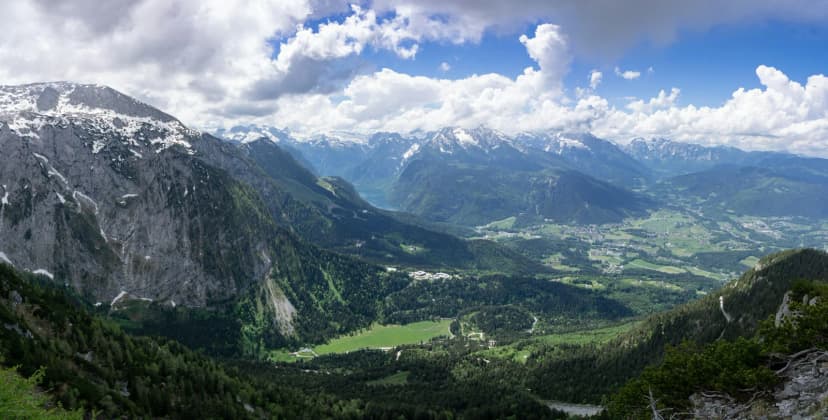
The Befreiungshalle rises on the Michelsberg above Kelheim, downstream from Regensburg along the Danube valley, and it is the single most rewarding half-day excursion from the city. Where Regensburg rewards slow wandering through a medieval old town, Kelheim delivers one dramatic neoclassical building on a hill, with river views in every direction. The town also sits at the mouth of the Altmühl and at the entrance to the Danube gorge, so a single day out can combine architecture, a boat ride and limestone cliffs.
Structure your day around one fixed point rather than a list. The monument consists of the round hall itself, a ring of victory figures inside, tribe figures on the exterior and balconies above the hall; the open hilltop around it is a separate matter. Whether grounds access and interior admission are split, combined or seasonal is something the operator states on its own site rather than something you should assume from an old blog post. Check the operator's pages for current opening hours and admission before you travel, and treat any figure you see elsewhere as a historical quote rather than a live price.
This guide covers how the trip actually works: what the building is, how to reach Kelheim without a car, how much walking the hill involves, and how to build half-day or full-day shapes around it. It also links wider Regensburg planning material so you can slot the excursion into a longer stay.
Short Answer: What the Befreiungshalle Is and Where It Sits
The Befreiungshalle, also translated as the Hall of Liberation, is a neoclassical monument on the Michelsberg hill above Kelheim, honouring victories in the Wars of Liberation of 1813 to 1815. It was commissioned by King Ludwig and constructed in local limestone, and it appears among the top attractions in Kelheim in a 2026 round-up of the town's most-mentioned sights. It overlooks Kelheim and the Danube valley, and on the water side it is reached via the boat landing stage and the Ludwigsbahn, the little railway that carries passengers up towards the hall.
The plan shape is simple: a round hall with an outer ring of statues and an interior ring of victory figures, topped by balconies with wide valley views. Because the hilltop is exposed and the interior circulation is narrow, the visit is not a passive one. Expect stairs, a gentle walking pace and a general sense of being above the town rather than in it.
What the Monument Actually Is: Design and History
Construction began in 1842 under the initial architect but stalled when he died, and King Ludwig then asked Leo von Klenze to take over the design. Work resumed in 1848 and the hall was completed in 1863, more than two decades after the first stone was laid. The delay is worth knowing because it explains why the building feels like a product of high neoclassicism rather than of the commemorative moment itself. A travel account from 2020 describes exactly this sequence and also records the narrow staircase up to the gallery and balconies.
The interior is a round hall of roughly 45 metres in height and around 29 metres in diameter, ringed by 34 victory figures whose hands rest on shields turned towards the centre. On the outside, 18 statues represent the German tribes who took part in the campaigns against Napoleon, which is exactly the kind of allegorical programme common to Ludwig's monument projects.
Reading the Building: Statues, the Inner Gallery and the Balconies
Once you are inside, the visit unfolds in levels rather than rooms: the main floor around the central opening, a walkable gallery behind the ring of victory figures, and two balconies above them. The stairs to the gallery and balconies are narrow enough that on a hot day you will want to take them slowly, and the balcony views over Kelheim, the Danube and the wooded slopes are the reason to push on. Whether the gallery and balconies are open on the day of your visit is something the staff at the entrance and the operator's own notices will state, so ask on arrival rather than planning around a specific detail.
Decide before you go whether you are treating this as an architecture visit or a viewpoint visit. If it is architecture, read the statue programme first and allow time for the interior; if it is a viewpoint, allow enough slack in your schedule to linger on the balconies when the light is right. Either way, budget for the walk up and back down again, which is the part most first-time visitors underestimate.
Getting There From Regensburg: Rail, Road and the Boat Option
The straightforward way from Regensburg is to travel to Kelheim by train or road and then continue to the Michelsberg, which is the classic pattern for a day trips from Regensburg itinerary. Because timetables, bus and rail connections and journey times change with the season and with engineering works, check current connections rather than relying on a schedule you read in an old post. If you are new to the region's transport, the Regensburg by train and bus guide covers the city's network and how to move between the station, the old town and the surrounding area.
The second option is the water route: a Danube boat from Kelheim's landing stage toward the gorge, paired with the Ludwigsbahn, the little railway that carries passengers up towards the hall. Departure schedules, fares and operating seasons for both the boats and the Ludwigsbahn change from year to year, so confirm them with the operator before you plan the day around them. Treat the boat-and-rail combination as a fair-weather option that rewards you with scenery rather than speed.
If you have a car, the drive is short and gives you the flexibility to combine the hall with other Kelheim sights in one loop. If you do not, plan the trip as a train-to-town journey with a walk or local transfer to the hill, and leave margin for the return leg. The Kelheim and Danube gorge day trip from Regensburg guide goes deeper into combining the hill with the river and the town's other sights.
Climbing Michelsberg: Stairs, Slopes and How Much Walking Is Involved
The Befreiungshalle sits on top of the Michelsberg, so every route to it involves a climb. Visitors who park near the site still have stairs and a slope to negotiate before they reach the entrance, and those arriving from below or from the landing stage have more. Expect the hilltop itself to be steeper and more stepped than a typical viewing platform, and dress accordingly.
Inside, the stairs to the gallery and balconies are described as narrow, which makes them the limiting factor on a busy day rather than the entrance. If you have mobility concerns, ask the operator before travelling about how the site can be reached and whether step-free access is available, since this is something only the operator can confirm. Build the trip around the assumption that you will be on your feet for most of it.
Tickets and Visiting Logistics: What to Confirm Before You Go
The best single place to confirm the current arrangement is the operator's own site, where opening times, seasonal variations and admission are published. Do not assume that the outdoor hilltop experience and the paid interior are the same product: treat them as separate things to check, and confirm whether the grounds and the hall share a ticket, are separately ticketed or are free to enter on the day. Many blog posts quote figures that are years old, so any number you see outside the operator's own pages is history rather than a booking reference.
On the Regensburg side, the tourist information office at Rathausplatz 4 is the practical fallback for opening times, maps and city-wide advice, and it publishes its visitor hours for the season, with telephone support during the same period. Use it to confirm transport links and to pick up a town map if you are planning to combine the hall with anything else in Kelheim. If you are also considering a museum later in the day, note that city and museum opening hours in Regensburg change across the year and are worth confirming individually.
Pairing the Hall With Kelheim's Other Sights
Kelheim is not just the hill it sits above: the 2026 round-up of things to do there also lists Weltenburger Enge, the Danube Gorge, the old canal harbour, the town gate and the archaeological museum. The Danube gorge in particular turns the day from an architectural excursion into a landscape one, and it is reachable from the same town or from the water. If you have time for one addition only, the gorge is the most natural pairing with the hall because it uses the same stretch of river.
The gorge and its surrounding sites are best treated as a walking and boating landscape rather than a monument checklist, since the cliffs are the attraction. Expect to spend more time there than the map suggests, especially if you stop at the riverside points along the way. A Kelheim and Danube Gorge Day Trip from Regensburg shape works because both halves are within a short distance of each other.
Back in Regensburg, the obvious counterweight is the UNESCO-listed old town itself, which is compact enough to walk in the evening after you return. A wide range of city and cultural material is published through the city's portal, which is useful when you want to see what is on during your dates, and the Regensburg page pulls the landmark and itinerary strands together. If you need a single afternoon indoors, a Regensburg document Neupfarrplatz visitor guide covers a smaller archaeological site that suits a shorter stop.
Suggested Half-Day and Full-Day Shapes
Suggested half-day shape, for a first visit: reach Kelheim mid-morning, walk or transfer up to the Michelsberg, and spend your time inside the hall and on the balconies rather than in the town. Have a late lunch in Kelheim afterwards, then return to Regensburg in the afternoon. This works when you want the monument first and everything else second.
Suggested full-day shape, for the landscape: go to Kelheim in the morning, walk up to the hall first while the light is still behind you over the river, then head down and use the afternoon for the Danube gorge or Weltenburg. Take the boat if it is running and the Ludwigsbahn is available; otherwise structure the day on foot and with local transport. The trade-off is pace versus coverage: a full day gives you both the architecture and the valley, but leaves little time for Kelheim's old town.
A third shape is for travellers based in Regensburg who want to keep the evening in the city. Do the hall as a straightforward out-and-back, leave the gorge for another day, and use the rest of the afternoon in Regensburg's old town. This is the least tiring version and the one that fits around fixed rail connections.
Practical Timing: Season, Weather and Daylight on an Exposed Hilltop
The Michelsberg is a hilltop and behaves like one: wind, sun and sudden weather changes matter more there than in Kelheim's streets below. The season also shapes what is open, and the operator's site is the place to confirm the current calendar rather than assuming a summer pattern. If you are visiting in the colder half of the year, shorter days and thinner visitor numbers both point toward an earlier start.
Regensburg's tourism material is broader than monuments, and its Experience and Discover pages are a useful check on what else is running while you are in the region. Pair the hilltop day with lower-altitude or indoor alternatives in case the weather turns. If you need a rainy-day plan inside the city itself, the Regensburg attraction page links out to several options.
What to Skip If You Only Have a Few Hours
With only a few hours, skip the attempt to combine the hall with the gorge and Weltenburg, because the transfers between them eat the time you would spend looking at anything. Choose the hall alone, and accept that you will not see Weltenburg on the same trip. That is a real trade-off rather than a loss: the two sites reward different kinds of attention.
Also skip trying to walk the full riverside network if your transport back to Regensburg is fixed. Build in a buffer before your return leg, because the hilltop descent and any local transfer can absorb more time than expected. If you are genuinely short of time, the honest answer is that the Befreiungshalle deserves its own half day rather than a rushed hour.
Getting Back and Using the Rest of the Day in Regensburg
Returning to Regensburg in the late afternoon leaves the evening open, and the city is small enough to walk at that hour. The Stone Bridge and the old town stretch along the Danube side, which makes for a natural finish to a day that already involved the river. If you want to know what is on, the city's cultural listings are the place to look rather than a fixed itinerary.
Roman Regensburg is the other easy evening thread: the Porta Praetoria, the surviving north gate of the legion camp, sits close to the cathedral quarter and is described as the only remaining Roman gate north of the Alps apart from Trier's Porta Nigra. If you want to end the day indoors, check which museums in the city are open before setting out, since hours shift by season and by institution. Both options work because the distances involved are short, and the Regensburg page collects the relevant landmark guides.
Plan Your Visit
The Befreiungshalle is a realistic day trip from Regensburg precisely because it does not pretend to be a full city: it is one building, on one hill, with a river valley around it. Confirm the operator's current opening times and admission before you travel, decide whether you are going by train, road or, in season, by water, and give the climb and the interior stairs the time they actually need. The Regensburg materials linked above cover the rest of the city once you are back.
Frequently Asked Questions
Is the Befreiungshalle free to visit?
The monument is run by an operator that publishes its own admission and opening information, and the reliable way to answer this is to check those pages before you travel. Do not assume that the hilltop grounds and the hall interior share the same conditions of entry, because they may be handled differently. Do not rely on figures quoted in older travel blogs, which may describe a past season.
How long do you need at the Befreiungshalle?
Allow a half day for the excursion as a whole, including the journey from Regensburg and the climb up the Michelsberg. The hall itself, the inner gallery and the balconies are not large, but the approach, the narrow interior stairs and the views all take time. If you want the visit to feel unhurried, set aside more than you think the building alone would need.
Can you combine the Befreiungshalle with Weltenburg Abbey in one day?
Yes, this is a common full-day shape, and the two sites sit in the same stretch of the Danube valley near Kelheim. The main constraint is transport: boats and the Ludwigsbahn operate seasonally and on their own schedules, so check before you commit to a route. If schedules do not line up, treat the two as separate days rather than trying to force them together.
How do you get from Regensburg to Kelheim without a car?
Rail from Regensburg to Kelheim is the usual car-free approach, followed by a transfer or walk up to the Michelsberg. Bus and rail links change with the season and with works on the line, so confirm current connections rather than relying on a remembered timetable. In the boating season, the Danube boat from Kelheim and the Ludwigsbahn offer a scenic alternative.
What is there to see inside the Hall of Liberation?
The interior is a round hall ringed by 34 victory figures holding shields and facing inward, with a walkable gallery behind them and balconies above. The exterior carries 18 statues representing the German tribes that took part in the campaigns against Napoleon. The balconies are the viewpoint element, and the stairs to them are narrow.
Is the climb up Michelsberg difficult?
The site sits on a hill, so some climbing is unavoidable on any approach. Visitors describe stairs and slopes both before the entrance and inside the building, and the interior stairs to the gallery and balconies are narrow. If you have mobility concerns, ask the operator about access before you travel rather than assuming a step-free route exists.
Sources
- Tourismus Regensburg: Regensburg Tourismus GmbH
- Top 19 things to do and attractions in Kelheim
- Hall of Liberation Kelheim – spectacular view and a lot of stairs – Flynn On Tour
- Official event website
- Stadt Regensburg - Start - Kultur
- Experience & Discover: Regensburg Tourismus GmbH
- Porta Praetoria, Regensburg, Germany - SpottingHistory