
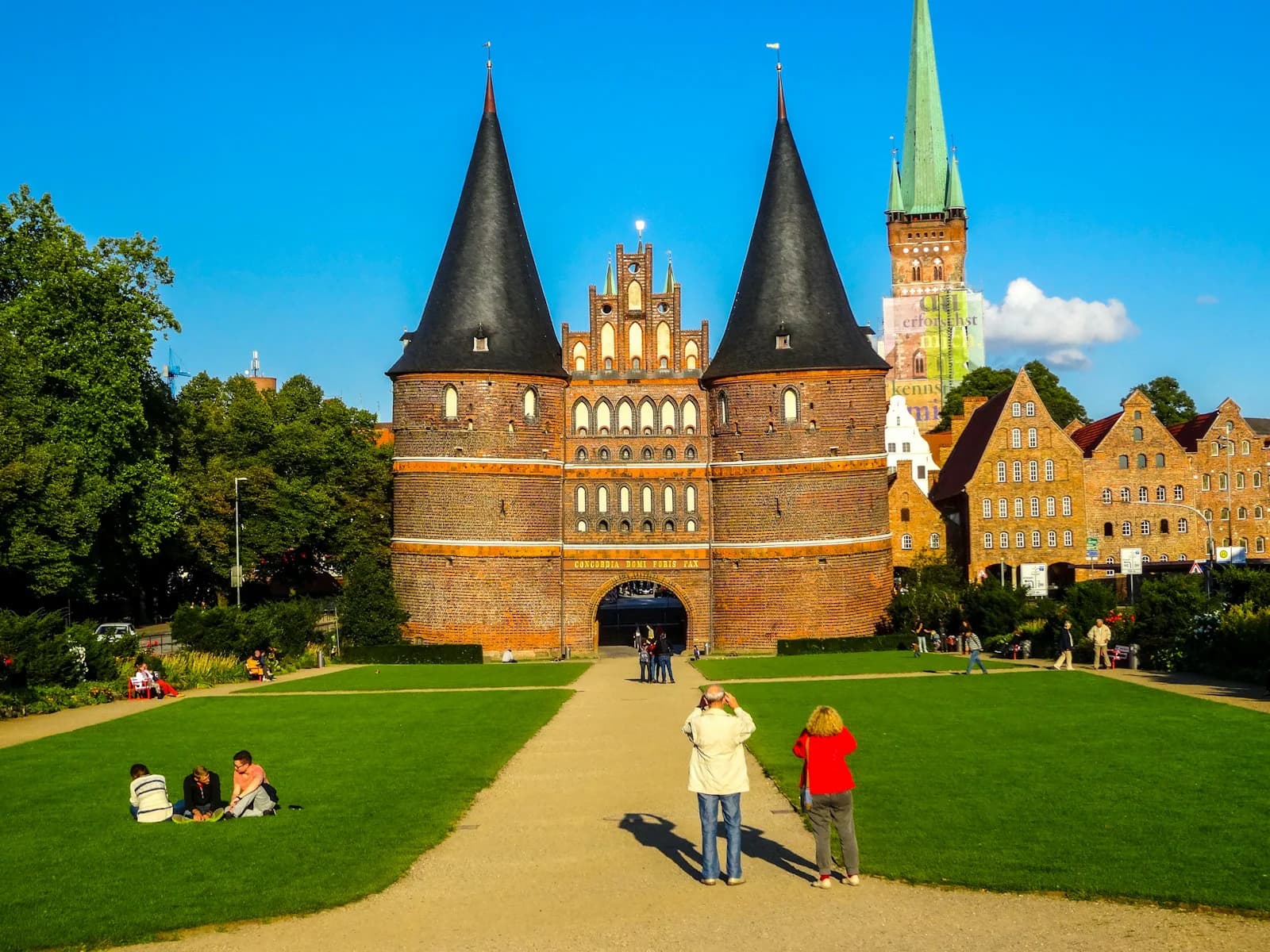
The Museumshafen, or museum harbor, appears on Lübeck's official city portal as one of the harbor entries, grouped with the bridges and the salt warehouses. The city's own sightseeing listing places it on the Trave beside the old town, so it works as a short waterfront stop inside a walking day rather than a separate excursion. The same harbor listing names the LISA von Lübeck as a companion entry, which is the starting point for any planning here.
One thing to settle before you go: nothing in the city's harbor listing states that the Museumshafen has opening hours, an entry gate, or a single combined ticket. Treat the harbor as a place you look at and walk past, and treat any ship, boat tour, or museum interior as its own arrangement with its own operator. That distinction is the most useful decision you can make while planning.
Where the Museumshafen Sits on the Trave
Lübeck's historic centre is an island between the Trave and the Wakenitz, and the city's own UNESCO pages describe the medieval city as a World Heritage Site. Several of the best-known monuments stand just off that island on the surrounding ground: the Holstentor and the old salt warehouses sit on the peninsula near the river. A detailed Lübeck city guide notes that these western structures lie outside the Old Town Island on what it calls the Wall peninsula, which is why the harbor belongs to the same waterfront band of the city.
Most visitors reach the old town from the west, from the station, the bus station, or one of the large car parks. That same guide explains that arriving on foot you first cross the Puppenbrücke, the dolls' bridge, whose eight allegorical figures gave it its name, with the original sculptures now kept at the St.-Annen-Museum. The salt warehouses line the Trave nearby, built between 1579 and 1745 in a Renaissance brick style and now a landmark in their own right. Walking this western edge already puts you on the water, so the harbor is less a detour than the next stretch of the same riverside.
Because the old-town island is small, everything in this western waterfront zone sits within an easy walk of the next thing. The same source puts the island at roughly one square kilometre. You do not need a vehicle to connect the Holstentor, the salt warehouses, the riverbank, and the harbor side. Plan the harbor as a short pause inside that walk rather than a destination you travel to.
What the Museumshafen Name Actually Covers
On the official city portal, the Museumshafen appears as a named sight under the Häfen heading, alongside the LISA von Lübeck, which is listed in the same harbor section.
What that means practically is that the harbor area itself is a viewpoint and a waterfront setting. Specific vessels change with owners, seasons, and maintenance, and the city's listing names only the LISA von Lübeck among them. Do not build your day around a particular ship being moored on the date you arrive; check what is currently lying there if a specific vessel is the reason for your stop.
Be equally careful with the word museum. A historic ship can be viewed from the quay while its interior, guided access, or onboard exhibit may follow separate rules set by whoever operates it. The city's harbor listing does not state entry terms, so the honest answer to whether you can go aboard is that it depends on the operator of that vessel at that time.
Harbor, Ships, and Museums Are Three Different Things
The most common planning error in this corner of Lübeck is assuming one ticket covers the waterfront, the ships, and the nearby museums. Nothing in the official harbor listing supports that. The Holstentor, for example, houses its own city museum, and the bye:myself Lübeck guide describes the gate as built in 1464 and now housing that museum, so it has its own arrangement separate from the harbor.
The same source explains that St. Peter's Church is used mainly for contemporary exhibitions rather than regular services, and that its tower is reached by lift for a view over the city, with opening hours that vary by season. Whatever the current terms, they are set by the church rather than by any harbor operator, so confirm them with the operator rather than assume. Pair the tower with the harbor only if you have already decided to pay for a viewpoint.
The same logic applies to Lübeck's museums more broadly. The European Hansemuseum, on the northern tip of the centre, is described by the same city guide as connected to the Burgkloster, a former Dominican cloister, and the Willy Brandt House and the Behnhaus Drägerhaus are likewise separate institutions with their own admissions. The Buddenbrookhaus is shown as temporarily closed in one aggregator listing, which is not the same as a confirmed operator closure. Check each museum's own site before you commit an afternoon to it.
How Long to Allow, and When to Go
As an editorial suggestion rather than an official figure, allow twenty to forty minutes for the harbor itself: enough to walk the quay, look at what is moored, and take in the Trave with the old-town skyline behind it. If you add a boat tour or a ship interior, that becomes a different block of time entirely. Treat the harbor as the free, flexible part of your day and the extras as the scheduled part.
Season affects what you see more than anything else, because the point of a museum harbor is the vessels. Moored boats, views, and waterfront activity vary through the year, and winter weather on an exposed quay is a genuine comfort issue. The city's harbor listing does not publish seasonal operating detail, so check closer to your dates if a particular ship matters to you.
Light is the other variable worth planning around. Late afternoon gives you the brick facades and the water at a low angle, which is why the western riverbank is a popular photographic stretch. If the harbor is primarily a photograph for you, that timing matters more than the duration of the stop.
Combining the Harbor With the Old Town
A sensible half-day runs west to east across the island: arrive past the Puppenbrücke, take in the Holstentor and the salt warehouses, walk the harbor stretch of the Trave, then continue into the lanes toward the market square and the town hall. That same city guide describes the town hall as a composite building, built in stages and therefore in several styles, so it rewards being looked at properly rather than glanced at from the square.
If you want the harbor inside a single day rather than spread across a stay, put it early. It is close to the station end of town, so it works as your first stop before the old town fills up, and it needs no booking to enjoy from the outside. You can then commit the rest of the day to whichever interiors you have confirmed are open.
Beyond the obvious sights, the old town rewards deliberate wandering: courtyards, gangways, and the quieter streets behind the main axes. Lübeck's tourism organisation states that its certified guides run tours of the city on foot and on the water and offer themed and personalised formats, which can give the waterfront and the merchant architecture a context that a solo amble will not.
Boat Tours and the LISA von Lübeck Are Separate Offers
The official harbor section of the city portal lists the LISA von Lübeck as a named entry alongside the Museumshafen, which makes it the one vessel worth mentioning by name here. That listing does not tell you when it sails, what boarding costs, or whether it is running on your dates. If the ship is important to you, treat those as questions for the operator.
Harbor and canal tours are a distinct product from the harbor itself. Lübeck's tourism organisation groups harbour and canal tours as their own activity category alongside its guided walking tours, which makes them a separate offer rather than part of the Museumshafen. Booking terms, departure points, and schedules belong to whoever runs the boat. A tour gives you the architecture from the water, which is a genuinely different view of the old town, but it is an add-on rather than a way of visiting the Museumshafen.
Do not assume a harbor walk and a canal cruise can be paid for together, or that a ship visit is included in either. Each has its own operator and its own conditions, and the city's listings present them as separate items. Decide separately whether you want water level, deck level, or quay level, then arrange each accordingly.
The Passat Is in Travemünde, Not at the Museumshafen
One route-planning error is worth flagging directly: the four-masted barque Passat is a Travemünde attraction, listed on the city portal under its Travemünde sights rather than among the Lübeck harbor entries. Travemünde is the Baltic resort district of Lübeck with its own beach, promenade, and lighthouse, and the city's own navigation treats it as a separate destination.
That matters because the two ship experiences are often conflated in casual planning. If your interest is the Passat, you are planning a Travemünde trip, not a detour from the Museumshafen quay. If your interest is a moored historic vessel close to the old town, the harbor area is the relevant stop, subject to what is currently lying there.
Travemünde itself is a half-day or day in its own right, with beach life, a promenade along the Trave, and the old lighthouse area. Combining it with the Museumshafen in one day is possible in principle but turns a relaxed waterfront stroll into a pressured itinerary. Choose one water experience per day and let the other be a different trip.
Mistakes to Avoid When Planning
The first mistake is expecting a ticketed attraction with hours and a gate. The harbor appears in the city's sightseeing listings as a place, and neither its listing nor the tourism material states entry terms for it. Confirm anything that matters, such as a specific ship's access, with the operator rather than with a general travel summary.
The second is assuming the waterfront is the whole visit and skipping the streets behind it. The city's own pages present the old town as a UNESCO World Heritage Site, and the bye:myself guide notes that the site consists of more than a thousand listed buildings rather than a single monument. The courtyards and side lanes carry as much of the city's character as the river edge does.
The third is trusting stale summaries. Museum and ship arrangements change, one aggregator already flags the Buddenbrookhaus as temporarily closed without an operator confirmation, and no source here gives current prices or times for harbor offerings. Check the operator or official city pages shortly before you travel and accept that some details are simply not published in advance.
Who the Museumshafen Suits
The Museumshafen works best for travellers who want a free, flexible waterfront pause that fits naturally into an old-town walk rather than a headline attraction that justifies a trip on its own. It pairs well with the Holstentor, the salt warehouses, and the western riverbank, and it suits anyone who prefers looking at a working waterfront to queueing for a ticket.
If you want more from the water, add a harbour or canal tour or a visit to the LISA von Lübeck separately, and confirm the terms with the operator first. If you want the famous four-masted barque, plan that as a Travemünde day. Either way, verify current access and any ticketing on the operator's own pages before you travel.
Frequently Asked Questions
Is the Lübeck Museumshafen free to visit?
The harbor appears in Lübeck's official sightseeing listings as a named place on the Trave rather than as a ticketed attraction, and no entry terms for the harbor area itself are published there. That does not automatically mean a specific ship, its interior, or a boat tour is free, because those belong to their own operators. Confirm access conditions with the operator of whichever vessel or tour you want before you travel.
How long should I spend at the Lübeck Museumshafen?
As an editorial suggestion rather than an official figure, twenty to forty minutes covers a walk along the quay and the view over the Trave toward the old town. That stretches if you stop for photographs or if a particular ship is moored and you want to look at it properly. Adding a boat tour or a ship interior is a separate block of time with its own schedule, so plan those apart from the harbor stroll itself.
Can I combine the Museumshafen with the Lübeck old town in one day?
Yes, and that is the natural way to do it. The old-town island is small, and the harbor sits on the Trave at the western edge near the Holstentor and the salt warehouses, so it fits into a west-to-east walk across the centre. Put the harbor first if you arrive by train, since it is at that end of town, then continue into the lanes toward the market square and the churches.
Is the Passat ship at the Lübeck Museumshafen or in Travemünde?
The four-masted barque Passat is a Travemünde attraction and is listed by the city under its Travemünde sights, not among the Lübeck harbor entries. Travemünde is the Baltic resort district of Lübeck with its own promenade, beach, and lighthouse, and it is treated as a separate destination. Plan a Passat visit as a Travemünde trip rather than as a stop at the Museumshafen quay.
Are harbour and canal tours the same as visiting the Museumshafen?
No. Harbour and canal tours are a distinct activity listed separately by Lübeck's tourism organisation, with their own operators, booking arrangements, and departure points. Walking the Museumshafen is simply spending time on the waterfront; a boat tour is a booked experience that shows you the city's architecture from the water instead. Decide separately which of the two, or both, you want.
Does one ticket cover the harbor and the nearby museums?
There is no published basis for assuming a combined ticket covering the harbor, the ships, and the surrounding museums. The city's harbor listing presents the Museumshafen and the LISA von Lübeck as separate entries, and museums such as the Holstentor's city museum, the European Hansemuseum, and the Behnhaus Drägerhaus each operate their own admissions. Check each operator's own information rather than planning around a single pass.


