
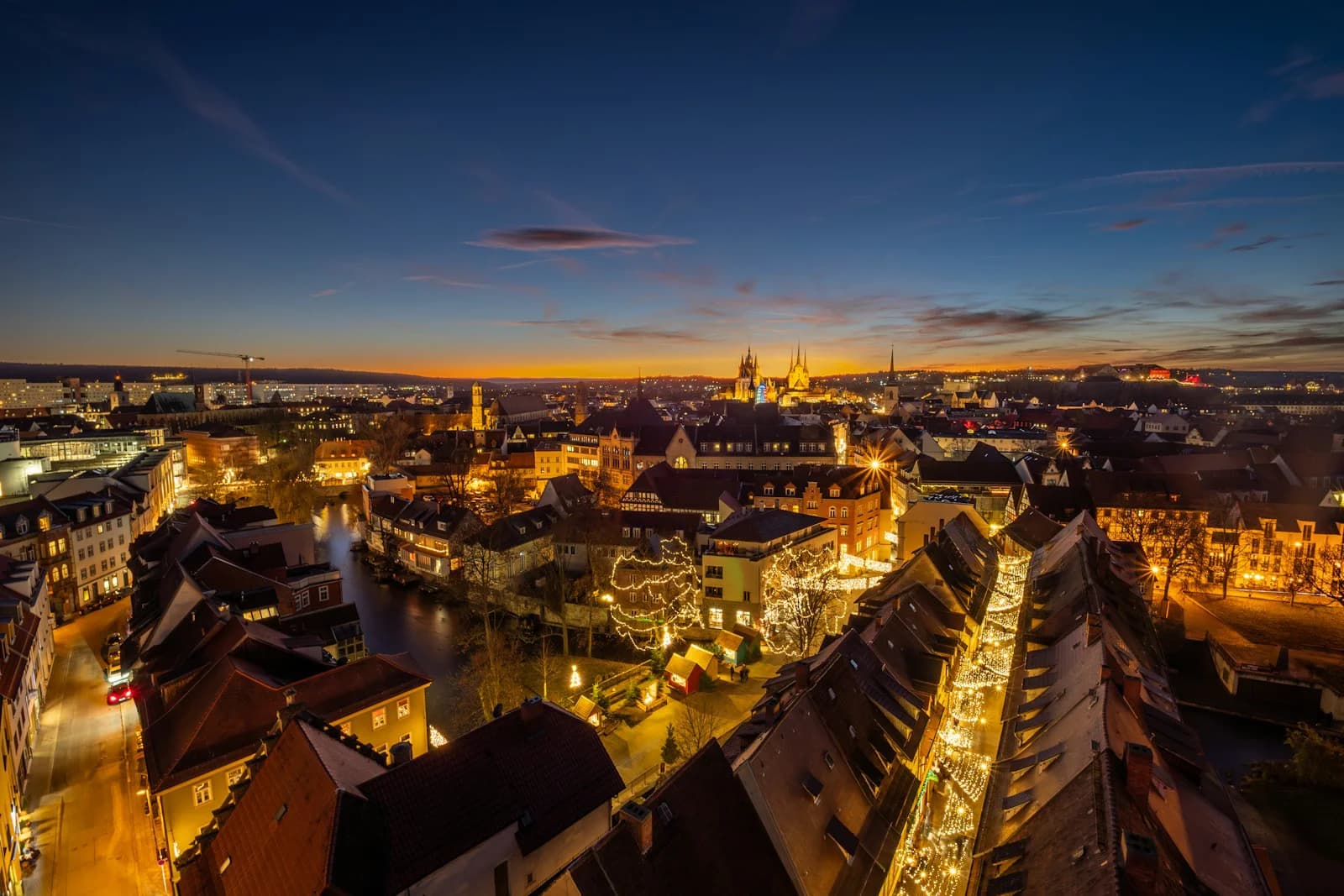
The Erfurt Stadtmuseum sits in Haus zum Stockfisch, one of the city's most magnificent late-Renaissance houses, and uses that building to tell the story of Erfurt from its earliest settlement through to the present day. Its permanent exhibition gives particular weight to the medieval metropolis and to the Reformation period. A suggested duration for the core displays is around 90 minutes, though that is our own planning estimate rather than an official figure.
Erfurt's official tourism listing describes the museum as a place that references the many authentic historical sites in the old town. That framing matters: the Stadtmuseum works as an orientation stop early in a visit rather than a detached indoor attraction. For broader trip planning, the Erfurt: Itineraries and City Travel Guides hub collects other routes and clusters.
Why the Stadtmuseum Earns a Slot in an Erfurt Itinerary
Many Erfurt attractions treat a single theme: the cathedral, the Merchants' Bridge, the Jewish heritage sites. The Stadtmuseum is the one place that tries to hold the whole arc together, moving from early settlement through the medieval trading city to the modern capital of Thuringia. If you only have time for one history museum, this is the one that gives context to everything else you will walk past.
Erfurt's official tourism listing frames the museum as a starting point rather than a standalone attraction: the permanent exhibition points visitors toward the many authentic historical sites in the old town. In practice that means a morning here can shape how you read the Krämerbrücke, the Domplatz and the Jewish quarter afterwards. The Domplatz Erfurt visitor guide covers the square that anchors most walking routes.
Haus zum Stockfisch: The Building as a Reason to Visit
The address Johannesstraße 169 belongs to a late-Renaissance house, and the official municipal museum listing describes it as one of the most magnificent of its kind. That matters because the architecture is not a neutral container: the house itself is part of what the museum is presenting. Budget a few minutes simply to look at the facade and stairwell before you start reading labels.
The building sits inside the old town, and the same official listing records the nearest streetcar stop ten metres from the museum. That listing runs the museum's published hours from 03.01.2026 to 31.12.2026, showing Tuesday through Sunday, 10:00 to 18:00. Always re-check the operator's page close to your travel date, because seasonal variations and public holidays can change that pattern.
Inside the Permanent Exhibition: From Early Settlement to the Medieval Metropolis
The permanent exhibition follows Erfurt's development from early settlement to the medieval trading city and on to the present. The medieval section is the strongest, with an emphasis on how a river-crossing settlement grew into one of central Germany's wealthiest commercial centres. Expect a dense chronology rather than a single showpiece object.
The official municipal museum listing highlights a particularly impressive depiction of the medieval metropolis of Erfurt, and that is where the layout rewards slow reading. If you rush through to reach the Reformation floor, you will miss why the later religious story mattered economically and politically. A moderate pace through the medieval rooms makes the second half of the museum far more legible.
Luther's Erfurt and the Reformation Floor
The permanent exhibition on the first floor presents the Reformation period and the importance of Erfurt as Luther's intellectual center with the oldest university in Germany, according to the official municipal museum listing. This is the part most visitors come for, and it works best if you already know the outline of Luther's biography. The displays set the university and the Augustinian community in the wider city rather than treating them in isolation.
To turn the Reformation section into a walking day, plan to continue to the Augustinian Monastery, where Luther was admitted as a monk on 17 July 1505, or to the Old Synagogue and mikveh that form part of Erfurt's UNESCO-listed Jewish heritage. Those sites have their own opening hours, admission arrangements and rules, so do not carry anything you read about the Stadtmuseum across to them. The Augustinian Monastery Erfurt visitor guide covers the monastery separately.
Museum Cinema and Multimedia Stations
Beyond the objects, the museum offers multimedia offerings such as the film Stone Chronicle, which the official municipal museum listing presents as one of the reasons to visit. These are useful when you are short on reading time or when travelling with companions who prefer audiovisual interpretation. They are best used as a break between exhibition rooms rather than as a substitute for the collection itself.
A museum cinema is also part of the programming, though the schedule changes with whatever is being shown. Do not assume a specific film is running on the day you visit. Check the operator's page or ask at the desk when you arrive, and treat any long-format screening as a time commitment you plan for rather than stumble into.
Special Exhibitions: How to Check Before You Commit a Time Slot
The museum runs varied special exhibitions alongside the permanent displays, and the official municipal museum listing uses them as a further reason to come back. Specific titles and their run dates change frequently and are not fixed here, so treat any current-special-exhibition claim you see in an older guide as unverified. The reliable move is to check the official municipal museum page in the days before your visit.
As a comparison point, the neighbouring Museum für Thüringer Volkskunde publishes its own current special exhibition and event calendar, with dates listed directly on the museum's site. If you plan a two-museum day, check each site's own page rather than relying on a shared events leaflet, because the two venues manage their programming independently. That also applies to child-focused workshops and holiday programmes.
Practical Visit Details: Hours, Admission and the First Tuesday
The official municipal museum listing publishes the Stadtmuseum's opening hours for the 2026 season as Tuesday to Sunday, 10:00 to 18:00, with that validity window running from 03.01.2026 to 31.12.2026. Those hours belong to that window and to the Stadtmuseum, not to every museum in the city. If you are travelling in a later year, start from the operator's page again rather than assuming the pattern repeats.
The same listing shows several admission figures rather than a single flat price, plus a noted free-entry rule on the first Tuesday of the month. Because the listing presents several listed amounts, do not treat any one of them as the definitive ticket; read the current categories on the operator's page before you budget. A separate Erfurt Tourismus notice confirms that several municipal museums open free on the first Tuesday of the month, and that the Stadtmuseum runs a hands-on activity for children on that day.
Ticket Scope, Payment and What the Listing Does Not Confirm
Erfurt's museums are separately administered, and the Stadtmuseum's admission figures are listed on its own entry rather than bundled into a single city-wide ticket. Do not assume that paying once at the Stadtmuseum gives you access to the Kunstmuseen, the Naturkundemuseum or the Museum für Thüringer Volkskunde. The one genuinely shared arrangement the city publicises is the free first Tuesday, which several municipal museums observe on the same day.
The official municipal museum listing names cash and EC as the accepted payment methods, and does not add online booking or broader card networks. It also does not settle questions that visitors often ask, such as guided tour availability, photography rules or barrier-free status, so those should be checked directly with the museum rather than assumed. If any of those details determine whether you visit, contact the museum before you travel.
Getting There and Orienting in the Old Town
Johannesstraße 169 sits inside Erfurt's historic core, and the official municipal museum listing records a streetcar stop ten metres from the entrance. That makes the museum easy to bolt onto a walk between the Domplatz, the Fischmarkt and the Merchants' Bridge. Erfurt's historic tramway, running since 1894, is a distinctive way to see the wider city if you want a guided overview before or after your museum visit.
Once you are inside the old town, orientation is mostly a matter of following the main pedestrian streets, and the museum's location on Johannesstraße keeps it close to the shopping axis on Anger. If you are combining the museum with a full old-town circuit, the Erfurt Altstadt walk covers the historic core in detail. That gives you a natural before-and-after anchor for a half-day plan.
Pairing the Stadtmuseum with Erfurt's Other Museums
The most useful pair is the Stadtmuseum plus the Angermuseum Erfurt visitor guide, because the Angermuseum's collection covers medieval to contemporary art and crafts. Where the Stadtmuseum explains the city's history, the Angermuseum explains its visual and material culture. Two or three hours split between them gives a broader picture than either alone.
The third leg is the Museum für Thüringer Volkskunde, an everyday-history museum with its own exhibitions, collections and visitor information published on its own site. Its focus on rural life, dress and domestic objects complements the Stadtmuseum's political and urban narrative. Remember that its hours and admission figures are published separately, so check both museums' pages before you assign time slots.
How Much Time to Allow
As a labelled suggestion rather than an official figure, allow roughly 90 minutes for the permanent exhibition, plus 30 minutes if a special exhibition or a film screening interests you. Visitors who read every label carefully or who use the multimedia stations will need longer. This is our planning estimate, not something the museum publishes.
If your time in Erfurt is short, prioritise the medieval and Reformation rooms and skim the later periods, then take the historical tramway or a short walk to see the sites those rooms referenced. The Museum Pass for Erfurt and the ErfurtCard are worth checking for your itinerary, but verify what each currently covers rather than assuming it applies to every museum you plan to see. If you are already planning several city sites, the Erfurt hub lists further combinations.
Mistakes to Avoid
The most common error is assuming a single purchase covers every municipal museum. The Stadtmuseum's admission figures are listed per museum, so a visit here does not automatically include the Kunstmuseen, the Naturkundemuseum or the Volkskundemuseum. Budget separately and check each venue's own page.
The second is treating an older guide's mention of a special exhibition as still running. Exhibition titles and dates rotate, and a listing that was accurate last season may describe a show that has already closed. Confirm the current programme on the operator's page shortly before your visit, and treat anything a third-party blog says as a starting point rather than a schedule.
The third is inheriting the Stadtmuseum's hours and admission figures onto the Reformation sites it discusses. The Augustinian Monastery Erfurt visitor guide and the Old Synagogue are separate institutions with their own arrangements. Use the museum to understand the history, then verify each site independently.
Plan Your Visit
The Erfurt Stadtmuseum is a strong first stop if you want the shape of the city before you walk it. Verify the 2026 opening hours and current admission categories on the operator's page, note whether your dates fall on the first Tuesday of the month, and check the current special exhibition programme separately. Bring a payment method the listing confirms rather than relying on cards it does not mention.
Frequently Asked Questions
Is the Erfurt Stadtmuseum free to enter?
Not every day. The official municipal museum listing shows more than one regularly listed admission figure and states that entry is free on the first Tuesday of the month. Because the listing presents several amounts rather than a single price, check the current categories on the operator's page before you budget. A separate Erfurt Tourismus notice also confirms that several municipal museums open free on the first Tuesday of the month.
What can I see in the Stadtmuseum's permanent exhibition?
The permanent exhibition covers Erfurt's history from early settlement through the medieval trading city to the present, with a particularly impressive depiction of the medieval metropolis. Its first floor addresses the Reformation era and Erfurt's role as Martin Luther's intellectual centre with what was then the oldest university in Germany. Multimedia offerings such as the film Stone Chronicle and a museum cinema are also part of the offer.
How long should I plan for a visit to the Stadtmuseum?
This is our own planning suggestion, not an official figure: around 90 minutes for the permanent exhibition, plus half an hour if you want to sit through a film or work through a special exhibition. Anyone reading every label or using the multimedia stations should add more. Nothing the museum publishes commits you to a set visiting time.
Does one ticket cover the Stadtmuseum and Erfurt's other municipal museums?
Do not assume so. The Stadtmuseum's admission figures sit on its own listing rather than bundled with the Kunstmuseen, Naturkundemuseum or Volkskundemuseum. The one shared arrangement the city publicises is the free first Tuesday, which several municipal museums observe on the same day. Check each venue's own page before combining them in one day.
Where is the museum and how do I reach it?
The Stadtmuseum is at Johannesstraße 169 in the old town, and the official municipal museum listing records a streetcar stop ten metres from the entrance. Erfurt's historic tramway has been running since 1894 and offers a guided overview of the city if you want context before your museum visit. Confirm current service details locally rather than relying on older guides.
How do I find out which special exhibition is currently showing?
Check the official municipal museum page shortly before your visit, because special exhibition titles and dates rotate and are not fixed in advance for planning purposes. Third-party blogs and older leaflets are unreliable here. The neighbouring Museum für Thüringer Volkskunde also publishes its own current exhibitions, and the two venues programme independently.


