A standard adult ticket to the Musée de l'Orangerie costs €12.50 booked online in 2026 (€11 at the on-site desk), the museum is open Monday and Wednesday through Sunday from 9:00am to 6:00pm with last admission at 5:15pm, and it's closed every Tuesday, on May 1, on the morning of July 14, and on December 25. For a museum built around eight Monet Water Lilies canvases you can see in well under two hours, that's an easy schedule to work around — the part that trips people up is knowing which ticket to buy, whether it's worth pairing with the Musée d'Orsay, and when to go before the tour groups fill the two oval rooms.
This guide covers exactly what a 2026 ticket costs, the museum's opening hours and the quietest times to visit, how long to budget, how to get there, and the mistakes worth avoiding before you book. It's part of our full Paris attractions guide.
What Is the Musée de l'Orangerie?
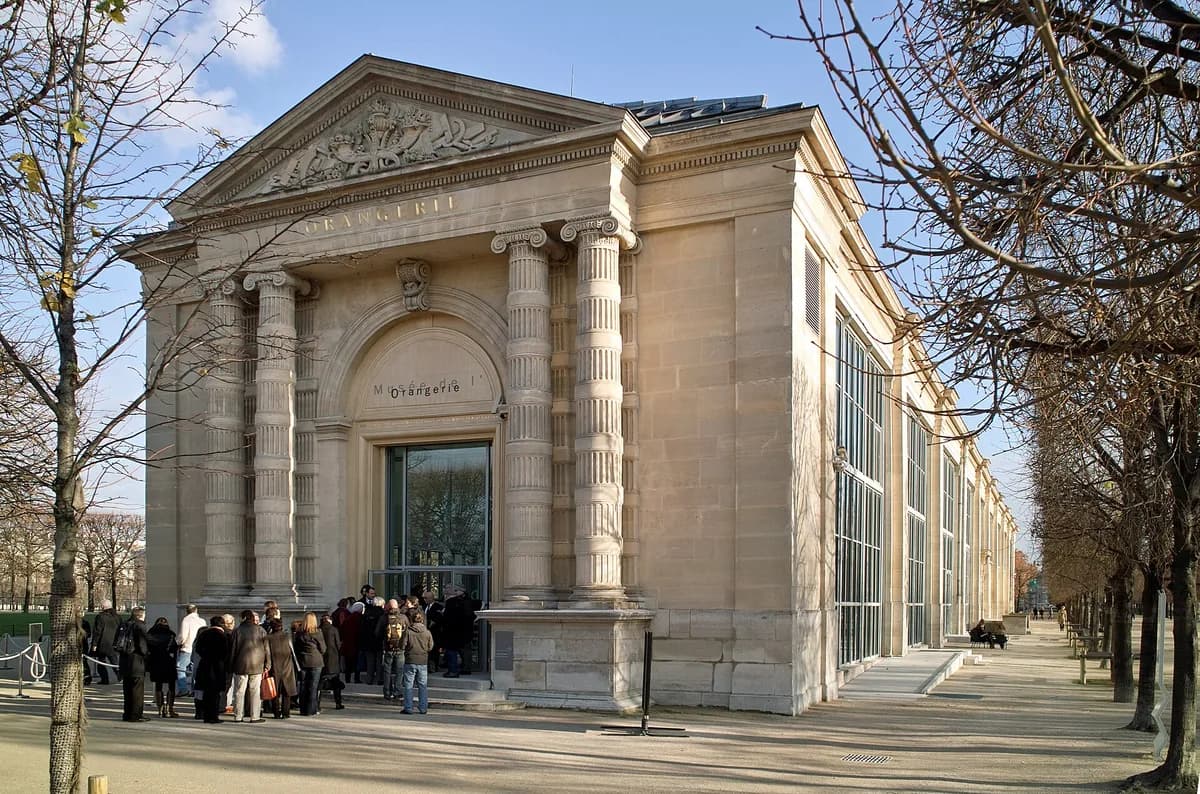
The Musée de l'Orangerie sits in the southwest corner of the Tuileries Garden, next to Place de la Concorde. The building started life in 1852 as a literal orangery — Napoleon III had it built, with glass walls on the south side, to shelter the garden's citrus trees over winter. After the Tuileries Palace burned in 1871, the building passed through various public uses until it was converted into a museum, opening on May 17, 1927, originally under the name Musée Claude Monet.
That original name is the reason the museum exists: Monet donated eight monumental Water Lilies panels to the French state, and two purpose-built oval rooms on the ground floor were designed specifically to display them in natural light, arranged to evoke an endless, walk-in landscape. In the basement below, the Walter-Guillaume collection — acquired by the state in 1959 and 1963 — adds Cézanne, Renoir, Matisse, Picasso, Modigliani, and Soutine across a much smaller footprint than most Paris museums. A major renovation between 2000 and 2006 restored the Water Lilies rooms to natural overhead light and added the basement galleries; the museum reopened in its current form on May 17, 2006.
Tickets & Prices 2026
Standard adult admission is €12.50 booked online through the official rates page; the same ticket costs €11 if bought at the museum desk. Entry is free for visitors under 18 of any nationality and for EU/EEA residents aged 18–25 with valid ID, and the museum is free for everyone on the first Sunday of each month — though as of mid-2026 a reserved time slot is still recommended for the free Sunday, since capacity is limited. Some Friday evenings during exhibition periods carry reduced-price entry after 6pm; confirm the current schedule on the official site before you plan around it.
A combined ticket covering both the Musée de l'Orangerie and the Musée d'Orsay — often listed as the Passeport Orsay–Orangerie — runs around €18–20 online as of mid-2026, valid for one visit to each museum within three months of purchase. It's sold both online and at either museum's ticket desk, and it undercuts paying full separate admission (Orsay's standard ticket alone runs €14–16, plus the Orangerie's €12.50, for roughly €27–28 combined) — confirm the current combo price on the official site before you rely on it. The Musée de l'Orangerie is also included in the multi-day Paris Museum Pass, which can be the better value if you're visiting several state museums in the same trip — pass holders still need to book a timed entry slot in advance rather than walking straight in.
Opening Hours & Best Time to Go
The Musée de l'Orangerie keeps a consistent weekly schedule with one weekly closure:
- Monday, Wednesday–Sunday: 9:00am–6:00pm (last admission 5:15pm, galleries clear by 5:45pm)
- Some Fridays during exhibition periods: open later, with reduced admission after 6pm — check the current calendar before you plan around it
- Closed: every Tuesday, plus May 1, the morning of July 14, and December 25
Arriving right at 9:00am opening is the single best move — the two Water Lilies rooms are small enough that even a modest tour group changes the feel of the space, and the first hour is consistently the quietest. Late morning through early afternoon (roughly 11am to 3pm) draws the heaviest traffic, much of it day-trippers combining the Orangerie with the Louvre or Orsay. If you can't make the opening slot, the hour before closing on a weekday is the next-best window — smaller crowds, though you'll be moving at a faster pace than a morning visit allows.
How Long to Plan
Budget 1 to 1.5 hours for a focused visit. That's enough time to sit with the Water Lilies panels in both oval rooms — most visitors spend 20 to 30 minutes there alone, since the rooms reward slowing down — plus a walk through the Walter-Guillaume collection in the basement. Visitors who want to read most of the wall text and linger over the Cézanne and Matisse rooms downstairs should budget closer to 2 hours.
Because the museum is compact, it pairs naturally with other stops on the same day rather than needing its own dedicated half-day. Many visitors combine it with the Louvre or the Musée d'Orsay in a single outing, or slot it into a broader first- or second-day Paris walk; our 2-day Paris itinerary shows where it fits alongside the city's other major sights without crowding your schedule.
How to Get There
The museum sits inside the Tuileries Garden at its western end, right where the garden meets Place de la Concorde. The nearest metro stop is Concorde, served by Lines 1, 8, and 12, about a 5-minute walk through the garden's western gate. Several bus routes stop along Rue de Rivoli and around Place de la Concorde within a similar walking distance.
On foot, the Louvre is roughly a 10-minute walk east through the length of the Tuileries Garden, and the Musée d'Orsay is about 10 to 15 minutes across the Seine via the Passerelle Léopold-Sédar-Senghor or Pont Royal footbridges. Driving isn't worth it — parking around Place de la Concorde is limited and metered, and every transit option above is faster from most central hotels.
Visit Tips: Queues, Booking & Common Mistakes
Book your ticket online in advance rather than relying on walking up, especially for weekends, school holidays, and the first Sunday of the month when free admission draws the largest crowds. Buy only through the official site or a clearly listed authorized reseller — resale sites routinely mark up prices for a museum this well known, and some sell tickets that won't scan at the door.
The most common mistake is treating the Orangerie as a quick add-on and rushing the Water Lilies rooms in five minutes. The panels are designed to be viewed slowly, ideally from a bench in the center of each oval room rather than walking the perimeter, and the natural light shifts the color noticeably depending on the time of day. A second common mistake is skipping the basement Walter-Guillaume collection entirely — it's easy to miss since most visitors head straight for the exit after the ground-floor rooms, but it holds a genuinely strong run of Cézanne, Renoir, and Matisse works in a fraction of the crowd. Bags above a certain size go through security screening at the entrance, so arrive with a small bag if possible to avoid the extra few minutes at the cloakroom.
Nearby Attractions
The Musée de l'Orangerie sits at one of the most concentrated stretches of central Paris. Place de la Concorde, with its Egyptian obelisk and fountains, is directly outside the museum's front door. The Jeu de Paume, a contemporary photography museum, occupies the opposite corner of the same garden. Walking east through the Tuileries Garden leads straight to the Louvre, while crossing the Seine on foot reaches the Musée d'Orsay in about the same time. Heading northwest up the Champs-Élysées from Concorde leads eventually to the Arc de Triomphe, and continuing west along the river brings you to the Eiffel Tower, roughly 3 kilometers away and a comfortable stop to pair with an Orangerie-and-riverside afternoon.
Frequently Asked Questions
Frequently Asked Questions
How much are tickets to the Musée de l'Orangerie?
A standard adult ticket costs €12.50 booked online in 2026, or €11 at the on-site desk. Entry is free for visitors under 18 and for EU/EEA residents aged 18–25 with valid ID, and free for everyone on the first Sunday of each month, though a reserved slot is recommended even on free-entry days.
Is the Musée de l'Orangerie free on the first Sunday of the month?
Yes. Admission is free for everyone on the first Sunday of each month. Because this is one of the busiest days at the museum, booking a time slot in advance is strongly recommended even though the ticket itself is free.
Do I need to book Musée de l'Orangerie tickets in advance?
It's not strictly required outside peak periods, but booking online ahead of time is the safer approach, particularly for weekends, French school holidays, and the free first Sunday of the month, when walk-up capacity fills faster. Paris Museum Pass holders also need to reserve a timed entry slot rather than walking straight in.
How long should I spend at the Musée de l'Orangerie?
Plan for 1 to 1.5 hours for a focused visit covering the two Water Lilies rooms and the Walter-Guillaume collection downstairs. Visitors who want to linger over the wall text and the basement galleries should budget closer to 2 hours.
Is there a combined ticket with the Musée d'Orsay?
Yes, a combined Orangerie–Orsay ticket (the Passeport Orsay–Orangerie) runs around €18–20 online as of mid-2026 and is sold both online and at either museum's desk. It's worth it if you plan to visit both on the same trip, since separate tickets add up to roughly €27–28 combined — confirm current terms on the official site before you rely on it.
The Musée de l'Orangerie rewards a slow, unhurried visit far more than its modest size suggests. Two rooms built to hold eight paintings sound like a quick stop, but the combination of natural light, quiet, and Monet's intent for the panels to be viewed as an immersive landscape is the kind of experience that's genuinely hard to rush.
Book online ahead of a weekend or the free first Sunday, arrive at 9:00am if you want the rooms close to empty, and budget at least an hour so the basement Walter-Guillaume collection doesn't get skipped. Pair it with the Louvre or the Musée d'Orsay on the same day, and it becomes one of the most efficient art stops in Paris for the time it takes.
For current official information, see the official Musée de l'Orangerie site.