Standard admission to the Musée d'Orsay costs €16 online in 2026, the museum is open Tuesday to Sunday from 9:30am to 6pm (until 9:45pm on Thursdays), and since March 2026 every visitor — including Paris Museum Pass holders — must book a timed-entry slot in advance, because walk-up admission is suspended during a multi-year renovation of the reception areas. For a museum this famous, on the Left Bank of the Seine directly across from the Louvre, the real question isn't whether the art is worth seeing — it's whether it's worth the planning required to get in, and how it stacks up once you're inside.
This guide gives a straight verdict on whether the Musée d'Orsay is worth it, what 2026 tickets cost (including what to do if your timed slot is sold out), how long to budget, and how to visit without a guided tour. It's part of our full Paris attractions guide.
What Is the Musée d'Orsay?
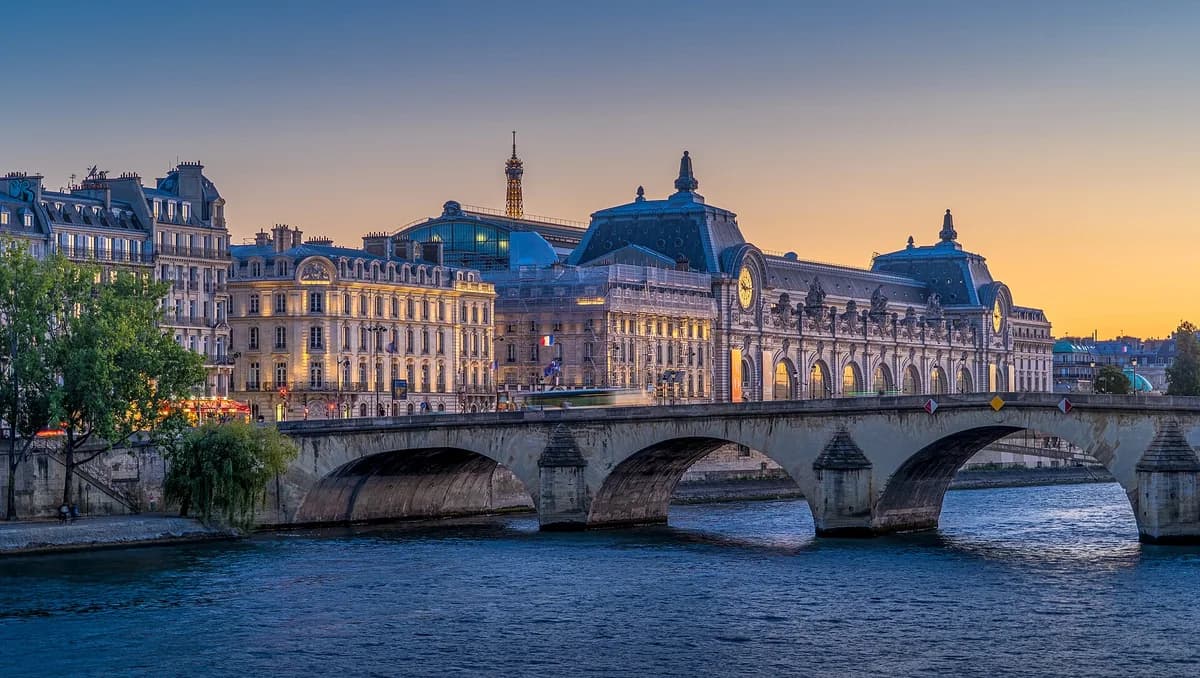
The Musée d'Orsay occupies the former Gare d'Orsay, a Beaux-Arts railway station built for the 1900 World's Fair and designed by architect Victor Laloux. The station fell out of use for long-distance trains by the 1930s as its platforms proved too short for modern engines, and after decades of neglect and a near-demolition, it reopened in 1986 as a museum. The building itself — a vaulted glass-roofed hall with an oversized station clock still visible from the upper floors — is as much a reason to visit as the art inside it.
The collection bridges the gap between the Louvre's older masterworks and the Centre Pompidou's modern art, covering roughly 1848 to 1914. It holds the world's largest collection of Impressionist and Post-Impressionist paintings: Monet, Renoir, Degas, Cézanne, and Van Gogh all have rooms built around their work, alongside Manet's "Olympia" and "Le Déjeuner sur l'herbe," Van Gogh's "Self-Portrait" and "Starry Night Over the Rhône," and Renoir's "Bal du moulin de la Galette." The top floor, where most of the Impressionist galleries sit, is lit by the station's original glass roof, and the clock terrace at the western end frames one of the more photographed views of Paris.
Is the Musée d'Orsay Worth It?
Yes — for anyone with an interest in Impressionism, the Musée d'Orsay is one of the strongest single-museum visits in Europe, and travelers who compare it directly to the Louvre very often prefer it. The reason isn't that the art is better; it's scale. The Louvre is a survey of roughly 5,000 years of art spread across more than 700,000 square feet, and seeing even its highlights requires a plan of attack. The Musée d'Orsay is large but genuinely walkable in an afternoon, and its collection is more tightly focused, so first-time visitors tend to leave feeling like they actually saw the museum rather than a fraction of it.
Where the visit disappoints is almost always a scheduling problem rather than a content problem. Because timed-entry booking became mandatory in March 2026 while the ground-floor reception areas are rebuilt, showing up without a reservation simply doesn't work anymore — there's no walk-up line to join. Travelers who book a slot, budget realistic time, and don't try to rush all five floors in ninety minutes consistently rate it among the best things they did in Paris. Travelers who show up expecting a quick, no-booking-required stop are the ones who come away frustrated, and that frustration is about the renovation-era logistics, not the museum itself.
Tickets & Prices 2026 (Including What to Do If They're Sold Out)
Standard adult admission is €16, booked online through the official site. A reduced Thursday-evening ticket, valid from 6pm to 9:45pm, costs €12. Entry is free for visitors under 18 of any nationality, for EU/EEA residents aged 18–25, for disabled visitors plus one companion, and for everyone on the first Sunday of each month — though a reserved time slot is still required even for free admission. An audio guide adds €5 if you want extra context without booking a live tour.
The key thing to know for 2026: since March 10, timed-entry booking has been mandatory for every visitor, including Paris Museum Pass holders, because the museum's reception areas are under renovation through summer 2028. There is no ticket counter and no walk-up admission during this period, which means popular slots — especially weekend mornings and school-holiday weeks — can and do sell out days in advance. If your preferred date is sold out: check back closer to the date, since cancellations and released holds do reappear; try a Thursday-evening slot, which tends to have more last-minute availability and costs less; or shift to a weekday morning, which draws the smallest crowds of the week. If you're weighing whether a broader city pass is worth building your trip around, our breakdown of whether the Paris Pass is worth it covers how bundled museum access holds up against booking Orsay directly.
Opening Hours & Best Time to Go
The Musée d'Orsay runs the same schedule most of the week, with one late night:
- Tuesday, Wednesday, Friday, Saturday, Sunday: 9:30am–6:00pm (last admission 5:00pm)
- Thursday: 9:30am–9:45pm (last admission 9:00pm)
- Monday: closed, plus closed May 1 and December 25
Confirm the live schedule on the official site before you travel, since hours are reviewed periodically. Thursday evening after 6pm is the single best value-to-crowd trade in the museum's schedule — fewer visitors, a reduced ticket price, and the same collection under different light. Tuesday mornings right at the 9:30am opening are also relatively quiet, but Tuesdays get busier than usual later in the day because the Louvre is closed every Tuesday and some of its would-be visitors redirect to the Musée d'Orsay instead. As a rule, avoid the 11am–3pm window on any day if you can, and don't count on Tuesday afternoon being the calm alternative it would normally be.
How Long to Plan
Budget 2 to 3 hours for a focused visit covering the top-floor Impressionist galleries and the ground-floor Manet and Courbet rooms — enough to see the museum's signature works without rushing. Visitors who also want the Post-Impressionist and Art Nouveau decorative arts galleries, plus the photography collection, should plan for 3 to 4 hours. A leisurely, full pass through all five floors runs 4 to 5 hours, and it's genuinely difficult to see everything in a single visit, so picking priorities ahead of time pays off more here than at most museums.
You don't need a guided tour to get the most out of a visit. The standard ticket is self-guided entry, gallery numbering and free floor plans make the layout easy to navigate on your own, and the €5 audio guide covers the major works in more depth if you want context without committing to a fixed-pace group tour. A private or small-group guided tour can be worth it if you want a specific narrative thread through the collection, but it isn't necessary to appreciate the museum. If the Musée d'Orsay is one stop among several, our 2-day Paris itinerary shows how to fit it in alongside the city's other major sights without cutting it short.
How to Get There
The museum sits at 1 Rue de la Légion d'Honneur on the Left Bank, directly across the Seine from the Louvre and the Tuileries Gardens. The RER C line has a station named Musée d'Orsay right outside the entrance, making it the most direct approach if you're coming from Versailles or the airport-connected RER network. The Solférino stop on Metro Line 12 is about a five-minute walk. Several bus routes run along Quai Anatole France and Rue de Lille directly past the museum.
If you're coming on foot from the Louvre, the Passerelle Léopold-Sédar-Senghor pedestrian bridge crosses the Seine in about 10 to 15 minutes of walking and is one of the more pleasant river crossings in central Paris. Driving isn't worth it — parking in this stretch of the 7th arrondissement is limited and metered, and every approach above is faster from most central hotels.
Visit Tips: Queues, Booking & Common Mistakes
Book your timed slot as early as you can on musee-orsay.fr — for 2026 dates in spring, summer, or around a school holiday, that can mean weeks ahead rather than days. Buy only through the official site or its clearly listed authorized resellers; unofficial resale sites routinely mark up prices for a museum this well known, and some sell duplicate or invalid tickets that won't scan at the door.
The most common mistake is spending the entire visit on the fifth-floor Impressionist galleries and running out of time before seeing the ground floor, where Manet's most-discussed paintings and the Beaux-Arts sculpture hall sit under the original station roof. Pick three or four must-see works before you arrive and let the floor plan route you between them rather than trying to see it all. Security screening is standard for a major Paris museum, so arrive with a small bag if possible — large bags and backpacks go through the free cloakroom, which adds a few minutes if you arrive close to your booked entry time. Because entry is now strictly timed, don't arrive dramatically early either; you can't get in before your slot, and there's limited space to wait once security has processed you.
Nearby Attractions
The Musée d'Orsay sits at the heart of Left Bank Paris, within easy reach of several other major landmarks. The Louvre is a 10 to 15 minute walk across the Passerelle Léopold-Sédar-Senghor footbridge, and the Musée de l'Orangerie — home to Monet's large-scale Water Lilies panels and technically the Orsay's sister museum — sits just across the river in the Tuileries Gardens, about the same distance. Heading east along the riverbank, Notre-Dame Cathedral on Île de la Cité is roughly a 20-minute walk or a short ride on Metro Line 4. In the other direction, the Eiffel Tower is about 2 kilometers west along the Seine — walkable in 25 to 30 minutes, or a few stops on the RER C that also serves the museum directly. The Musée Rodin, with its sculpture garden, is a short detour south of the river if you have extra time before or after your visit.
Frequently Asked Questions
Frequently Asked Questions
Is the Musée d'Orsay worth visiting?
Yes, especially for anyone interested in Impressionist and Post-Impressionist art. Many first-time visitors to Paris actually prefer it to the Louvre because it's more focused and far easier to see in a single visit — you leave feeling like you saw the museum, not a fraction of it. Most disappointment comes from skipping the mandatory 2026 timed-entry booking rather than from the collection itself.
How long does it take to visit the Musée d'Orsay?
A focused visit covering the top-floor Impressionist galleries and ground-floor highlights takes about 2 to 3 hours. Visitors who also want the Post-Impressionist, Art Nouveau, and photography galleries should plan for 3 to 4 hours, and a full, unhurried pass through all five floors runs 4 to 5 hours.
What should I do if Musée d'Orsay tickets are sold out?
Check back closer to your travel date, since cancellations and released holds do reappear on the official site. A Thursday-evening slot (6pm to 9:45pm) tends to have more last-minute availability and costs less than a standard daytime ticket. Shifting to a weekday morning, which draws the smallest crowds of the week, is also a reliable fallback since 2026 booking is mandatory for every visitor and there is no walk-up line to fall back on.
Can I visit the Musée d'Orsay without a guided tour?
Yes. The standard €16 ticket is self-guided entry, and free floor plans plus gallery numbering are enough to navigate the main collection on your own. The €5 audio guide adds context on the major works without requiring a fixed-pace group tour. A guided tour can help if you want a specific narrative thread through the museum, but it isn't necessary to appreciate the collection.
Is the Musée d'Orsay free at any time?
Yes, for some visitors. Entry is free year-round for anyone under 18, for EU/EEA residents aged 18–25, and for disabled visitors plus one companion. The museum is also free for everyone on the first Sunday of each month, though a reserved timed-entry slot is still required even for free admission.
The Musée d'Orsay earns its reputation — not just for the depth of its Impressionist and Post-Impressionist collection, but because the former train station it's housed in is one of the more striking museum buildings in Europe on its own terms. The honest caveat for 2026 is entirely logistical: mandatory timed entry during the reception-area renovation means this is not a museum you can decide to visit on a whim.
Book your slot ahead — a Thursday evening if you want the best value-to-crowd trade — budget at least two hours, and pick your must-see paintings before you arrive rather than trying to cover all five floors in one pass. Do that, and the Musée d'Orsay delivers on its reputation in 2026.
For current official information, see the Musée d'Orsay's official 2026 admission, hours, and tickets page and the official museum site.