
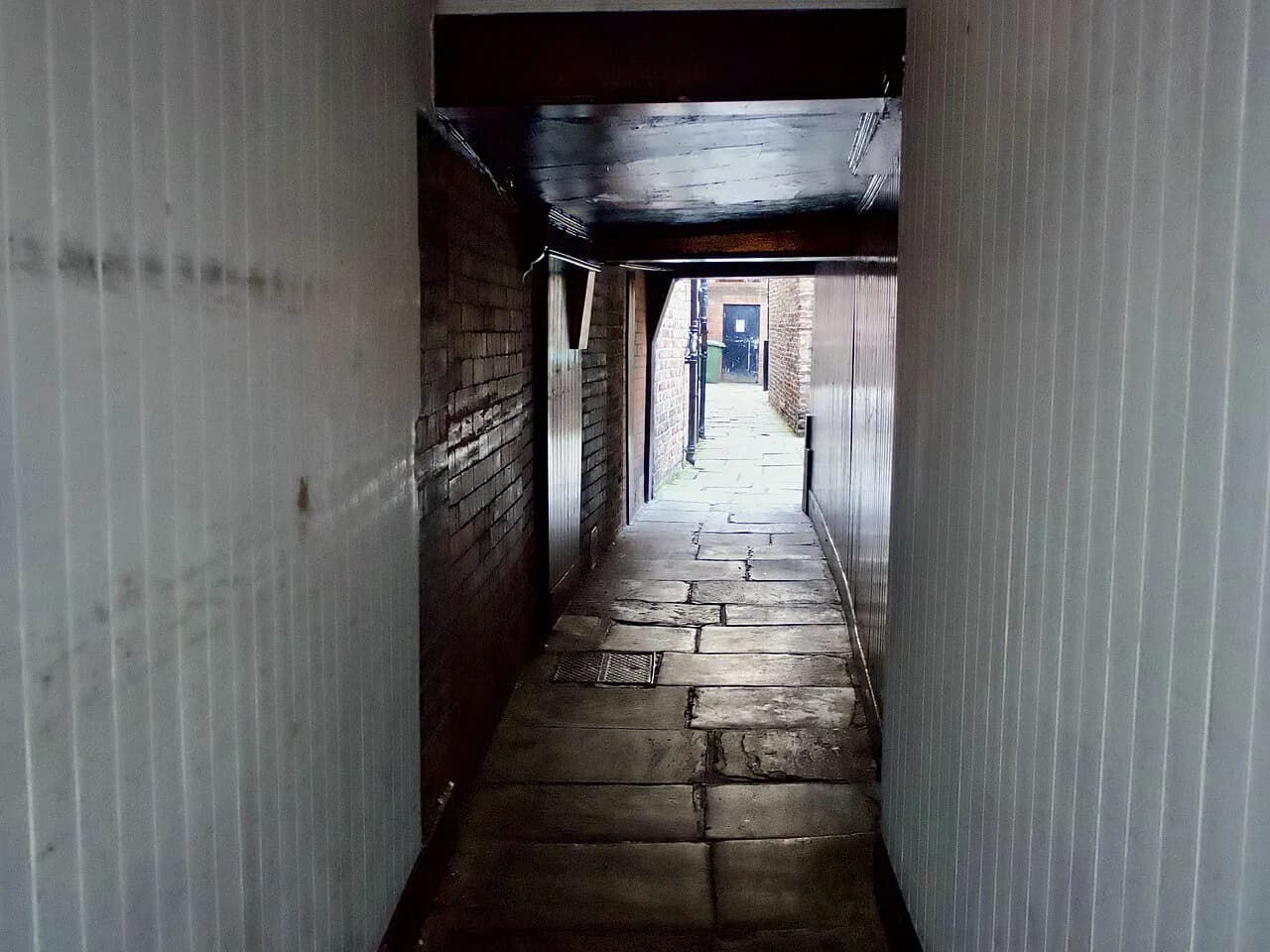
Last updated September 2026: hidden alleyways in York — locally called snickelways — thread between Stonegate and Swinegate away from the crowds on The Shambles. Mark W. Jones coined the term in 1983, and the network still connects markets, churches, and courtyards across the old city. This guide names the specific passages worth finding, flags which ones are gated after dark, and builds on our wider list of 18 Hidden Gems in York: A Local's Guide to Secret Sights and Practical Logistics.
What Are York's Hidden Alleyways? Meet the Snickelways
Hidden alleyways in York go by a specific local name: snickelway. York author Mark W. Jones invented the word in 1983 for his book A Walk Around the Snickelways of York. Jones defined it precisely as a narrow place to walk along, leading from somewhere to somewhere else, usually in a town or city, especially in York. That original walk mapped 50 routes inside the city walls. The book sold well enough that Jones expanded it into a hardback edition, The Complete Snickelways of York, in 1991. At least nine editions have been published since. Most of the passages date from medieval times, when they served as shortcuts between markets, churches, and the River Ouse. Some sections may be older still, following the street pattern of Roman Eboracum and Anglo-Saxon York. According to York Civic Trust, walking Coffee Yard through Barley Hall may retrace a Roman-era route. Three passages between Market Street and High Ousegate once led to a since-demolished church, St Peter the Little. Locally they're known as Peter Lane, Pope's Head Alley, and Le Kirk Lane. Parliament Street didn't open as an alternative route until the 1830s. Walking a few of these lanes is the fastest way to leave the crowds on The Shambles behind.
- Snicket: a passage between walls or fences
- Ginnel: a narrow cut between or through buildings
- Alleyway: a narrow street or lane — together they form the word snickelway
Six Must-See Snickelways to Prioritize First
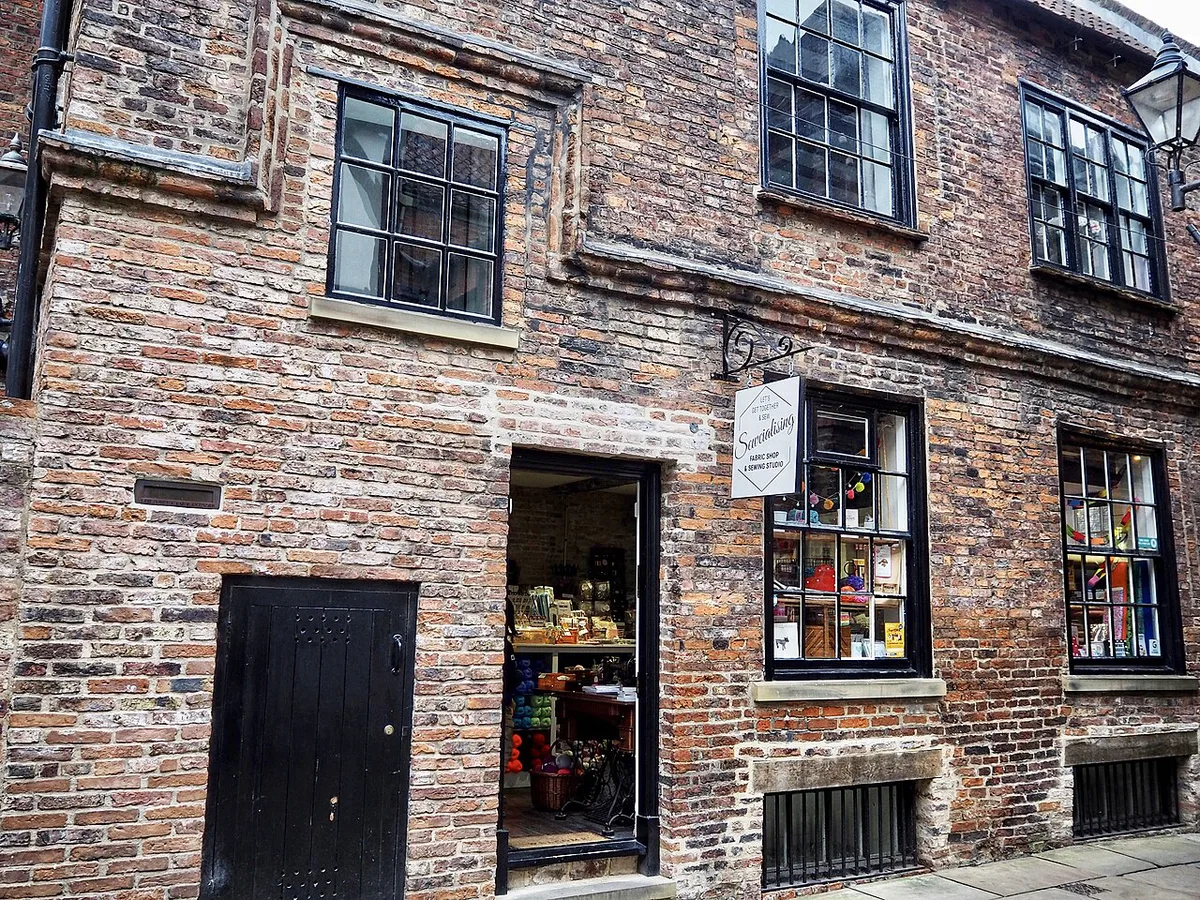
Six snickelways stand out for history, atmosphere, or sheer physical novelty. Coffee Yard runs alongside the medieval Barley Hall complex. A locked hall gate can occasionally interrupt through-access, so check current opening status before you plan to walk it end to end. Pope's Head Alley squeezes down to roughly 2 feet 7 inches at its tightest point, narrow enough that two people cannot pass side by side. Local legend ties Mad Alice Lane, also called Lund's Court, to a woman named Alice. She was reputedly hanged for poisoning her husband, and some visitors report an eerie feel after dark. Lady Peckett's Yard takes its name from Alice Peckett, wife of John Peckett. He served as Lord Mayor of York in 1701 and died in 1759. Finkle Street was once called Mucky Peg Lane and bends at a sharp elbow, a shape some trace to an Old Norse word for corner. Nether Hornpot Lane likely takes its name from medieval pits used to soak animal horn. Craftsmen then shaped the softened horn into everyday tools, including early spectacle frames.
These six snickelways represent only a fraction of Jones' 1983 guide's 50 mapped passages, yet cover the essential history and atmosphere.
| Snickelway | Vibe | Notable Detail |
|---|---|---|
| Coffee Yard | Photogenic, historical | About 220 feet long, the longest snickelway; runs past Barley Hall |
| Pope's Head Alley | Historical challenge | About 2 feet 7 inches wide at its tightest point |
| Mad Alice Lane (Lund's Court) | Haunted | Reputedly named for a woman hanged for poisoning her husband |
| Lady Peckett's Yard | Photogenic, historical | Named for Alice Peckett, wife of a 1701 Lord Mayor |
| Finkle Street | Shortcut, historical | Formerly Mucky Peg Lane; bends at a sharp elbow near St Sampson's Square |
| Nether Hornpot Lane | Shortcut, historical | Likely named for medieval horn-working pits |
Choose Your Route by Vibe: Photogenic, Haunted, Shortcut, or Historical
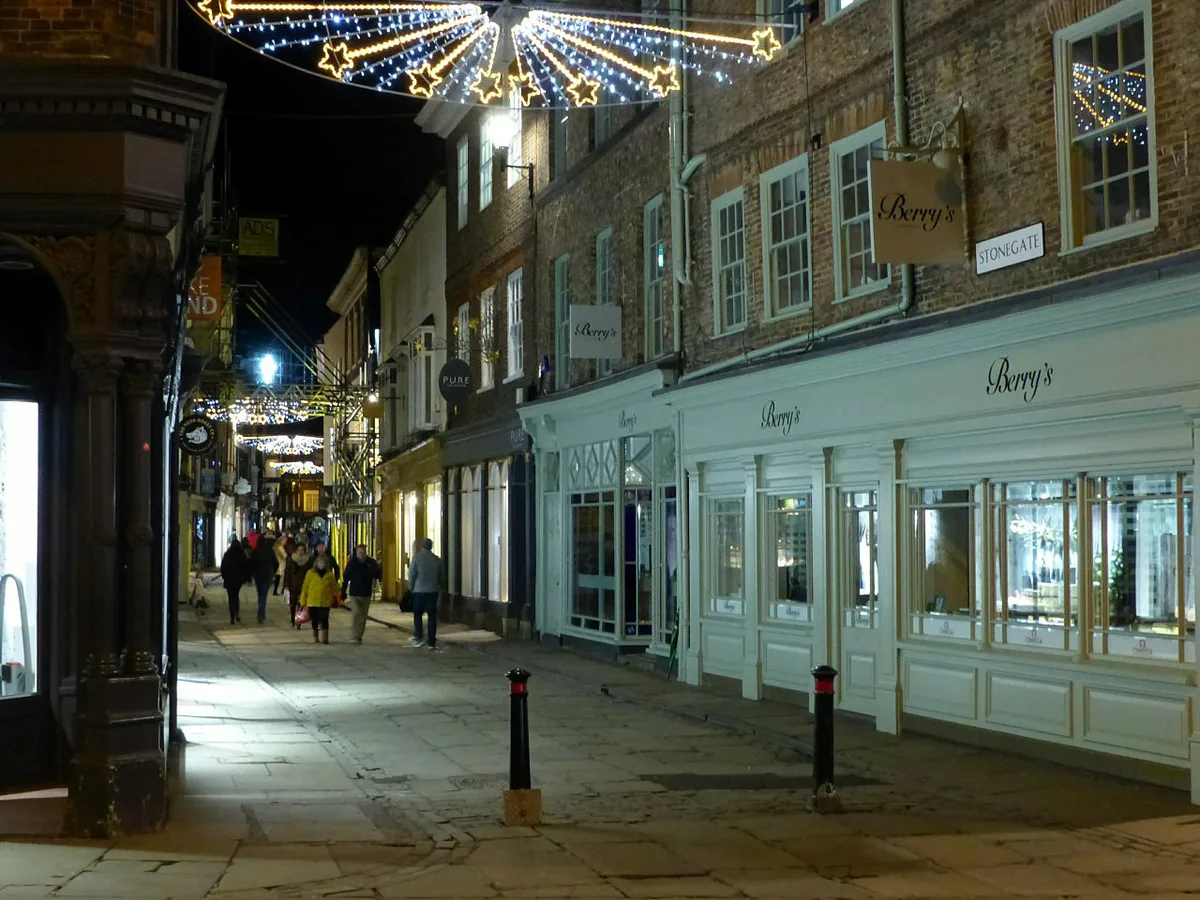
Match your walk to what interests you most, since the six main snickelways split naturally into four moods. Photographers get the most from Coffee Yard's length and Lady Peckett's Yard's architectural interest. Mad Alice Lane covers the haunted angle on its own, thanks to the local hanging legend tied to Lund's Court. Finkle Street and Nether Hornpot Lane work best as shortcuts, cutting between St Sampson's Square and the surrounding streets. Pope's Head Alley sits in a category of its own. It's a historical curiosity that doubles as a physical test, given its narrow, roughly 2-foot-7-inch width.
- Photogenic: Coffee Yard, Lady Peckett's Yard
- Haunted: Mad Alice Lane (Lund's Court)
- Shortcut: Finkle Street, Nether Hornpot Lane
- Historical challenge: Pope's Head Alley
More Snickelways and Named Passages to Watch For
Beyond the six highlighted above, York's street plates reveal many more names worth a photo. Entering the Slug and Lettuce bar from Grape Lane may retrace the steps of Roman-era residents, according to York Civic Trust. Straker's Passage and Malt Shovel Yard both appear on hand-painted plates the Trust points to as examples of the network's varied, personal history. St Sampson's Square sits at the end of Finkle Street. It was once called Thursday Market and served as York's second most important marketplace after Pavement. Historically, it was home to the city's main meat market. Nearby, Whip-Ma-Whop-Ma-Gate holds the title of York's shortest street. It isn't technically a snickelway, but its name — said to mean 'neither one thing nor the other' — often comes up in the same conversation. Not all of these survive as public routes. Others were absorbed into shops, used to store bins, or simply closed off and built over.
How to Plan a Two-Hour Snickelways Walking Route
Budget about two hours for a realistic circuit of six to ten snickelways. That follows the spirit of Jones' original guide without attempting all 50 in one outing. Start near The Shambles or St Sampson's Square. Both sit close to the highest concentration of named passages. Let each lane spit you out onto a street, then use that street to orient toward the next passage. Since digital maps often fail to register these lanes, carry a written list of names rather than trusting turn-by-turn directions. Early morning suits photography, since the passages sit in shadow for much of the day and empty out before tour groups arrive. Evening adds atmosphere, particularly around Mad Alice Lane. Confirm any gated sections are still open before you commit to a route that depends on them. Wear flat, grippy shoes; the cobbles and worn stone steps get slick when wet.
Access, Cost, and Accessibility on the Snickelways
Walking York's snickelways costs nothing. Every named passage covered here is a public right of way, free to enter during open hours. York City Council even uses the term in official paperwork, including notices of temporary footpath closures. Jones himself noted that closures get added to new editions of his book as paths change status over time. Several passages are unsuitable for wheelchairs or double-strollers. Pope's Head Alley narrows to about 2 feet 7 inches at its tightest point. Most surfaces are uneven cobble or worn stone rather than flat paving. Not every passage stays open around the clock. Coffee Yard's link through the Barley Hall complex follows the hall's own hours. A few smaller cuts through private courtyards close after dark, even though they read as public on a map. Treat any snickelway blocked by a gate or a locked door as private property, not a wrong turn.
Pair the Walk with Hidden-Gem Pubs and Courtyard Museums
Treat Lady Peckett's Yard as a natural pivot toward a pub stop. York's wider list of hidden-gem pubs covers picks beyond the obvious main-street chains. One popular option, the Snickleway Inn, borrows the local word for its name. It actually fronts onto Goodramgate rather than sitting inside a passage itself, so don't expect to find it mid-alley. Small museums also turn up in courtyards along this network, and many keep shorter opening hours than York's larger sites. Our guide to off-the-beaten-path museums covers options that pair well with an alley walk. Before building a museum stop into the route, check current hours. York Museums Trust publishes visiting times for several of the city's collections. Afterward, York's Museum Gardens work as a quiet spot to sit down. Our guide to quiet parks and green spaces has more options for a rest stop. Its own site, Yorkshire Museum and Museum Gardens, lists current garden opening times.
Mistakes to Avoid When Exploring York's Alleyways
Google Maps and similar apps often fail to register snickelways as through-routes, so relying on a phone screen leads to backtracking. Look up instead of down at a screen, and navigate by landmarks. A second, lesser-known Hornpot Lane opens beside the Poundland store on Low Petergate and leads through to Holy Trinity Church. Not every gap between buildings is a public snickelway. Some are simply access to a shop's bins or a private yard, and a locked gate or a no-entry sign settles the question fast. Historic street plates are another giveaway. Named snickelways typically carry a hand-painted or cast plate, not a modern blue-and-white council sign. Slow down and look for the older-style marker before assuming a gap is a dead end.
Beyond the City Center: More Hidden Corners Near York
Snickelway-style passages aren't unique to the main circuit between Stonegate and Swinegate. For similar quiet corners outside that stretch, see the guide to Bishophill and Clementhorpe. York Civic Trust also points to a lane near Clifton Green that follows a footpath route used for at least 300 years. Other UK cities have their own version of this idea. Edinburgh's Old Town has its own network of narrow closes. Our guide to hidden gems in Edinburgh covers that city's take. London leans more toward tucked-away courts and mews than medieval snickelways specifically. A separate guide to hidden gems in London rounds up its comparable spots.
A lane near Clifton Green maintains footpath routes spanning over 300 years, paralleling the Roman and medieval origins of central snickelways.
Frequently Asked Questions
What does snickelway mean?
Snickelway is a word coined by York author Mark W. Jones in 1983. It blends snicket, ginnel, and alleyway into one term for the city's narrow historic passages.
Are York's snickelways free to visit?
Yes, walking the snickelways covered here costs nothing. Every one profiled in this guide is a public right of way. A few connect through complexes like Barley Hall, which keep separate opening hours.
Which snickelway is the narrowest?
Pope's Head Alley holds that title, narrowing to about 2 feet 7 inches at its tightest point. Two people cannot comfortably pass each other there, so plan accordingly if carrying luggage.
How long does it take to walk the snickelways?
A realistic circuit of six to ten passages takes about two hours on foot, including stops for photos and street plates. Jones' original 1983 walk covered 50 snickelways, but most visitors see a fraction of that in one visit.
Which snickelways should first-time visitors prioritize?
Coffee Yard, Mad Alice Lane, and Lady Peckett's Yard cover the strongest mix of history and atmosphere in the least walking. Pope's Head Alley and Finkle Street are worth adding next if time allows.
Are the snickelways wheelchair accessible?
Some are, but many are not reliable for wheelchairs or strollers. Surfaces are often cobbled or uneven, and Pope's Head Alley is too narrow for anything wider than foot traffic.
When is the best time to photograph the snickelways?
Early morning works best, before shops open and tour groups arrive on The Shambles. Overcast light also helps, since it softens the shadows these narrow passages usually sit in.
Is it safe to walk the snickelways at night?
Many stay well used into the evening, especially those near pubs and restaurants. Stick to passages you've already scouted in daylight, and skip any that feel unusually quiet or poorly lit.
What's the difference between a snicket, a ginnel, and an alleyway?
A snicket is a passage between walls or fences, while a ginnel cuts between or through buildings. An alleyway is simply a narrow street or lane, and York blended all three words into snickelway.


