
Last updated August 2026, this guide covers hidden underground cisterns in Istanbul that the crowds at the city's most famous cistern tend to miss. Only two of the city's publicly accessible cisterns stay genuinely quiet: Binbirdirek Sarnıcı and Şerefiye Sarnıcı. This guide compares all three sites, then flags the details most Basilica Cistern visitors walk right past.
How Many Hidden Underground Cisterns Are There in Istanbul?
Several hundred ancient cisterns are believed to lie beneath Istanbul, built across the Byzantine era to store water for the city above. Most stay unexcavated, sealed off, or repurposed today as cafés, art spaces, or storage. Only three are open to the public: the Basilica Cistern, known locally as Yerebatan Sarnıcı, Binbirdirek Sarnıcı, and Şerefiye Sarnıcı. The Basilica Cistern draws nearly all the visitors and nearly all the photos of the three. Binbirdirek and Şerefiye are the ones actually worth calling hidden underground cisterns in Istanbul today.
Why the Basilica Cistern Isn't Really Hidden Anymore
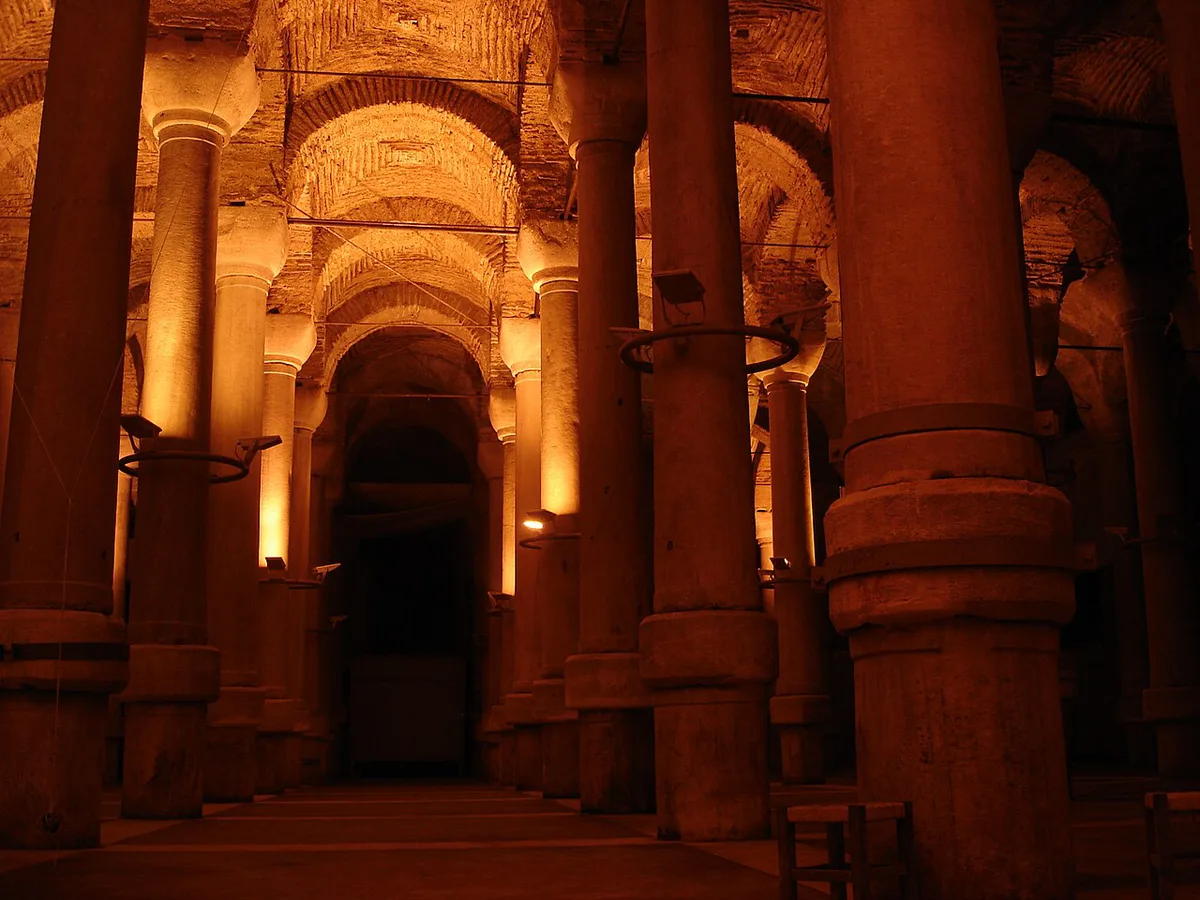
The Basilica Cistern earns its fame honestly. It has the atmosphere, the lighting, and the two Medusa-head column bases that guidebooks return to again and again. Its ceiling rests on 336 columns arranged in 12 rows of 28. At full capacity, it reportedly held about 80,000 cubic meters of water. That water traveled from the Belgrade Forest, roughly 12 miles north of the city, via the Valens Aqueduct. It's also part of the Historic Areas of Istanbul, a UNESCO World Heritage Site inscribed in 1985, and Turkish heritage law protects it as a 1st-degree archaeological zone. An earlier restoration between 1985 and 1987 removed roughly 50,000 tons of silt from the reservoir floor and added the elevated walkways still used today. A second, larger restoration ran from 2020 to 2022, replacing aging supports and reopening the site that year with new lighting and a modular steel walkway. In 2022, the city's heritage body also staged a digital art exhibition inside the space, projecting contemporary work onto the columns and walls. That same fame means lines at the entrance, especially in the late morning and early afternoon. Locals kept drawing water and fish from the cistern for centuries. A French traveler's 16th-century account brought outside attention, and film crews later found the space too, including a 1963 scene in From Russia with Love and an appearance in Dan Brown's Inferno. None of that makes it hidden. This combination makes the Basilica Cistern the busiest of Istanbul's three public cisterns, and explains why the other two deserve more attention.
Comparing Istanbul's Three Monumental Cisterns
Basilica Cistern, Binbirdirek Sarnıcı, and Şerefiye Sarnıcı are Istanbul's three publicly accessible Byzantine cisterns. Each one suits a different kind of visit. Weekday mornings are consistently described as the calmest window across all three. If your Istanbul itinerary already leans budget-conscious, Binbirdirek's lower relative price and thin crowds make it the easiest one to add without much extra planning. The table below compares crowd levels, relative cost, and who each site fits best.
| Cistern | Crowd Level | Cost Tier | Best For |
|---|---|---|---|
| Basilica Cistern (Yerebatan Sarnıcı) | Highest of the three; expect a line most days | Highest of the three, used here as the price baseline | First-time visitors who want scale, lighting, and the Medusa heads |
| Binbirdirek Sarnıcı (Cistern of Philoxenos) | Low; often near-empty on weekdays | Roughly two-thirds of the Basilica Cistern's rate, per published accounts | Travelers who value quiet over spectacle |
| Şerefiye Sarnıcı (Cistern of Theodosius) | Low to moderate | Slightly below the Basilica Cistern's rate | Travelers short on time who still want one polished stop near Beyazıt |
Hidden Details Inside the Basilica Cistern
Most visitors head straight for the two Medusa heads and then leave. Slow down, and the Basilica Cistern holds detail most people miss. Both Medusa heads sit as column bases in the northwest corner. One lies on its side, the other sits upside down, and no record explains why. Most of the 336 columns were recycled from older ruins around the empire rather than carved new for the cistern, which is why capital styles mix Ionic, Corinthian, and a few unornamented Doric designs. One column carries a raised pattern resembling peacock feathers, a design that echoes the Triumphal Arch of Theodosius I that once stood in today's Beyazıt Square. Local legend names two more features worth finding: the Weeping Column and the Hen's Eye. Legend holds the Weeping Column seeps near its base. A small circular carving called the Hen's Eye marks the foot of another column. Neither has a confirmed explanation, and neither shows up on a typical guided walk-through. Finding them just takes an unhurried lap around the walkways instead of a stop at the first photo point.
Two major restorations added elevated walkways and new lighting, but the fifty-two stone steps and uneven surfaces still require confirming accessibility details before visiting.
Binbirdirek Sarnıcı: The Quiet Alternative
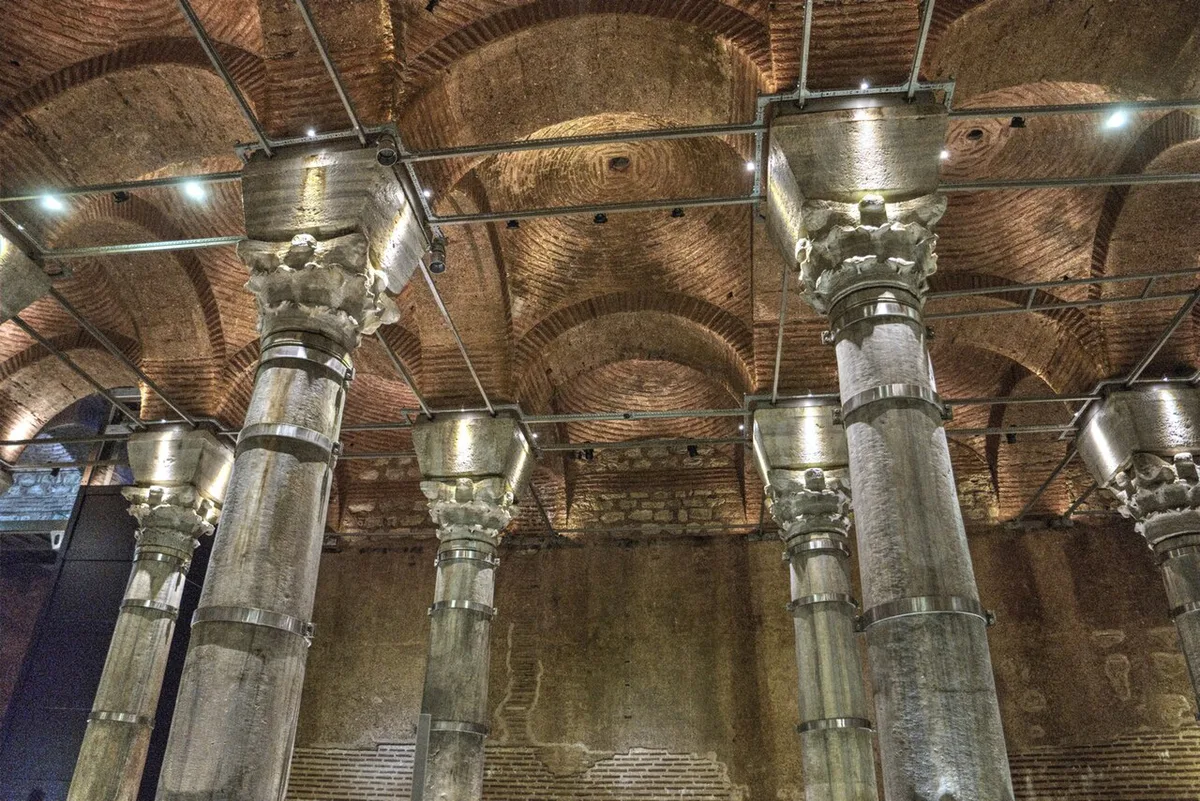
Binbirdirek Sarnıcı sits a short walk from the Basilica Cistern, yet draws a fraction of the visitors. Its Turkish name is often translated as the Cistern of 1,001 Columns. The true count is smaller. Published accounts put it at 224. Scholars link the site to the Cistern of Philoxenos, a private reservoir built for a Roman senator's palace in the early 4th century. Justinian I later expanded it to serve the wider public. Water once reached it from the Valens Aqueduct, sections of which still stand near Istanbul University. This design sets Binbirdirek apart from the Basilica Cistern. Each column is built from two shorter cylinders, stacked and joined at the middle rather than cut as one continuous shaft. Column drums were reportedly quarried on a nearby island, and some still carry small mason's marks cut in Greek lettering. Over the centuries, the surrounding ground level rose by several meters, and later work paved over the buildup instead of clearing it, which leaves the columns looking slightly truncated today. Some support work is visibly still in progress in a few spots, adding to a rawer feel than the Basilica Cistern's finished presentation. Ticket prices run lower too, reportedly around two-thirds of the Basilica Cistern's rate. On a weekday, you may have the columns almost to yourself. That lower price and thinner crowd fit neatly into a low-budget day. For more ways to save, see this roundup of no-cost sights around the city.
Binbirdirek costs roughly two-thirds of the Basilica's rate while delivering the opposite experience: weekday solitude instead of the Basilica's consistent queues.
Şerefiye Sarnıcı: The Fast, Polished Option
Şerefiye Sarnıcı, also known as the Cistern of Theodosius, is the smallest of Istanbul's three public cisterns and the fastest to visit. Byzantine emperor Theodosius II is credited with commissioning it between 428 and 443 AD, nearly a century before the Basilica Cistern was built. Published accounts put its column count at 32. Each rises roughly 10 meters tall, which keeps the space feeling monumental despite the smaller footprint. A modern renovation added a reflecting pool, a café, and a glass-floor viewing platform at street level. Entry includes a multimedia presentation, with light and sound effects layered over the ancient stonework. That contemporary treatment will not suit everyone. Some travelers prefer the older structure left alone. It does make Şerefiye a practical choice if your schedule only allows for one stop near Beyazıt. Ticket prices sit slightly below the Basilica Cistern's, which helps if you are already budgeting an afternoon that includes the city's rooftop terraces.
Getting There and Avoiding the Queue
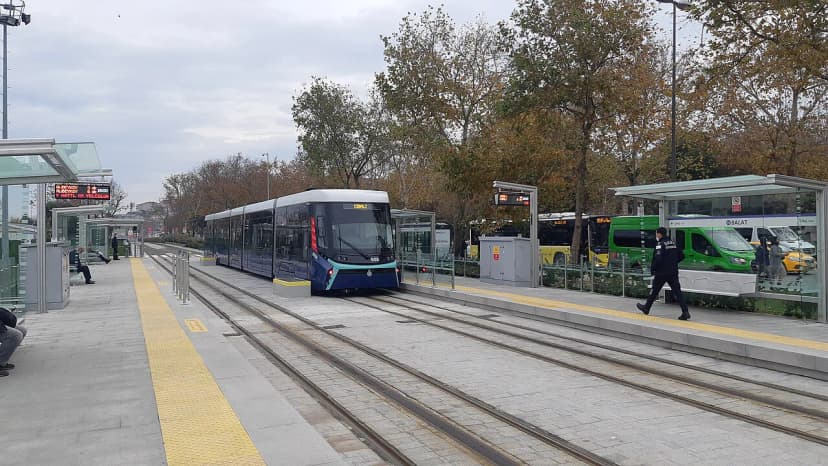
All three cisterns sit within walking distance of Sultanahmet's biggest landmarks: Hagia Sophia, the Blue Mosque, and Topkapı Palace. The T1 tram line stops at Sultanahmet, a short walk from the Basilica Cistern entrance. On foot, the walk from Hagia Sophia to the Basilica Cistern takes only a few minutes. Arrive close to opening time on a weekday to beat the biggest crowds. Hours vary by season, so check the official ticket page before you go. Some ticket sellers bundle cistern entry with nearby sights such as Hagia Sophia or a Grand Bazaar tour. Availability and pricing change, so confirm current options directly with the seller. Binbirdirek and Şerefiye rarely have lines at all, which makes them a natural stop before or after the Basilica Cistern rather than a separate trip. A practical sequence: visit the Basilica Cistern first thing, cover Hagia Sophia and the Blue Mosque next, then save the quieter Binbirdirek or Şerefiye for later, since neither depends on beating an opening-time crowd. The Grand Bazaar and Süleymaniye Mosque sit within the same walkable historic core, if you want to extend the day. Once you are done underground, the historic peninsula rewards more walking. Fener's Orthodox landmarks sit a bus or taxi ride from Sultanahmet. This district is also home to the Ecumenical Patriarchate of Constantinople, a living link to the Byzantine city that built these cisterns. Across the water, Kadıköy's local food scene makes a good pairing for a full day off the Sultanahmet trail.
Mistakes to Avoid at Istanbul's Cisterns
These are the errors that show up most often in visitor accounts of the Basilica Cistern, Binbirdirek Sarnıcı, and Şerefiye Sarnıcı. These cisterns are just one layer of the city's overlooked side. For more context on what counts as genuinely overlooked here, see this wider guide to lesser-visited corners of Istanbul.
- Skipping the early-morning window: the Basilica Cistern draws its longest lines in late morning and early afternoon.
- Wearing slick-soled shoes: the raised walkways sit just above standing water and stay damp.
- Missing the staircases: fifty-two stone steps lead down into the Basilica Cistern, and at least one lesser-visited corner is reached by a narrow stairway.
- Assuming full step-free access: some visitor guides describe the Basilica Cistern as accessible with assistance on uneven surfaces, but confirm current accessibility directly with the ticket office before you go.
- Trusting the first map pin for Binbirdirek Sarnıcı: more than one nearby structure carries a similar label, so confirm the entrance before you walk over.
- Budgeting time for only the Basilica Cistern: many itineraries skip Binbirdirek and Şerefiye entirely, which means missing the two sites most likely to feel uncrowded.
Frequently Asked Questions
When was the Basilica Cistern built?
Most sources date the Basilica Cistern to the 6th century, built during the reign of Byzantine Emperor Justinian I. It replaced an earlier public square called the Stoa Basilica, which is where the structure gets its name.
Are there other cisterns in Istanbul besides the Basilica Cistern?
Yes. Binbirdirek Sarnıcı and Şerefiye Sarnıcı are the two other cisterns currently open to the public. Several hundred more are believed to exist under the city, but most stay unexcavated, closed, or repurposed for other uses.
Is Binbirdirek Sarnıcı worth visiting?
It is a strong pick if you want a quieter cistern with a distinct design rather than the busiest one. Its double-stacked columns look different from the Basilica Cistern's single shafts, and crowds are typically much thinner. Ticket prices also run lower, reportedly around two-thirds of the Basilica Cistern's rate.
What are the Basilica Cistern's current opening hours?
Published hours vary by source and likely shift by season, so treat any specific number with caution. Check the official ticket page immediately before your visit rather than relying on an older listing you find elsewhere.
Is the Basilica Cistern wheelchair accessible?
Some visitor guides describe it as accessible with assistance on uneven surfaces. Confirm current accessibility directly with the ticket office before you plan a visit, since walkway conditions can change during restoration work.
How do you get to the Basilica Cistern from Sultanahmet?
Take the T1 tram to the Sultanahmet stop, then walk a few minutes to the entrance. The cistern sits within walking distance of Hagia Sophia, the Blue Mosque, and Topkapı Palace, so most visitors combine it with at least one other stop.
Which cistern should first-time visitors choose if they only have time for one?
For most first-time visitors, the Basilica Cistern remains the stronger single stop because of its scale, lighting, and the Medusa heads. If avoiding crowds matters more to you than spectacle, pick Binbirdirek Sarnıcı or Şerefiye Sarnıcı instead.