
Last updated August 2026, this guide looks past Balat's rainbow stairs for real hidden gems in Balat and Fener, Istanbul. Fener held Constantinople's Greek Orthodox institutions, while Balat sheltered Sephardic Jewish families who arrived after 1492. Together, the two Fatih District quarters pack a prefabricated iron church, antique auctions, and secondhand bookshops into a few blocks along the Golden Horn.
Fener and Balat Beyond the Rainbow Houses
Fener and Balat sit side by side in Istanbul's Fatih District, divided by a boundary most visitors never notice. Greek Orthodox institutions built up Fener's identity, while Balat became the city's Sephardic Jewish quarter after 1492. UNESCO added both neighborhoods to Istanbul's Historic Areas listing in 1985, citing the density of Ottoman-era wooden houses packed into a few hillside blocks. Byzantine institutions once extended well below Fener's visible street level. Travelers curious about that underground layer of the city can pair this walk with the underground cistern network elsewhere in the city center. Balat's version of that history stays street-level: laundry lines, wood-fired bakeries, and cumba bay windows original to houses 50 to 200 years old. Independent bookshops, antique dealers, and single-origin coffee counters now share those same blocks with the original wood-fired bakeries. This spoke sits alongside the broader Istanbul highlights guide for travelers assembling a longer list.
Getting to Fener and Balat: Ferry, Tram, or a Flat Walk
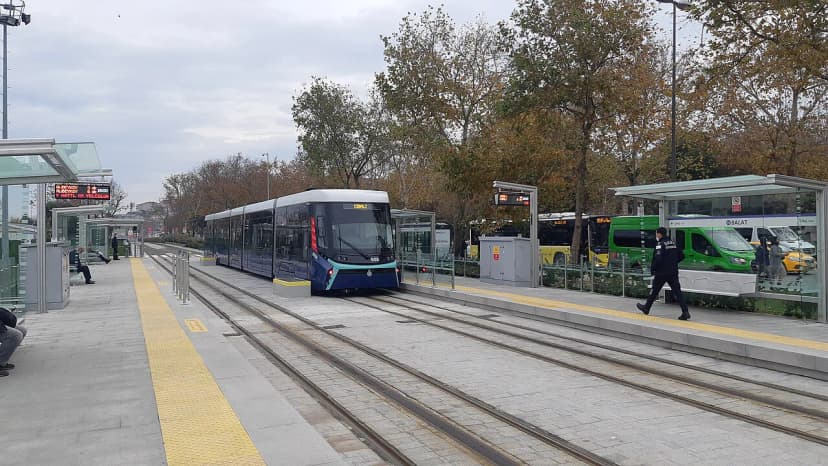
Three ways to reach Fener and Balat each carry a trade-off worth weighing before setting out. Ferries from Eminönü or Karaköy give the best approach view of the pastel houses from the water. The T5 tram runs along the Golden Horn coast and is currently the most direct transit option into the neighborhood. Walking from Eminönü takes 30 to 40 minutes on flat ground, though traffic is heavier than the ferry or tram routes. From the Asian side, an hourly ferry connects Kadıköy to the Fener terminal, and the walk from there into central Balat takes about nine minutes. Arrive at Kiremit Caddesi before 9 am, the same window locals already use to beat the tour groups.
The 30 to 40 minutes refers to the flat approach from Eminönü; the neighborhood's steep cobblestone streets require flat, closed-toe shoes with tread and add travel time.
| Option | Best For | Time / Notes |
|---|---|---|
| Ferry (Eminönü or Karaköy to Fener) | Best water-level view of the houses | Short walk from the Fener terminal into the neighborhood |
| T5 Tram | Fastest transit link | Runs along the Golden Horn shoreline |
| Walking from Eminönü | No transit cost, flat route | 30-40 minutes |
| Walking from Karaköy | Longer flat route | 40-50 minutes |
| Ferry from Kadıköy | Crossing from the Asian side | About once an hour to the Fener terminal |
12 Hidden Gems in Balat and Fener, Istanbul
These 12 stops move past the postcard stairs into the streets, shops, and institutions that give Fener and Balat their character. They run north to south, from Fener's Greek Orthodox landmarks into Balat's Jewish quarter and antique trade.
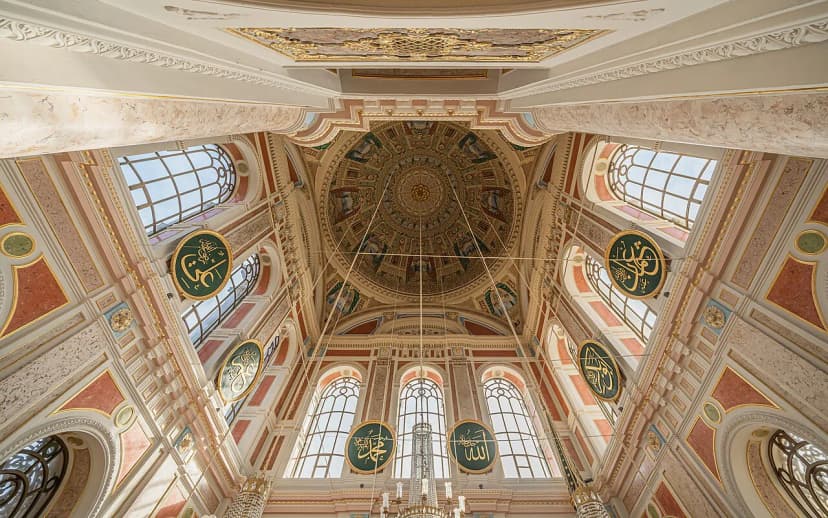
- Ecumenical Patriarchate of Constantinople
- The Patriarchate has served as the spiritual center of the Orthodox Christian world since around 1600.
- Visitors can step inside to see the mosaics, and a service may be underway depending on when you arrive.
- The Ecumenical Patriarchate's official site has current visiting information.
- Phanar Greek Orthodox College (the Red Castle)
- Built between 1881 and 1883 on a foundation dating to 1454, the red-brick building earned the nickname Red Castle for its fortress-like shape.
- About 50 students still attend, and the building itself stays closed to the public.
- Climb Sancakar Yokuşu for the exterior view; the steep street is part of the reason locals call it a castle.
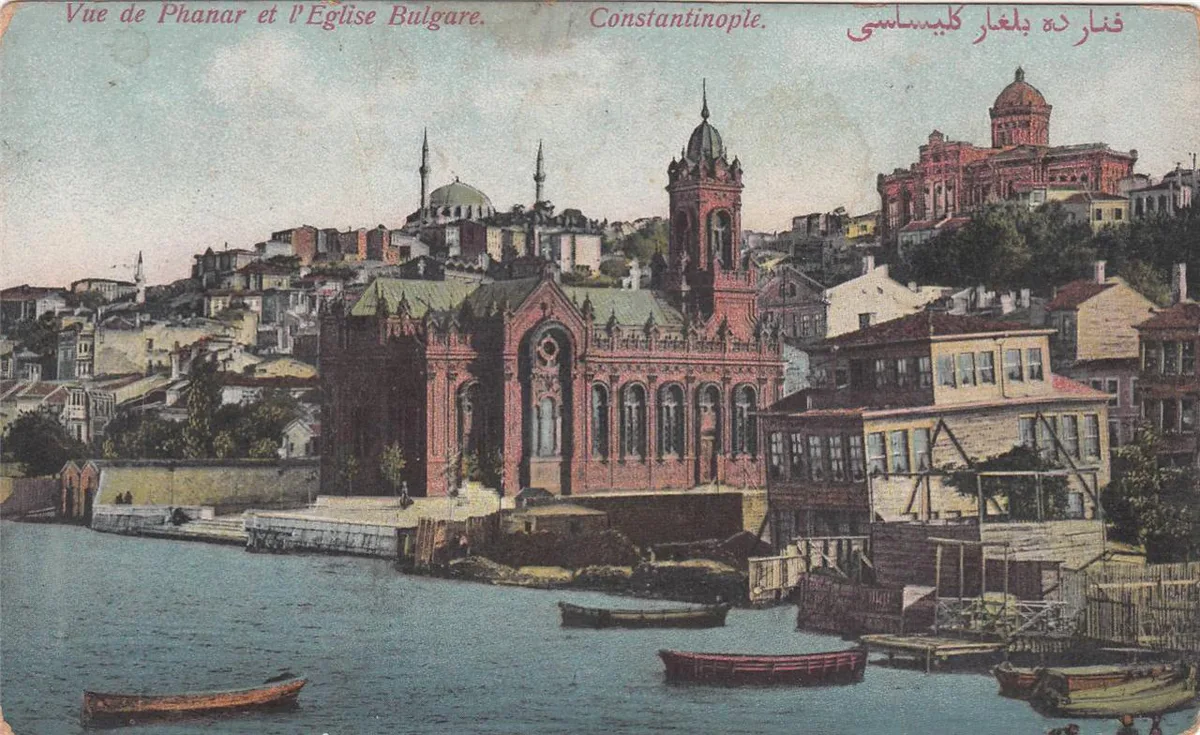
- St. Stephen's Bulgarian Iron Church
- Completed in 1898, the church was built almost entirely from prefabricated cast iron, cast in Vienna and shipped down the Danube to Istanbul.
- It reopened in 2018 after a restoration and still holds Sunday services for the city's Bulgarian Orthodox community, and entry is free.
- Wandering the surrounding streets costs nothing either, and the free things to do in Istanbul guide covers more stops like it.
- Dimitrie Cantemir Museum
- This small museum sits in a former Ottoman-era house in Fener and honors Dimitrie Cantemir, a Moldavian prince and scholar who lived in Istanbul in the early 1700s.
- It draws far fewer visitors than Fener's bigger landmarks, so check current opening hours before planning a special trip.
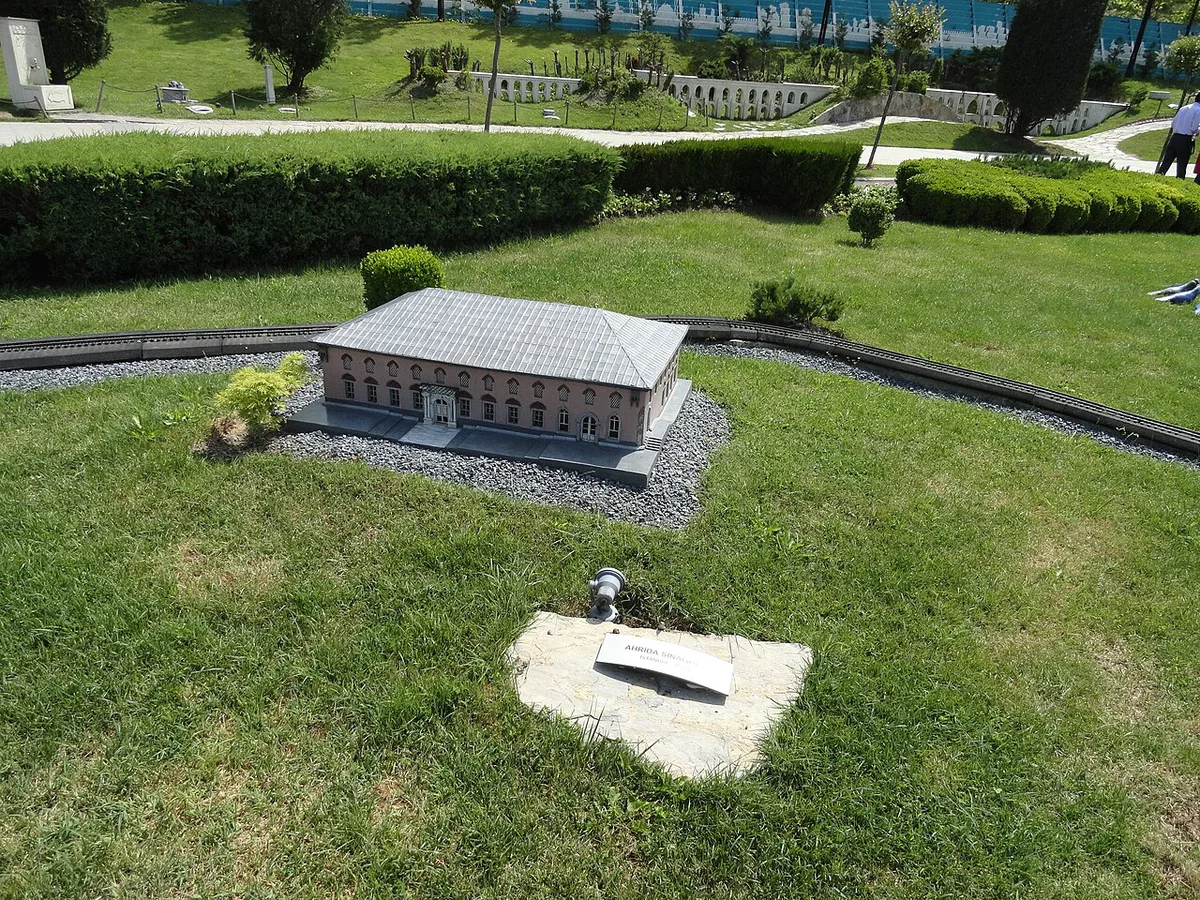
- Ahrida Synagogue
- Built in the 15th century, Ahrida is among the oldest synagogues still standing in Istanbul, with a boat-shaped bimah unusual among Sephardic congregations.
- Balat once held 18 synagogues; only three, including Ahrida, still hold services today.
- Visiting requires advance permission and security clearance, so contact the synagogue or a local guide before planning a stop.
- Balat's Evening Mezat (Antique Auctions)
- Several Balat antique dealers run informal evening auctions, known locally as mezat, where locals and collectors bid on furniture, glassware, and estate pieces.
- Auctions tend to start after regular shop hours, so ask a dealer earlier in the day for that evening's schedule.
- Haggling is expected even outside auction hours, in keeping with Istanbul's wider antique-shopping custom.
- The Sahaf Trail: Balat Sahaf and Popstel
- Balat Sahaf is a secondhand bookshop down a side street, stacked with books, cassettes, and magazines dating back to just after World War Two.
- Popstel, nearby, specializes in bound antique books, old Ottoman newspapers, and vintage-style postcards.
- Both shops sit inside Balat's wider antique cluster, so budget extra time to browse instead of rushing through.
- Çıfıt Bazaar
- Çıfıt Bazaar is Balat's older market row, lined with small workshops and traditional shops rather than souvenir stalls.
- It sits close to the neighborhood's antique cluster, so pair a visit with the Sahaf Trail bookshops nearby.
- Hours vary by vendor, so a weekday morning visit is the safer bet for finding shops open.
- Kiremit Caddesi and Vodina Caddesi Backstreets
- Kiremit Caddesi is the most-photographed row of pastel houses, so arrive before 9 am to shoot it without a crowd.
- Vodina Caddesi runs a similar stretch of color a few blocks over, with far fewer visitors.
- Antique and vintage shops cluster near the steep stairways off both streets, and the wooden bay windows, or cumbas, date from 50 to 200 years old.
- Sevda Gazozcusu
- This gazoz, or Turkish soda, shop stocks dozens of regional flavors, from sour cherry to more unusual local blends.
- It works well as a mid-walk break between Fener's climbs and Balat's stairways.
- Cafe Naftalin K
- Cafe Naftalin K is Balat's best-known cat cafe, furnished with vintage pieces and mismatched armchairs.
- Expect a wait for a table on weekend afternoons, when Balat's cafe scene gets busiest.
- Forno Balat
- Forno Balat is known for pide and lahmacun cooked in a wood-fired oven, plus a full Turkish breakfast spread.
- It's a practical lunch stop partway through a walking route, before the climb back up toward Fener.
- Ask about the breakfast spread if visiting in the morning; it pairs well with a stop right off the ferry.
Fener vs Balat: Which Quarter Matches Your Trip
Fener and Balat share a border, but the two quarters feel different underfoot. Institutions like the Patriarchate and Phanar Greek Orthodox College give Fener an intellectual, historic feel. Balat feels more artistic and gritty, driven by its antique trade and independent cafes. Fener's newer cafes lean toward skyline seating, and the citywide rooftop terraces guide covers more options like them.
| Feature | Fener | Balat |
|---|---|---|
| Primary vibe | Intellectual and historic | Artistic and gritty |
| Top landmark | Phanar Greek Orthodox College | Ahrida Synagogue |
| Best for | Byzantine history | Antique shopping |
| Cafe scene | Chic and modern | Vintage and bohemian |
What a Day in Balat and Fener Actually Costs
Walking the streets of Fener and Balat costs nothing, and several of the landmarks above are free to enter. One widely cited Istanbul guide prices a full day here at $136 to $204 per person, built around a sit-down lunch and museum entries. Budget travelers on foot, with a soda stop, a bookshop browse, and a pide lunch, can expect $40 to $70 per person. Mid-range travelers adding a guided walking tour or a sit-down dinner will land somewhere between those two figures. Ferries and the T5 tram both run on Istanbul's standard public transit fare, so transport adds little on top of either budget.
A $40 to $70 per person budget aligns with the 4-Hour walking loop plus purchases at cafes, shops, and a lunch stop, rather than museum visits.
Safety, Steep Streets, and Local Etiquette
Balat has gentrified significantly since the early 2000s, and in our editorial assessment the neighborhood is safe for typical daytime and evening visits. Stick to main pedestrian routes after dark, the same precaution worth taking in any dense city neighborhood. Cobblestone hills are the bigger practical obstacle, especially the climb up Sancakar Yokuşu toward Phanar Greek Orthodox College. Wear flat, closed-toe shoes with real tread, and consider a top-down route that starts near the college and descends into Balat.
- Photographing without asking
- Ask before photographing residents or their homes; people live behind those pastel facades.
- Wrong shoes for the hills
- Skip sandals or smooth soles; the cobblestones near Phanar Greek Orthodox College get steep and uneven.
- Skipping the backstreets
- Sticking to Kiremit Caddesi alone means missing quieter, equally colorful streets like Vodina Caddesi.
A 4-Hour Walking Route From Fener to Balat
A single loop covers most of this list in about four hours, moving from Fener's institutions down into Balat's stairways. Start at the Fener ferry terminal and walk uphill toward the Ecumenical Patriarchate and Phanar Greek Orthodox College. From there, walk to St. Stephen's Bulgarian Iron Church along the Golden Horn before doubling back into Balat's antique and bookshop streets. Finish at the stairways near Kiremit Caddesi, with a soda at Sevda Gazozcusu or a table at Cafe Naftalin K. Travelers who enjoy Balat's antique hunt can continue it across the Bosphorus at Kadıköy's flea market streets on another day.
- Fener Ferry Terminal (start)
- Begin here after a ferry from Eminönü, Karaköy, or across the Bosphorus.
- Ecumenical Patriarchate and Phanar Greek Orthodox College
- Climb Sancakar Yokuşu for the Red Castle exterior, then loop back toward the Patriarchate grounds.
- St. Stephen's Bulgarian Iron Church
- Walk the Golden Horn shoreline to the cast-iron church for a free look inside.
- Balat's Antique and Sahaf Streets
- Cut into Balat to browse Balat Sahaf, Popstel, and the antique dealers near Çıfıt Bazaar.
- Kiremit Caddesi and the Stairways (finish)
- End at the pastel houses and stairways, with a stop at Sevda Gazozcusu or Cafe Naftalin K.
Frequently Asked Questions
What's the difference between Fener and Balat?
Fener was historically Istanbul's Greek Orthodox quarter, centered on the Ecumenical Patriarchate and Phanar Greek Orthodox College. Balat was the city's Sephardic Jewish quarter, and today it's better known for antique shops, secondhand bookstores, and the colorful houses along Kiremit Caddesi.
Is Balat safe to visit?
Balat is generally safe for tourists, and the neighborhood has changed substantially since its rougher decades in the late 20th century. Stick to main pedestrian streets after dark, the same precaution that applies in any dense city neighborhood. Daytime visits, including the backstreets away from Kiremit Caddesi, carry no particular added risk in our editorial assessment.
How much time should you plan for Fener and Balat?
Plan on about four hours for a walking loop covering the main landmarks in both quarters. Add extra time if antique shops, bookstores, or a sit-down lunch are on the list, since browsing tends to run long in Balat.
What is the best time of day to photograph Balat's colorful houses?
Arrive at Kiremit Caddesi before 9 am to shoot the houses without a crowd, since tour groups typically arrive later in the morning. Weekday mornings, in general, are quieter than weekend afternoons across both neighborhoods.
Can you go inside the Ahrida Synagogue or the Ecumenical Patriarchate?
Ahrida Synagogue requires advance permission and security clearance, so contact the synagogue or a local guide before planning a visit. The Ecumenical Patriarchate is generally open to visitors, and a service may be underway depending on when you arrive.
How do you get from central Istanbul to Balat and Fener?
Ferries from Eminönü or Karaköy give the best view of the neighborhood from the water. The T5 tram runs along the Golden Horn coast, and walking from Eminönü takes 30 to 40 minutes on flat ground. From the Asian side, an hourly ferry connects Kadıköy to the Fener terminal, a nine-minute walk from central Balat.
How much does a day in Balat and Fener cost?
Budget travelers can expect to spend $40 to $70 per person on a self-guided day with a soda stop, a bookshop browse, and a pide lunch. One widely cited estimate for a fuller day, with museum entries and a sit-down lunch, runs $136 to $204 per person.