Last updated August 2026. A one day in Valencia itinerary works best in one direction, from medieval Ciutat Vella to the futuristic City of Arts and Sciences. Built for AVE day-trippers from Madrid or Barcelona, this route also weighs Old Town time against beach time, tourist-card math, and the paella rules that keep you out of tourist-trap kitchens.
One Day in Valencia Itinerary at a Glance
This route starts at Plaza de la Reina in Ciutat Vella and finishes either at Malvarrosa Beach or in Ruzafa, depending on how the afternoon goes. Walking covers the morning through the old town. A rented bike along the Turia Gardens covers the afternoon transit out to the City of Arts and Sciences.
- 9:00 AM — Horchata and fartons at Horchatería de Santa Catalina near Plaza de la Reina.
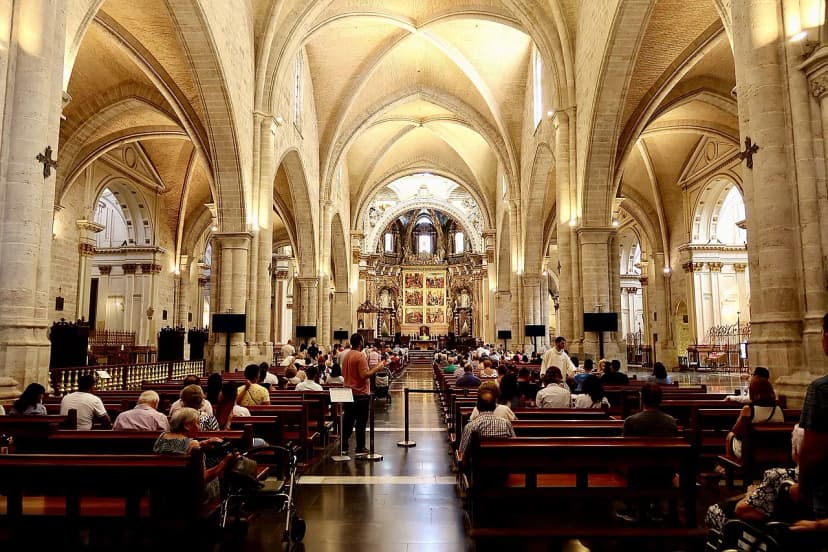
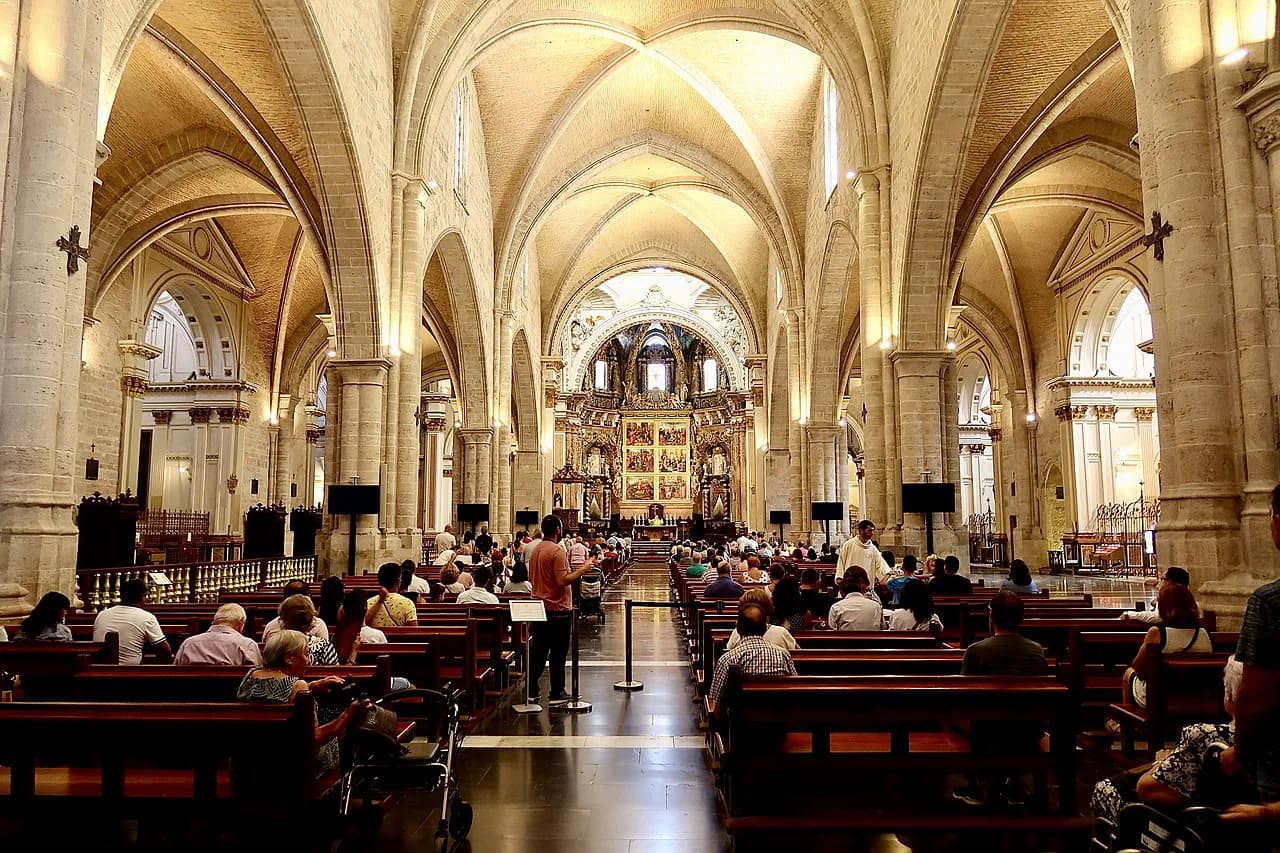
- 10:00 AM — Valencia Cathedral, then the €2 climb up El Miguelete bell tower.
- 11:15 AM — La Lonja de la Seda, the Gothic Silk Exchange and its Contract Hall.
- 12:00 PM — A fast stop at Mercat Central, which closes by 3:00 PM.
- 12:30 PM — San Nicolás de Bari, the painted-ceiling church known locally as the Sistine Chapel of Valencia.
- 2:00 PM — Paella Valenciana for lunch in El Carmen or Ruzafa.
- 3:30 PM — Bike rental near Torres de Serranos, then a ride down the Turia Gardens.
- 4:30 PM — A stop at Gulliver Park for anyone traveling with kids.
- 5:00 PM — The City of Arts and Sciences: walk the exterior, visit the Umbracle, or go into the Oceanogràfic.
- 6:30 PM — Choose Malvarrosa Beach for sunset or Ruzafa for its boutique streets.
- 8:30 PM — Tapas and Agua de Valencia for dinner.
- 10:00 PM — Day ends; head back toward your hotel or train station.
Morning in Ciutat Vella: Cathedral, Silk Exchange, and Market
Start at Plaza de la Reina, ringed by cafés facing the cathedral. Order horchata and fartons at Horchatería de Santa Catalina, a pairing tied to Valencia's chufa, or tiger nut, drink. From the cathedral, cross to Plaza de la Virgen and its Turia Fountain before doubling back toward the Silk Exchange. La Lonja de la Seda, Ciutat Vella's UNESCO World Heritage building, dates to the late 15th century. Its Contract Hall, the Sala de Contratación, is lined with twisted stone columns built for the city's silk merchants. On Sundays a flea market has traditionally set up outside the Lonja from around 10:00 AM to 1:00 PM; confirm it's still running before you plan around it. Mercat Central works better as a fast stop than a sit-down meal, since it closes by 3:00 PM. Grab fresh orange juice or jamón and keep walking. San Nicolás de Bari, nicknamed the Sistine Chapel of Valencia for its painted ceiling, sits a few streets from the market.
- Valencia Cathedral opens at 10:00 AM; admission runs about €8 and includes the cathedral museum plus an audio guide.
- Climbing El Miguelete, the cathedral's bell tower, costs €2 and gives the widest rooftop view over Ciutat Vella.
- San Nicolás de Bari costs about €10 to enter, audio guide included.
Pro-Tip: Europe's Narrowest House
Behind Santa Catalina church, Plaza de Lope de Vega hides La Estrecha, one of Europe's narrowest houses at about 107 centimeters wide. It's easy to miss if you're not looking for it, so budget two minutes for the detour. It's one of several Valencia hidden gems worth folding into the morning walk without slowing down the route.
The Paella Rule: Where and What to Eat at Midday
Authentic Paella Valenciana is built on rabbit, chicken, and flat green beans, not seafood. Restaurants directly on the beach or facing the cathedral square typically charge more and cook to a tourist pace. Many kitchens also require a two-person minimum order and about 40 minutes of cooking time, so this isn't a quick lunch stop. Plan to sit down around 2:00 PM, when local kitchens start serving. If seafood rice is what you want instead, ask for Arroz a Banda, a different Valencian dish cooked in fish stock. El Carmen and Ruzafa both run kitchens a few streets back from the tourist plazas, where prices tend to run lower than the main squares.
The morning itinerary treats sites as fast stops—Mercat Central is explicitly called a quick visit, and the hidden house takes just 2 minutes without slowing you down. The 2:00 PM paella lunch represents a pace change, requiring about 40 minutes of cooking time plus a two-person minimum.
Afternoon: Biking the Turia Gardens to the City of Arts and Sciences
The Turia Gardens exist because the Turia River flooded the city in 1957. Engineers later diverted the river and turned the old bed into a park that connects the old town to the City of Arts and Sciences. Renting a bike near Torres de Serranos beats waiting on a bus for this stretch, and the ride down to the CAC takes a fraction of the time a bus route would. Climbing Torres de Serranos costs €2 and adds a view over the old city gate before you set off. Guided city bike tours run about €25 if you'd rather follow a route than plan one. Families with children often stop first at Gulliver Park, a free playground built around a reclining giant statue with bathrooms on site. Pair the stop with the Valencia with Kids: An Age-by-Age Family Guide for 2026 guide for more nearby options. At the City of Arts and Sciences, you cannot realistically tour both the science museum and the Oceanogràfic in one afternoon. Strolling the plaza and the exterior is free of charge, and the Umbracle's landscaped walkway costs nothing to walk through. Entering a museum runs €8 to €32 depending on the building, and water activities like paddle boards start at €2.50 for 10 minutes. Go inside the Oceanogràfic if you're traveling with kids or want a close look at the marine exhibits, which the venue's own materials describe as the largest aquarium complex of its kind in Europe. Skip the interiors and just walk the grounds if photography and architecture are the priority; either way, the exterior and the gardens count among the city's free things to do.
Late Afternoon Choice: Malvarrosa Beach or Ruzafa
Two directions work equally well from the City of Arts and Sciences. Malvarrosa Beach sits past the Cabanyal neighborhood, known for tiled, low-rise facades along the boardwalk. Stop at La Fàbrica de Gel, a former ice factory turned bar, for a drink facing the water as the sun drops. Ruzafa runs the opposite direction: a grid of streets built around boutique shops, coffee roasters, and dinner spots. Pick the beach for open air and a swim. Pick Ruzafa for shopping and a livelier walk before dinner.
Evening: Tapas and Agua de Valencia
Agua de Valencia mixes cava, fresh orange juice, gin, and vodka, and most bars serve it by the pitcher for the table. Café de las Horas, in the old town, is one of the well-known spots for it. For dinner, El Carmen keeps a historic feel, with tapas bars tucked into narrow medieval streets. Ruzafa leans modern, with smaller plates and later kitchens. Either neighborhood pairs well with a longer look at Valencia's nightlife scene if the evening stretches past dinner.
Getting to and Around Valencia in a Day
High-speed AVE trains from Madrid or Barcelona arrive at Joaquín Sorolla station, a short walk or metro ride from Ciutat Vella. Regional trains use Estació del Nord instead, which sits closer to the old town's core. Flying in works too: Metro lines 3 and 5 run from the airport to the center in about 20 to 30 minutes. Walking and one bike rental cover almost this entire route, so a taxi shouldn't be necessary unless you're catching a late train.
Is the Valencia Tourist Card Worth It for One Day?
A 24-hour Valencia Tourist Card costs €15 and bundles public transport with entry to the Silk Exchange and Torres de Serranos, plus a few smaller perks. Paying site by site instead, a Serranos Towers climb alone runs €2, and single transport tickets add up fast if you're crossing several neighborhoods in one day. The card doesn't cover El Miguelete or San Nicolás, so budget those separately either way. For a day built around several transport rides plus both the Silk Exchange and Serranos Towers, the card pays for itself. For a day spent mostly on foot, visiting just the cathedral and the free plazas, skip it and pay per site instead.
| Cost item | Paying separately | With 24h Tourist Card (€15) |
|---|---|---|
| Public transport, full day | Priced per ride | Included |
| Torres de Serranos climb | €2 | Included |
| Silk Exchange entry | Check current standalone pricing | Included |
| El Miguelete climb | €2 | €2 (not covered) |
| San Nicolás de Bari | About €10 | About €10 (not covered) |
Essential Planning Tips for a One-Day Visit
Timing this route around local rhythms saves both money and crowd stress.
- Las Fallas runs March 15 to 19 each year and fills the streets with processions, fireworks, and crowds; expect higher prices and fuller sites if your visit lands during that week.
- Most shops close on Sundays, and museum hours run shorter, though a handful of sites offer free entry that day.
- One day covers the highlights but skips the wider region, including Albufera Lake; pair this route with a Best Day Trips from Valencia: A 2026 Planning Guide guide if you have a second day to spend.
Frequently Asked Questions
Is one day enough time in Valencia?
One day covers Ciutat Vella, the Turia Gardens, and the City of Arts and Sciences, but it leaves out the wider region, including Albufera Lake. Add a second day if you want the beach at a slower pace or a trip outside the city.
Do you need the Valencia Tourist Card for a one-day trip?
The 24-hour card costs €15 and is worth it if your day includes several transport rides plus both the Silk Exchange and Torres de Serranos. If your day is mostly walking with just the cathedral and free plazas, pay per site instead.
What's the difference between Paella Valenciana and Arroz a Banda?
Paella Valenciana is built on rabbit, chicken, and green beans, not seafood. Arroz a Banda is the seafood version, cooked in fish stock, and counts as a different dish from what many restaurants outside Valencia call paella.
How do you get from Valencia's airport or train station to downtown?
From the airport, Metro lines 3 and 5 reach the center in about 20 to 30 minutes. High-speed AVE trains arrive at Joaquín Sorolla station, while regional trains use Estació del Nord; both stations sit within walking or metro range of Ciutat Vella.
What time should you eat paella in Valencia?
Plan lunch for around 2:00 PM, since most kitchens serve paella at midday rather than for dinner. Many restaurants also set a two-person minimum order and need about 40 minutes to cook it, so this isn't a fast stop.