
Last updated July 2026: Lisbon neighborhoods vary sharply within a few blocks, from the flat grid of Baixa to the stepped alleys of Alfama. Seven hills and the Tagus River shape which district suits a short visit, a longer stay, or a stroller-friendly base. This guide breaks down vibe, hill level, transit links, and food for each core area, with flat, central districts usually easiest for families and first-timers.
Lisbon Neighborhoods at a Glance: Hills, Vibe, and Who Each Area Suits
Hill level and vibe are the two biggest factors in choosing where to stay. The table below ranks six core Lisbon neighborhoods by character and by how much climbing to expect. Read the full breakdown below for transit links and food notes on each one. Hill levels reflect an editorial assessment of typical walking routes rather than an official measurement.
| Neighborhood | Vibe | Best For | Hill Level (1-5) |
|---|---|---|---|
| Baixa | Central, grid streets, grand squares | First-time visitors, shopping | 1 - Flat |
| Alfama | Historic alleys, Fado music | Romance, photographers | 5 - Steep |
| Chiado | Upscale cafes, bookshops | Foodies, book lovers | 3 - Moderate |
| Bairro Alto | Quiet by day, party by night | Night owls | 4 - Steep |
| Príncipe Real | Leafy, trendy, LGBTQ+-friendly | Concept stores, gardens | 3 - Hilltop |
| Belém | Monumental, riverside, flat | History, families | 1 - Flat |
Lisbon Geography 101: The Tagus River and Seven Hills
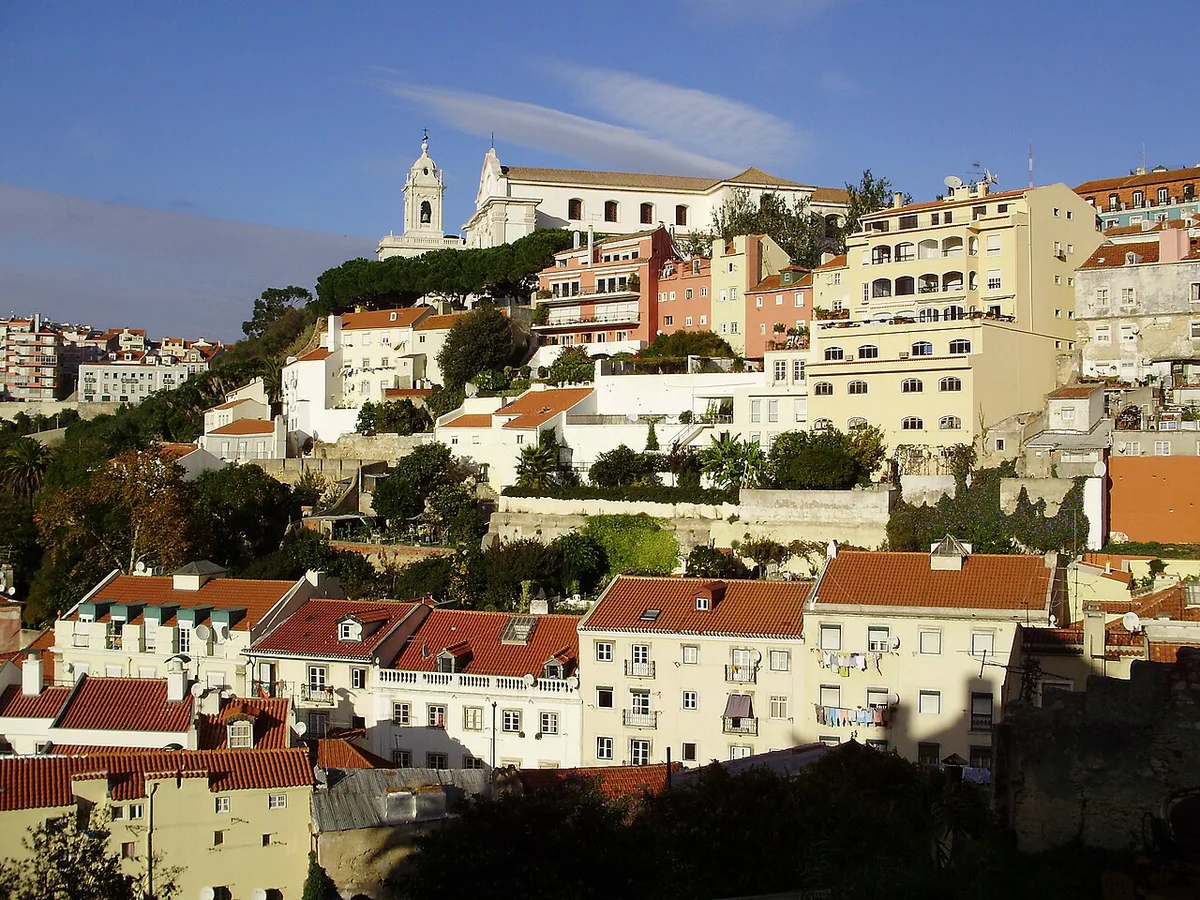
Lisbon sits along the north bank of the Tagus River, or Rio Tejo, with most historic sights within a mile or two of the water. Like Rome, the city rises across seven hills, so trams and funicular-style elevators fill gaps that streets alone cannot climb. A single event reshaped that layout: the 1755 earthquake. Alfama survived largely intact and kept its tangle of alleys. The Marquis of Pombal rebuilt Baixa afterward on a strict grid instead. Pace exploring across at least a couple of days. Check How Many Days in Lisbon Do You Need? 2026 Trip-Length Guide before mapping a neighborhood-by-neighborhood route.
The 1755 earthquake created opposite aftermaths across Lisbon: Alfama's preserved medieval alleys are now steep and difficult for luggage, while Pombal's grid rebuild gave Baixa flat streets for easy rolling access. This geometric split remains stark between neighborhoods.
Baixa and Rossio: The Flat, Central Base
Baixa is the neighborhood the Marquis of Pombal rebuilt on a grid after 1755. Wide, flat streets fan out from Praça do Comércio on the riverfront to Rossio, the wave-tiled square long used as a meeting point. Flat terrain and dense tram and metro links make this the easiest first-time base, especially with luggage or a stroller. It sits an easy walk from many of the 10 Best Restaurants in Lisbon: Where to Eat by Neighborhood (2026 Guide). Rossio train station also connects onward for day trips. See Day Trips From Lisbon Travel Guide for options. Crowds are the trade-off: Rua Augusta and the arch draw heavy foot traffic year-round. Petty theft is a known risk around the main squares, so keep bags zipped and valuables out of back pockets. The neighborhood also quiets down once dinner service ends, so evenings feel thinner than Bairro Alto or Alfama.
Alfama: Steep Streets and Fado Nights
Alfama is Lisbon's oldest neighborhood and one of the few areas that survived the 1755 earthquake mostly intact. Narrow alleys wind uphill past laundry lines and small tiled facades. Fado, the city's traditional sung music, was born in bars along these streets. Two landmarks anchor the neighborhood: the 12th-century Sé Cathedral, which has no entrance fee, and the 11th-century Castelo de São Jorge, where an adult ticket costs €15. Both reward the climb with some of the city's 10 Best Viewpoints in Lisbon to See in 2026. The same miradouros make strong photo spots in Lisbon at golden hour. Short-term rentals have also reshaped Alfama's housing stock in recent years, so some of the neighborhood's traditional feel now competes with tourist apartments. Mobility is the real trade-off: stairs, uneven cobblestones, and dead-end alleys make rolling luggage difficult, and Fado bars can run loud into the late evening. Wet cobblestones get slick fast. Pack a backup plan with Lisbon on a Rainy Day: 2026 Travel Guide for indoor options.
Chiado and Bairro Alto: Shopping by Day, Nightlife After Dark
Chiado and Bairro Alto sit next to each other, split by Praça Luís de Camões, and locals often treat them as one stretch. Historic cafés like A Brasileira anchor Chiado's polish, along with bookshops and the 1902 Elevador de Santa Justa, an iron lift that climbs roughly 150 feet. Nearby, the Convento do Carmo, a 1389 convent left roofless by the 1755 earthquake, now holds an archaeology museum. Bairro Alto stays quiet by day and changes completely after dark, when bars and restaurants fill the same steep streets that stayed sleepy at lunch. That is the neighborhood to book for 10 Best Things to Do in Lisbon at Night (2026). Anyone sensitive to noise should ask about soundproofing before booking, or choose a room on the Príncipe Real side of the hill instead.
Cais do Sodré: Riverfront Nightlife and Transit Hub
Cais do Sodré sits where Bairro Alto's slope meets the river, anchored by a major metro stop and the ferry terminal to the south bank. Pink Street, officially Rua Nova do Carvalho, carries the neighborhood's bar scene after dark. Time Out Market sits at its center, a food hall with stalls from multiple Lisbon chefs and restaurants under one roof. The area stays close to Chiado and Bairro Alto on foot. It also has fewer hills than either, so it can work as a nightlife base without Alfama's stairs or Bairro Alto's steepest blocks.
Príncipe Real: Quiet Sophistication Near the Center
Príncipe Real sits just north of Bairro Alto on a gentler hilltop, with tree-lined streets, a public garden, and the Embaixada concept store inside a converted 19th-century palace. The area draws a design- and food-focused crowd and carries a strong LGBTQ+-friendly reputation among Lisbon's central districts. It stays a short walk from Rato Metro station, so the center and Bairro Alto's restaurants are close without the noise of staying inside the party zone itself. Weighing a short stay against a longer one helps decide how far from the center to base. Check the 2-day Lisbon itinerary for a compact plan. The 3-day Lisbon itinerary covers a slower pace instead.
Estrela, Madragoa, and Alcântara: Local Lisbon
West of Bairro Alto and Príncipe Real, Estrela centers on the Basílica da Estrela and the adjoining Jardim da Estrela, a park with a pond and playground that suits families staying nearby. Madragoa sits between Estrela and the river, a residential pocket of narrow streets with fewer tourists than Alfama. Further along the waterfront, Alcântara holds LX Factory, a former industrial complex turned into studios, shops, and restaurants under a working railway viaduct. The mix suits digital nomads and travelers who want an artsy, less-scripted base over the postcard center. For more low-key picks across the city, see Hidden Gems in Lisbon: A 2026 Travel Guide.
Graça and São Vicente: Views Without the Alfama Crowds
Graça and São Vicente sit above and beyond Alfama, on some of the highest ground in the city. Both are largely residential, with street art scattered through São Vicente and fewer tour groups than the miradouros closer to the castle. The elevation makes this stretch one of the better spots for sunset. It also avoids the crowding that builds at Alfama's more famous lookouts. See Where To Watch Sunset In Lisbon: Travel Guide for specific miradouros. Staying here means longer walks or tram rides to central sights, so it suits travelers who prioritize views and quiet over convenience.
Belém and Parque das Nações: Monuments and Modern Lisbon
Belém sits west along the river, roughly a 20-minute tram ride from the center, and the terrain is flat compared with the hillside districts. It holds Jerónimos Monastery, Belém Tower, and the bakery credited with the original pastéis de Belém. Parque das Nações sits on the opposite side of the city, built for the 1998 World Expo and still flat, modern, and spread along the river. Wide promenades there work well for strollers. Families weighing a base in either area can cross-check both against Lisbon With Kids: A Family Travel Guide for 2026 for logistics.
Avenidas Novas: Lisbon's Modern, Practical Base
Avenidas Novas sits north of the historic center, built up as Lisbon expanded beyond its 19th-century boundaries. Wide avenues, modern apartment blocks, and business offices define the area more than tiled facades or cobblestones. The Green Metro line runs directly through it, making transit into Baixa or Chiado fast even without a car. It suits travelers who want lower rates and easy transit over a historic setting. It also works well as a base for a longer stay that mixes sightseeing with remote work days.
What a Night Costs by Neighborhood
Rates shift with season and demand, but recent hotel listings give a workable sense of scale across neighborhoods. The table below samples one property per area, from bargain to luxury. Booking further from the historic center, in areas like Avenidas Novas or Parque das Nações, typically trims cost without adding much travel time to the main sights.
Príncipe Real's sample rate ($175/night) undercuts Chiado ($250/night) while placing visitors within a short walk of the same bars, making it a budget-conscious nightlife alternative.
| Neighborhood | Sample Property | Nightly Rate |
|---|---|---|
| Avenidas Novas | Hotel White Lisboa | $140/night |
| Baixa | Hotel Lis Baixa | $150/night |
| Príncipe Real | Alegria Boutique Hotel | $175/night |
| Alfama | Pousada de Alfama | $200/night |
| Chiado | Palácio das Especiarias | $250/night |
| Near Avenida da Liberdade | One Palácio da Anunciada | $375/night |
Getting Around Lisbon's Neighborhoods
A Viva Viagem card covers metro, tram, bus, and the funicular-style elevators, and it is worth loading before hopping between districts. Tram 28, the yellow historic route, threads through Baixa, parts of Alfama, and Graça. It gets packed at peak hours, and pickpockets are a known risk on board. Route changes happen periodically, so confirm the current Tram 28 route before relying on it for a specific stop. The Green Metro line reaches Avenidas Novas and other newer areas north of the center. Metro service generally runs from early morning into the late evening; confirm current hours before planning a late return. On steep stretches in Alfama, Bairro Alto, or Graça, a rideshare like Uber or Bolt often beats walking with luggage or waiting on a crowded tram. Before committing to a sightseeing pass, check whether the Lisbon Pass is worth it for the specific sights on the itinerary.
Choosing a Base: Matching a Neighborhood to the Trip
Matching a neighborhood to the trip comes down to mobility, priorities, and season. The list below breaks the choice down by traveler type.
- First-timers short on time: Baixa or Chiado, both flat or moderate and close to major sights. Build a single day around the highlights with a one-day Lisbon itinerary.
- Nightlife-focused stays: Bairro Alto directly, or Príncipe Real for a quieter walk to the same bars.
- Families or limited mobility: Baixa, Belém, or Parque das Nações, all flat. Cross-check plans against Lisbon With Kids: A Family Travel Guide for 2026.
- Budget-conscious days: fill gaps with 11 Free Things to Do in Lisbon in 2026, many of them miradouros with no entrance fee.
- Rainy-day backup: several of the city's best museums in Lisbon cluster in Belém and Chiado.
- Trip timing: check the best time to visit Lisbon before booking, since peak summer months raise hotel prices and crowding downtown.
Frequently Asked Questions
Which Lisbon neighborhood is best for first-time visitors?
Baixa and Chiado work best for most first-time visitors. Both sit flat or moderately hilly, put major sights within walking distance, and connect easily by tram and metro to the rest of the city.
Which Lisbon neighborhood has the steepest hills?
Alfama and Graça sit on the steepest ground, with narrow stairs and uneven cobblestones throughout. Bairro Alto and parts of Príncipe Real also climb steadily, though less severely than Alfama.
Where should you stay in Lisbon to avoid crowds?
Graça, São Vicente, Madragoa, and Alcântara stay quieter than the central tourist corridor. Each one is still a manageable tram or metro ride from Baixa and Chiado.
Is Alfama worth staying in with luggage?
Alfama's stairs and cobblestones make rolling luggage difficult, and some guesthouses sit above vehicle access. Basing the first and last nights in Baixa or Chiado, then visiting Alfama on foot, sidesteps the problem.
How do you get between Lisbon's neighborhoods without a car?
A Viva Viagem card covers metro, tram, bus, and funicular-style elevators across the city. Tram 28 links Baixa, parts of Alfama, and Graça directly, and rideshares like Uber or Bolt handle the steepest stretches.
How much does it cost to stay in Lisbon's neighborhoods?
Nightly rates vary by neighborhood and season. Recent hotel listings range from around $140 in Avenidas Novas to $250 in central Chiado, with five-star options near Avenida da Liberdade running $375 and up.