
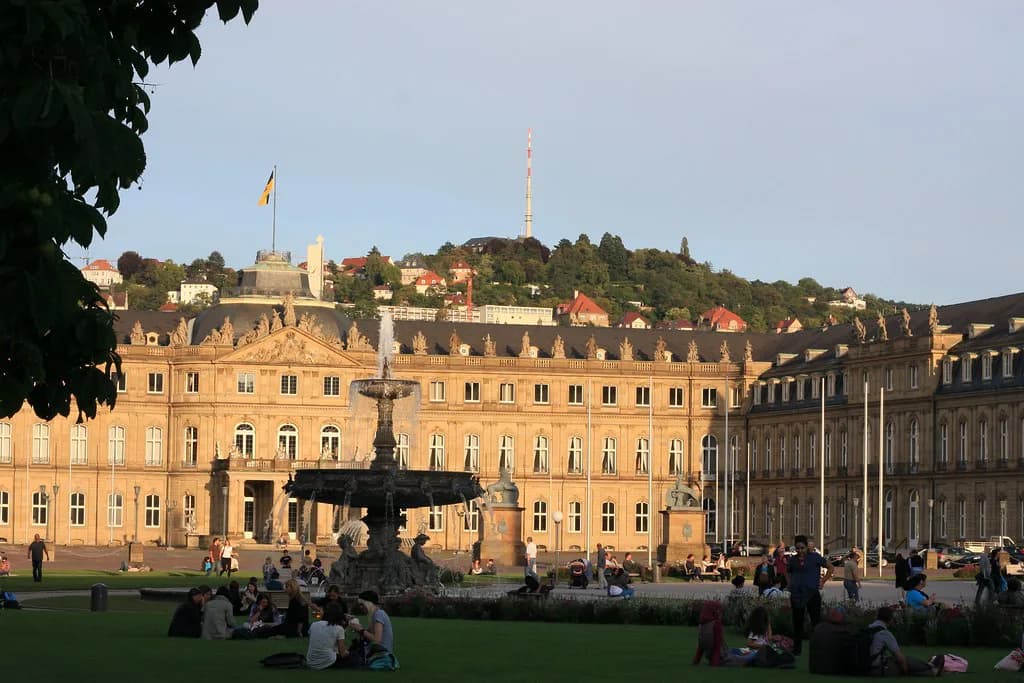
Stuttgart Hauptbahnhof sits at the centre of a regional network that reaches university towns, baroque palaces and hilltop castles without a hire car. The decision that shapes each day is not distance but ticket type: a Baden-Württemberg regional pass covers regional trains and local transport inside the state, while faster categories sit outside that scope. Starting from the rail base, three destinations reward the effort in different ways, and one of them needs genuine planning.
Why Stuttgart Hauptbahnhof Works as a Rail Base
Stuttgart Hauptbahnhof concentrates regional and long-distance services in one place, so a day trip begins with a normal walk to the station rather than a drive to a peripheral park-and-ride. Because most of the worthwhile destinations sit inside Baden-Württemberg, the same regional ticket logic applies again and again. That repetition is the real advantage: once you understand the ticket rules, every subsequent day out becomes easier.
Night-time returns and evening plans are easier when you base yourself in the city and treat the outward leg as the committed part of the day. Pair a short rail hop with a Stuttgart evening so the return leg is never the stressful element. If you are still deciding how many days to give the city itself, a 2 days in Stuttgart itinerary can help you see which evenings stay free for day trips.
The Ticket Decision That Shapes the Whole Day
Regional passes in Germany are state-specific, and the Baden-Württemberg version is built around regional trains rather than the whole timetable. The published WanderInGermany guide states the ticket covers 24 hours of buses, trams and regional trains within Baden-Württemberg, and that regional services carry the letters RE or RB before the number. The same guide warns that travelling on ICE, IC or EC services without the correct ticket carries a fine risk, so the train category matters more than the fare you were shown.
The same guide lists a starting price and an extra charge per additional passenger, but those figures date from 2023 and should not be treated as current for 2026. Check the live fare in the Deutsche Bahn app or on the operator website before you commit, and compare it against a normal return ticket for your exact route. Ticketing rules, group conditions and validity hours are the parts worth re-reading once, carefully, before the first trip.
If time is the constraint, high-speed services such as ICE, IC and EC are faster but sit outside the regional ticket and need a separate booking. That turns a cheap day into a more expensive one, and it also changes the planning: reserved high-speed seats reward a fixed schedule, whereas regional travel is more forgiving. Decide early which you value more, because the answer determines both the ticket you buy and the itinerary you build around it.
One practical wrinkle is that the fastest direct option to Tübingen is not covered by the regional pass, so a cheaper fare can mean a slower itinerary with transfers. Read the train category on each connection before choosing it, and do not assume that the first result in a journey planner is the one your ticket allows. Cross-check what is running on the official visitor site before you finalise the day.
Tübingen: The Low-Effort Half Day
Tübingen is the easiest place to start because the town itself supplies the day: a compact old town, a riverfront, a market square and a university scattered through the streets rather than gathered behind one gate. The WanderInGermany guide describes the train ride as roughly 45 minutes to an hour and a quarter depending on the connection, with some departures running directly and others requiring a change. Treat those as source-reported ranges and confirm your own timings in a live journey planner.
The one planning point specific to Tübingen is that a fast direct service in the direction of Aulendorf is not valid with the regional pass, so choosing it means buying a separate ticket. If the whole point of the day is the cheap state fare, take the slower covered connection and accept the extra time. If the point is to arrive early and stay late, price the fast option honestly rather than discovering the difference at the barrier.
On the ground, a sensible shape is a morning arrival, a walk through the old town and market square, and an afternoon along the Neckar before an early evening return. Because the town is small, the risk is not running out of things to do but staying longer than the last convenient train allows. Photograph the return times on arrival, while you are still calm and unhurried.
Ludwigsburg Residential Palace: The Shortest Hop
Ludwigsburg is described by the WanderInGermany guide as the shortest train ride on this list, the one most likely to fit comfortably around a Stuttgart evening. The palace complex is the reason to go, and the same guide notes that while the train leg is simple, a transfer to a local bus is normally required to reach the palace grounds and gardens. Do not plan on walking the whole way unless you have checked the distance yourself. For wider planning, see Ludwigsburg Residential Palace day trip from Stuttgart.
The WanderInGermany source describes the site as Germany's largest palace, with several museums inside the building and extensive gardens outside, and it separates those elements rather than treating them as one ticket. That distinction matters for budgeting and for time: gardens and grounds reward a slow walk, while interiors and collections reward a booked slot. Check the palace's own pages for which parts are ticketed and which are open without a ticket.
Because the bus connects the station to the palace area, the return leg needs the same attention as the outbound one. Capture the timetable before you go into the grounds, and decide in advance whether you want the last bus or an earlier, more comfortable one. A short hop is only relaxing if the return is settled.
Hohenzollern Castle: The Trip That Needs Real Planning
Hohenzollern Castle is the day that separates casual rail users from planners, because the train does not finish the job. The WanderInGermany guide puts the train leg to Hechingen at roughly an hour and then requires a bus onward before the climb to the castle, with a source-reported total of at least an hour and a half. Treat that as an estimate from one guide, not a guaranteed schedule.
The same source gives a specific bus from Hechingen to the castle area, but line numbers and timetables change, so confirm the current service in a live journey planner rather than relying on a printed article. Build slack into the plan for the connecting bus, and decide before setting out whether you are willing to walk up if the timing does not work. The castle's own visitor information is the place to check access arrangements and opening details.
Hohenzollern also pairs well in theory with nearby Lichtenstein Castle, but combining the two by train is ambitious because both need a bus leg and their timetables have to align. If the goal is one castle done properly, give Hohenzollern the whole day and enjoy it. If the goal is two, accept an early start and a firm return plan.
Where the Rail Network Runs Out
Lichtenstein Castle is the clearest example of a destination where the train is only the first stage. The WanderInGermany guide describes a train to Reutlingen Hauptbahnhof of roughly forty minutes to an hour, a short walk to the bus stop, and then a bus toward Honau followed by a walk or hike to the castle. Bus numbers and walking distances should be confirmed live, because this is exactly the kind of detail that changes between seasons.
The guide's most transferable tip is to photograph the return bus timetable before starting the climb, since the return stop is often on the other side of the road. That single habit prevents the worst version of the day, which is finishing the visit and then discovering a long wait with no easy alternative. Do it while you still have phone signal and daylight.
Destinations like this are worth doing, but they should be chosen deliberately rather than slotted in casually. If you want a low-stress day, save Lichtenstein for a trip where you have a full day and no evening commitment. If you want a big, memorable outing, it delivers, provided you treat the bus and the walk as central to the plan.
Crossing Into Another State
Frankfurt is a perfectly good day out from Stuttgart, but it is not a regional-pass day. The WanderInGermany guide notes that Frankfurt sits in Hesse, which removes the state-ticket advantage entirely, and labels the high-speed option as requiring a separate booking made in advance. Once you accept that, the trip becomes a straightforward high-speed day rather than a cheap regional one.
Strasbourg and other cross-border suggestions raise the same question in a sharper form, because a different country also means different ticketing. The guide groups these further destinations together under longer trips, which is the honest way to present them. Price the fare and the travel time honestly, and choose them because the destination justifies it, not because they appeared on a list.
Sizing the Day Before the Last Useful Return Train
The practical limit on any rail day trip is not the outbound journey but the last return you are willing to take. Work backwards: decide the latest time you want to be back in Stuttgart, then subtract the return travel time, then subtract a buffer for the bus or the walk at the far end. What remains is your actual window at the destination, and it is usually shorter than people expect.
This is also the argument for not packing two destinations into one regional day unless both are short hops. A town like Tübingen rewards an unhurried afternoon, while a castle with a bus connection does not tolerate a squeezed schedule. One destination done well beats two done anxiously.
If you want a second easy day, an Esslingen Old Town Day Trip from Stuttgart makes a natural contrast to the palace and castle outings. Keep one day short and one day ambitious, and the week based in Stuttgart stays enjoyable instead of becoming a series of races against timetables.
Plan Your Visit
Start with the ticket type, not the destination list: confirm in a live journey planner which trains are regional and which require a separate booking, then choose the day that fits. Build each outing around the return, capture bus and train times before you leave the station, and leave one evening free for Stuttgart itself.
Used that way, the rail base does real work: Tübingen is the gentle introduction, Ludwigsburg is the shortest hop with a bus at the end, and Hohenzollern is the ambitious day that rewards patience and preparation.
Frequently Asked Questions
Can you do Hohenzollern Castle as a day trip from Stuttgart by train?
Yes, it is possible, but it is the most demanding trip on this list because the train only gets you to the Hechingen area and a bus and a climb follow. The WanderInGermany guide describes the total as taking at least an hour and a half. Plan the return journey before you go up, and check current bus times in a live journey planner rather than relying on older articles.
Is the Baden-Württemberg Ticket valid to Tübingen?
It is valid on regional trains marked RE or RB plus local buses and trams inside Baden-Württemberg, but the WanderInGermany guide notes that some faster direct services on that route are not covered and need a separate ticket. Check the train category before boarding, because travelling on the wrong category carries a fine risk.
Which Stuttgart day trip by train is easiest for a first visit?
The WanderInGermany guide treats Tübingen as a low-effort option because the old town, market square and riverfront are all within walking distance of the station, so the return is simple. Save the castle trips with bus connections for a later day when you are comfortable with the ticketing rules.
Do you need a car to reach Ludwigsburg Residential Palace?
No, but the train does not stop at the palace gate. The WanderInGermany guide states that a local bus connects the station area to the palace grounds, so you should check current connections and timings in a live journey planner on the day. Treat the bus as part of the trip rather than an afterthought.
How many day trips can you fit into a short stay based in Stuttgart?
Two or three works well if you alternate a short rail hop with a longer outing and keep at least one evening free for the city. Trying to do a different destination every day tends to produce rushed visits and anxious returns. Choose quality over quantity and check return times before committing.


