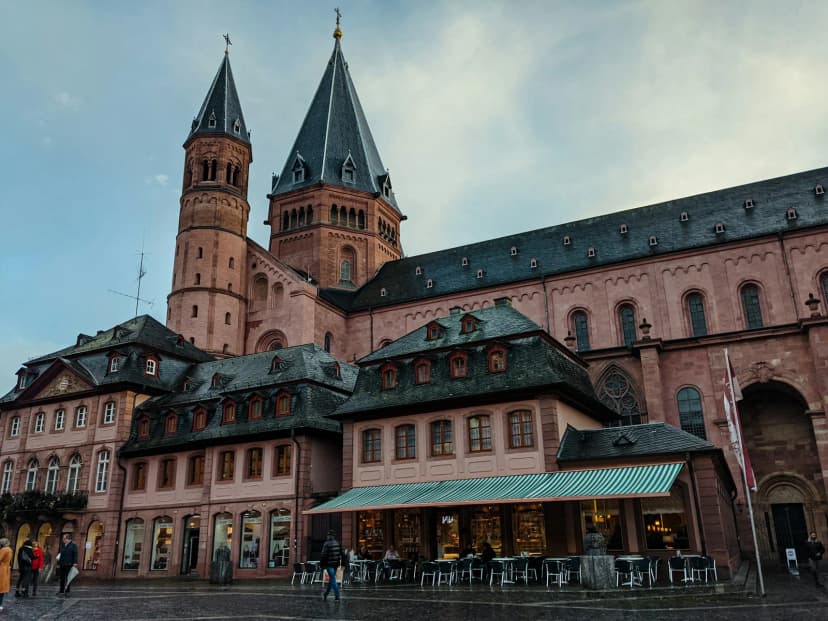
Regensburg's Old Town is compact enough to cross on foot, which is why a self-guided walk works well here: you set the pace, linger where you like, and skip what does not interest you. The city's tourism service notes that Regensburg holds two World Heritage titles, the Old Town with Stadtamhof from 2006 and the Danube Limes from 2021, and describes the city as Germany's best-preserved medieval large city. Everything below is a suggested route assembled by us, not an official Regensburg tourism itinerary.
The city's own tourism service lists the cathedral, the Stone Bridge, the Old Town Hall, the Old Grain Market, Porta Praetoria and Bismarckplatz among the sights worth building a day around, and uses an area in front of the House of Bavarian History as a common starting landmark for guided walks. Use that source to check current programmes and visitor information before you go.
Why Regensburg's Old Town Suits a Self-Guided Walk
Few German cities of this size let you move from Roman remains to a medieval bridge to a Gothic cathedral without a bus or tram in between. Regensburg's core was spared large-scale wartime destruction and heavy post-war redevelopment, so the lanes, squares and patrician towers still read as one continuous historic fabric. That continuity is exactly what makes walking the sensible way to see it.
The Old Town and Stadtamhof were inscribed together as UNESCO World Heritage in 2006, and the Danube Limes followed as a second, separate title in 2021. The two titles are distinct, which matters if you are trying to understand why the riverbank and the museum quarter are part of the same story as the cathedral square.
If you want a deeper inventory of what sits inside these lanes before you commit to a route, the city landmark guides are a useful planning layer. Reading them first helps you decide which interiors deserve your time and which you are happy to admire from outside. That decision, more than distance, determines how long the walk actually takes.
Route Overview and Suggested Duration
Start at Donaumarkt, the square on the southern edge of the Old Town, and finish at Bismarckplatz in the west. In between you can pass the Old Grain Market, Porta Praetoria, the Stone Bridge, St. Peter's Cathedral and the Old Town Hall, with the lanes of Wahlenstrasse and Bachgasse carrying you westward. The order works because it moves you steadily across the core without backtracking.
Our suggested duration for the walking route itself is two to three hours at an unhurried pace, and that figure is a suggestion from us rather than an official one. Add time for any museum interior, a cathedral visit, or a proper sit-down stop. A free guided tour of the historic Old Town is advertised by its operator as a two-hour walk covering nine stops between the House of Bavarian History and Bismarckplatz, which gives you a rough sense of how much ground the core covers.
One self-guided itinerary of the Old Town makes the case that Regensburg is best enjoyed simply by walking and that the pleasure is in the wandering rather than a checklist. Treat the sequence here the same way: a spine, not a script. Swap the order freely if a side lane pulls you in.
Leg 1: Donaumarkt, the Old Grain Market and Porta Praetoria
Donaumarkt gives you an easy, open start with river air and a clear sense of where the Old Town begins. From there, the Old Grain Market and Porta Praetoria come quickly, which is convenient because the Roman gate is one of the few surviving pieces of the legionary fortress that predates everything medieval around it. Look for it embedded in later building fabric rather than standing free.
The House of Bavarian History sits in this area and works well as a fixed meeting landmark, since it is easy to name and easy to find. The operator of the free Old Town tour uses a spot in front of that museum as its meeting point before heading west to Bismarckplatz. If you are walking independently, it functions just as well as a place to orient yourself before turning into the lanes.
Leg 2: Crossing the Stone Bridge
The Stone Bridge is the single most useful piece of orientation in the city, because it tells you immediately which bank you are standing on. Crossing it takes you towards Stadtamhof, the small former town on the northern side that shares the UNESCO listing with the Old Town. Walking over and back is free, and it is the kind of stop where a slow crossing beats a quick photo.
Think about when you cross rather than only how. Morning and late afternoon light both flatter the bridge and the riverfront differently, and the crossing is exposed to weather in a way the lanes are not. If your schedule allows only one crossing, do it when you are least rushed, then return to the southern bank to continue the route.
Leg 3: St. Peter's Cathedral and the Surrounding Lanes
St. Peter's Cathedral anchors the eastern half of the walk and is the point where most visitors slow down. The approach through the surrounding lanes matters as much as the building itself, since the narrow streets frame the towers and spires at odd angles before they open into the square. Budget more time here than you think you need.
This is also where the free-versus-paid distinction becomes concrete. The streets and squares around the cathedral are public ground and cost nothing to walk, while entering interiors, museums and tower climbs may involve their own arrangements. We deliberately do not quote entry fees or opening days, because these change and vary by site.
The free tour operator runs its walk in German and English, which is a reminder that the language you get on a guided option can vary by departure. If you prefer a fixed narrative, check what is actually scheduled for your dates rather than assuming a language or time. For a self-guided walk, that concern disappears entirely.
Leg 4: The Old Town Hall and the Perpetual Imperial Diet
The Old Town Hall carries the heaviest historical weight of any stop on this route, because it is bound up with the Perpetual Imperial Diet that sat in Regensburg for an unusually long stretch. The city's own tourism service highlights the building under exactly that association. Understanding that context changes how the facade reads when you arrive.
From the Old Town Hall, Wahlenstrasse and Bachgasse carry you west through the kind of medieval lanes that make the walk worthwhile even between major sights. The tourism service lists both streets as sights in their own right, which is a fair signal that the connective tissue here is not merely filler. Walk them slowly and look up at the upper storeys.
Leg 5: Bismarckplatz and the Haidplatz Option
Bismarckplatz makes a clean western end point and gives you a natural place to stop, sit, or decide whether to keep going. The free guided walk uses it as its finishing point after working across the Old Town from the House of Bavarian History. Treat it as your closing bracket rather than a highlight in its own right.
Haidplatz is the natural extension if you still have energy, described by the city's tourism service as one of the most beautiful and oldest squares in Regensburg. Adding it turns a straightforward linear walk into a loop back through the centre. If you are building a one day in Regensburg itinerary, this is a sensible way to absorb the extra hour without repeating ground.
Free Streets and Bridge Versus Paid Interiors
The most useful planning distinction on this walk is between public ground and ticketed interiors. Streets, squares, the bridge and the riverbank cost nothing to walk, so the route itself is free regardless of your budget. Museums, cathedral interiors and tower climbs are separate propositions with their own conditions.
The House of Bavarian History is a museum stop, not part of a combined Old Town ticket, so do not assume one purchase covers several buildings. Check the operator's own pages for current entry arrangements rather than relying on any figure you have read elsewhere. The same logic applies to every interior you consider along the way.
If your interest is in what sits off the obvious line, the hidden gems around Regensburg are worth a separate look before you finalise the route. Some of the smaller courtyards and lesser-known squares are free to enter and quiet outside peak hours. Folding one or two into the walk costs almost no extra time.
How to Pace the Walk: Short, Half-Day and Full-Day Versions
A short version covers the spine only: Donaumarkt, the Old Grain Market, Porta Praetoria, the Stone Bridge crossing and the cathedral. That is the compact circuit for anyone with a couple of hours and no interest in interiors. It keeps you moving and still touches every headline sight.
The half-day version adds the Old Town Hall, the walk along Wahlenstrasse and Bachgasse, and a proper pause somewhere in the middle. This is where the route stops feeling like a transfer between landmarks and starts feeling like a wander. One sit-down break turns the difference between the versions into a matter of comfort rather than distance.
The full-day version keeps all of the above and adds Haidplatz and at least one museum interior, with time on the Stadtamhof side of the bridge as well. If that is your plan, a two days in Regensburg itinerary is a more honest container than trying to compress everything into a single push.
Cafe and Rest-Stop Planning
Regensburg's Old Town has plenty of cafes and taverns, and the honest planning advice is simply to leave room for one rather than to fix on a specific address in advance. We do not name a particular place or claim anything is open, because we cannot verify current hours, days or prices. Choose by what is open when you are hungry.
Location matters more than reputation for a rest stop on this route. A break between the cathedral and the Old Town Hall splits the walk at roughly the right point, and a second short pause near Bismarckplatz lets you finish comfortably. Avoid scheduling your only stop at the start, when you do not yet need it.
For a longer stay with more flexibility around meals and timing, a three days in Regensburg itinerary spreads these stops across days instead of one afternoon of walking.
Arrival and Orientation
Regensburg's station area sits north of the river and within reasonable walking distance of the Old Town, so most visitors arrive on foot rather than needing local transport. The city's tourism office at Rathausplatz is the practical first stop if you want printed material, current information or a question answered in person. Its location inside the Old Town means you can fold it into the walk rather than making a separate trip.
Note that major rail engineering work on the Nuremberg-Regensburg-Passau line is flagged by the city's tourism service as affecting 2026 travel in the wider region. That concerns longer-distance rail, not your footing inside the Old Town. If you are arriving by train, check your own connection details before travelling.
Practical Checks Before You Go
Confirm opening days yourself for anything you intend to enter, because churches and museums keep their own calendars and can close for services, restoration or seasonal reasons. We deliberately state no hours here. The city's tourism office is the right place to verify what is operating during your dates.
Light and crowds shape this walk more than most. Start early if you want the lanes closer to empty, and keep the bridge crossing for a time when the weather is least likely to interrupt it. Late autumn and winter afternoons darken quickly, so front-load the outdoor sections.
Free tours of the historic Old Town are advertised as pay-what-you-want, with the operator suggesting a voluntary contribution range at the end rather than a fixed price, and cash as the payment method. Booking through the platform and cancelling properly if your plans change is part of using such a service in good faith. That is separate from anything you might pay to enter a museum.
Pairing the Walk With Stadtamhof and a Longer Bavarian Break
Stadtamhof, on the northern bank across the Stone Bridge, shares the UNESCO listing with the Old Town and reads almost like a small town of its own, as the city's tourism service describes it. Extending the walk there gives you a different scale of street and a different view back across the water. It is the most rewarding way to add an hour without adding a major sight.
Regensburg also sits well within a wider Bavarian itinerary, and the city's own tourism pages keep events, tickets and accommodation in one place if you are building a trip around the walk. Check those listings rather than fixed dates in any guide, since programmes change year to year.
Plan Your Visit
Regensburg's Old Town rewards the simplest possible approach: start at Donaumarkt, walk the spine past the Old Grain Market, Porta Praetoria, the Stone Bridge, the cathedral and the Old Town Hall, and finish at Bismarckplatz. Our suggested two to three hours is a planning estimate, not an official figure, and it assumes you keep museum time separate.
Treat the free streets, squares and bridge as the backbone and decide independently whether any paid interior earns your time on the day. Verify opening arrangements with each operator rather than relying on any schedule you read in advance, and check the city tourism service for anything seasonal.
Frequently Asked Questions
Is there a free guided walking tour in Regensburg?
Yes. At least one operator advertises a free tour of the historic Old Town that runs in German and English, uses a pay-what-you-want model rather than a fixed fee, and asks for payment in cash at the end. It starts near the House of Bavarian History and finishes at Bismarckplatz. Availability, times and languages vary, so check the operator's own booking page for your dates rather than assuming a departure exists.
How long does a self-guided Regensburg Old Town walk take?
Our suggested duration for the route described here is two to three hours at an unhurried pace, and that is our own planning estimate rather than an official figure. That window covers the walk itself, not time inside museums or a long meal break. If you add a museum interior, a cathedral visit and a proper rest stop, allow closer to half a day. A guided version of the same ground is advertised at two hours.
Can you see Regensburg's Old Town in one day on foot?
Yes, the core is compact and walkable in a single day. The limit is not distance but how many interiors you want to enter, since each one costs time and may have its own opening arrangements. A realistic one-day plan covers the main route plus one museum or church interior and a sit-down break. Adding Stadtamhof across the Stone Bridge is the easiest way to extend the day without leaving the centre.
Do you need tickets for Regensburg's Old Town sights?
No, not for the streets, squares and the Stone Bridge, which are public and free to walk. Ticketed or separately arranged entries apply to interiors such as museums and some church spaces, and each operates on its own terms rather than a shared Old Town pass. Do not assume one purchase covers several buildings. Check the individual operator for current entry arrangements before you go.
Where should you start a self-guided Regensburg Old Town walk?
Donaumarkt is the most practical starting point because it sits at the southern edge of the core and leads naturally into the Old Grain Market and Porta Praetoria. The House of Bavarian History in the same area makes an easy landmark if you need a fixed point to meet someone. Finishing at Bismarckplatz in the west means you cross the Old Town in one direction without backtracking.