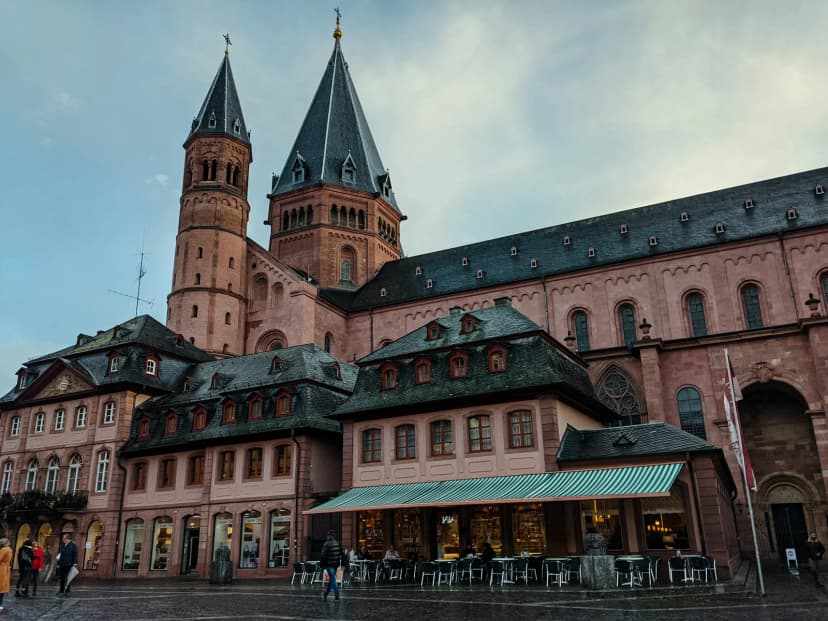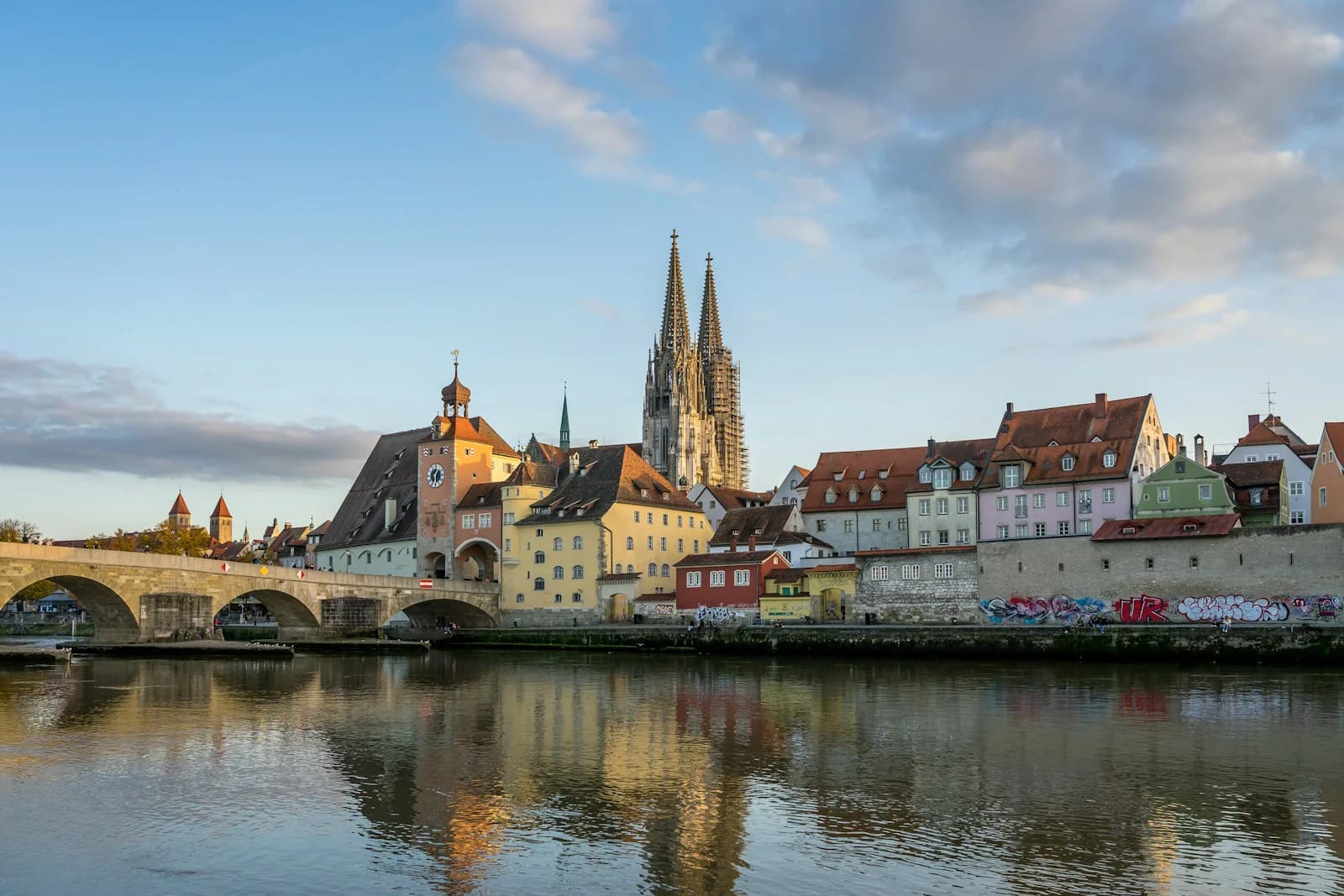
Regensburg is often described as one of Germany's best-preserved medieval large cities, and the city's own tourism service notes that it holds two World Heritage titles: the old town was inscribed in 2006 and the Danube Limes added a second title in 2021. That matters if you are hunting quieter corners, because the protected area is a lived-in district with shops and residents, not a stage set. The old town is compact, so most of it works best on foot.
A concrete reason to look beyond the headline sights: the Niedermünster, a short walk from St Peter's Cathedral, is built on the remains of an early medieval convent, and visitors can see archaeological excavations below that reveal layers of Roman and early Christian history, according to a Regensburg travel guide. That single fact turns a modest-looking church into a timeline. The Roman Porta Praetoria nearby is equally easy to walk past, since its weathered stones are set between later buildings rather than displayed in the open.
Why Regensburg Rewards a Slower Second Look
The UNESCO-listed old town covers a dense medieval core of cobbled lanes, churches, squares and the riverfront, with Stadtamhof across the Stone Bridge. Because everything sits within a walkable radius, the difference between a first visit and a second one is not distance but attention. Walkers who stick to the main route between Neupfarrplatz and the cathedral see the set pieces; those who turn down a side lane find the courtyards, flower boxes and small museums that give the city its texture. This is a district where people live, work and gather, so quiet moments tend to appear between the busy shopping streets.
One practical consequence: you do not need an itinerary to find the lesser-known corners, only a willingness to loop away from the crowd and come back. The tourist information office at Rathausplatz is the place to confirm current opening details before you commit to a specific church or museum interior. That matters because free-to-enter grounds and paid interiors are often next to each other, and not every building in a complex shares the same access. Treat any route you read, including the suggestions below, as a starting shape rather than an official trail.
The Niedermünster Quiet: Underground History Beside the Cathedral
The Niedermünster, sometimes translated as the Lower Minster, sits close enough to St Peter's Cathedral that many visitors simply walk between the two without registering the contrast. From the outside it is easy to overlook next to the cathedral's Gothic mass, but inside it offers a quiet, atmospheric space with centuries of history behind it. The reason to prioritise it over yet another church is below ground: the church stands on the remains of an early medieval convent, and the archaeological excavations beneath reveal layers of Roman and early Christian history, as a Regensburg travel guide notes.
If you are deciding whether the detour is worth it when the cathedral is right there, think of the two as different experiences rather than competitors. The cathedral delivers scale, stained glass and the landmark silhouette visible across the rooftops; the Niedermünster delivers intimacy and archaeology. Budget your time so the cathedral gets the outward-looking, photograph-heavy visit and the Niedermünster gets the slow, quiet one. Confirm current access to the excavations on the day, since opening arrangements can change and the official city tourism pages should be your reference.
Porta Praetoria: Roman Stone Between Later Buildings
The Porta Praetoria is the city's most literal piece of deep history: a Roman gateway to the fortress of Castra Regina. One travel account dates the surviving stones to the original construction of 179 AD, while a Regensburg things-to-do guide describes it as built in the 2nd century AD as a northern gateway to the fortress. Either way, the mistake most visitors make is expecting a free-standing monument and walking straight past it, because the surviving stones are embedded between later buildings rather than framed in a plaza. Stop, read the weathered stone, and the whole old town reads differently: the medieval lanes and Gothic spires are only the most recent layer of a site that has been occupied for a very long time.
Because the gate does not announce itself, it works best as a deliberate stop rather than something you stumble into while looking at a map. Approach it from the direction of the cathedral quarter and give yourself a few minutes to look at the masonry before moving on. If you want the Roman context explained in more depth, the tourist information service can point you to what is currently viewable. Photograph it in flat daylight if you want the stonework to read clearly in the pictures.
Stadtamhof and the Stone Bridge: A Change of Pace
Crossing the Stone Bridge, a 12th-century structure once considered a marvel of medieval engineering, delivers a transition rather than just a view. On the far bank, Stadtamhof is a former independent town that now feels like a quieter extension of the old centre, with narrow cobblestone streets and colourful houses instead of the bustle around Neupfarrplatz. One Regensburg guide notes that the area is small, so you will not need long to explore, but that crossing the bridge is worth it for the change in pace. The reward is the look back: the cathedral towers rise above the rooftops while the Danube runs beneath the bridge, and in the evening the lights reflect on the water.
The district is small, so it does not demand a long visit, but it is worth prioritising over squeezing in one more church interior. Walk across, wander a few lanes, and then decide whether to stay for something to eat or return to the old town. For a different lens on the same city, free things to do in Regensburg include riverside walks and the bridge itself, which costs nothing and gives you the best skyline view. Just avoid treating Stadtamhof as a tick-box attraction; its value is the calmer rhythm, not a specific sight.
Alleys, Courtyards and Slow Wandering
Regensburg is filled with hidden, colourful alleys and small boutiques, and there are quiet courtyards and gardens where you can sit and read or have a picnic after a morning of exploring, one travel blog notes. Look up as well: window boxes filled with flowers appear on facades throughout the old town, and they are one of the details that make a slow walk worthwhile. The trick is to treat the lanes between the shopping streets as destinations rather than shortcuts, and to change direction whenever a passage looks promising. That approach also keeps you out of the densest crowds without removing you from the historic core.
If you want a wider menu of low-cost wandering, this Regensburg: Itineraries and City Travel Guides collection covers routes at different durations, so you can match a walk to the time you actually have. For the specific question of where the old town gets quiet relative to the big sights, the answer is usually one street back from any square with a market or a major church. Ducking behind the main facades is often enough to find a courtyard with nobody in it.
Free Grounds Versus Paid Interiors
The most common source of confusion in Regensburg is assuming a complex is one visit with one ticket. In practice you may find that church interiors, archaeological excavations and small museums within the same area have separate access, and that some grounds are free to enter while specific collections or underground sections are ticketed. The Niedermünster is the clearest example: the church and its underground excavations are different propositions, so check what is actually open before you plan your day around it. Never assume one ticket or one opening time covers every building you can see from the same square.
The reliable habit is to confirm the specific site, on the day, at the source that runs it. The city's tourism pages and the tourist information office at Rathausplatz are set up for exactly that question, and they can also tell you whether a guided option exists for a site you want to understand in depth. If a website only advertises the city in general terms, treat it as background rather than confirmation of hours or access. Budget flexibility rather than assuming a fixed price, and carry a little cash as a fallback.
Suggested Shapes for a Half-Day and a Full-Day Wander
These are our suggestions for pacing, not official routes. As a suggested duration rather than an official timing, a half day is enough to start at the cathedral, walk the short distance to the Niedermünster for the underground excavations, continue to the Porta Praetoria, then cross the Stone Bridge into Stadtamhof and return via the riverbank. That sequence keeps the biggest crowds at the start and ends in the calmest district. It also puts the Roman stone in the middle of the walk, when your attention is still fresh.
For a fuller day, extend the same loop with a second pass through the lanes between Wahlenstraße and Bachgasse, and add time in a courtyard or garden where you can sit with a book or a picnic. If you want the whole thing mapped more tightly, the one day in Regensburg itinerary gives a single-day structure to compare against. A two-day version makes sense if you also want the river and a day trip, and the 2 Days in Regensburg itinerary can absorb the slower corners without rushing. The point is to leave room for the unplanned detour, which is usually where the best finds happen.
Practical Framing: Walking, and Where to Confirm Details
Treat the old town on foot as the baseline: it is compact and pedestrian-friendly, which makes wandering the most efficient way to cover the quiet corners as well as the famous ones. The official Regensburg tourism site is the right place to check current visitor information, including what is open and any temporary arrangements. The tourist information office at Rathausplatz is the physical fallback if you prefer to ask in person and pick up printed material. Both are better than relying on an old blog post for time-sensitive details.
Before you set out, decide which single interior you most want to see and build the walk around it, then let everything else be optional. That way a closed door or a long queue does not derail the day, because the alleys, courtyards and the Roman gate remain available regardless. Keep an eye on the weather too, since Regensburg can be enjoyed year-round but the experience changes a lot with the seasons, as one travel guide observes. Late spring and early autumn are usually the most comfortable for walking without heavy crowds.
Plan Your Visit
Regensburg's hidden gems are not hidden in the sense of being far away; they are one turn off the main route, which is why the Niedermünster, the Porta Praetoria and the lanes of Stadtamhof reward a slower second look. The most effective plan is to keep the walk flexible, confirm the interior you care about before you commit, and let the courtyards and alleys fill the gaps. Compare your options across these Regensburg: Landmark Visitor Guides before you finalise a route, and keep the details of what is open for the day itself.
Frequently Asked Questions
What are the least crowded corners of Regensburg's old town?
The quietest corners are usually one street back from any square with a market or a major church, in the narrow lanes and courtyards between the main shopping streets. Stadtamhof, across the Stone Bridge, is noticeably calmer than the old town squares and feels more local. The Niedermünster, a short walk from the cathedral, also offers a much quieter interior than the cathedral next door. Because these are living streets rather than attractions, the crowds shift with the time of day.
Is the Niedermünster worth visiting when the cathedral is right there?
Yes, for a different reason than the cathedral. The cathedral is the city's Gothic landmark and delivers scale and stained glass, while the Niedermünster offers a quiet interior and, beneath it, archaeological excavations that reveal layers of Roman and early Christian history. Treat them as two separate visits rather than one, and check current access to the excavations before you go, since arrangements can change. If you only have time for one church interior, the cathedral is the obvious choice; if you want the deeper history, the Niedermünster is the more unusual experience.
Where exactly is the Porta Praetoria and why do people miss it?
The Porta Praetoria is in the old town, close to the cathedral quarter, but it is not a free-standing monument. The Roman gateway to the fortress of Castra Regina survives as stones embedded between later buildings, so visitors expecting a framed ruin walk straight past it. Look for the weathered masonry at street level rather than a plaza or a marked entrance. Stopping to read the stone is what makes the rest of the old town read as a layered site rather than a single medieval snapshot.
Is Stadtamhof worth crossing the Stone Bridge for?
Yes, if you want a change of pace rather than another tick-box sight. Stadtamhof is a former independent town that now feels like a quieter extension of the old centre, with narrow cobblestone streets, colourful houses and a more relaxed atmosphere. The district is small, so it does not need a long visit, but the view back across the Danube towards the cathedral towers is the reason to cross. It is especially atmospheric in the evening, when the lights reflect on the river.
How long should I set aside for wandering Regensburg's alleys and courtyards?
As a suggestion rather than an official route, a half day is enough to cover the cathedral, the Niedermünster, the Porta Praetoria and a loop through Stadtamhof at a relaxed pace. A full day lets you repeat the lanes between Wahlenstraße and Bachgasse, sit in a courtyard and still leave room for an unplanned detour. The old town is compact, so the time you need depends more on how often you stop than on distance. Build the walk around one interior you really want to see and keep the rest flexible.