Nuremberg rewards photographers because the historic centre is compact enough to cross on foot, yet dense enough to keep producing new frames. Treat the stops below as one suggested loop you can compress, extend or reverse. Everything here stays inside the Old Town, the castle hill and the river corridor.
The most useful decision before setting out is which subjects are free to look at and which sit behind a ticket. Streets, squares, bridges and most exteriors cost nothing; church and museum interiors generally do not. One interior detail is worth planning around: the Nuremberg tourist office publishes opening hours for St. Sebald Church of 9:30 am to 4:00 pm from January to March and 9:30 am to 6:00 pm from April to December, admission of 5 euros for visitors 18 and older, a reduced rate of 2.50 euros and an annual pass at 15 euros, with children and young people admitted free.
Free Streets, Squares and River Viewpoints
Almost every classic Nuremberg frame is available without paying anything: the half-timbered lanes, the market square, the church facades and the river crossings are all public space. What you pay for elsewhere is usually a building's interior, not the view of it. Plan your day so the free compositions carry the bulk of your shooting and paid interiors become deliberate pauses rather than the main event.
Weißgerbergasse is the lane most photographers come for. The former tanners' quarter, whose name means white tanners' lane, holds the largest surviving group of medieval artisan houses in the city, with wooden shutters and flower-filled window boxes framing the facades. Because the street is narrow, wide shots pull in parked cars, signage and passers-by, so consider picking one or two house fronts and shooting along the row instead of trying to capture the whole lane at once. A more detailed order for these lanes sits in the Nuremberg Old Town walking route.
The Pegnitz gives you the city's other signature view, where the Heilig-Geist-Spital appears to sit over the water when you look back from the crossing into the Old Town. The hospital church, which once held the imperial regalia, was not rebuilt after the 1945 air raids, so what you photograph today is largely the restored complex around it. A little further west, the Hangman's Bridge and Executioner's House area rewards a slow walk if you are willing to loop away from the main sightseeing flow.
Hauptmarkt: Two Compositions in One Square
The Hauptmarkt is where most visitors take their first Nuremberg photograph, and it holds two distinct subjects rather than one. The Schöner Brunnen, a Gothic spire-shaped fountain, stands on one side, while the Frauenkirche facade defines the eastern edge of the square. Shooting them as separate pictures usually works better than squeezing both into a single wide frame.
The square changes character depending on the day. The tourist office notes that on weekdays the Hauptmarkt stalls sell regional and international specialities and that the square carries a medieval flair, while from the Friday before the first Advent the entire square is given over to the Christmas market and its decorated stands, with the market opened by the Nuremberg Christmas Angel speaking from the balcony of the Frauenkirche. If you want the fountain unobstructed, avoid that period altogether.
For the Frauenkirche, the facade itself is the reliable subject, since its Gothic frontage faces straight onto the open square. Whether the mechanical clock figures perform on any particular schedule is not something to build an itinerary around, as the city does not publish that as a visitor-facing timing detail. Treat any clock-figure viewing as a bonus if you happen to be standing there, not a plan.
St. Sebald Church: The One Paid Interior with Published Hours
St. Sebald is Nuremberg's oldest city parish church, begun around 1215 as a three-aisled Late Romanesque basilica with two choirs and widened in Gothic style from 1309. Destroyed in the Second World War along with much of the city, it was reconstructed and reconsecrated in 1957. Its main photographic draw is the St. Sebaldus Tomb, a bronze structure cast between 1508 and 1519 by Peter Vischer the Elder and his sons, described as both micro-architecture and goldsmithing work because of its three-bay canopy and dense Gothic and Renaissance ornament.
That tomb is an interior subject, so it falls on the paid side of the equation. Because the space is a working church, low light and the need to avoid disturbing worshippers both shape what you can reasonably shoot, so arrive ready to work with available light rather than flash. Outside, the church's bulk and towers give you free exterior compositions from several angles around Albrecht-Dürer-Platz.
The published information covers this church specifically and should not be read across to other Nuremberg churches or to the castle. Opening hours differ by season, and admission applies to visitors 18 and older, with a reduced rate and an annual pass also listed. Because these details can change, confirm them on the operator page before you travel rather than relying on a secondhand figure.
Paid Church and Museum Interiors Worth Entering
Beyond St. Sebald, Nuremberg has several interiors that photographers value, but each has its own ticket and its own terms. The City Museum at Fembo House, for example, publishes a museum admission of 7.50 euros for adults and a 2.50 euro reduced rate, plus a small-group flat ticket, and a day ticket supplement of 4.00 euros that lets that entry ticket double as a municipal museum day pass for the same day. Guided tours are priced separately per group and do not include any special themed tours, so a pass bought at one municipal museum is worth checking carefully at the next.
Two other interiors are frequently mentioned in visitor accounts and are worth researching in advance if you want indoor shots: the Historische Kunstbunker, a wartime art bunker, and the rock-cut cellars beneath the Old Town, which once served the brewing trade and later doubled as air-raid shelters. Both operate on guided-tour models with language-specific departures, so they need booking decisions rather than casual drop-ins. Verify current tour times and languages directly with each operator, since none of this is published as a fixed public timetable in the sources consulted here.
The Fembo House itself is described as the last surviving Renaissance trader and patrician family home of its scale in Nuremberg, built in 1596 by the Dutch silk trader Philipp van Oyrl in a prominent spot between the city hall and the Imperial Castle. Its interiors, dance hall, Baroque vestibule and the “Beautiful Room” from the Pellerhaus are as much the photographic subject as any exhibit. A long-running redesign of the permanent exhibition has closed upper floors at times, with reopening planned in stages, so confirm which floors are currently open before planning interior shots.
Castle Hill and the City Walls
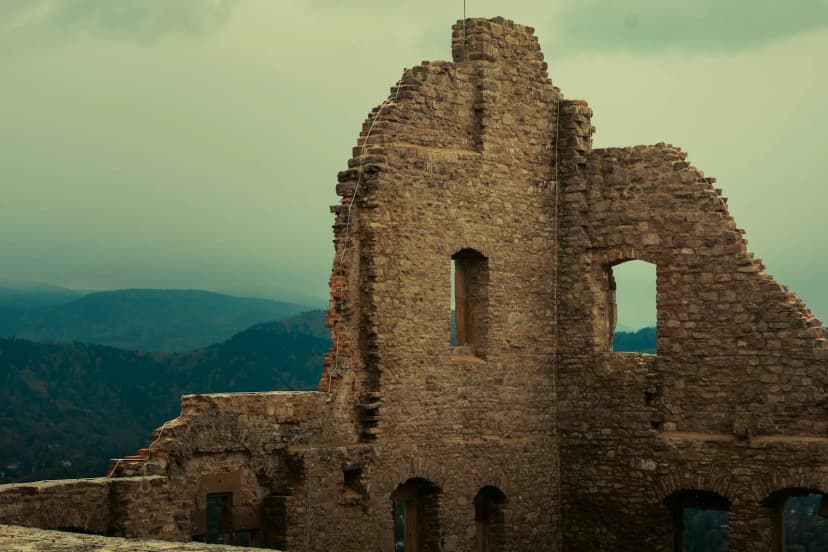
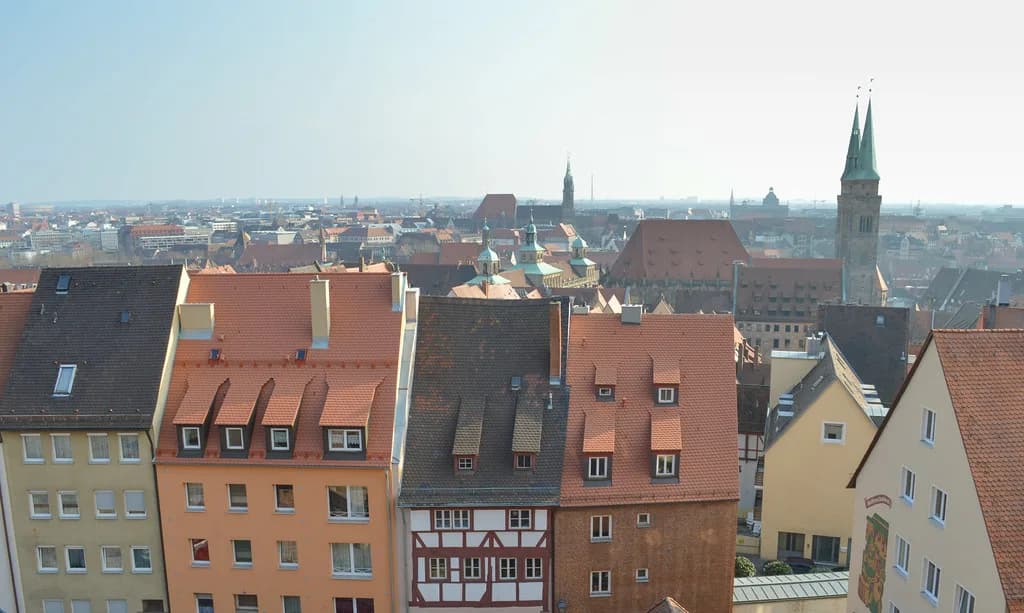
The climb to the castle is the single best investment of effort for a photographer in Nuremberg, because the payoff is the view back down over the rooftops rather than anything inside. Nuremberg Castle comprises the Imperial Castle, the Burgraves' Castle and buildings erected by the Imperial City, a chain of structures and towers on a hill rather than one grand facade. Approach from the town side and shoot the ascent, the gates and the wall lines as you go.
The medieval city walls are the other structural asset here, running around the Old Town and offering layered compositions where fortification, street and rooftops stack together. Walking a stretch of the wall circuit lets you shoot the town through the wall's own openings, which is a different picture from the same view taken at street level. Wall access is seasonal in practice in many German cities, so check locally before planning your visit around it rather than assuming it is open.
Interior details of the castle, including the tower climb and the museum rooms, sit outside the scope of what can be confirmed here. Prices and hours for those elements are not published in the sources used for this guide, so treat any figure you see elsewhere with caution and check the castle's own operator information. Skipping the interiors entirely still leaves you with the best panorama in the city.
A Suggested Walking Order for Old Town and Castle Hill
For a half day, start at the Handwerkerhof near the main station, work north through Königstraße to St. Lorenz, cross the Pegnitz for the river view, then push up through the Hauptmarkt to St. Sebald. Ending at the castle hill means the climb comes once, at the point where you still have usable daylight. This ordering also means you cross the river only once rather than doubling back across it; the full sequence is set out on the walking route.
For a full day, add Weißgerbergasse and the northern lanes before the castle, then descend on the western side toward the Hangman's Bridge and Executioner's House cluster and finish along the river. That second half is quieter and suits a slower, more deliberate approach. One fair warning: a route like this is a long walk over cobbles, so build in a break rather than treating it as a sprint.
If your interest extends beyond a single day, the city's compact structure makes it easy to slot a photo walk into a broader plan. Pairing this route with a longer itinerary lets you shoot the Old Town in one pass and keep the castle hill for better weather, while an evening pass through the lit-up lanes follows a different route again. For wider planning, see 3 Days in Nuremberg, and for an after-dark version see Nuremberg at Night.
What to Skip if You Only Have Half a Day
With about four hours, drop most of the paid interiors and concentrate on the free set: Weißgerbergasse, the Hauptmarkt, the river crossing and the castle hill. That combination yields the images most people associate with Nuremberg without any queueing or booking. It also keeps your route linear, which matters more than the number of stops when time is short.
Skip the wider city entirely if photography is the only goal. Sites outside the Old Town, including the zoo and the former Nazi Party rally grounds, involve travel time and different photographic purposes. Nuremberg Zoo is a landscape zoo in the Lorenzer Reichswald at Schmausenbuck whose features vary between rugged red sandstone formations, old trees and wetlands, and the tourist office describes it as one of the largest zoos in Europe, so it is a separate trip rather than a walk-on detour from the centre.
One thing worth adding rather than cutting is the Handwerkerhof, the artisans' courtyard tucked into half-timbered buildings just inside the walls near the station. It is small, free to walk through and gives you concentrated timber-framed architecture without the through-traffic of a residential street. It works well as either your first stop or your last, and it sits beside the trade-focused collections you can save for a wet afternoon: the Germanisches Nationalmuseum, described as Germany's largest museum of cultural history.
Sorting Free Views from Paid Interiors
The core of a good Nuremberg photo walk is knowing what you are choosing between: free, public compositions that carry most of the day, and a small number of paid interiors that need their own planning. St. Sebald is the one interior with clearly published hours and admission, which makes it the easiest to schedule and the one worth building a route around. Everything else should be checked with the operator on the day you intend to go.
Build the day around Weißgerbergasse, the Hauptmarkt, the river and the castle hill first, then decide whether an interior fits the remaining time and budget. That order protects you against closures, queues or a change in weather, since the essential shots are already in the bag. Verify any volatile detail you plan to rely on, and let the pictures follow from the walking rather than the other way around.
Frequently Asked Questions
Where are the best free photo spots in Nuremberg?
The free compositions are all public space: Weißgerbergasse for half-timbered facades, the Hauptmarkt for the Schöner Brunnen and the Frauenkirche facade, the Pegnitz crossings for the Heilig-Geist-Spital over the water, and the castle hill and city walls for panoramas over the rooftops. The Handwerkerhof near the station is another free walk-through with concentrated timber-framed buildings. What costs money is generally the inside of a building, not the view of it.
Do I need a ticket to photograph inside St. Sebald Church?
Yes, unless you fall into a free category. The Nuremberg tourist office publishes a seasonal opening schedule and a price list for visitors aged 18 and over, with a reduced rate and an annual pass, and free entry for children and young people. Anyone attending prayer, devotions, worship services or pastoral care is admitted free of charge. Because the church is a working place of worship, low light and consideration for anyone present should shape how you shoot. Confirm the current hours and rates on the operator page before you go, as these can change.
How long does a Nuremberg photo walk through the Old Town take?
As a rough editorial suggestion, allow about four hours for a concentrated circuit of Weißgerbergasse, the Hauptmarkt, one river crossing and the castle hill, and most of a day if you add one or more paid interiors. This is a suggested duration, not an official figure, and it depends heavily on how long you spend at each stop and how often you pause to shoot. Cobbled surfaces and the hill climb are the two things most likely to slow you down.
Which river crossings show the old hospital building over the water?
The classic framing of the Heilig-Geist-Spital over the Pegnitz is taken from the crossing that leads into the Old Town, looking back at the building as it appears to sit above the water. Further west, the Hangman's Bridge and Executioner's House area gives a different river composition with more of the surrounding lanes in view. Neither is published as an official viewing platform, so treat them as public crossings and viewpoints rather than designated photo points.
Is the castle hill worth it for photos if I skip the castle interiors?
Yes. The main photographic reason to climb is the view back over the town, which is available without buying anything, and the castle itself is a chain of buildings and towers rather than one grand facade. Skipping the paid interiors costs you the museum rooms and tower access but not the panorama. Since prices and hours for those interior elements are not published in the sources behind this guide, check the castle operator directly if you change your mind.
Sources
- Sebalduskirche (St. Sebald's Church) - Congress- und Tourismus-Zentrale Nürnberg
- St. Sebaldus Tomb | Work of art | Virtual museum of Nuremberg art
- Hauptmarkt (Main Market Square) - Congress- und Tourismus-Zentrale Nürnberg
- Informazioni per il pubblico | Stadtmuseum im Fembo-Haus
- A new permanent exhibition at City Museum at Fembo House