
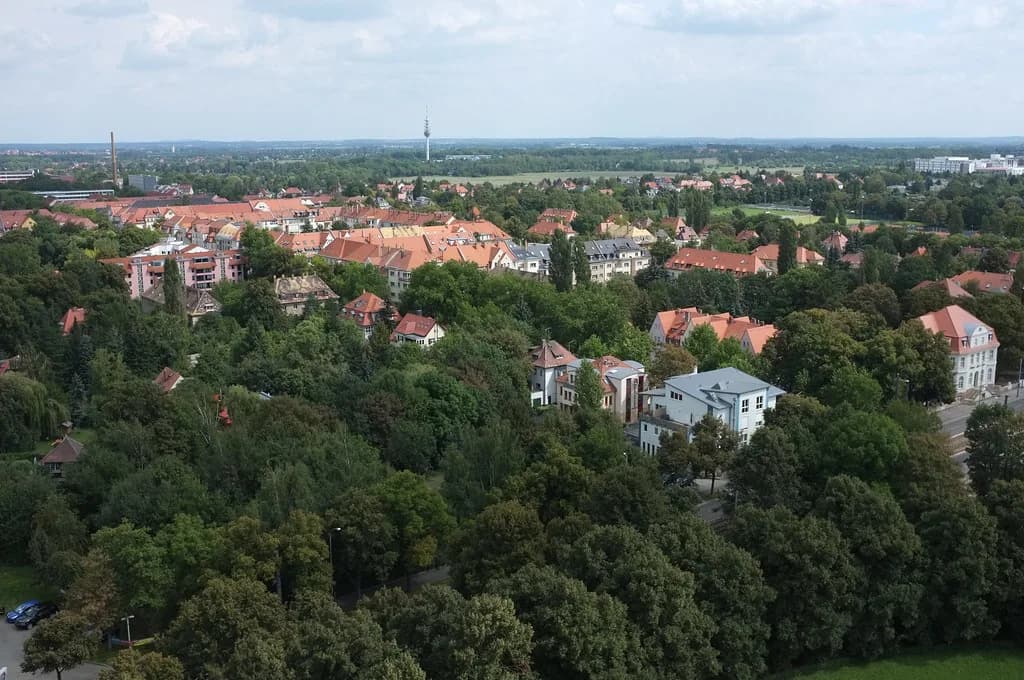
Leipzig rewards travellers who treat it as a base rather than a single stop. The city's main station is easy to navigate because the platforms sit on one level, and the compact centre means you can walk off a train and be among the arcades, churches and coffee houses within minutes. That ease is the practical argument for using the city as a launch point for day trips, whether you are heading to a state capital, a spa town or a national park.
It helps to set a realistic shape for the day before you book anything. Student guides for the city's study-abroad programme list approximate rail times to several destinations, including about one hour fifteen minutes to Dresden, roughly one and a half to two hours to Berlin, about one hour to Erfurt, around one and a half hours to Weimar, approximately one hour by S-Bahn to Wittenberg, and roughly two and a half hours each to Nuremberg and Saxon Switzerland. Those figures are estimates rather than timetables, so treat them as planning prompts and check current connections before committing to a long day.
How to Choose Your Day Trip from Leipzig
Start with travel time rather than hype, because hours spent on a train are hours you cannot spend in a museum or on a trail. A destination an hour away gives you a genuinely full day on arrival; a two-and-a-half-hour ride each way turns the journey itself into the main event. The second filter is what you are actually paying for. Free grounds and public squares let you arrive without a booking, while paid interiors such as palaces, treasure collections and museums usually need their own tickets and sometimes their own time slots.
Inside one complex, separate collections often have separate admission, so never assume that one ticket opens every door. Check the operator's own page for the specific building you want rather than trusting a general city pass description, and confirm opening hours and booking requirements close to your travel date. If you are staying in Leipzig for several days, it helps to pair a long rail day with a slower local one; a structured plan can balance the in-city districts with one or two out-of-town days.
The third filter is energy. A hike in the Elbe sandstone hills, a full museum circuit in Berlin and a quiet spa town all demand different stamina, and trying to combine two of them in one day usually produces a rushed version of both. If you are unsure, pick the destination with the shortest journey and the fewest must-see interiors, then let the day expand naturally.
Big-City Escapes: Dresden and Berlin
Dresden is the classic short hop and probably the best first day trip from Leipzig. It sits on the Elbe, and the rebuilt Frauenkirche, the Residenzschloss and the porcelain collection give you a dense historic core you can cover on foot. The study-abroad guide highlights Brühl's Terrace, nicknamed the Balcony of Europe, and notes that the Green Vault is described as holding an extraordinary treasure collection. That is exactly the kind of interior where a separate ticket and a time slot matter, so decide before you travel whether you want one deep visit or a broad walk through the old town.
Berlin is the grander but blunter proposition. Museum Island, the East Side Gallery, Checkpoint Charlie and the memorial for the murdered Jews of Europe are all real, but they spread across a city of enormous scale, and a single day forces hard choices. Anyone who wants to tour the Reichstag needs to arrange an appointment in advance, which effectively turns that visit into a planned commitment rather than something you add on a whim.
The honest trade-off is that a Berlin day trip means a large share of your waking hours go to travel and orientation, leaving only a slice of the city for actual seeing. If Berlin is a priority, consider giving it an overnight rather than a day. If you keep it as a day trip, choose one district and accept that the rest waits for another visit.
Reformation and Classical Culture: Erfurt, Weimar, Wittenberg and Nuremberg
Erfurt is the sleeper of the group, roughly an hour away and comparatively intact after the Second World War. Its Krämerbrücke, a medieval arched bridge lined with shops, and its cathedral give the centre real character, and the city's long trading history shows in its squares and merchants' houses. Luther studied in Erfurt to become a monk, which makes it a natural companion to a Wittenberg visit if the Reformation is your theme.
Weimar carries an unusual double identity: Goethe, Schiller and the Bauhaus museum on one side, and the Buchenwald concentration camp memorial on the other. Treating the memorial as a separate, deliberate decision rather than a photo stop is the respectful approach, and it deserves its own half day with time to read and reflect. Because visiting arrangements and any registration requirements can change, confirm the current rules with the memorial's own information before you plan the rest of the day around it.
Wittenberg suits a lighter, half-day rhythm. The Castle Church, where Martin Luther is said to have nailed his 95 Theses in 1517, and the surrounding Reformation sites form a compact historic centre that pairs well with a slow morning in Leipzig before you travel. The study-abroad guide notes that parts of Wittenberg were designated UNESCO World Heritage Sites in 1996. If you want a full day, add a walk along the Elbe rather than rushing to a second town.
Nuremberg is the longest ride of the group, at roughly two and a half hours each way, so it only makes sense if you have a specific reason to go. That reason is usually history: the Imperial Castle, the old town and the Palace of Justice associated with the post-war trials. Choose it when you want substance over convenience, and accept that the train will take a real bite out of your day.
Saxon Switzerland National Park: A Hike Day, Not a Stroll Day
Saxon Switzerland is the one trip on this list where the landscape itself is the attraction. The Elbe sandstone country offers rugged rock formations and forested valleys, and the study-abroad guide reports that the park's own website describes around 1,200 kilometres of trails, alongside landmarks such as Königstein Fortress and Sonnenstein Castle. That scale is why you should arrive with a route in mind rather than improvising at the trailhead.
Treat the national park as a full day and dress for weather that can change in the hills. The approximate two-and-a-half-hour rail time means an early start matters, and the last connection back is the constraint that shapes everything else. Check current trail conditions and transport times the day before, since seasonal services and path closures are common in this kind of terrain.
Smaller Saxon Escapes: Plauen, Markneukirchen and Bad Elster
Saxony's quieter corners reward travellers who want craft and spa culture instead of crowds. Plauen, a small city south of Leipzig, blends historic architecture with artisanal workshops and is known for its lace-making heritage; its Embroidery Machine Museum explains how the region's threadwork tradition developed. Markneukirchen, further south, has an instrument museum spread across more than twenty rooms, plus a reconstructed historic sawmill that demonstrates how wood becomes instruments.
Bad Elster, minutes from the Czech border, is the spa option. Its mineral-rich waters from the spring now known as the Moritzquelle were documented as early as the 17th century, and the state spa offers treatments including moor mud and peat therapy. This is a slow day by design: book treatments directly with the spa if you want them, and otherwise plan on walking, resting and letting the town set the pace.
Staying in Leipzig: A Plagwitz, Lindenau and Canal Day
Not every day trip requires a train. A walking day through Plagwitz and Lindenau uses the Karl-Heine Canal as its spine and ends among the galleries, studios and event spaces of the Spinnerei, a former cotton mill turned cultural complex. The route passes parks and water for much of its length, which makes it feel like an escape even though you never leave the city.
Timing matters more here than it does in the old town. A travel blogger who walked the district reports that many venues open from around six in the evening, so an afternoon visit can feel quiet while a later one finds the area awake. Build in a coffee stop earlier in the day and save the galleries for later.
If you have more time in the city, a structured plan helps you balance the in-city districts with one or two out-of-town days. A short break can absorb the centre and the canal district comfortably, while a longer stay lets you add a memorial site or a hike without cutting either short. For wider planning, see A Two-Day Leipzig Itinerary.
Pairing In-City and Out-of-Town Days
The most common planning mistake is stacking two demanding days back to back. If you spend one day on a long rail journey to Nuremberg or the national park, follow it with something local such as the canal district or a slow morning around the Markt. Alternating high-effort and low-effort days keeps the trip enjoyable rather than exhausting.
The lakes south of Leipzig are a tempting local alternative, and the Cospudener See visitor guide covers what you can realistically do there. Treat the lakes as an option to investigate rather than a confirmed rail plan, and check access and conditions locally before you go, since lakeside facilities change with the season.
Planning Notes to Verify Before You Travel
Accessibility, luggage storage and step-free routes vary by station, platform and attraction, so raise them directly with the operator rather than assuming. The same applies to any special exhibition, seasonal service or maintenance closure that could affect a specific date. A quick check of the official page a day or two ahead prevents most disappointments.
Ticket prices, opening hours and booking requirements are exactly the details that change most often, which is why this guide deliberately avoids quoting them. Use the official website of each site or the local transport operator for current figures, and treat any travel time here as an estimate to confirm against a live timetable.
Match the Trip to Your Hours and Energy
Leipzig's advantage as a base is that the range of days is genuinely wide: a treasure-filled state capital, a Reformation town, a sandstone hiking park, a spa resort and a walkable canal district all sit within reach. The right choice depends less on which destination ranks highest than on how many hours you have and how much you want to move.
Pick one anchor per day, verify the volatile details with the operator, and leave room for the unplanned. A well-chosen single destination usually beats three rushed ones, and the city itself rewards the time you keep for it.
Frequently Asked Questions
Is Leipzig worth visiting as a base for day trips?
Yes, largely because the main station is easy to navigate and the compact centre means you can be at your platform quickly. Destinations range from short hops to longer rail journeys, so you can mix a big city with a quiet Saxon town or a hike. Check current timetables before committing to the longest options, since travel times quoted in guides are estimates rather than fixed promises.
How many days in Leipzig is enough if I also want day trips?
Three to four days lets you see the centre, the canal district and one or two out-of-town destinations without rushing. If you plan a long rail day, pair it with a slower local day so you are not stacking two exhausting itineraries back to back. A short visit works best with a single day trip and the rest of the time spent in the city.
Is it better to visit Dresden or Leipzig?
They serve different purposes rather than competing. Dresden offers a dense historic core on the Elbe that suits a focused day trip from Leipzig, while Leipzig itself is better for music, coffee culture, canals and a lived-in contemporary feel. If you have time for both, use Leipzig as the base and give Dresden a day of its own.
Can I do a Berlin day trip from Leipzig without a car?
Yes, rail connections are straightforward and no car is needed. The constraint is scale: Berlin spreads its sights across a large area, so a single day realistically covers one district or a small cluster of related sites. Book any appointment-based visits, such as a Reichstag tour, well before you travel.
Should I visit a memorial site near Leipzig as part of a day trip?
It can be a meaningful part of a trip, but treat it as a deliberate choice rather than an item on a checklist. Set aside proper time to read, walk and reflect rather than photographing and moving on. Visiting rules, opening arrangements and any registration requirements can change, so confirm current practical details with the memorial's official information beforehand.


