The Philosophenweg, or Philosophers' Walk, on the north bank of the Neckar is free to walk and open at any hour, and one walker suggests allowing 30 to 60 minutes for the roughly three-kilometre path itself, plus 20 to 30 minutes each way if you walk up from the Old Town. That is a personal suggestion rather than official guidance, but it is a useful starting point, because the Neckar is the real dividing line in Heidelberg: cross it and the tour groups thin out.
The classic approach treats the Old Bridge as infrastructure rather than a sight: start there, climb the Schlangenweg steps on the far bank, and walk the Philosophenweg with the Old Town laid out opposite. From the path you can extend uphill to monastery ruins and the Thingstätte amphitheatre if your legs allow. Nothing in that loop requires a ticket, but it does require a decision about how much climbing you want.
What Counts as a Hidden Gem in Heidelberg
A hidden gem in Heidelberg is rarely a secret building. It is more often a route, a bank of the river, or an hour of the day when the coach parties have gone. The city's own tourism board lists the Philosopher's Walk alongside the castle and the Old Bridge as a signature Heidelberg experience, which tells you it is not obscure, only under-visited relative to the castle hill.
That distinction matters for planning. One walker recounts that the town was crowded near the bridge with British and Asian tour groups, yet once they crossed the Alte Brücke back to the Philosophenweg side they observed none of the large groups crossing the Neckar, quipping that there seemed to be a force field at the north end of the bridge.
Free sights are the backbone of this side of the city. Use free things to do in Heidelberg as your planning filter when you want a day that costs nothing beyond transport and food, and check opening details separately for any museum or interior you add.
Getting Oriented: the Neckar, the Old Bridge and the North Bank
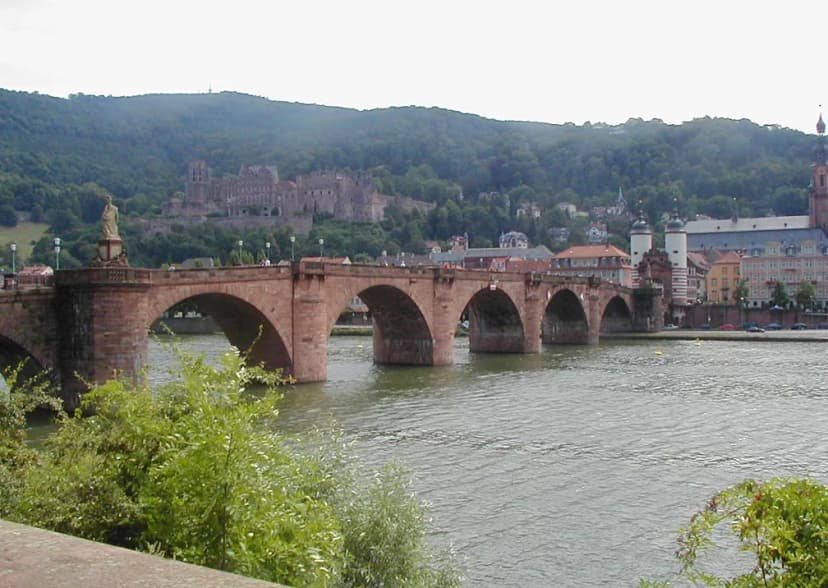
Heidelberg's Old Town sits on the south bank of the Neckar beneath the castle hill. The Old Bridge, officially the Karl Theodor Bridge, links that bank to Neuenheim on the north side. The bridge is described as fully pedestrianised and open to the public 24/7, with no tickets or advance booking required for a walk across.
At the southern end, the twin-towered Bridge Gate once formed part of the city fortifications. Nearby stands the bronze bridge monkey, erected in 1999 to replace an older stone figure; the mirror, the fingers and the small mice each carry their own legend. Rub the mirror for wealth, touch the fingers to ensure a return to Heidelberg, or stroke the mice for children, as one bridge guide explains.
Practically, the Old Town and the bridge area are walkable from each other, and the Old Bridge guides note that from Heidelberg Central Station you can take a tram or bus to Bismarckplatz and then walk down the Hauptstraße to the river. Confirm current connections through the city's own transport information on arrival rather than relying on a blog.
The Philosophenweg: What It Is and Why It Is Free
The Philosophenweg, or Philosophers' Walk, runs along the northern side of the Neckar on the slope of the Heiligenberg, directly opposite Heidelberg Castle. It is a public path, free to walk and available at any time, with sunrise and sunset named by one walker as the best windows for light and quiet. The path is an actual street before it becomes pedestrian-only.
A local hotel's hiking page describes the route as roughly two kilometres long on the sunny slope of the Heiligenberg, a warm microclimate where exotic plants such as palms, lemons and pomegranates grow. That same page explains the name comes from students rather than resident philosophers: in the Romantic period every student first studied philosophy, so student and philosopher were used interchangeably. Treat the two-kilometre figure as the path itself, not the whole outing.
One walker measured the path differently, at 2.5 kilometres, and rated most of it easy with a few moderate uphill sections on a surface that starts paved and turns to dirt, with stairs involved. The discrepancy is a reminder to budget by effort rather than by a single number. Bring water and something to eat, because beyond a seasonal ice cream cart there is generally nothing sold along the way.
Choosing Your Approach: Schlangenweg Steps or the Bergstrasse Route
From the Old Town, the shortest dramatic entrance is the Schlangenweg, a snake-like, partly stepped path that climbs the hillside from near the north end of the Old Bridge. Walkers who have done both directions recommend starting here if you only have time for one, because the arrival is the part you came to photograph: you crest the steps into the cypresses with the Old Town, the Neckar and the castle all in one frame.
The gentler alternative starts at Bismarckplatz, crosses the Theodor-Heuss-Brücke and continues via Brückenkopfstrasse and Bergstrasse before turning onto Philosophenweg. This route still climbs but avoids most of the stairs, and it passes university buildings and residential streets on the way. The trade-off is paying more attention to traffic at the crossings versus counting steps on the snake path.
If you have a car or are willing to take a taxi, you can be dropped at the pedestrian section of Philosophenweg itself and skip the climb entirely. That option suits anyone short on time, but it removes the sense of arrival that makes the walk memorable. Whichever approach you pick, wear shoes with grip, since the steps and dirt sections get slick when wet.
How Long to Allow for the Walk
Two numbers matter: the time on the path and the time to reach it. One walker suggests allowing 30 to 60 minutes for the 1.9-mile (3 km) path at a leisurely pace, plus 20 to 30 minutes each way if you are walking up from the Old Town. Those are personal suggestions, not official guidance, so treat them as a starting point for your own planning.
If you want the gardens, the viewpoints and a proper pause, the upper end of that range is more realistic than the lower one. Walkers who tried to squeeze the route into a single day in Heidelberg often describe cutting it off after the main panorama, which is a reasonable way to keep the rest of the day intact.
Add time if you plan to continue uphill to the Heiligenberg sites. One reader's account of a full loop that included the Thingstätte totalled roughly six miles. That is a reader's figure rather than an official distance, so build in slack. Allow the walk as a half-day rather than an hour if ruins and the amphitheatre are on your list.
What You Actually See on the Path
The payoff is the view back across the river: the Old Town rooftops, the Church of the Holy Spirit, the Neckar and the castle all in one frame. The last vantage point before the path levels out is singled out on a local hotel's hiking page as particularly rewarding, presenting a unique panorama of the Old Town on the far bank. Beyond that, the path continues almost level, so you can keep walking and taking in new angles rather than climbing again.
The Philosopher's Garden, or Philosophengärtchen, is the botanical heart of the walk. The hotel guide notes memorials to writers connected with Heidelberg, including a bust of Eichendorff with a poem on its base and a Hölderlin stone commemorating his Heidelberg ode. Plan a stop here rather than walking straight past, since it concentrates most of the literary context in a small space.
An earlier stretch is named Liselotteplatz after Liselotte of the Palatinate, and a further viewpoint, the Merianausblick, offers another panorama with benches. Walkers also mention an ice cream cart in season and flower beds along the way, which makes the path feel like a promenade rather than a hike. The overall effect is an easy walk with a couple of moderate uphill parts rather than a demanding climb.
Continuing Uphill: Heiligenberg Ruins and the Thingstätte
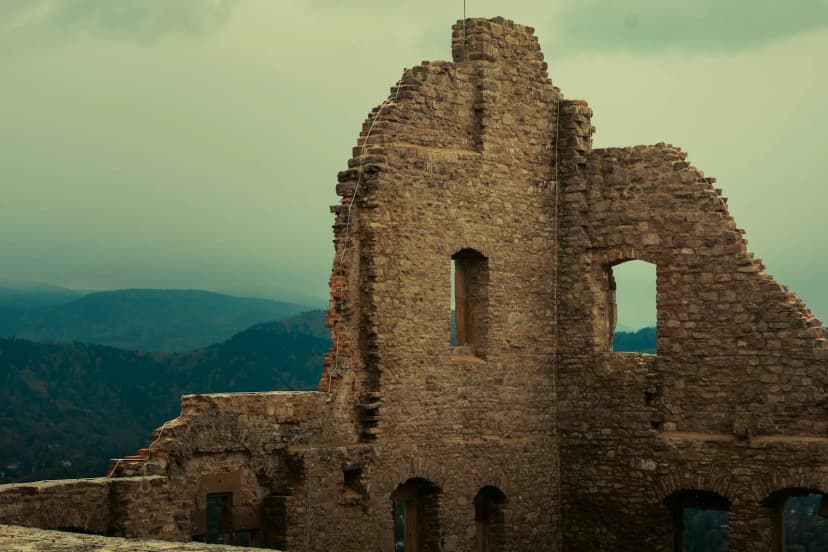
The Philosophenweg sits on the flank of the Heiligenberg, and the path can be extended upward to the Monastery of St Michael and the Monastery of St Stephen, plus a Celtic hill fort site. One walker describes remains of monasteries roughly a thousand years old and a Celtic fort dating to the fourth century BCE. These are ruins in woodland rather than a managed visitor complex.
The Thingstätte, a Nazi-era open-air amphitheatre, appears at the top of one travel platform's list of hidden gem attractions in the city. It is not signposted as a destination from the path, as one reader notes, so navigation tools or a map help. Treat it as a monument you reach on foot rather than a ticketed site.
Budget the extension honestly: it is extra climbing and extra time on top of the Philosophenweg. If you are on a tight schedule, the classic panorama is the essential part and the ruins are the optional one. If you have a second day, a Heidelberg two day itinerary gives you room to do both without rushing the Old Town.
Terrain, Footing and Weather Realities
Steps, dirt sections and leaf litter are the recurring themes in walker accounts. One visitor who completed the loop in autumn found the descent along mountain-bike trails slippery under wet leaves and said she would wear hiking boots next time rather than trainers. That is a sensible default for any month when it has rained recently.
Do not plan the walk as a night activity on the strength of the views alone. One walker cautions that the path has tripping hazards and drop-offs and would not recommend doing it after dark, even though it is technically accessible at all hours. If you want evening atmosphere, save it for the lower Old Town instead.
Check the weather the same day rather than days ahead, because a wet morning changes the footing on the steps more than it changes the view. Heidelberg Marketing maintains a weather and webcam section on its site, which is a quick way to judge conditions before committing to the climb.
Lower Old Town Alternatives for the Evening
Back on the south bank, Untere Straße is the street one resident writer points to for a night out, noting that open pubs can be found there any night even though Heidelberg is not a party city. It runs below the main shopping artery, so it feels different in character from the Hauptstraße crush. Treat the specific venue recommendations as starting points and check current opening before you set out.
Quiet squares do the same job earlier in the evening. Kornmarkt, a block from Market Square, has a clear view of the illuminated castle at night, and the Market Square itself hosts the Church of the Holy Spirit and the Hercules fountain. Both are free to walk through, which makes them a low-commitment way to end the day.
Pairing the Walk with the Rest of Heidelberg
The cleanest structure is one loop: Old Town, Old Bridge, Schlangenweg up, Philosophenweg along, and back across the bridge. That keeps the walking logical and avoids retracing the same bank twice. It also means you can add the castle on a separate half-day rather than trying to fit it between the climb and dinner.
If you are weighing the castle against the walk, note that the castle involves its own ascent and its own ticketing, and those details change. The Kurpfälzische Museum publishes its opening times and admission on its own visit page, and the same principle applies to any interior you add: check the operator's page rather than a blog, because third-party prices and hours age badly.
Readers with more time might look beyond the city. Schwetzingen Palace, about ten kilometres west, is a former summer residence whose garden combines a French part with an English-style extension, and it makes a natural half-day add-on rather than a substitute for Heidelberg's north bank.
Seasonal Timing and Crowd Patterns
Spring and early summer are recommended for the plants and flowers in the Philosopher's Garden, while sunrise and sunset are the best bets for light and solitude. Overnight visitors have an advantage, because many coach groups do not stay in the city, so mornings and evenings are calmer in the Old Town.
Autumn brings the risk of wet leaves and earlier darkness, which shortens the comfortable window for the upper paths. Winter is workable on the main path but the uphill extension becomes less appealing in cold, damp conditions. Season matters most for the optional Heiligenberg section, not for the paved start of the walk.
Check the city's own calendar before you book, because Heidelberg stages events through the year and some affect how busy the centre feels. Heidelberg Marketing publishes a current events page, and that is the place to confirm what is running during your dates rather than relying on outdated listings.
Plan Your Visit
Decide first how much climbing you want, because that single choice determines the shape of your day. The Schlangenweg from the Old Bridge gives you the dramatic arrival and the steps; the Bismarckplatz approach gives you a gentler gradient and more city on the way. Both end on the same path with the same view.
Wear shoes with grip, carry water, and set off earlier than you think you need to. Confirm any museum hours or transport details on the operator's own page before you travel, since the numbers that circulate in blog posts go stale quickly. Then cross the bridge, turn left, and take the steps.
Frequently Asked Questions
Is the Philosophenweg free to walk?
Yes. The Philosophenweg is a public path on the north bank of the Neckar and there is no charge to walk it, and it is accessible at any time of day. Reach it on foot from the Old Bridge via the Schlangenweg steps, or from Bismarckplatz via Bergstrasse. Because it is an open path rather than a ticketed site, there is nothing to book; the only cost is your own time and effort on the climb.
How hard is the climb up to the Philosophenweg?
It depends entirely on which approach you take. The Schlangenweg from the Old Bridge involves a lot of steps up a steep, partly stepped path, with benches for breaks. The route from Bismarckplatz via Bergstrasse still gains height but avoids most of the stairs, at the cost of walking alongside traffic at some crossings. Walkers with ordinary fitness describe both as doable, and driving or taking a taxi to the path removes the climb completely. Wear shoes with grip, because the steps and the dirt sections of the path become slippery when wet.
Can you combine the Philosophenweg with the Heiligenberg ruins and the Thingstätte?
Yes, but treat it as a longer half-day rather than an add-on. The Philosophenweg runs along the flank of the Heiligenberg, and the path can be extended uphill to the monastery ruins and the Thingstätte amphitheatre. The Thingstätte is not signposted as a destination from the path, so bring a map or navigation tool, and there is no official round-trip distance to rely on; one walker's account of a full loop came to roughly six miles. If your time is short, do the classic panorama and save the ruins for a return visit.
Where should you go in Heidelberg at night away from the main tourist streets?
Untere Straße in the Old Town is the street a long-term resident writer recommends for an evening out, with pubs that stay open and a more local feel than the Hauptstraße. Kornmarkt, a block from Market Square, is a quieter square with a view of the illuminated castle. Check individual venues before you go, since openings and hours change. And note that the Philosophenweg is not a sensible night walk, despite being accessible around the clock, because of uneven footing and unlit drop-offs.
What should you wear and carry for the walk?
Shoes with grip are the single most useful item, particularly after rain or in autumn when leaves make the steps and dirt sections slippery. One walker who completed a longer loop in trainers said she would choose hiking boots next time. Carry water and food, because apart from a seasonal ice cream cart there is generally nothing sold along the route. A charged phone with a map is worth having for the unsigned upper paths to the Heiligenberg sites.
Sources
- Heidelberg Marketing
- Discover the Hidden Gems of Heidelberg: A Unique City Guide
- 5 Fun Places to Visit in Heidelberg, Germany
- THE BEST Hidden Gems in Heidelberg (2026)
- Old Bridge Heidelberg: Visiting Guide and History
- Walking the Philosophenweg in Heidelberg: Our Tips
- The Philosophers Way - Heidelberg, Germany - For the Love of Wanderlust
- Philosopher's Path
- museum-heidelberg.de -Besuch