Hamburg rewards visitors who pick a quarter before they pick a hotel. The city officially organizes itself into seven administrative districts, the Bezirke, but almost everything travelers care about happens in the smaller Stadtteile that sit inside them. Recognizing that difference keeps you from comparing places that are not really comparable.
The official city portal publishes short guides to the districts and to individual quarters such as Eppendorf, St. Georg, HafenCity, St. Pauli, Ottensen, and Winterhude. A local-stay guide groups the same ground into roughly six visitor-friendly areas and rates them on atmosphere, convenience, and drawbacks. Reading both alongside each other is the fastest way to decide where to base yourself.
One concrete starting point: the Altstadt and Neustadt together hold the Rathaus, Inner Alster Lake, the historic warehouse district, and many of the main shopping streets, so first-timers can walk to most headline sights from a single base. Everywhere else trades some of that proximity for a different kind of day.
How to Read Hamburg's Geography
Hamburg's seven Bezirke are administrative containers, not walking itineraries. Hamburg Mitte alone takes in the busy city centre, bar-heavy St. Pauli, the modern HafenCity, and Wilhelmsburg, which means the same district can feel nothing alike from one street to the next. When you read that a quarter is "central" or "residential", check which layer the label belongs to.
The Stadtteile are the layer visitors actually walk. Altona spent much of its history under Danish rule and was an independent German city before joining Hamburg in 1937, which explains why it still reads as its own place. Eppendorf, Karoviertel, Ottensen, St. Georg, St. Pauli, HafenCity, and Winterhude each get their own official page because each has a distinct identity worth describing separately.
In practice, the visitor decision is simpler than the map suggests. Inner-city quarters cluster tightly enough that you can pair two in a single outing, while the northern and western residential quarters work better as a chosen destination for a half day. Plan around character first, then confirm the practical details on the city's own quarter pages before you commit a day to somewhere far out.
Altstadt and Neustadt: The Historic Core
The Altstadt and Neustadt form Hamburg's historic and geographic heart, with pedestrianized streets, canals, grand buildings, and the largest concentration of major sights. The Rathaus, the Inner Alster Lake, the historic Speicherstadt warehouses, the Elbphilharmonie, and the main shopping streets of Mönckebergstraße and Spitalerstraße are all here or a short walk away. For a short first trip, no other quarter saves you as much transit time.
The two halves differ more than the shared name suggests. The Altstadt is the grander, more historic half, with churches such as St. Petri and St. Jacobi and the Nikolaifleet canal, but it is also the more tourist-facing one. The Neustadt sits west of it and feels calmer and more everyday, particularly around Großneumarkt and the Gängeviertel arts quarter.
The trade-offs are real. Expect higher hotel and restaurant prices, more foot traffic, and limited parking; if you dislike spending your day among other travelers, the core can feel impersonal. The compensation is that you can walk to most of the city's headline sights and reach other quarters on foot, which is exactly why this area keeps coming up as the efficient first-timer base.
If you only explore one quarter on foot, make it this one. A self-guided route through the old town covers the major squares and canals without needing a booking, and it doubles as an orientation walk for the rest of your stay.
Sternschanze and Karolinenviertel: Atmosphere Over Sights
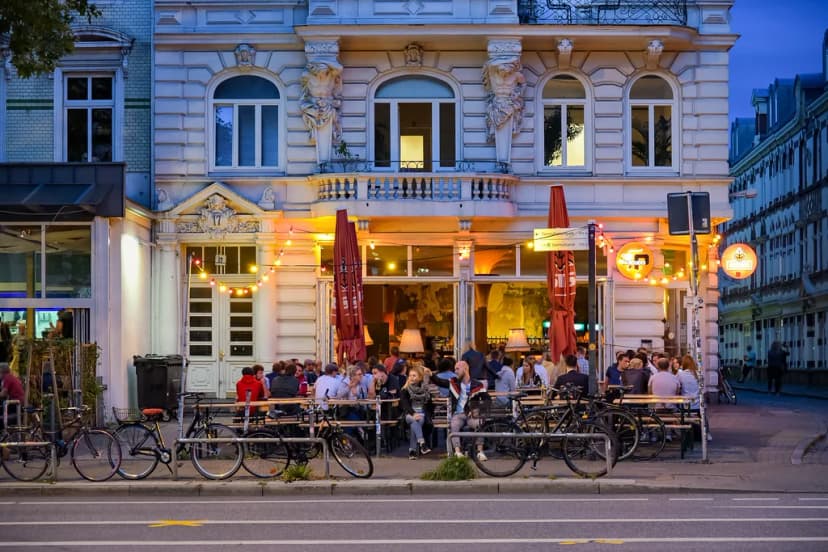
Known locally as Schanze and Karo, these adjacent quarters northwest of the centre are where you go for atmosphere rather than sightseeing. The streets are dense with cafés, craft beer bars, casual restaurants, vintage shops, record stores, and small locally owned boutiques. Choice is the point: Schulterblatt in Sternschanze is the busier eating and drinking strip, while Marktstraße in Karolinenviertel is the better strolling street for second-hand shops, design stores, and galleries.
Be honest about what is missing. There are no real tourist attractions in either quarter, so a stay here means relying on public transport to reach the big sights. The upside is a strong local character, walkable streets, and a livelier but more manageable night scene than St. Pauli's; the downsides are fewer hotels, fewer large establishments, and noise on busy streets.
Sternschanze reads as slightly more polished, with occasional leafy corners and the long-standing Rote Flora cultural and political centre as a landmark of sorts. Karolinenviertel is grittier and more artistic, with street art and independent retail defining the experience. If you want a quiet base in this area, choose a side street rather than a main strip.
These quarters suit younger travelers, creatives, and anyone who values neighborhood life over proximity to ticketed sights. They also pair naturally with the city's cheaper options: most of the free things to do here are simply walking, browsing, and sitting on a terrace.
St. Pauli: Nightlife First, Residential Behind It
St. Pauli is Hamburg's most famous quarter, largely because it contains the Reeperbahn, the city's main nightlife and red-light district. Bars, clubs, theatres, and music venues keep the area going late, and it is central enough to work as a base for the whole city. Treat the nightlife as the headline rather than the whole story.
Away from the main going-out streets, St. Pauli is a pleasant residential neighborhood with its own everyday life, including the football club that carries the name internationally. That split matters when you choose a hotel: a room on a quiet block gives you the convenience without the noise, and the walk home after a night out stays short.
The practical trade-off is noise versus convenience. Visitors who want late nights and short walks get both here; visitors who want calm evenings should look at the residential quarters instead, or accept that they will need to travel in and out. Either way, the city's U-Bahn and S-Bahn network makes the connection straightforward.
St. Georg: Central, Leafy, and Split in Two
St. Georg has a split personality that is worth understanding before you book. The area immediately around Hamburg Central Station is rougher than the rest and can feel seedy, especially at night. Beyond that pocket, the quarter turns leafy and pleasantly residential, with parks, green space, and quick access to the Outer Alster Lake.
Its central position is the main argument in its favor, and the dining scene is strong for a quarter this size. Galleries, shops, restaurants, and bars fill the streets east of the station, and the Hauptbahnhof puts long-distance trains and day trips within a few minutes' walk. For visitors who want central without the Altstadt price tag, this is often the compromise that works.
The caution is specific, not general. Being alert around the station at night is sensible, while the residential streets further into the quarter are ordinary city life. Choose your hotel by which side of that line it sits on, and the quarter is easy to enjoy.
HafenCity and Speicherstadt: Old Brick, New Steel
HafenCity and Speicherstadt sit along the waterfront just south of the old town, on land that was once Hamburg's working port. Speicherstadt keeps its historic character with red-brick warehouses, cobblestone streets, and narrow canals, and it holds UNESCO status. HafenCity next door is the modern counterpoint: steel and glass apartments, small squares, and parks.
Both are central and convenient, which makes them a strong base for visitors who want easy access to the main sights without sleeping inside the old town. The significant caveat is that the area is quiet in the evenings, so anyone whose trip revolves around nightlife will find it a poor fit. Think of it as a daytime and sightseeing location rather than an evening one.
For a short stay, the choice between the two comes down to taste. Speicherstadt gives you the historic warehouse atmosphere and canals; HafenCity gives you modern architecture and proximity to the waterfront. They are adjacent, so you do not have to pick only one for sightseeing, only for where you sleep.
Eppendorf and Winterhude: Green and Local
Eppendorf and Winterhude sit north of downtown and share an upscale, settled character. Expect elegant townhouses, tree-lined streets, good cafés and restaurants, and plenty of greenery. The city's own description of Eppendorf leans on the fact that it is one of Hamburg's wealthier quarters, while Winterhude mixes pompous townhouses, red-brick apartment buildings, modern offices, and parks into the same district.
The trade-off is distance from the centre. These quarters are best suited to repeat visitors or travelers with more than a few days, because spending part of each day in transit is the price of the calmer atmosphere. If your goal is to feel like you are really in Hamburg rather than in a tourist zone, that trade is usually worth making.
They are also the more obvious choice for families and couples who want quieter evenings. Public transport is reliable and frequent, so the center remains reachable, but you should plan your days around fewer, longer outings rather than constant back-and-forth.
Altona and Ottensen: Shopping Streets and Narrow Lanes
Altona and Ottensen sit west of the centre and have a relaxed, slightly self-contained feel. Ottensen functions as a major shopping district, and its narrow alleys and small bars and cafés have earned it the nickname "Little Paris". Altona's separate history before joining Hamburg in 1937 still shows in the way the area reads as its own town within the city.
For visitors, this pair rewards slow wandering rather than checklist sightseeing. Ottensen's lanes and shopping streets are the main draw, and the pace is gentler than in the core. HafenCity is a different proposition entirely: modern waterfront architecture and a quiet evening, versus Ottensen's lived-in streets and local commerce.
Transit, Timing, and How the Quarters Connect
Hamburg's public transport is the reason you do not have to stay next to the sights. The U-Bahn, S-Bahn, and bus network links the inner quarters and reaches further-out residential areas without much hassle. Sternschanze station, for example, connects to both U- and S-Bahn services, which makes the neighborhood practical for reaching the old town, the harbor, and the main station.
Rather than chasing exact routes, decide in advance how many transfers you are willing to accept each day. A base in the core means more walking and fewer rides; a base in Eppendorf, Winterhude, or Ottensen means a scheduled trip each time you head for the major sights. Both patterns work, but they produce different trips.
Check current connections and any service changes on the operator's own information before you rely on a specific route, since network details change more often than neighborhood character does. The official city tourism pages are the better starting point for current quarter-level orientation.
Trade-Offs Compared
Three factors decide most Hamburg stays: proximity to sights, neighborhood atmosphere, and evening activity. The Altstadt and Neustadt win on proximity and lose on calm and price. Sternschanze and Karolinenviertel win on atmosphere and lose on sightseeing. St. Pauli wins on evening activity and loses on quiet, unless you pick a residential block.
HafenCity and Speicherstadt score well on proximity and architecture but poorly on nightlife. St. Georg sits in the middle on almost everything, with the specific caveat about the station area. Eppendorf and Winterhude trade proximity for green space and a local feel, and Altona and Ottensen offer a relaxed alternative with good shopping.
A useful method is to write down what you will do after 20:00. If the answer is dinner near the hotel, the core or the waterfront works. If the answer is bars until late, stay near St. Pauli or the Schanze. If the answer is sleep, the northern quarters are the safer bet.
Suggested Durations and Pairings
The following pairings are our suggestions, not official guidance, and you should adjust them to your own pace. For a single full day, combine the Altstadt and Neustadt in the morning with the Speicherstadt and HafenCity in the afternoon: the route is mostly walkable, covers the historic core and the waterfront, and ends near transit back to almost any base.
For a half day, take Sternschanze and Karolinenviertel together, since they border each other and neither depends on ticketed sights. Pair St. Georg with a walk along the Outer Alster if you want green space with your lunch. Set aside a separate half day for Ottensen if shopping and lanes appeal, and treat Eppendorf or Winterhude as a full afternoon rather than a quick stop.
If time is short, skip the longer trips rather than cramming them in. Two quarters done slowly tend to beat four quarters rushed, especially when one of them is mostly a street to wander rather than a sight to tick off.
Choosing Your Hamburg Quarter
Start with the trip you are actually taking. A first visit with two or three days points to the Altstadt and Neustadt or to a waterfront base in HafenCity and Speicherstadt. A longer stay, or a return trip, opens up Eppendorf, Winterhude, and Ottensen, where the slower local rhythm becomes an advantage rather than a commute.
If atmosphere matters more than sightseeing, Sternschanze and Karolinenviertel deliver it, and St. Pauli delivers nightlife with the noise that comes with it. St. Georg remains the flexible middle option, provided you choose the right side of the station. Verify current details on the official city and operator pages before booking, since listings and services change.
Frequently Asked Questions
Which Hamburg neighborhood is best for first-time visitors?
The Altstadt and Neustadt are the most efficient first base because the Rathaus, Inner Alster Lake, the Speicherstadt warehouse district, and the main shopping streets are all within walking distance or a short ride. HafenCity and Speicherstadt are a good alternative if you want to be near the main sights without staying inside the busy old town. Both are central, so whichever you pick, you can still reach St. Pauli, St. Georg, and the waterfront easily.
Which Hamburg neighborhoods are best for families?
Eppendorf and Winterhude are the calmest options, with green streets, parks, and a local rather than tourist atmosphere, though they sit further from the centre and suit longer stays better. Altona and Ottensen are another relaxed choice with shopping streets and easy connections. If you want to stay central, the residential side of St. Georg offers green space and access to the Outer Alster.
Which parts of Hamburg should visitors be cautious about?
The area immediately around Hamburg Central Station in St. Georg is rougher than the rest of the quarter, particularly at night, while the surrounding residential streets are ordinary and pleasant. St. Pauli's nightlife district also warrants normal big-city caution late at night. Neither area is a reason to avoid the quarter; choose your hotel street with that in mind, and stay aware of your surroundings after dark.
Is HafenCity or Speicherstadt better for a short stay?
Speicherstadt gives you historic red-brick warehouses, canals, and cobblestone streets, while HafenCity gives you modern architecture and waterfront squares; they are adjacent, so you can walk between them. Both are central and convenient for the main sights, but both are quiet in the evenings. If your evenings centre on bars and nightlife, choose St. Pauli or the Schanze instead and visit the waterfront during the day.
Where should I stay in Hamburg for nightlife?
St. Pauli, around the Reeperbahn, is the obvious choice for bars, clubs, and theatres, and it is central enough to work as a base for the rest of the city. Sternschanze and St. Georg are the alternatives, with independent bars, cafés, and music venues in a more residential setting. Expect noise on the main going-out streets, and pick a quieter block if you want to sleep before the early hours.
How do I choose between Sternschanze and St. Pauli?
Choose St. Pauli if nightlife is the priority and you want theatres and clubs within walking distance. Choose Sternschanze if you prefer cafés, craft beer bars, vintage shops, and a neighborhood feel that is lively but less intense. Both are central and well connected, and both have quieter pockets a few streets away from the busiest strips.