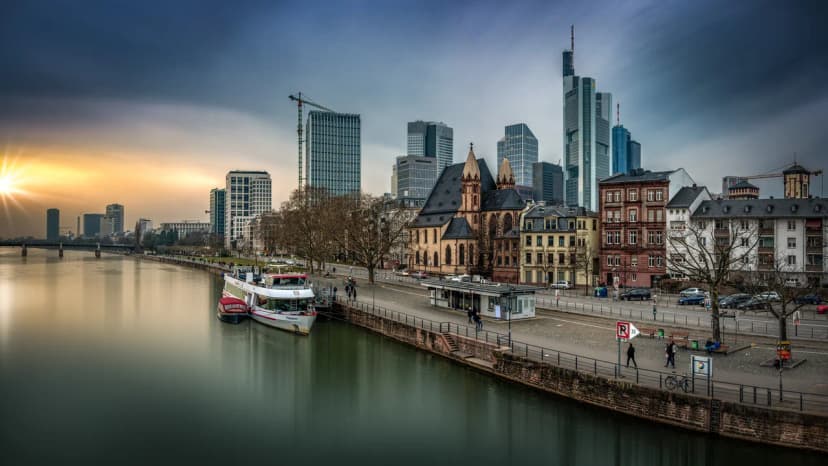
Frankfurt am Main presents itself as a cultural and museum city whose official tourism company builds its pitch around the River Main, the New Frankfurt Old Town, the Palmengarten and the skyline, alongside a calendar of large folk festivals. That framing is genuinely useful on a dry day, when you can move between riverbank, old town and gardens on foot. Rain rewrites the plan because the outdoor half of that list stops working and the indoor half has to carry the day.
As a suggested duration, not an official figure, assume a wet half-day gives you one solid indoor block of roughly two to three hours plus travel and a meal, and that a full wet day realistically holds two blocks. Plan around those blocks rather than around a wish list of venues. The city's own visitor site is the place to check current opening times, ticket terms and any short-notice closures before you commit. Further visitor details appear in #visitfrankfurt | Welcome to Frankfurt am Main!.
Why a Wet Day in Frankfurt Is a Planning Decision
The city's official tourism site describes Frankfurt through a handful of themes: museums and galleries, parks and gardens, the riverbank, and the contrast between timber-framed old town streets and modern towers. Several of those themes are weather-dependent, and only some have usable indoor versions. Deciding well means sorting the list by what still functions when it rains, not by which sight is most famous.
It also means accepting that a rainy day in Frankfurt is a trade-off between depth and coverage. One long indoor visit usually beats three rushed ones because moving between venues in the rain costs time, comfort and money. If your trip is short, spend the wet hours in one place rather than trying to tick off the whole city.
Shopping Streets and Arcades as a Rain Strategy
Retail areas are built for shelter, browsing and lingering, which makes them a legitimate wet-weather option rather than a compromise. The Zeil runs directly across from Hauptwache, and the tourism company's own description of the Christmas market notes that Germany's largest shopping street sits opposite that square, stretching trade toward Römerberg and the Main. That geography matters on a wet afternoon because errands and shelter overlap in the same few blocks.
Treat a shopping block as a flexible filler, not an anchor. It absorbs an hour or two without a reservation, works for mixed groups, and lets you retreat further if the rain intensifies. What it cannot do is substitute for a planned cultural visit, so pair it with one indoor block you actually chose.
How to Judge Indoor Candidates Honestly
Three questions separate a good indoor candidate from a frustrating one. First, is the grounds free while the interiors are ticketed, or is the whole site paid? Second, does the site sit inside a larger complex where different collections are separately ticketed? Third, does it require a timed slot or advance booking, which changes how you can use a spontaneous wet afternoon?
The complex question trips up more visitors than any other. Large museum and garden sites often bundle several buildings under one name, but a single ticket rarely covers every collection inside, and separate exhibitions can carry separate admission. Never assume that entry to a site means entry to everything on it, and check the specific ticket scope for the specific building you intend to enter.
If you want help narrowing the museum field, a comparison of the city's major art, natural history and modern art collections can save you from choosing on name recognition alone. That decision matters more in rain because a wrong choice costs you a whole indoor block. For museum-by-museum trade-offs, work through which museums I should choose in Frankfurt before you leave the hotel.
Museum Choices as a Rain Strategy
A deep single visit and a chain of short stops solve different problems. One deep visit suits a long wet afternoon, gives you somewhere to sit, and removes the risk of arriving at a second venue to find it full or closing. Several short stops suit a half-day when you are close to a cluster of venues and can move between them under cover, but each move costs time in the rain.
If you already know you want one major art collection, research that specific museum first so the visit fits your available hours rather than the other way round. Check tickets, collection highlights and how long to spend at the Städel Museum before you build the day around it, since a large collection can absorb an entire wet afternoon. Reserving the rest of the day as overflow, rather than adding a second venue, is often the better trade.
Where a city museum pass exists, its value depends on how many venues you will genuinely enter in one day rather than on the pass itself. A wet day tempts you into over-buying coverage you will not use. Decide your realistic count of paid interiors first, then check the pass terms and whether it needs a booking.
Green Oases When It Rains: What the Palmengarten Really Offers
The Palmengarten is one of Frankfurt's flagship outdoor themes, and it appears in the city's own list of first impressions alongside the skyline, old town and riverbank. Rain does not cancel a garden, but it does change what you can use there. The practical question is which parts are under cover and which parts you would be walking through wet, and that balance is specific to the site rather than general to gardens.
Do not assume that a botanical garden's glasshouses are automatically open to general admission, or that the indoor and outdoor areas share one ticket. Glasshouse and conservatory access can be tied to specific buildings, seasons or events. Confirm what the admission covers on the day you plan to visit by checking the garden's own published information, and keep the visit as an outdoor plan with an indoor fallback rather than the reverse.
If green space is the point of your trip, put it on a dry day and use the wet day for something genuinely indoor. Swapping the two is the single most common mistake visitors make when the forecast turns.
A Short Layover in the Rain: What Is Realistic
A few hours at the airport or station does not translate into a full city visit in the rain. Budget the time you need to get back through security or to your platform before you count what is left, and treat that remainder as your real window. Passing showers can stretch a short trip into a long one, so pick something close and predictable rather than something impressive and far.
With a genuinely short window, choose one indoor block near your arrival point, skip the riverbank and old town walk entirely, and set a hard stop time. Do not attempt a cross-city itinerary because a missed connection costs more than a missed sight. If the timing looks tight, stay in the terminal or station area and save the city for a longer visit.
A Wet-Day Plan You Can Actually Write Down
Start by anchoring one indoor block: a museum, a gallery or another indoor venue you have confirmed is open on your date and whose ticket scope you understand. Give it a fixed start and a fixed end, and write the address down rather than relying on a memory of the neighbourhood. One confirmed anchor is worth more than three unconfirmed maybes.
Then add a back-up that needs no booking, such as a shopping street or a covered arcade near your anchor, so a closure or a full venue does not end the day. Set a stop time for the whole plan so you are not still deciding at the point where everything is closing. End near transport you already know because finding a new route in heavy rain is the least enjoyable part of the day.
If children are in the group, the plan needs shorter blocks, a food stop and lower tolerance for queueing. Our guide to Frankfurt with kids covers how to pace a family day so a wet afternoon does not collapse into a tantrum. Build the day around the youngest traveller's limits, not the adults' list.
Mistakes to Avoid on a Rainy Day in Frankfurt
The first mistake is booking around assumed opening hours. Frankfurt's attractions do not share one timetable, and seasonal schedules shift, so confirm times on the day for each venue you plan to enter rather than trusting an older article or a general guide. A single wrong assumption can strand you in the rain with nothing to do.
The second is assuming something is free because the outdoor part is. Grounds and interiors frequently have different rules and different tickets, and large sites can contain several separately ticketed collections. The third is treating a festival as rainy-day shelter: the city's festival programme is seasonal, and wet weather can cancel or postpone outdoor events, so a festival entry in the calendar is not a plan for a wet Tuesday.
The fourth is over-scheduling across the river. Crossing the Main twice in one rainy day burns time you could spend indoors, and the riverbank views that justify the crossing are exactly what the weather spoils. Group your stops on one side of the river and accept that you will see less.
If You Are Curious About Indoor Options Elsewhere in Germany
For contrast rather than as Frankfurt advice, southwest Germany has a well-developed indoor excursion culture, and Baden-Württemberg's tourism board lists several large weatherproof attractions in that region. Its examples include a Scandinavian-themed water world at Rust, an indoor leisure park at Sindelfingen, a Zeppelin museum at Friedrichshafen, a Black Forest bathing complex, a large science centre at Heilbronn and a teddy bear museum. All of these are hours away in the southwest, not day-trip options from Frankfurt, and they appear here only to show what a dedicated indoor destination looks like.
Where to Verify Before You Go
Frankfurt's rainy-day problem has no single answer because the city's indoor strengths are spread across museums, retail areas and covered venues that each operate on their own terms. The workable approach is to confirm one indoor anchor, understand exactly what its ticket covers, and keep a booking-free fallback for when plans change. That is enough structure for a wet day without pretending the city has a purpose-built rain itinerary.
Check current opening times, ticket scope and any short-notice closures on the city's official tourism site before you travel, since these details change and no guide can substitute for the operator's own information. If you want a wider frame for the trip, our Frankfurt am Main landmark guides cover the individual sights, and the two-day itinerary shows how the indoor and outdoor pieces fit together on a longer visit.
Frequently Asked Questions
What can I do indoors in Frankfurt when it rains?
Think in categories rather than a fixed list because the city does not publish a single rain itinerary. Museums and galleries, retail streets and covered arcades, and any conservatory or exhibition building attached to a garden are the realistic categories. Pick one anchor you have confirmed is open, understand what its ticket actually covers, and add a booking-free fallback such as a shopping street so a closure does not end your day. Verify times and ticket scope on the venue's own information or the city's official tourism site before you set out.
How should I spend a short layover in Frankfurt in bad weather?
Treat your real window as the time left after you have allowed for getting back through security or to your platform, then subtract a safety margin. With a genuinely short window, choose one indoor block near your arrival point and skip the riverbank and old town walk entirely. Set a hard stop time and do not attempt a cross-city itinerary because a missed connection costs more than a missed sight. If the timing looks tight, stay in the terminal or station area rather than risk the city.
Are Frankfurt's green spaces usable on a wet day?
The Palmengarten is one of the city's signature outdoor themes, so rain changes how you use it rather than cancelling it outright. The practical question is which parts are under cover and which would leave you walking in the wet, and that balance depends on the individual site. Do not assume that conservatories or glasshouses are open to general admission or that indoor and outdoor areas share one ticket because those access rules can be building-specific or seasonal. Check the garden's own published information for your date.
Do I need to book indoor attractions in Frankfurt in advance?
It depends entirely on the venue, and there is no city-wide rule. Some sites run timed entry or sell out on wet weekends, while others accept walk-ins without a reservation. Before you build a day around one place, check whether it requires or recommends advance booking and whether that booking covers the specific collection or building you want to see. If a venue does not publish booking guidance, plan a booking-free fallback and arrive early rather than assuming you can walk straight in.