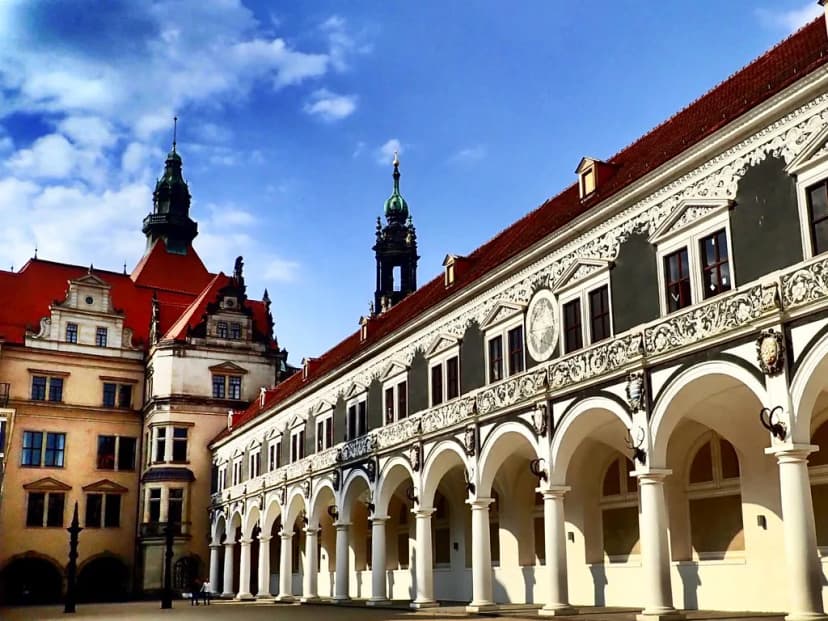
Dresden's old town packs its famous landmarks into a small, walkable area, which is exactly why many visitors never leave it. Traveller accounts note that the centre is unusually compact, with the major sights concentrated in quite a small area, and one writer reckons the city could be seen in two full days if pressed. That compactness is a gift on a short trip, but it also means the quieter corners get skipped.
The districts that reward a second look lie across the river or beyond the inner ring: the Neustadt's courtyard passages, the riverbank path along the Elbe, and outer districts such as Radebeul. These are not secret in any absolute sense, but they attract a different, slower kind of visit. The most useful planning skill is knowing which spaces are free to wander and which need their own ticket.
This guide treats the old town as a starting point rather than the whole itinerary. It flags where current prices, opening hours and booking rules have to be confirmed on operator pages, because those details change and no third-party blog should be treated as final. Where a duration appears on this page without attribution, read it as a pacing suggestion rather than an official figure.
What Counts as a Hidden Gem in Dresden
Dresden's headline sights sit on the left bank inside a tight inner ring, and the city's own wayfinding is built around that core. The official Dresden tourism pages describe a tourist pedestrian guidance system that has been built up and extended since 2004, with information steles at 46 prominent locations such as stations, stops and car parks pointing the way to the city's most significant cultural sights. That structure is genuinely helpful, but it also funnels most first-time visitors along the same route.
For this guide, a hidden gem is not an obscure secret but a stop that sits outside the standard Baroque circuit and asks for a different kind of attention. A courtyard covered in sculptural drains, a riverside path used mostly by locals on bicycles, or a museum devoted to a single nineteenth-century novelist all qualify. Deciding which of these suits you matters more than ticking off a list, because each one trades landmark density for a narrower, more specific appeal. Our Dresden landmark visitor guides explain individual visits and ticket choices.
One practical consequence is that these stops tend to be spread out rather than clustered. The Neustadt sits north of the river, the large parks and garden districts lie to the south and east, and Radebeul is a separate town in the Elbe valley. Grouping two or three stops by geography will save you more time than chasing the single most talked-about sight, and it keeps a day from turning into a series of river crossings.
Free Grounds, Paid Interiors: How to Budget Your Time and Money
The single most useful distinction in Dresden is between outdoor space you can enter without paying and the museums housed inside it. Traveller accounts describe the Zwinger as a Baroque complex of pavilions, galleries and inner courtyards that today contains museums, including the Old Masters Gallery, the Mathematical-Physical Salon and the Porcelain Collection. Walking the courtyards and gardens is a different proposition from paying to enter the galleries.
Bloggers also make clear that even within a single complex the tickets are not interchangeable. One widely read Dresden guide states that the Historic Green Vault inside the Royal Palace is the only museum not on the all-inclusive day ticket, while the New Green Vault is covered by the regular palace ticket and a palace ticket includes the state apartments, armour collection, Hall of the Giants and Renaissance Wing. Treat any assumption that one ticket covers everything under one roof as unreliable, and check the operator's own ticketing page before you commit.
Building a day around one paid interior plus free outdoor wandering is a reliable pattern. You get the substance of a collection or exhibition in the morning, then spend the afternoon moving between courtyards, promenades and riverbank paths at no cost. That rhythm also keeps you flexible if a timed entry slot or a change of plan disrupts the schedule.
Neustadt Wandering: Kunsthofpassage and the Tree-Lined Hauptstrasse
The Neustadt sits on the north bank and reads as an entirely different city: lower-rise, residential, and full of small businesses rather than monumental facades. Third-party travel accounts describe a peaceful quarter built around a long tree-lined pedestrian street with plenty of small cafes and shops, and note that you will not see too many other tourists there. That contrast is the point of going.
The Kunsthofpassage is the Neustadt's best-known pocket of public art: a group of connected courtyards where the facades themselves are the attraction. It costs nothing to walk through, and it works best as a slow loop rather than a photo stop, since each courtyard has its own character. Because this is a residential area, treat noise levels and the opening patterns of surrounding shops as things to observe rather than assume.
Allow a loose half-day for the Neustadt if you like browsing, or a focused two hours if you mainly want the courtyards and a coffee. Start at one end of the main pedestrian axis and walk its length rather than doubling back, then drop toward the river to connect with the Elbe path. That single direction keeps the neighbourhood from turning into a maze.
The Elbe Riverbank on Foot or by Bike
The riverbank is Dresden's free spine, linking districts that otherwise feel disconnected. The city's official tourism pages describe a tourism infrastructure that is very well developed for walkers and cyclists and identify the Elberadweg as the most important inner-city cycling route, winding along the river away from road traffic. That makes it the natural way to move between the old town, the Neustadt side and the greener edges of the city.
Bloggers describe the stretch of bank between the Japanese Palace and the Augustus Bridge as a spot where residents walk, picnic and cycle, with a beer garden looking across at the old town. Whether you walk or cycle, the appeal is the same: skyline views without a ticket queue. The bridge itself is the obvious crossing point between the two banks, and it doubles as a viewpoint.
Note that riverside routes can be affected by works: city news listings include a closure of the Elberadweg in the Laubegast area near the Hosterwitz waterworks. Before you plan a long ride or walk, check current city information rather than relying on an old map. A short out-and-back section is usually enough to enjoy the river without committing to a full-day route.
Radebeul and the Karl May Museum: A Niche Detour Worth Deciding On
The Karl May Museum in Radebeul is the clearest example of a Dresden-area stop that depends entirely on your interests. One traveller account describes it as their absolute favourite place to visit in Dresden, precisely because of a childhood attachment to the Winnetou films, and notes that the museum occupies Villa Shatterhand, the house where the author spent some of his earlier years. If Westerns and nineteenth-century adventure fiction mean nothing to you, the appeal drops sharply — the same writer is open about that bias.
The same source recommends starting at the back of the museum, where exhibits on real Native Americans include rare artefacts, before moving on to how Karl May portrayed the West in his books. That sequencing is one visitor's suggestion, not an official route, but it makes sense if you want context before the fiction. Expect a compact villa setting rather than a large modern museum campus.
Radebeul lies in the Elbe valley outside the Dresden city centre, and the museum's website is the place to check for current travel advice by car, train and tram as well as admission details. If you are short on days, the honest trade-off is between this niche stop and a riverside or Neustadt afternoon that costs nothing.
Panometer and Grand Garden: Choosing Between Two Big-Format Stops
The Panometer and the Grand Garden are both large-scale experiences, but they ask completely different things of a visitor. The Panometer is a large-format panoramic installation, which makes it a weatherproof option and a strong candidate for a rainy half-day. The Grand Garden is a historic park landscape where the main activity is simply walking.
A suggested itinerary slots the Grand Garden at roughly thirty minutes and the Panometer at about an hour, while describing the park visit as optional. Those figures are that writer's own pacing choices, not official durations, but they hint at the relative commitment: the garden can be a brief stroll or an entire afternoon, while the Panometer is a fixed indoor visit. Choose by format rather than by ranking.
Both sit away from the compact old town, so pairing one with a nearby district rather than crossing the city twice is the efficient approach. Check each operator's own page for current exhibitions and hours before setting out, because the Panometer's show changes and park events vary by season. Neither stop should be scheduled from a blog snapshot alone.
German Hygiene Museum and Transport Museum: Substance Over Facades
If you want museum content rather than architecture, the German Hygiene Museum and the Transport Museum are the two stops most often singled out. The Hygiene Museum is a modern, topic-driven institution covering the human body, emotions and sexuality, with temporary exhibitions that change over time. One visitor describes spending nearly three hours there after arriving sceptical, and notes that a lot of the presentation is only in German with audio guides available to help.
The Transport Museum occupies a central location and spreads its exhibitions across three floors covering cars, trains, ships and planes in roughly chronological order. That structure suits anyone curious about how people and goods have moved through history, and the same account rates it for its mix of text, audio, video and interactive elements. It is an easy add-on to an old-town day rather than a separate excursion.
Check each museum's own website for current opening days, exhibition themes and language provision before you go, because both run rotating programming. Neither shares a ticket with the other or with the palace complex. Budget a suggested two to three hours for whichever you choose, and treat that as your own pacing estimate rather than an official duration.
Building a Hidden-Gems Day
A workable structure is one paid interior in the morning, a free district or riverbank stretch in the afternoon, and an optional second stop if energy allows. For example, take a museum in or near the old town early, then cross to the Neustadt for courtyards and coffee, finishing along the Elbe as the light softens. That sequence minimises backtracking and keeps the ticket cost contained to one commitment.
If you have a second day, use it to go outward instead of deeper into the same quarter: Radebeul if the Karl May Museum appeals, or the Grand Garden and Panometer if you prefer parkland and large-format imagery. Keeping the two days distinct by geography prevents the common mistake of repeating the old-town loop with different labels. A full two days in Dresden is enough for the compact centre plus one outward excursion, based on how travellers describe the city's scale.
Leave buffer time, especially if you are relying on timed entry for a specific collection. Volatile details such as opening days and ticket scope are best confirmed the day before on the operator's page, not assumed from a guide written months earlier. A little slack is what turns a checklist into a pleasant day.
Practical Dresden Planning: Arrival, Transport and Verification
Dresden's official tourism pages cover arrival by car, train, long-distance bus and air, and describe a local network that includes numerous trams, buses, Elbe ferries and two mountain railway lines. The same source states that cycle paths run along many main roads, with a total length of more than 360 kilometres, and that the Elberadweg is the most important inner-city route. Use these pages as your reference for how the city connects, rather than memorising specific lines from an old blog.
The city also publishes a Themenstadtplan, a Dresden App and printed information material, all useful for on-the-ground wayfinding. Because route details and path closures change, treat any single source as a snapshot and cross-check before a long ride or a day trip. Booking accommodation near the river or in the Neustadt changes the character of your trip as much as any single sight.
For anything volatile, go to the operator first: the museum's own ticketing page, the venue's calendar, the city's current notices. That habit matters more in Dresden than in cities where a single ticket covers everything, because collections here are managed separately. Plan the broad shape of your days, then confirm the specifics close to departure.
Plan Your Visit
Dresden's hidden gems are not hidden in the sense of being unknown; they are simply outside the compact Baroque circuit that most short visits cover. The Neustadt's courtyards, the Elbe riverbank and outer districts such as Radebeul each offer a different tempo, and each has its own free-versus-ticketed logic. Pick by interest and geography rather than by ranking.
Before you travel, confirm current opening days, ticket scope and any booking rules on the relevant operator's own page, and use the city's official transport and wayfinding information for the practical side. Prices and schedules shift, and a guide written earlier cannot carry that weight. With those checks done, the quieter half of Dresden is easy to plan and easy to enjoy.
Frequently Asked Questions
What are the best free things to see in Dresden?
The riverbank is the strongest free option: the Elberadweg and the promenades along the Elbe let you walk or cycle between districts with skyline views and no ticket. The Neustadt is free to wander too, including the Kunsthofpassage courtyards, and the pedestrian axis through the quarter works well as a slow loop. Walking the courtyards and gardens of the Zwinger complex is separate from paying to enter the galleries inside, so check what a given ticket actually covers before buying.
Is Radebeul worth the trip from Dresden?
It depends on whether the Karl May Museum interests you. The museum occupies Villa Shatterhand, the house connected to the author of the Winnetou novels, and it appeals strongly to readers of that adventure fiction and to anyone curious about how the American West was portrayed in German popular culture. If that subject leaves you cold, the travel time is better spent on the Neustadt or the Elbe path. Check the museum's own website for current transport advice and admission details before committing.
Which lesser-known Dresden museums suit a rainy day?
The German Hygiene Museum and the Transport Museum are the two most often recommended for indoor, topic-driven visits, and the Panometer offers a large-format indoor experience. The Hygiene Museum is interactive and covers the body, emotions and health, with rotating exhibitions; the Transport Museum spreads vehicles across three floors. Because exhibitions and opening days change, confirm what is on and when each venue is open directly with the operator rather than relying on a guide.
How do you get around Dresden without a car?
Dresden has a well-developed local network that the city describes as including numerous trams, buses, Elbe ferries and two mountain railway lines, alongside a large network of cycle paths. The Elberadweg is the main inner-city cycling route and runs along the river away from road traffic, which makes it a practical spine for a car-free day. The city also maintains a tourist pedestrian wayfinding system with information steles at major arrival points, plus a Themenstadtplan and a Dresden App for planning.