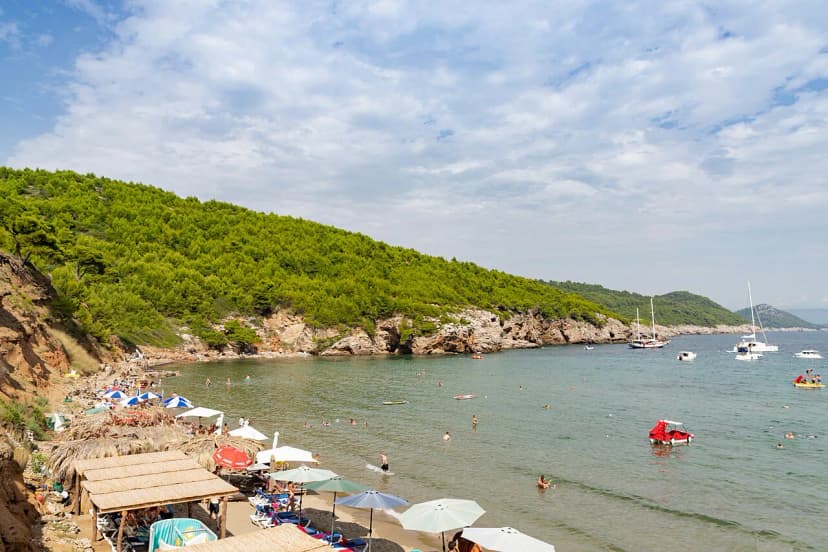
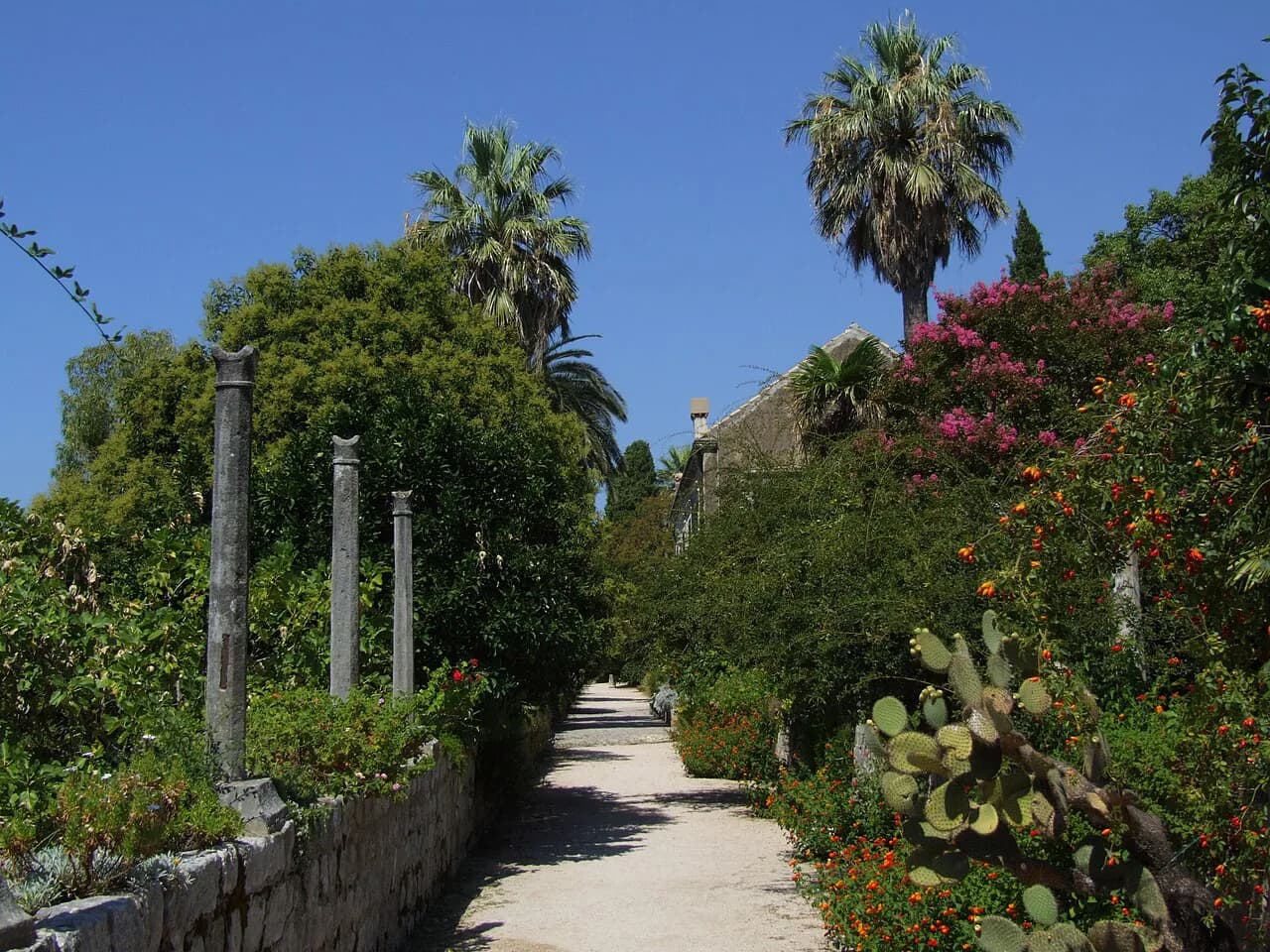
Last updated August 2026, a Trsteno Arboretum Dubrovnik day trip pairs 500-year-old plane trees with a Renaissance aqueduct and a Game of Thrones filming pavilion. It sits about 20km (12 miles) west of Dubrovnik on the coastal road toward Ston, reachable by Libertas bus, car, or private boat. This guide covers what to see, how the Sansa Stark and Olenna Tyrell scenes line up on the ground, and whether the trip beats closer options like Lokrum.
Trsteno Arboretum from Dubrovnik: Is It Worth the Detour?
Trsteno rewards travelers who want shade, stone paths, and space between themselves and other visitors. Stone benches sit beneath the entrance plane trees, where the shaded paths feel noticeably cooler than Old Town's stone streets at midday. Multiple garden historians describe it as one of the oldest arboretums in Europe. Its history dates to the late 15th century, when the noble Gučetić-Gozze family sent ship captains home with seeds and plants from their voyages. Regional tourist board listings, including the Dubrovnik Tourist Board, group Trsteno with Lokrum and the Elaphiti Islands as protected natural sites. Photographers get the most out of an early or late visit, when the plane-tree canopy filters harsh midday light. If you'd rather stay inside the walls, Old Town's quieter alleys deliver a similar break from crowds without the bus ride. Trsteno also shows up on lists of lesser-known Dubrovnik detours for exactly this reason. It's a 25-30 minute trip that trades Stradun's crowds for open paths and sea views.
A few traveler types get the most value from a stop here.
Lokrum is the closer, faster alternative for travelers short on time. Lokrum Reserve, the public body managing the island, describes it as a protected nature reserve just off the Old Town harbour. For a land-based look at its monastery ruins and gardens, see the island's cloister gardens. This table lines up the practical differences.
| Factor | Trsteno Arboretum | Lokrum Island |
|---|---|---|
| Getting there | 25-30 min by Libertas bus or car (20km/12 miles) | About 10 min by boat from the Old Town harbour |
| Entry cost | Paid ticket at the gate (see Practical Tips below) | Separate reserve entry fee — check current rate |
| Setting | Renaissance garden, working aqueduct, villa remnants | Benedictine monastery ruins and botanical garden |
| Best for | Slow walks, the Game of Thrones pavilion, fewer crowds | Quick half-day trips, the Dead Sea saltwater pool |
- Photographers chasing early or late light without crowds in the frame.
- Game of Thrones fans mapping the pavilion and pergola filming scenes.
- Botanical travelers interested in Renaissance-era garden design and centuries-old plane trees.
- Travelers trading Old Town's midday heat for shaded stone paths.
Game of Thrones Filming Locations Inside the Arboretum
Season 3 and season 4 of Game of Thrones used Trsteno as the palace gardens of King's Landing. Production crews filmed several Red Keep scenes across the pavilion and pergola paths near the villa. Two specific spots draw repeat visits from fans tracing the show's plot.
Photographers, Game of Thrones fans, and visitors seeking heat relief all benefit from the 07:00 summer opening.
- The Pavilion — the open-sided structure near the villa where Sansa Stark meets Lady Olenna and Margaery Tyrell.
- The Pergola and Coastal Paths — the tree-lined walkways used as the wider Red Keep gardens, where Varys and Tyrion hold private conversations.
- Best photo timing — arrive near opening (07:00 in summer) or in the last hour before closing, when the pavilion and pergola have the fewest other visitors.
Must-See Highlights Within the Grounds
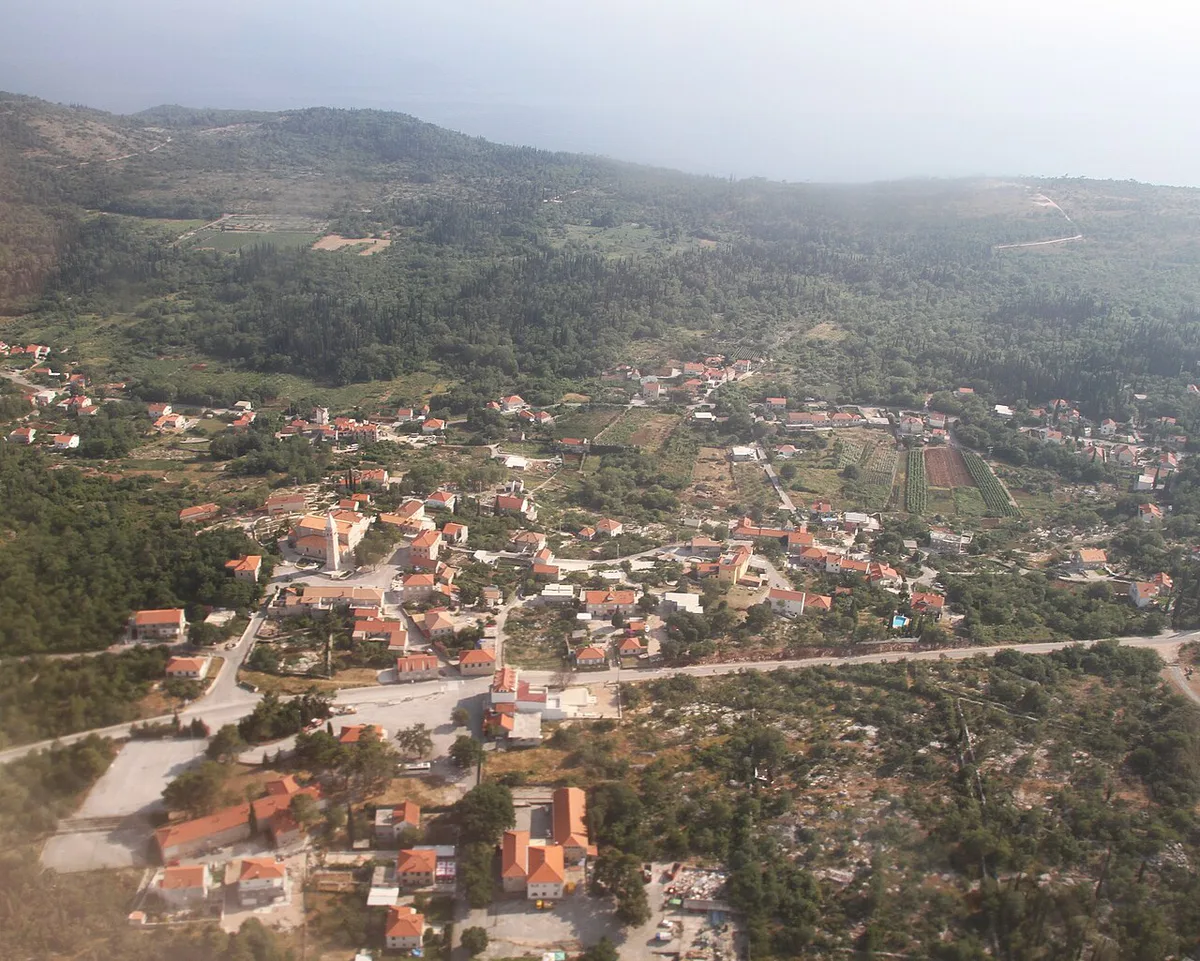
Two Oriental plane trees mark the entrance, on the old market square in Trsteno village. Multiple sources put their age at more than 500 years, with trunks around 5 meters (16 feet) across. Local legend credits one of these trees with blocking Napoleon's forces in 1806, when a fallen limb closed the road for two days and helped force a negotiated truce. Both trees survived the two disasters that reshaped the arboretum. Yugoslav forces shelled and burned much of the site on October 2-3, 1991, during the Siege of Dubrovnik. A second blow came in 2000, when a drought-season forest fire burned roughly 120,000 square meters (about 30 acres) of the grounds.
Across the grounds, the collection totals about 465 plant taxa in 111 families, according to a regional natural sites listing. Mediterranean and European species make up the largest share at 31%, followed by Asian species at 22% and American species at 17%. Collected plants include eucalyptus, Aleppo pine, holm oak, palms, and laurel, gathered over five centuries of trading voyages. Total protected area runs about 64 acres (25.61 hectares), including the Renaissance garden, an olive grove, and stretches of oak, pine, and cypress forest.
Neptune's Fountain anchors the garden's Baroque section, built in 1736 with a carved figure of the sea god flanked by two nymphs. A stone aqueduct, built by 1492, still carries water roughly 70 meters (230 feet) to irrigate the grounds. That system has supplied water for more than five centuries. By historical accounts, it was one of the few regional estates with a dedicated water supply, which made the elaborate gardens possible.
Villa and chapel remnants date to the Gučetić-Gozze family's original 15th-century estate, once a summer retreat for Dubrovnik Republic nobility. Historians describe the estate as a villeggiatura, a rural retreat that combined ornamental gardens with working orchards, mills, and olive presses. Eleven historic structures survive across the property, including the summer villa, olive and wheat mills, storage buildings, the chapel, the fountain, and the aqueduct. The estate passed to the Croatian Academy of Sciences and Arts in 1948, and since 1962 it has carried formal protection as a monument of landscape architecture. Restoration work since the 1990s has stabilized the structures without adding a modern visitor center, so the grounds still read as a working estate rather than a museum.
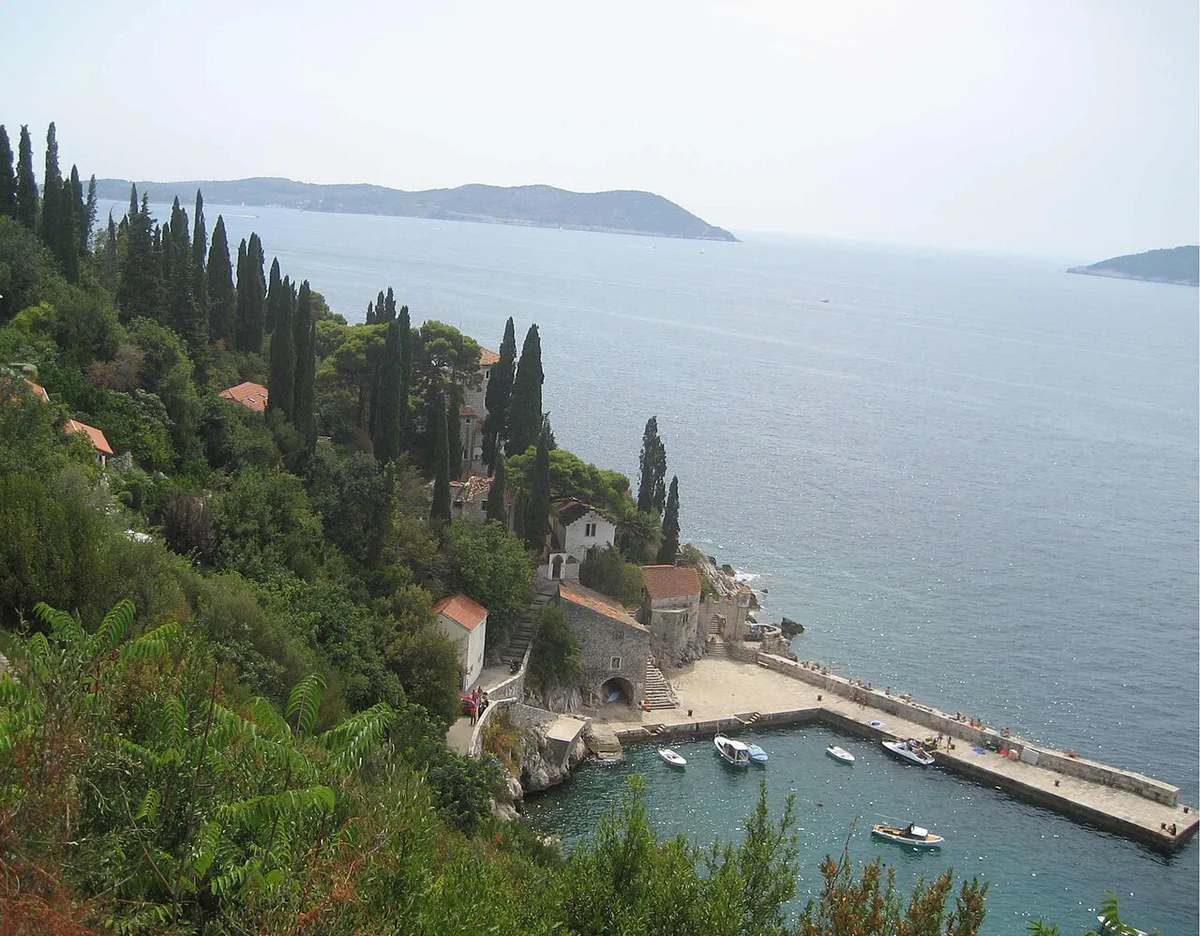
Stone steps drop from the garden's lower terrace to the old Trsteno pier and a small pebble cove. That walk down is steep but short, and it's one of the few places on this stretch of coast where you can swim right after a garden visit. This path connects to a stretch of coastline covered among quiet swimming spots near Dubrovnik.
How to Get There: Bus, Car, or Boat
Libertas Dubrovnik runs public buses from the main bus station in Gruž to a stop named Trsteno. Lines 12, 15, 21, 22, and 35 all serve the route, with a ride time of about 25-30 minutes. Departures can be infrequent outside peak season, so check the current Libertas schedule app before planning your day around a specific bus.
Driving takes about the same 25-30 minutes from Dubrovnik, mostly along the coastal road toward Ston. Parking near the entrance is limited, so arriving early or after the tour-bus wave gives you a better shot at a space. Ride-hailing costs more than the bus fare but noticeably less than a private boat transfer, making it a reasonable middle option for two or more travelers splitting the fare. Coordinate a pickup time with the driver in advance, since Trsteno has no taxi stand.
A third option skips the road entirely. Private boat operators run transfers from Dubrovnik's Old Port directly to the Trsteno pier below the arboretum, and some pair the stop with a wider Elaphiti Islands itinerary. This route suits travelers already booked on an island-hopping trip who want to add the gardens without backtracking to Gruž.
- Bus stop: Trsteno, on the coastal road (request stop)
- Lines: Libertas 12, 15, 21, 22, and 35 from Gruž main bus station
- Ride time: about 25-30 minutes each way
Practical Tips for Your Visit
Timing matters more at Trsteno than at most Dubrovnik stops. Arriving at opening (07:00 in summer, 08:00 in winter) or in the final hour before closing avoids both the heat and the tour-bus groups that arrive mid-morning. On-site food service is limited, so bring water and a snack rather than counting on a cafe. Much of the garden sits under mature tree canopy, but the coastal path down to the pier gets full sun, so pack sunscreen for that stretch. Stone paths throughout the garden are uneven, and the walk down to the pier is steep, so wear closed shoes rather than sandals. Cell signal inside the gardens can be patchy in spots, so screenshot your bus schedule or tickets before you arrive. For group bookings or to confirm current hours, contact the ticket office at Potok 20, Trsteno, phone +385 20 751 019.
As of 2026, published entry prices are per person, with discounts for groups, children, and students. The group rate saves €2.00 per adult ticket and €1.00 per child ticket compared with individual pricing, which matters if you're arriving with a guided tour.
| Ticket type | Price |
|---|---|
| Adult | €10.00 |
| Adult, group / travel agency | €8.00 |
| Children & students | €7.00 |
| Children & students, group | €6.00 |
| War veterans, pensioners, persons with disabilities, Dubrovnik-Neretva students | Free |
Extending Your Day Trip: Nearby Stops
Trsteno sits on the road most travelers use to reach the northern coast, which makes it easy to fold into a longer loop. Boat travelers often continue to the Elaphiti Islands, three inhabited islands reachable by ferry from Dubrovnik's Gruž Port. Ferry times vary by island, so budget your afternoon accordingly.
Early morning arrivals at 08:00 or 09:00 avoid midday crowds and meet ferry schedules for Elaphiti Islands extensions.
Travelers with a rental car often continue west toward Ston, or detour to Vjetrenica Cave, before looping back to Dubrovnik in the afternoon. Altogether, a Trsteno-plus-Elaphiti day covers roughly 20km (12 miles) by road plus additional time on the water, so start by 08:00 or 09:00 to avoid rushing the return ferry.
- Koločep — about 25 minutes by ferry from Gruž Port, the closest of the three.
- Lopud — about 50 minutes by ferry, known for Šunj Beach.
- Šipan — roughly an hour by ferry, the largest and least developed of the three.
Frequently Asked Questions
Is Trsteno Arboretum worth visiting from Dubrovnik?
Yes, for travelers who want a quieter alternative to Old Town's crowds and enjoy garden history or Game of Thrones filming spots. Bus rides run about 25-30 minutes each way, and the grounds reward a two-to-three-hour visit. Lokrum Island is faster to reach if time is tight, but it draws more day-trippers.
How do you get from Dubrovnik to Trsteno Arboretum?
Libertas bus lines 12, 15, 21, 22, and 35 run from the main bus station in Gruž to the Trsteno stop, about 25-30 minutes each way. Driving takes a similar amount of time, though parking near the entrance is limited. Private boat transfers also run from Dubrovnik's Old Port, sometimes combined with an Elaphiti Islands stop.
How much does it cost to enter Trsteno Arboretum?
Published entry prices list adults at €10.00, with a discounted €8.00 group rate for travel agencies. Children and students pay €7.00 individually or €6.00 in a group. Some visitor categories, including Croatian war veterans and residents of Dubrovnik-Neretva County, enter free. Check current pricing at the gate before you go.
Where exactly was Game of Thrones filmed at Trsteno Arboretum?
Sansa Stark meets Lady Olenna and Margaery Tyrell in the pavilion near the villa. Nearby, the pergola and coastal paths served as the wider Red Keep gardens for scenes between Varys and Tyrion. Both spots sit within a short walk of the main entrance.
Can you swim near Trsteno Arboretum?
Yes. Stone steps lead from the lower garden terrace down to the old Trsteno pier and a small pebble cove. It's a steep but short walk, and it works well as a cooldown before heading back to Dubrovnik.
How long should you plan for a Trsteno Arboretum visit?
Budget two to three hours for the grounds themselves, plus travel time. Bus travelers should add roughly 25-30 minutes each way, so a half-day trip is realistic. Photographers and Game of Thrones fans tracking specific filming spots often stay closer to three hours.
Was Trsteno Arboretum damaged during the war?
Yes. Yugoslav forces shelled and burned much of the site on October 2-3, 1991, during the Siege of Dubrovnik, damaging part of the summer villa and the oldest section of the gardens. Fire struck again in 2000, during a regional drought, burning roughly 120,000 square meters (about 30 acres). The two entrance plane trees survived both events undamaged, and restoration work has continued since.
What's the best time of year to visit Trsteno Arboretum?
Summer hours run 07:00 to 19:00 from May to October, giving the widest scheduling window. Winter hours shrink to 08:00-16:00 from November to April, with cooler temperatures and thinner crowds. Late spring and early autumn balance daylight, temperature, and crowd size reasonably well.