
Last updated August 2026, this guide covers hidden gems in Dubrovnik Old Town for travelers ready to move past Stradun. The walled core is compact, so a quiet find is often just one steep stairway from the main promenade rather than a remote discovery. Game of Thrones tourism and cruise-ship crowds concentrate on a few streets, leaving courtyards, cliffside terraces, and a market's early hours mostly to locals.
Why Dubrovnik Old Town Still Hides Quiet Corners
Dubrovnik's popularity rose fast after Game of Thrones filmed scenes throughout the walled city, and cruise-ship volume has stayed high every summer since. Old Town has three gates. Pile Gate sits to the west and handles most day-trip traffic. Ploče Gate sits to the east, closer to Banje Beach. Buža Gate stays quietest of the three and sits closest to the cable car base station. Three timing windows shape a quieter visit. A 7am-to-9am golden window delivers empty alleys and the softest light. Peak cruise hours run roughly 10am to 4pm and are worth avoiding on the main routes. After 8pm, the mood turns mellow again, and side-alley wine bars beat Stradun for a calmer glass. Locals call the physical toll of the northern grid above Prijeko the stair tax, so pack shoes with real grip. Each entry below flags whether stairs, cash, or crowd timing matters most, since those three factors decide how quiet a spot actually stays.
A one-day pass costs about €40, roughly matching standalone City Walls entry (€35), but includes free transit plus a dozen attractions like Franciscan Monastery (€6).
8 Hidden Gems in Dubrovnik Old Town Worth the Extra Steps
This list narrows a citywide roundup to spots inside or just beside the Old Town walls, ranked roughly from easiest to reach toward the most stair-heavy. For neighborhoods farther out, see the broader guide to Dubrovnik's quiet corners.
- Gundulić Square's Morning Market Window
- Vendors sell figs, lavender, and candied orange peel until around 9am, when the mix shifts toward souvenirs aimed at day-trippers.
- Market hours run daily until roughly 1pm, and a midday pigeon-feeding ritual draws a small crowd right as the square's clock strikes noon.
- Arrive before 8am to see how the square actually functions for residents rather than visitors.
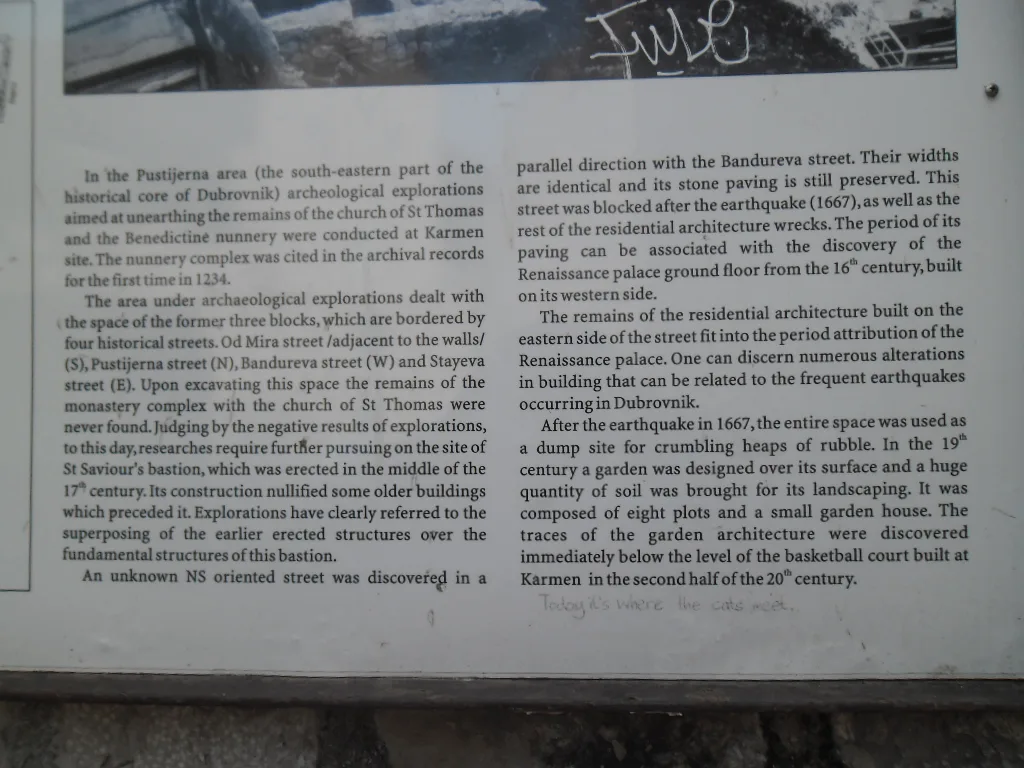
- The Old Town Basketball Court
- Tucked into the northwest corner of the walls, this public court looks straight down over the Adriatic and the terracotta rooftops below.
- Enter from the north Buža Gate, turn right, and follow the wall to the small corner gate that opens onto the court.
- Bring a ball to play, or just take in one of the free views over Old Town's rooftops.
- Jesuit Stairs and the Church of St. Ignatius
- Most visitors know these steps only as a Game of Thrones filming location and skip the church waiting at the top.
- Show up by 7am for empty steps and soft morning light, well before tour groups and photo lines fill in.
- Free to enter, the Church of St. Ignatius holds a Baroque interior that draws only a fraction of the crowd stopping for photos outside.
- Pustijerna's Quiet Backstreets
- Pustijerna sits between the southern walls and the old harbor, one of the quieter residential pockets left inside the Old Town.
- Streets run steep and stepped here, part of the stair tax. Laundry lines stretch across narrow lanes, and few shops interrupt the quiet.
- Expect no crowds beyond the occasional resident heading home.
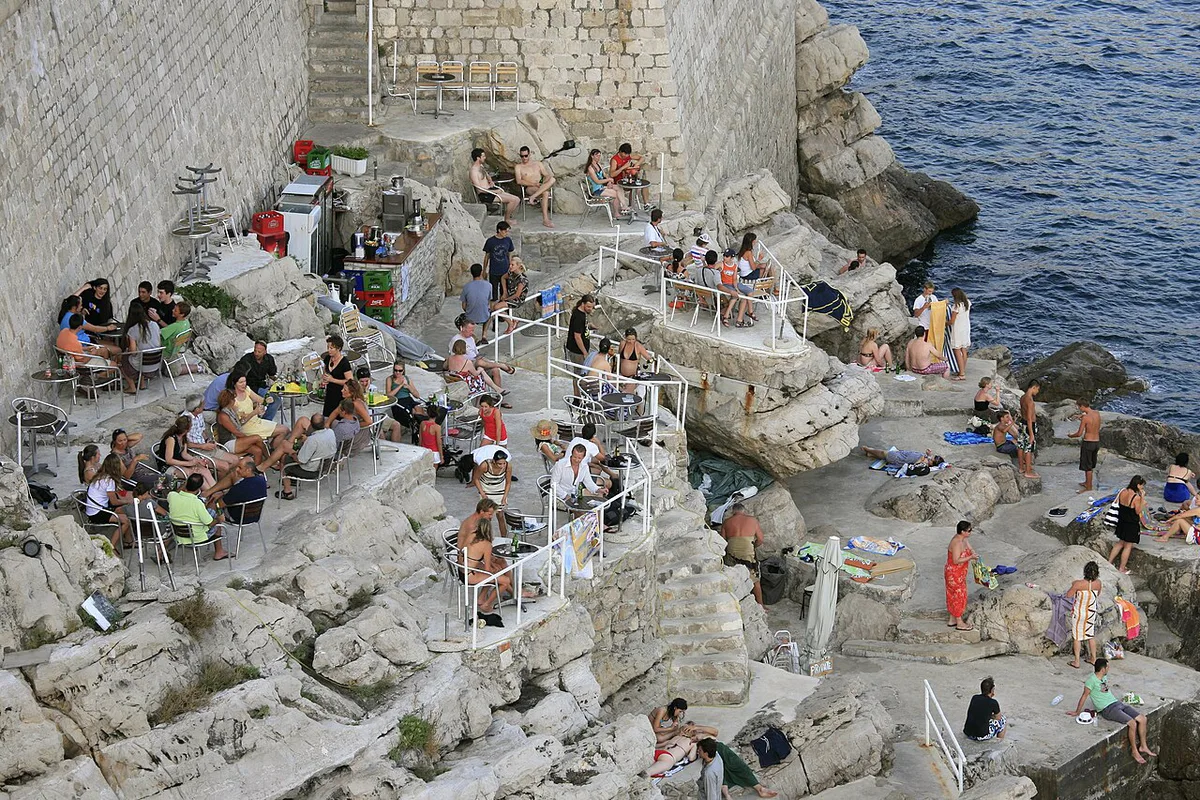
- Buža Bar I and Bard Mala Buža
- Both bars sit through holes cut into the southern sea walls, marked by small signs reading "cold drinks with the most beautiful view."
- Buža Bar I draws a cliff-jumping crowd with a ladder back up from the water; Bard Mala Buža, a short walk further along, stays quieter with rock-terrace seating.
- Cash only applies at both, and drink prices sit higher than inside the walls, since the premium buys the ledge, not the pour.
- Beach Šulić Below Fort Lovrijenac
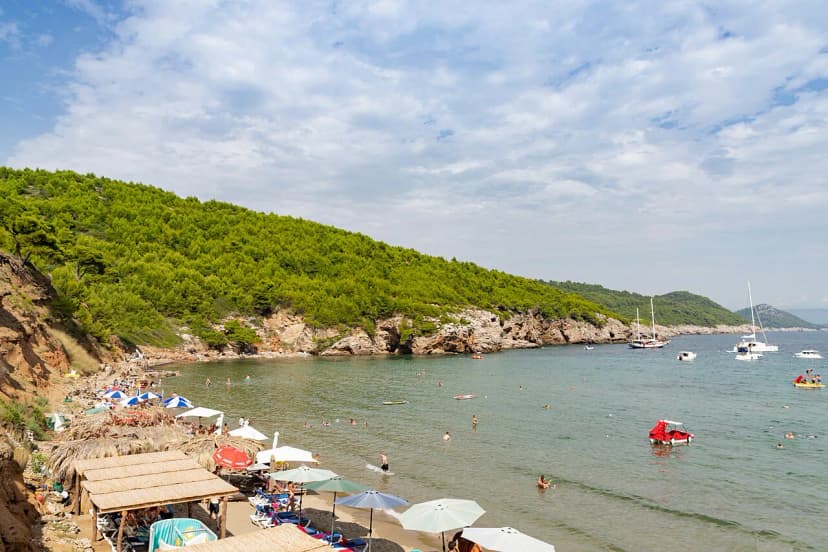
- This rocky cove sits on the Pile side of the walls, below Fort Lovrijenac, and stays calmer than Banje Beach across town.
- Beach Bar Dodo sits just above the water with shaded seating for a drink after swimming.
- For more coves in the same spirit, see this guide to secluded coves near Dubrovnik.
- West Harbour (Pile Bay)
- This inlet between Old Town and Fort Lovrijenac doubled as Blackwater Bay in Game of Thrones and quiets down once tour groups clear out.
- Stone steps cut into the rock let you climb straight into calm water, with no beach club or entry fee involved.
- It sits a five-minute walk from Pile Gate, closer to the gate than either Šulić or Banje.
- Franciscan Monastery Cloister and Pharmacy
- Shaded by a stone-well cloister, this corner of the monastery offers a genuine break from midday heat inside the walls.
- Its attached pharmacy dates to the 14th century, among the oldest still in operation in Europe.
- Individual entry runs around €6, or it comes included with the Dubrovnik Pass; arrive right at opening for the courtyard mostly to yourself.
Gem vs. Tourist Trap: A Quick Decision Matrix
Some Old Town choices come down to which side of one street gets picked. Table comparisons below line up the busiest option against a quieter, similarly close alternative.
| Tourist Circuit Choice | Quieter Alternative | Why It Works |
|---|---|---|
| Stradun waterfront dining | Side-alley bistros like Barba or Lady Pi-Pi | One block off Stradun usually means lower prices for similar fresh seafood. |
| Banje Beach (paid loungers, biggest crowds) | Beach Šulić or the West Harbour steps | Both stay free and quieter, reached by a short walk instead of a boardwalk. |
| Guided Game of Thrones tour | Self-guided location scouting with a mapped list | A guide adds behind-the-scenes context; going solo costs nothing beyond city admission. |
| Buying paid tickets one by one | A one-day Dubrovnik Pass | Separate tickets add up fast once two or more paid sights are visited; the pass covers a dozen attractions and city buses for about €40. |
Beyond the Walls: Quieter Extensions Near Old Town
A 20-minute walk south of the walls reaches the abandoned Hotel Belvedere. This former luxury resort was damaged during the 1990s war and has stood in ruins since. Public access is currently tolerated despite private ownership, but broken glass, unstable floors, and crumbling terraces make caution essential. Stick to open pathways and skip any structure that looks weak. Sveti Jakov's beach access involves roughly 500 steps down from the coastal road, so budget real time and water for the climb back up. Gradac Park sits closer to the walls, a shaded pine grove above the sea near Fort Lovrijenac. Most people rushing toward the City Walls entrance skip it entirely. Fit hikers can skip the Mount Srđ cable car, priced around €27 round-trip. The marked trail up instead reaches the same fortress-topped summit for free. A short ferry from the Old Port reaches Lokrum Island, and the island's botanical gardens and saltwater lake get fuller coverage in a dedicated guide. Lokrum Reserve also publishes current nature-reserve entry details worth checking before a visit. Travelers with three or more days should look at ferry-based day trips to the Elaphiti Islands instead of a single guided boat tour. South of the city, a slower-paced option is the Trsteno Arboretum and Konavle countryside, worth pairing with either island route.
Practical Logistics for Hidden-Gem Hunting
One-day Dubrovnik Passes run about €40, three-day passes about €50, and seven-day passes about €60, based on currently published pass pricing. That covers entry to a dozen major attractions, including the City Walls. It also includes free rides on the city bus network and discounts of 10 to 30 percent at roughly 84 more places. A standalone City Walls ticket costs roughly €35. It earns back that extra €5 once one more paid attraction, such as the Franciscan Monastery Museum or the Rector's Palace, joins the same day. Confirm current City Walls hours and any pricing updates via the Dubrovnik Tourist Board before finalizing a schedule. Cash still rules outside the main streets. Both Buža Bar locations along the southern sea wall accept cash only, and pricing runs higher there than at bars inside the walls. Card readers work fine back on Stradun and at larger restaurants near the Old Port. Onofrio's Fountains near Pile Gate offer free drinking water, worth carrying a bottle for since shade stays limited across most of the routes above. Keep small euro bills on hand for cliffside bars and market stalls, since neither typically accepts cards.
Sponza Palace’s Memorial Room
Sponza Palace on Luža Square is easy to photograph and easy to pass without entering. The early-16th-century building once served as Dubrovnik’s customs house, mint, treasury, and trading center. Its Gothic-Renaissance courtyard is a quiet architectural pause near the busier Old Port and Stradun.
Inside, seek out the Memorial Room of the Defenders of Dubrovnik. It commemorates local people killed defending the city during the 1991–1995 war. Portraits and names give essential context to a city often framed only through medieval history and filming locations.
- Find it beside the Bell Tower, a few minutes from Ploče Gate.
- Visit early or after dinner, when Luža Square is less crowded.
- Keep voices low; this is a memorial space, not a photo stop.
Pair it with a slow look at the palace facade and nearby St. Blaise’s Church. The stop takes little time, but adds depth to an Old Town walk.
Frequently Asked Questions
What counts as a hidden gem in Dubrovnik Old Town?
In a walled core this compact, a quiet find is usually a spot one street or one stairway off Stradun rather than somewhere remote. The Jesuit Stairs' church interior, the Pustijerna backstreets, and the Old Town basketball court all qualify since most day-trippers walk right past them.
When is the best time to see Dubrovnik Old Town without crowds?
Arrive between 7am and 9am for the emptiest streets and the softest light, before cruise-ship groups fill the main routes around 10am. Crowds generally thin by late afternoon, and the town turns mellow again after 8pm, when side-alley wine bars beat Stradun for a calmer glass.
Is the Dubrovnik Pass worth buying?
It depends on how many paid sights fit into the itinerary. A one-day pass costs about €40 against a standalone City Walls ticket at roughly €35. It earns back that extra cost once one more paid attraction, such as the Franciscan Monastery Museum, joins the same day.
Are the abandoned Hotel Belvedere ruins safe to visit?
Technically private but treated as open to public access, the site carries real hazards from broken glass, unstable floors, and crumbling terraces. Stick to open pathways, avoid weak-looking structures, and treat any visit as at your own risk.
Where can travelers swim near Old Town without the Banje Beach crowds?
Beach Šulić, below Fort Lovrijenac on the Pile side, and the West Harbour steps near Pile Gate both offer calmer water within a five- to ten-minute walk of the walls. Croatian law keeps all coastline public, so neither spot charges an entry fee.
Is the City Walls walk still worth the ticket price?
Yes — the walls remain the clearest way to understand the city's layout, and a standalone ticket runs roughly €35 per adult. Walking right at opening avoids both the heat and the thickest crowds on the narrower stretches.
How much time should travelers plan for exploring beyond the main sights?
Old Town's quieter corners fit into a single extra half-day beyond the main sights. Pairing them with a Lokrum or Elaphiti ferry trip is easier with three full days in the city, a pace many first-time visitors find comfortable for Dubrovnik overall.