Last updated August 2026. Most searches for lokrum island hidden gems start at the Old Town's harbor, where a short ferry crosses to a forested nature reserve. Cruise-ship crowds mostly skip it, so the saltwater lake, ruined monastery, and hilltop fort stay quiet even in August.
Why Lokrum Island's Hidden Gems Are Worth the Ferry Ride
Lokrum Island is worth visiting if you want quiet nature within a 15-minute ferry ride of Dubrovnik's Old Town. Most day-trippers photograph the Iron Throne replica near the dock and leave. Its interior holds a saltwater lake, a ruined monastery, and a hilltop fort most visitors never reach. Escaping the crowds is easier once you're aboard the boat than while dodging tour groups through the Old Town's quieter alleys. This short crossing means you can be standing at the Dead Sea by mid-morning without giving up an afternoon in the Old Town. None of the six spots below require a guide or a booked tour, just a ferry ticket and a decent pair of shoes. For a broader list of low-key spots across the city, the quiet corners across Dubrovnik guide covers this island alongside inland options.
6 Hidden Gems on Lokrum Island You Shouldn't Miss
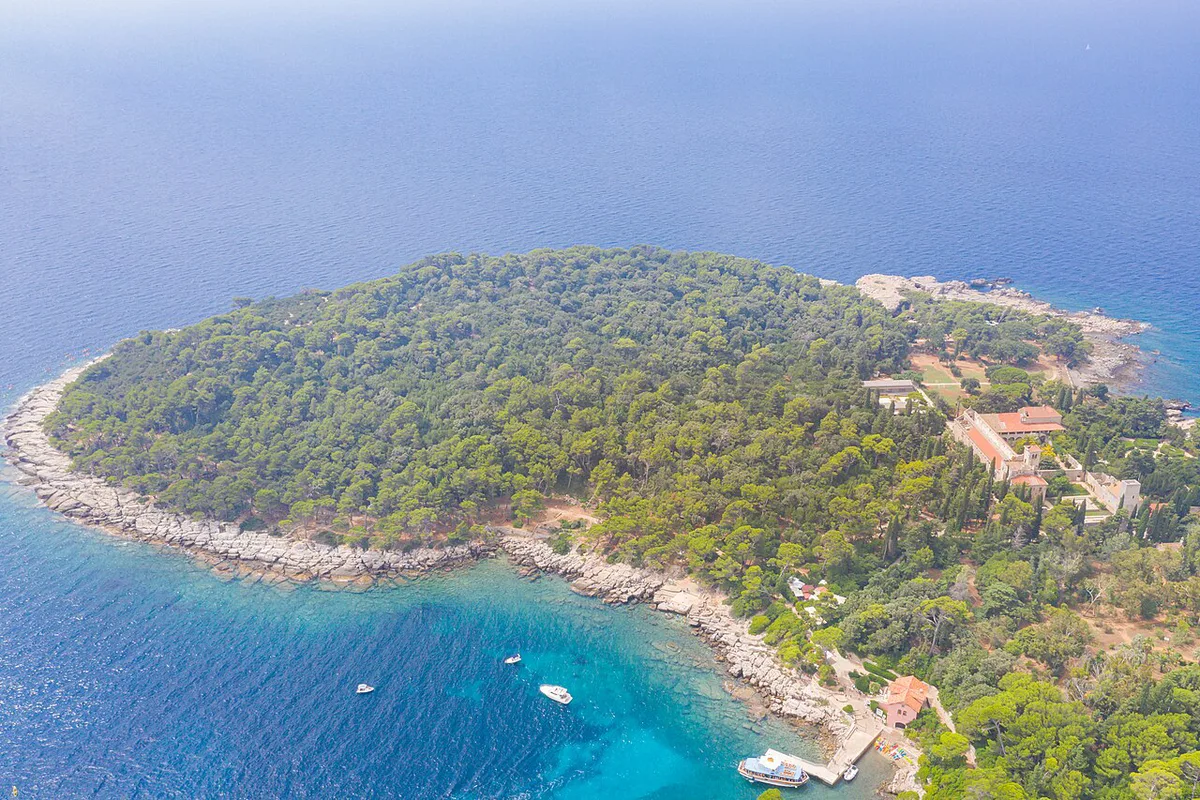
These six spots move beyond the dock-side photo op and into the parts of Lokrum most ferry-loads skip entirely. Free-roaming peacocks and rabbits, descendants of birds brought from the Canary Islands, wander the same paths, per the Lokrum Reserve.
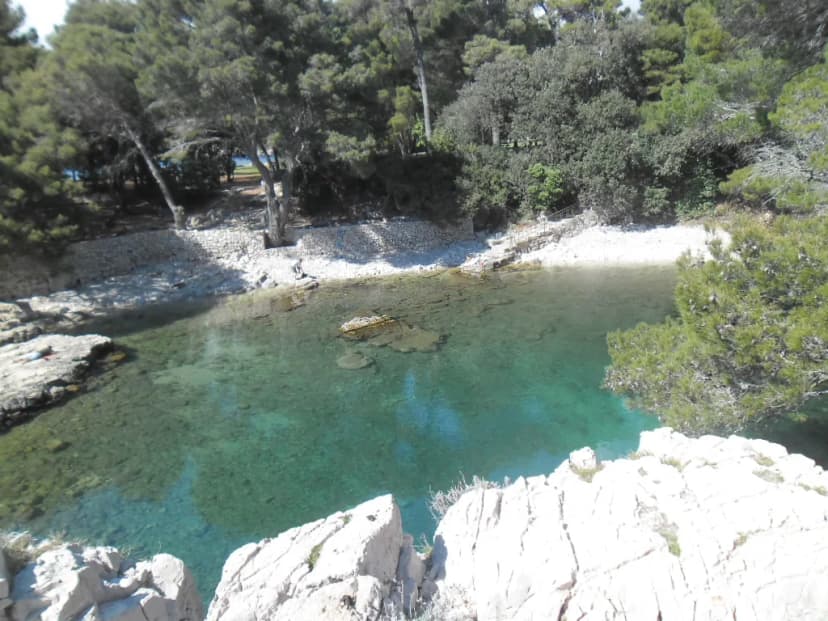
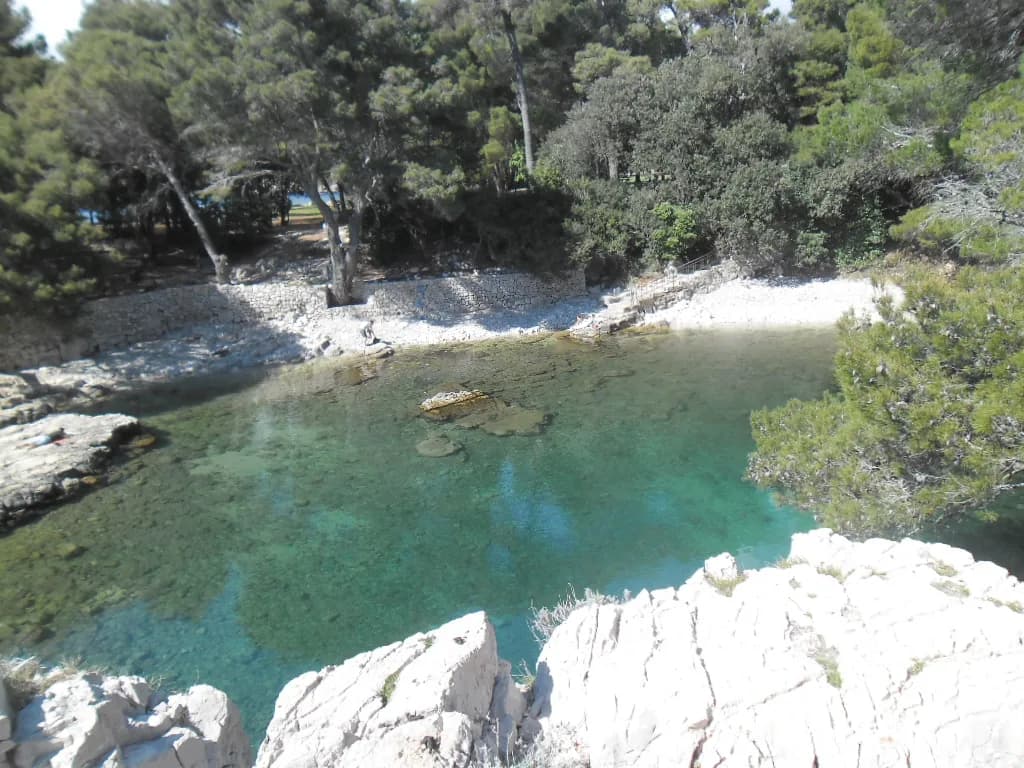
- The Dead Sea (Mrtvo More) and Its Hidden Sea Cave
- Mrtvo More, the inland saltwater lake, formed when tectonic shifts and erosion carved a basin that slowly filled with seawater, per the Lokrum Reserve.
- The lake runs about 30 feet deep, stays calm, and its metal ladders make entry easy for swimmers with limited mobility.
- A shallow sea cave connects to the lake, open to strong swimmers willing to cross jagged rock rather than sand. For a sandier alternative, see the guide to sandier coves near Dubrovnik.
- The Benedictine Monastery Ruins and Cloister Garden
- The monastery complex includes basilica remains from the 12th and 13th centuries and a cloister garden added in the 15th and 16th centuries.
- Legend also ties Lokrum to King Richard the Lionheart, said to have been shipwrecked near the island in the 12th century.
- Game of Thrones fans will recognize the cloister as the city of Qarth, and the show's Iron Throne prop sits free to view in the island's visitor center.
- The Path of Paradise Hike to Fort Royal
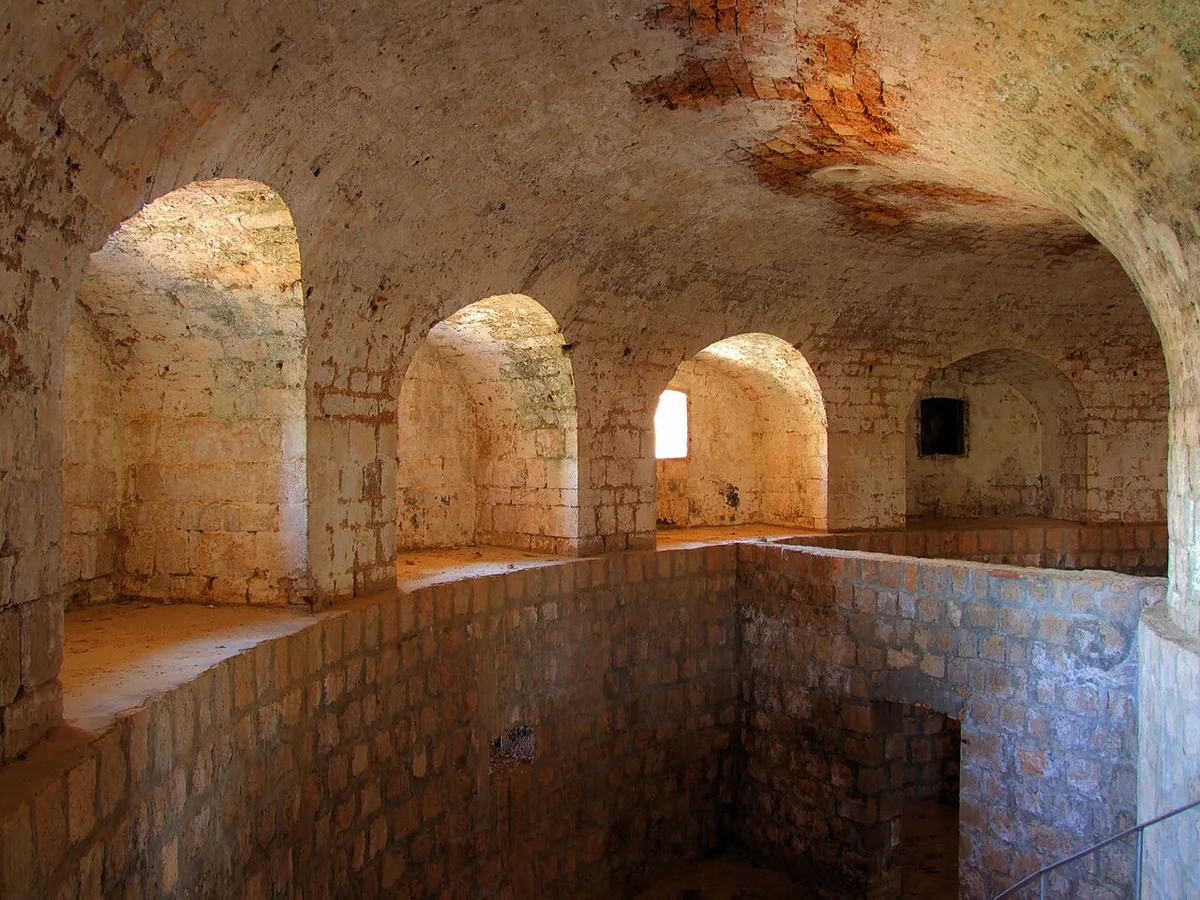
- A cypress-lined trail called the Path of Paradise climbs from the monastery area to Fort Royal, the island's highest point.
- French forces began building Fort Royal in 1806 and finished it around 1835. The interior is small, but entry is free.
- From the ramparts you can see Dubrovnik's city walls and the Adriatic stretching past the harbor, one of the best framings of the Old Town skyline.
- The Botanical Garden's 800-Species Collection
- Established in 1959, the botanical garden holds more than 800 plant species gathered from climates around the world.
- A dense stand of cacti and other succulents forms the garden's most photographed corner.
- Gardeners at the Trsteno Arboretum work on a larger scale inland, so pair the two day trips if gardens are the draw.
- The Cross of Triton Memorial
- A stone cross on the island's grounds memorializes sailors from the Austrian warship Triton who died in service.
- Group tours rarely stop here, which makes it one of the quietest corners on an island that draws day-trippers by the ferry-load in peak summer.
- The memorial ties Lokrum's history to 19th-century Austrian naval losses, a quieter counterpoint to the island's Game of Thrones fame.
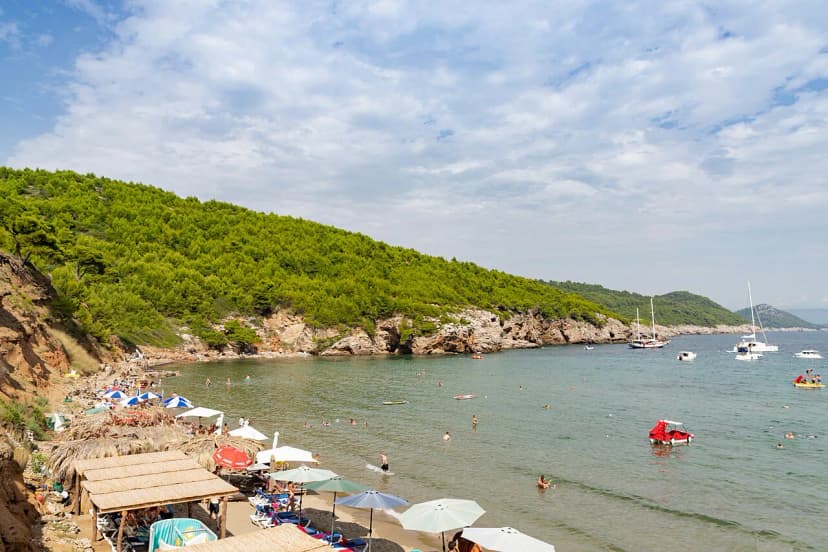
- The Unmarked Nudist Beach on the Southeast Shore
- A clothing-optional beach sits on the island's southeast side, reached by a marked side trail away from the main paths.
- Signage marks the approach clearly, so families sticking to the main trails will not stumble onto it by accident.
- The same nature reserve admission ticket covers this stretch of coastline, so there's no separate fee to swim here instead of at the Dead Sea.
The Curse Legend: Why No One Stays Overnight on Lokrum
Local legend says Benedictine monks placed a curse on Lokrum when they were forced to leave. The curse warns that anyone who tries to privately own the island will meet misfortune. Archduke Maximilian Ferdinand bought the island anyway and funded a church and monastery there. The story has followed Lokrum ever since. Older ruins on the island include a 19th-century quarantine hospital and disused water reservoirs, both far less visited than the monastery. Whatever you make of the folklore, the practical rule behind it is real. The island closes to visitors at dusk, and the ferry operator enforces a firm last-departure schedule. No accommodations exist on Lokrum, so missing the final boat means a long wait on the dock, not a night among the ruins.
Getting to Lokrum Island from Dubrovnik's Old Port
Ferries to Lokrum leave from the Old Port (Porat) inside Dubrovnik's Old Town walls, not from the modern harbor that handles cruise ships and long-distance ferries. This is the same harbor the Dubrovnik Tourist Board lists as the departure point for the short crossing to the island. Boats run roughly every 30 minutes in peak season, and the crossing itself takes about 15 minutes. Buy tickets online in advance or at the Old Port kiosk, ideally arriving at least 15 minutes before your chosen departure to avoid a sold-out sailing. Croatia switched its currency to the euro in 2023. Current fares are quoted in euros, not the kuna prices you may still see on older blogs. Check the Lokrum Reserve site for the day's ferry-and-admission combo price before you go, since the ticket usually bundles entrance to the nature reserve. Dubrovnik Card holders have historically received a discount on that combo ticket, though it's worth confirming current terms. Independent kayak rentals also reach the island for travelers comfortable navigating the short strait themselves, though most visitors book a guided tour instead. Paddling over by kayak costs more and takes real effort. It trades the fixed ferry schedule for a route along the coastline at your own pace.
| Option | Travel Time | Cost | Effort |
|---|---|---|---|
| Ferry from the Old Port | About 15 minutes each way; boats roughly every 30 minutes in peak season | Ticket price bundles the nature reserve admission fee | Low - just a seat on the boat |
| Guided sea kayak tour | Longer, with paddling time along the coastline | Higher than the ferry ticket since it includes a guide | High - a real workout across open water |
Lokrum vs. the City Walls: Go or Skip With Limited Time
With less than 48 hours in Dubrovnik, the City Walls and Old Town streets deliver more of what the destination is known for. Lokrum can wait for a return trip. With two to three days, a half-day on Lokrum fits well after an early walk on the Walls. Catching the first ferry before cruise groups arrive makes the difference. Travelers with three or more days have room for a full day on the island plus a second boat trip. The Elaphiti Islands are the natural next stop for more time on the water. Cruise-ship days at the Old Port can mean longer lines for the Lokrum ferry, so build in extra buffer time when a ship is in dock.
| Time in Dubrovnik | Recommendation |
|---|---|
| Under 48 hours | Prioritize the City Walls and Old Town; save Lokrum for a return trip |
| 48-72 hours | Add a half-day on Lokrum via the first ferry, after an early walk on the Walls |
| 3+ days | Take a full day on Lokrum and pair it with a second island outing |
Planning Your Visit: Timing, Packing, and Food
Arriving on the first ferry of the day beats both the midsummer heat and the cruise-ship crowds at the Dead Sea. By midmorning in peak season, the lake area fills in fast. That calm water turns crowded within an hour once midmorning arrives. Pack water shoes or reef sandals, since every swimming spot on Lokrum is rock rather than sand. Sunscreen matters too, because most of the walking trails and the Dead Sea area offer little shade. Lokrum has a handful of restaurants and cafés, roughly three or four in total, clustered near the ferry dock and the Dead Sea. Prices there run higher than in Dubrovnik's Old Town, so a light picnic is the better-value option for a full day.
With ferries departing roughly every 30 minutes in peak season, timing an early arrival becomes straightforward for beating midsummer heat and cruise crowds.
- Water shoes or reef sandals
- Every swimming spot on Lokrum is rock, and entry points can be sharp underfoot.
- Reef-safe sunscreen
- Shade is limited along the trails and around the Dead Sea.
- A refillable water bottle
- Fill it before boarding, since island prices run higher than in the Old Town.
- Cash or a card
- You'll need it for the ferry-and-admission ticket and any café stop on the island.
Mistakes to Avoid on Lokrum Island
A few avoidable mistakes turn a good half-day trip into a stressful one.
- Missing the Last Ferry Back
- The return schedule is enforced strictly, and Lokrum has no overnight accommodations for stranded visitors.
- Confirm the day's final departure time at the Old Port ticket booth rather than trusting a schedule from a previous season.
- Cell coverage on the island is patchy, so don't count on calling for a later pickup.
- Skipping Water Shoes
- None of Lokrum's swimming spots have sand, and entry points are jagged limestone and dolomite rock.
- The metal ladders at the Dead Sea help, but bare feet still catch on the rock nearby.
- Sun-heated rock near midday gives you one more reason to pack them.
- Expecting a Sandy Beach
- Every shoreline on the island is rock, formed from limestone and dolomite deposits laid down roughly 85 million years ago.
- Travelers who want sand should plan that swim elsewhere along the coast rather than on Lokrum.
- Sunbathing still works fine on the flat rocks near the dock, just not on sand.
Frequently Asked Questions
Is Lokrum Island worth visiting?
Lokrum is worth visiting if you want a quiet nature break within a short ferry ride of Dubrovnik's Old Town. With fewer than 48 hours in the city, prioritize the City Walls first and treat Lokrum as a bonus rather than a must-do.
How do you get from Dubrovnik to Lokrum Island?
Ferries leave from the Old Port inside Dubrovnik's Old Town walls, not from the modern cruise terminal outside the Old Town. Boats run roughly every 30 minutes in peak season, and the crossing takes about 15 minutes.
Is there an entrance fee if you kayak to Lokrum?
As a nature reserve, Lokrum charges admission no matter how you arrive. Ferry tickets typically bundle that fee into the ticket price. Travelers arriving independently by kayak should expect to pay admission separately at the entrance point. Confirm current terms with the Lokrum Reserve before you paddle out.
How much time do you need on Lokrum Island?
A half-day covers the main sights if you move directly between the Dead Sea, the monastery ruins, and Fort Royal. A full day gives room to add the botanical garden, a swim break, and time at a café, especially on the first ferry of the morning.
Do peacocks and rabbits really roam freely on Lokrum?
Yes, free-roaming peacocks and rabbits live across the island, and the peacocks are said to be descendants of birds brought over from the Canary Islands. Keep a respectful distance and avoid feeding them, since they are wild animals in a protected reserve.
When is the best time of year to visit Lokrum Island?
Lokrum suits a visit any time the ferry operates, but the warmer months from May through September give the best swimming conditions. Outside that window, expect a quieter island with cooler water and fewer open cafés.
What should you know about swimming in the Dead Sea on Lokrum?
This saltwater lake is calmer than the open Adriatic, and its high salt content makes floating easier than swimming laps. Metal ladders help at the rocky entry points, and the attached sea cave suits only confident swimmers.