
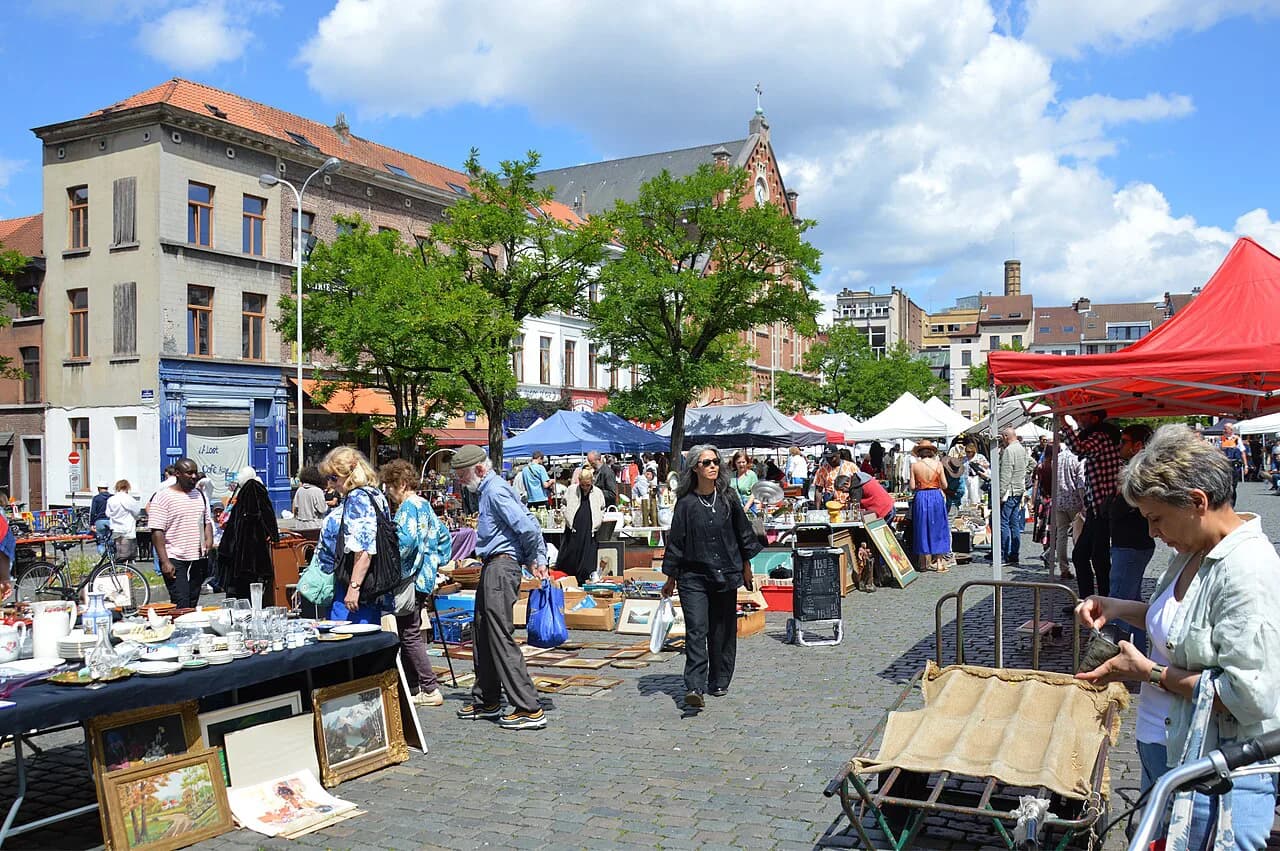
Last updated August 2026, this guide narrows hidden gems in the Marolles, Brussels down to seven walkable, verified picks in one neighborhood. Marollen, the old working-class quarter, centers on the daily antiques market at Place du Jeu de Balle. The walk also passes a Gothic church, a free rooftop viewpoint, and a local restaurant, all within reach on foot.
Where the Marolles Sits, and How to Reach It
The Marolles (Marollen in Dutch) is a historic, working-class quarter just south of Brussels' Grand-Place. It sits between the Palais de Justice on the hill above and Gare du Midi below. Brussels' official tourism site, Visit Brussels, lists it among the city's oldest, most distinctly local neighborhoods. Where central Brussels runs on chocolate shops and souvenir stores, the Marolles runs on secondhand furniture and dealer folding tables instead. The pace here stays slower and more workaday than the tourist core. Street signs throughout the neighborhood appear in both French and Dutch, reflecting Brussels' bilingual status, so either language works for navigation. This walk suits travelers who have already covered the Grand-Place and Manneken Pis loop and want a quieter, less commercial side of the city. Weekday visits favor quieter shop browsing, while weekend mornings bring the market to its fullest and liveliest state.
From Gare du Midi, the 10 to 15-minute walk arrives at the market square first; that placement optimizes the route when carrying luggage.
- On foot from Grand-Place
- About a 15-minute walk south, mostly downhill toward the market square.
- On foot from Gare du Midi
- About a 10 to 15-minute walk from Brussels' Eurostar and Thalys hub.
- By public transit
- Check STIB/MIVB's journey planner for the current tram, bus, or metro routes serving the district's edges.
Why the Marolles Became Brussels' Antiques Quarter
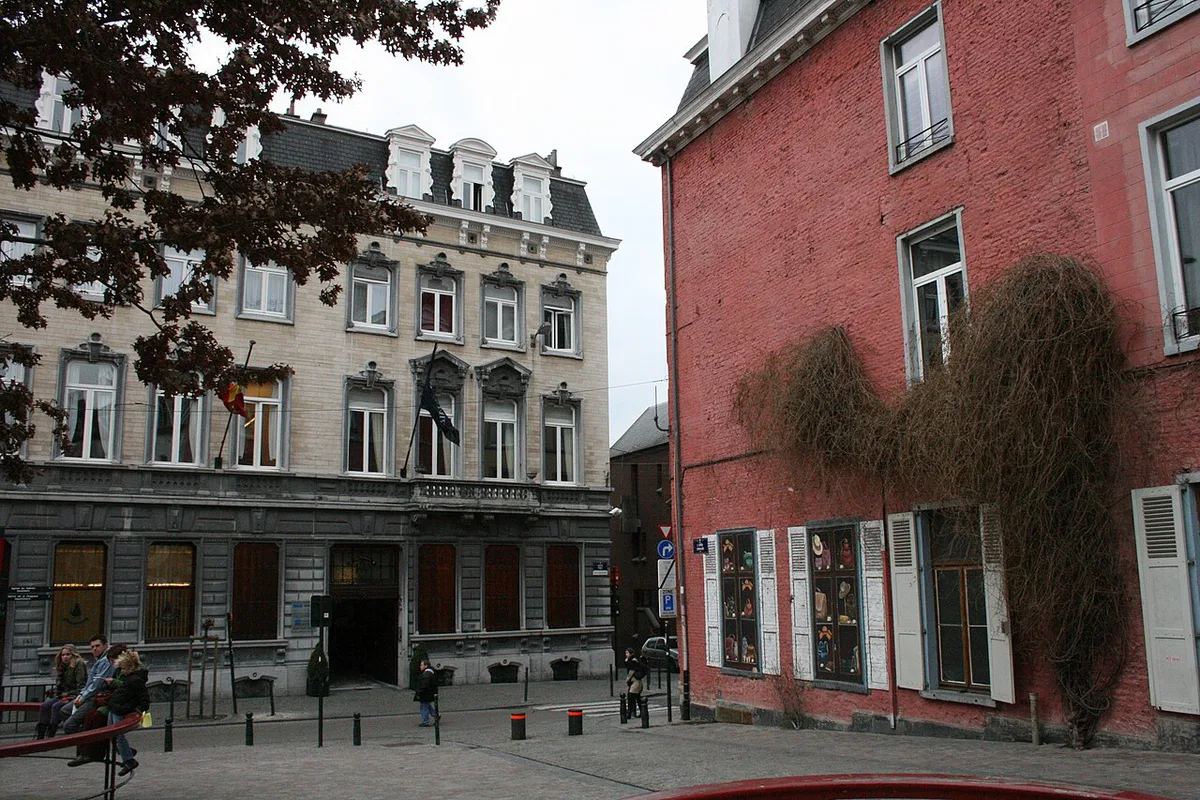
The neighborhood's antique-dealing habit ties to its working-class history and its long friction with the institutions built above it. Architect Joseph Poelaert's 19th-century Palais de Justice project demolished part of the Marolles and displaced residents. That grievance survives locally in the phrase schieve architek, roughly crooked architect in the Marollien dialect. This history helps explain why the neighborhood kept its own secondhand economy instead of following central Brussels toward tourism and retail chains. Rents in some surrounding blocks have risen in recent years, adding pressure on smaller antique dealers who still work the market. Some stalls are said to be run by the same families for generations, though turnover varies year to year. Even so, the market and the shopping streets around it remain the most reliable way to see the neighborhood's original character firsthand.
7 Hidden Gems in the Marolles, Brussels
These seven picks follow a walkable route through the neighborhood, starting at the market square and moving outward. Each one explains why it counts as a hidden gem next to Brussels' obvious sights, plus how to reach it, when to go, and what it costs.
- Place du Jeu de Balle Flea Market
- This square hosts Brussels' longest-running daily flea market, where dealers sell antiques, secondhand furniture, and bric-a-brac rather than souvenirs.
- Mornings bring the most stock, and Thursdays, Saturdays, and Sundays are traditionally the busiest days to browse.
- Browsing costs nothing, and haggling directly with sellers is standard practice on this square.
- Rue Haute and Rue Blaes
- These two parallel streets frame the market square and hold most of the neighborhood's permanent antique and vintage shops.
- Unlike the market's folding tables, these storefronts open on non-market days too, so they work well as a backup plan.
- Entry is free, and a relaxed walk covering both streets fits into roughly an hour.
- Rue des Renards
- A quieter side street off the main square, lined with smaller antique dealers and secondhand booksellers.
- It sees noticeably less foot traffic than Rue Haute, which suits travelers who prefer browsing without crowds.
- Free to walk; shops generally keep standard shopkeeper hours, so a weekday visit tends to be more reliable than early mornings.
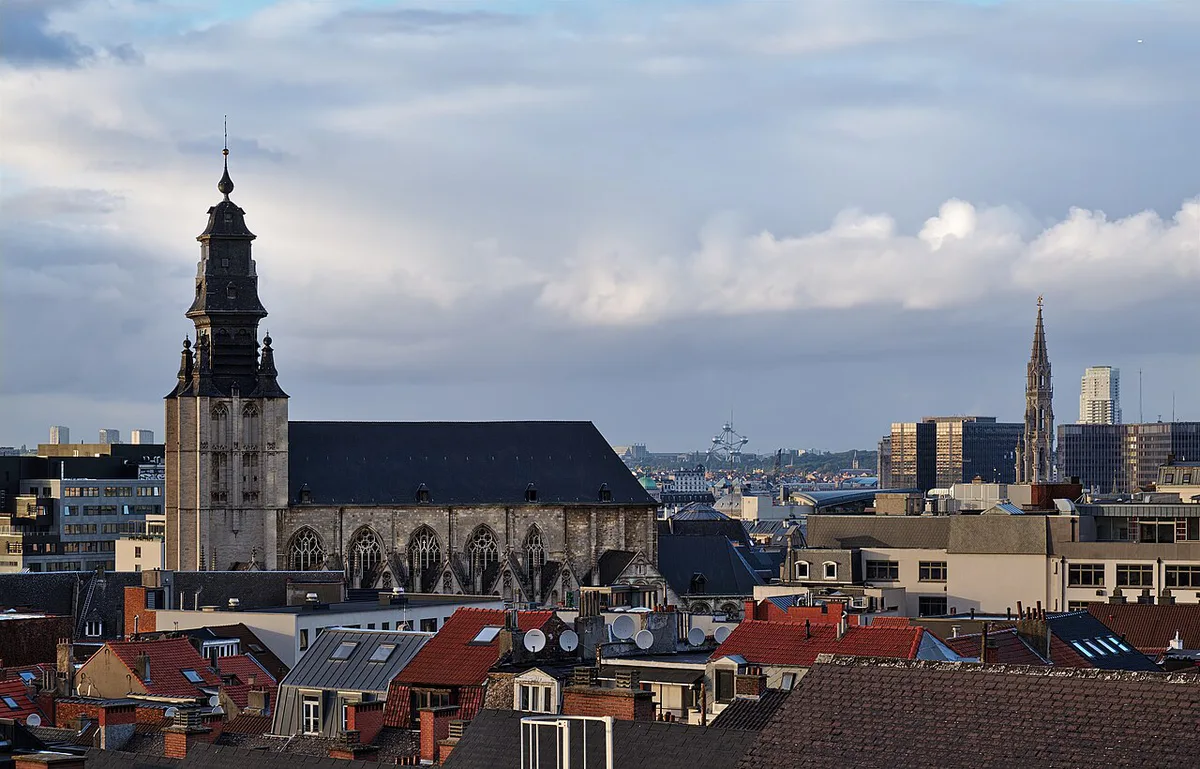
- Notre-Dame de la Chapelle
- This Gothic church marks the historic edge of the Marolles and holds the tomb of painter Pieter Bruegel the Elder.
- It draws a fraction of the visitors that Brussels' Cathedral of St. Michael and St. Gudula sees in the city center.
- Entry is typically free during open hours; confirm the posted schedule before visiting, since parish hours can vary.
- The Free Viewpoint Near Place Poelaert
- A public staircase and elevator connect the Marolles to Place Poelaert, next to the Palais de Justice above the neighborhood.
- The top delivers a free, rooftop-level view over the Marolles and the wider Brussels skyline, without a ticket line.
- For more panoramic spots and offbeat museums citywide, the offbeat museums and viewpoints guide rounds up further options.
- Volle Gas
- A longstanding neighborhood restaurant serving traditional Bruxellois dishes like stoemp and meatballs, rather than tourist-menu fare near Grand-Place.
- It draws a mostly local crowd, especially in the evening after the market stalls pack up for the day.
- Expect standard sit-down-restaurant pricing, and confirm current hours directly before visiting, since neighborhood spots can change.
- Cantillon Brewery
- Cantillon sits just outside the Marolles proper, in neighboring Anderlecht, roughly a 15 to 20-minute walk from the flea-market square.
- It remains one of the few traditional lambic breweries still brewing inside Brussels, a detail the market-and-antiques crowd often misses.
- For full logistics, hours, and tasting details, see the dedicated Cantillon brewery guide.
Half-Day or Full-Day: What to Prioritize
A half-day, roughly three hours, covers the flea market, the two main shopping streets, and the viewpoint near Place Poelaert at a relaxed pace. A full day adds Notre-Dame de la Chapelle and Rue des Renards to that route. It also adds a sit-down meal at Volle Gas and the walk out to Cantillon Brewery. Travelers arriving at Gare du Midi with luggage should start at the market square, since it sits closest to the station, before adding the uphill picks later. Travelers with only an hour or two should focus on the market square and Rue Haute, since together they capture most of the neighborhood's identity. Because the flea market sits outdoors, rain thins both the dealers and the crowds, so a dry forecast is worth checking before an early start. Either plan leaves room for a coffee stop along Rue Haute without disrupting the overall route.
Cantillon Brewery sits a 15 to 20-minute walk from the market square and works as a full-day add-on, not a half-day priority.
| Time Frame | Recommended Stops |
|---|---|
| 1–2 hours | Market square, Rue Haute |
| Half-day (~3 hours) | Flea market, Rue Haute, Rue Blaes, viewpoint near Place Poelaert |
| Full day | Add Notre-Dame de la Chapelle, Rue des Renards, meal at Volle Gas, Cantillon Brewery (15–20 minute walk) |
Costs, Accessibility, and Where Else to Look
Most of the neighborhood is a free wander, and the flea market itself costs nothing beyond what travelers choose to buy. A restaurant meal at Volle Gas typically costs less than a comparable sit-down meal near Grand-Place, since Marolles pricing follows the neighborhood's working-class character rather than tourist-district rates. Check Volle Gas's own contact details directly for current menu pricing before visiting, since restaurant costs shift year to year. None of the picks on this list require booking ahead or an entry ticket. Cobblestones run throughout the neighborhood, with a steady uphill slope toward the Palais de Justice. Wheelchair or stroller users should take the public elevator near Place Poelaert instead of the adjoining stairs. Total spending for a full day, including a meal and a few market purchases, depends mostly on personal choices rather than fixed neighborhood pricing. Central Brussels also holds the Musical Instruments Museum, a favorite for travelers chasing the offbeat-museum angle beyond this neighborhood. A separate guide covers the city's Art Nouveau discoveries, most of which sit outside the Marolles. Many, including the Horta Museum, sit in Saint-Gilles instead. Dieweg Cemetery is a separate excursion in Uccle, not a same-walk pairing. The Dieweg Cemetery guide has the full logistics. For picks across the rest of the city, the citywide hidden gems guide rounds out the list. Travelers extending the trip north can pair this walk with the Bruges day-trip guide for a similarly walkable day.
Market Etiquette and Practical Tips for the Marolles
Many stalls at Place du Jeu de Balle prefer cash, so carrying small bills makes transactions easier. Bargaining is expected and normal, and dealers generally respond better to a reasonable counteroffer than a lowball one. Ask before photographing a dealer's stall closely, since some sellers consider their goods personal property rather than a backdrop. Reusable bags or a foldable tote help for carrying market finds back to a hotel, since most stalls don't provide packaging. Arrive earlier in the morning for a specific type of item, like vinyl records or vintage glassware. Professional dealers often buy the best pieces first, before casual browsers arrive. Weekday mornings tend to have less competition from other buyers than weekend mornings.
Jardin des Ursulines for a Quiet Local Pause
Jardin des Ursulines adds a quieter counterpoint to the dealer tables and busy antique streets. This public park sits on the upper, eastern side of the Marolles, around a five-minute walk northeast of Place du Jeu de Balle. Terraced grass, mature trees, benches, and views across the surrounding rooftops make it a useful pause between the market and Notre-Dame de la Chapelle.
The park also includes a well-used skate area and sports space. That gives it a more everyday atmosphere than Brussels’ formal central gardens. Entry is free, and it suits travelers who want to see residents using the neighborhood rather than only browsing its shops. Visit in daylight, then continue downhill toward the flea market or uphill toward the Place Poelaert viewpoint. The paths and nearby streets can be uneven, so allow extra time if cobblestones or slopes are difficult.
Frequently Asked Questions
What is the best time to visit the Marolles in Brussels?
Mornings suit the neighborhood best, since trading at Place du Jeu de Balle is liveliest early in the day. Thursdays, Saturdays, and Sundays are traditionally the busiest market days, while weekday afternoons favor quiet browsing in the fixed antique shops. Confirm the market's current schedule locally before planning an early start, since flea-market hours can shift.
How does the Marolles differ from central, touristy Brussels?
Central Brussels around Grand-Place runs on chocolate shops, waffle stands, and souvenir stores built for day-trippers. The Marolles instead runs on secondhand furniture, antique-dealer stalls, and a working-class history that shaped the neighborhood's identity long before tourism arrived. Prices and foot traffic both tend to feel lower here than near the main tourist core.
How much time should you plan for the Marolles' hidden gems?
A half-day, roughly three hours, covers the flea market, the two main shopping streets, and the viewpoint near Place Poelaert. A full day adds Notre-Dame de la Chapelle and Rue des Renards to that route. It also adds a sit-down meal and the walk out to Cantillon Brewery.
Is the Marolles walkable, and are there accessibility concerns?
Yes, every pick on this list sits within comfortable walking distance of Place du Jeu de Balle. Cobblestones and a steady uphill slope toward the Palais de Justice are the main physical challenges. Anyone using a wheelchair or stroller should take the public elevator near Place Poelaert instead of the nearby staircase.
Can you pair a Marolles walk with other Brussels sights?
Cantillon Brewery works as a same-day add-on, since it sits a short walk away in neighboring Anderlecht. Dieweg Cemetery, by contrast, is a separate excursion in Uccle rather than a same-walk pairing. Art Nouveau architecture and other offbeat museums also sit elsewhere in Brussels, best treated as separate itineraries.
What kinds of things can you find at the Place du Jeu de Balle market?
Expect secondhand furniture and vintage glassware at most stalls. Old vinyl records and general household bric-a-brac turn up often too, rather than curated antiques. Serious collectors tend to arrive early, since professional dealers often buy the best pieces from casual sellers before the morning crowds build. Prices are negotiable, and quality varies stall to stall, so budget time to browse rather than expecting guaranteed finds.
Do any of these Marolles spots require advance booking or tickets?
No advance booking applies to the flea market, the church, or the viewpoint near Place Poelaert. Volle Gas is the one stop where calling ahead can help, especially for a larger group or a weekend dinner slot. Confirm its current contact details and hours directly, since restaurant information can change.


