
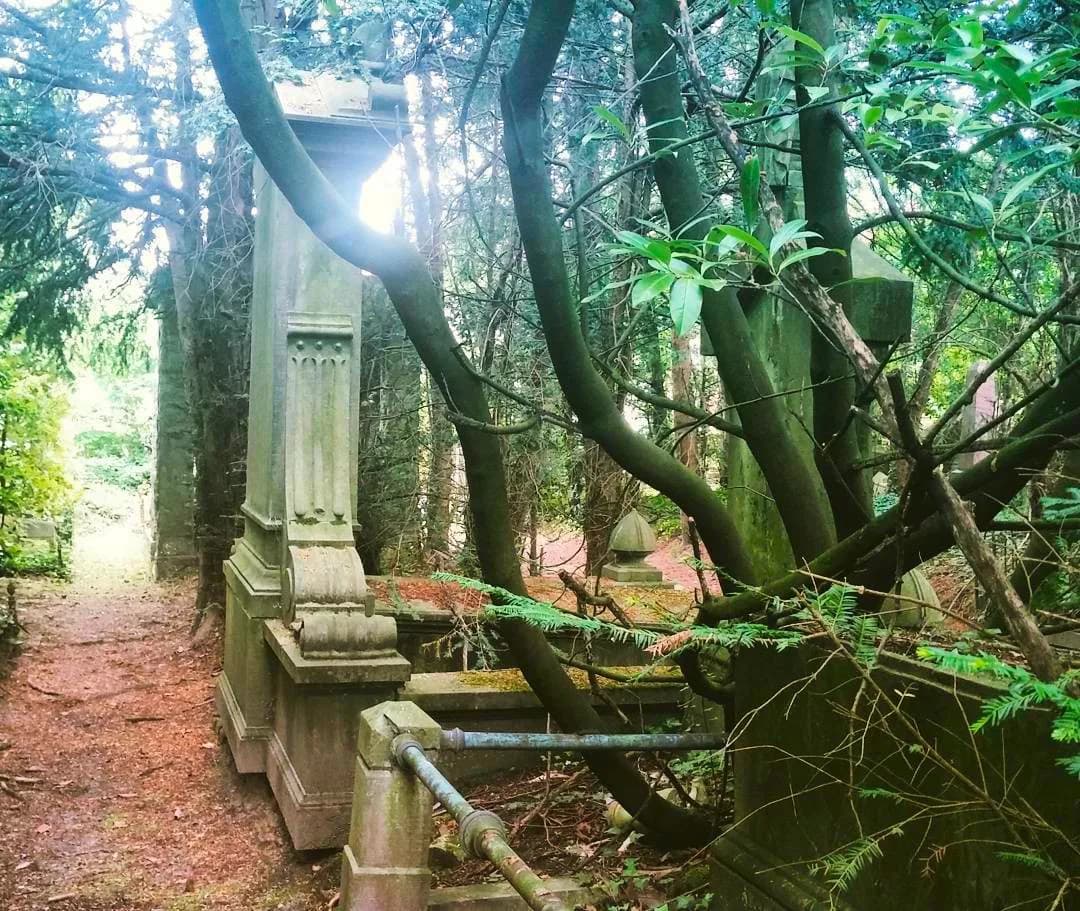
Last updated August 2026: Dieweg Cemetery Brussels sits in the Brussels commune of Uccle, several miles from the Grand Place tourist core. Ivy covers hundreds of headstones here, and brambles crowd the paths between cracked marble angels. This guide covers the site's history, its best-known grave, and the tram route that gets you there.
What Makes Dieweg Cemetery in Brussels Different
Most cemeteries in central Brussels keep trimmed hedges and swept gravel paths. Dieweg does the opposite. Burials stopped decades ago, and the commune now limits maintenance to the main paths, leaving individual plots to nature. Ivy has climbed over hundreds of headstones, and brambles have swallowed the smaller markers nearby. Self-seeded trees now push through iron railings that once fenced family plots. Foxes, songbirds, and insects use the overgrown sections as habitat, so parts of the cemetery read more like woodland than graveyard. Birdsong and wind through the leaves are usually the loudest sounds on the grounds. Dieweg belongs among the lesser-visited stops across Brussels, and it rewards travelers who want a quiet, unscripted hour away from the Grand Place crowds. That contrast between manicured city cemeteries and Dieweg's wild growth is largely what defines its character.
When burials stopped in 1945, maintenance narrowed to main paths, leaving individual plots to nature and creating Dieweg's overgrown character.
Who Dieweg Cemetery Suits Best
Dieweg suits urban explorers who enjoy sites left to decay on their own terms, rather than restored for visitors. Photography hobbyists come for the contrast between weathered stone and new growth, particularly in low light. Travelers interested in cemetery tourism and quiet historical sites find Dieweg a change of pace from the Grand Place souvenir shops and crowded museum queues downtown. Families traveling with young children may prefer a more central stop instead. Reaching Uccle takes real effort within a packed itinerary.
Dieweg Cemetery Brussels at a Glance
Skim these essentials first, then read the full context below.
- Location: Dieweg street, 1180 Uccle, Brussels
- Founded: 1866, after a cholera epidemic
- Closed to new burials: 1945, with exceptions granted until 1958
- Protected status: classified as a natural and heritage site in 1997
- Getting there: tram 92 toward Fort-Jaco, or tram 97; also a 15-minute walk from Uccle-Calevoet station
- Hours: approximately 8:00 AM to 4:30 PM, seasonal
- Cost: free entry
- Notable grave: Georges Remi (Hergé), creator of Tintin
- Best light: golden hour before closing, or misty mornings in colder months
A Brief History: From an 1866 Cholera Epidemic to a Protected Site
A cholera epidemic swept Belgium in 1866, and Uccle opened Dieweg to add burial ground beyond its already crowded parish cemeteries. According to Visit Brussels, the site has been officially disused since 1945, though residents could still request burial there until 1958. Nobody cleared Dieweg for redevelopment after that closure, unlike many disused urban cemeteries elsewhere. By the 1980s, upkeep had narrowed to the main paths, leaving individual plots to whichever families still visited them. Many of those families had moved away or died out over the decades, so ivy and brambles simply kept climbing over the abandoned stones. Officials classified the grounds as a protected natural and heritage site in 1997. That status locked in both the funerary monuments and the plants and animals that had already moved into the empty plots. The result is a cemetery frozen partway between a working burial ground and a nature reserve.
Who's Buried at Dieweg: Hergé's Grave and the Jewish Section
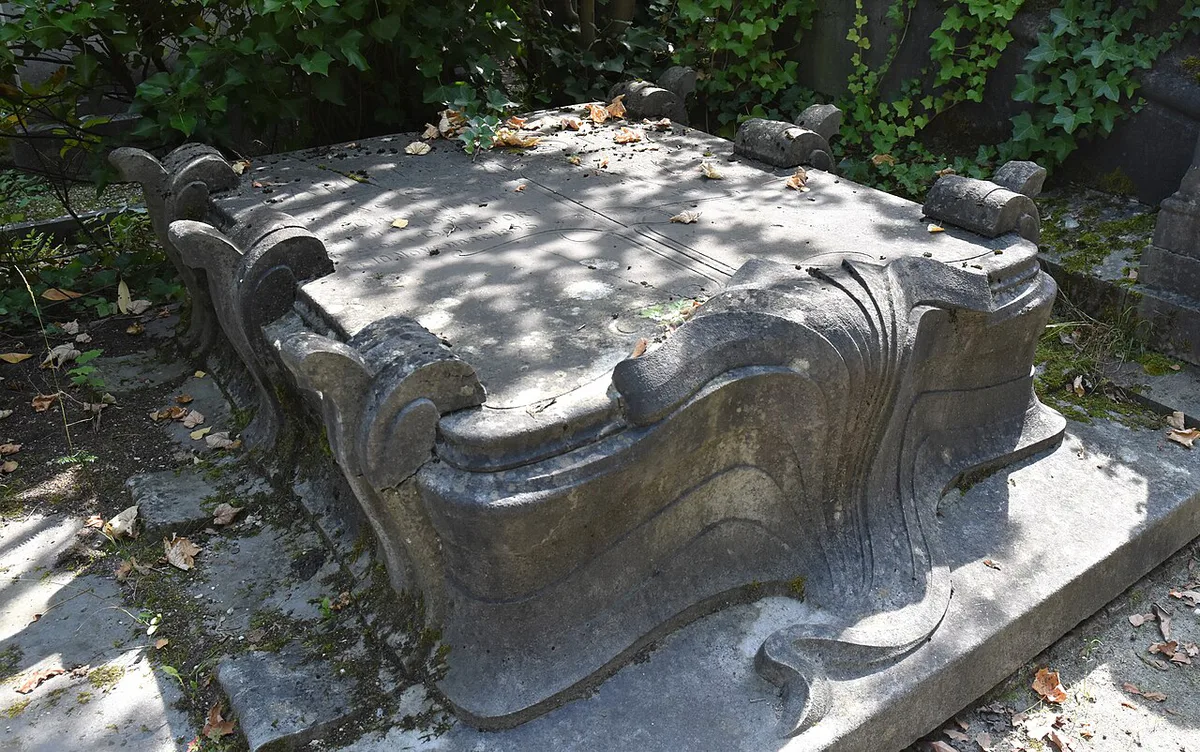
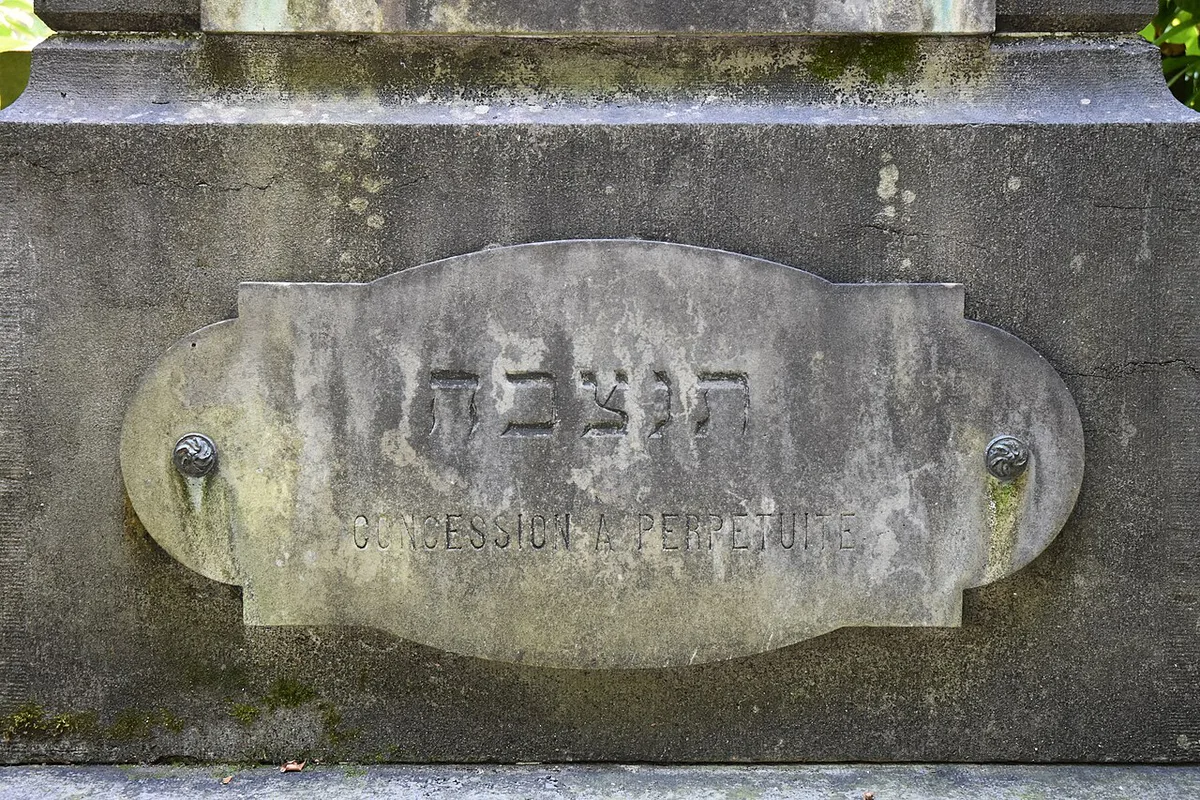
Cartoonist Georges Remi, known worldwide by his pen name Hergé, rests at Dieweg. His grave draws Tintin readers who would otherwise skip Uccle entirely. Dieweg also holds one of Brussels' most intact Jewish burial sections, with Ashkenazi graves dating from the late 19th century still standing among the ivy. These inscriptions offer a rare, largely undisturbed view into Brussels' 19th-century Ashkenazi community. Few burial sites from that period remain intact elsewhere in the city. Family plots throughout the grounds mix stone crosses, granite obelisks, and cast-iron fencing, a record of more than a century of changing funerary taste. Neoclassical columns sit alongside Art Nouveau ironwork, with monuments dated from the late 1800s through the 1950s. For more on the movement's Brussels landmarks, the Horta Museum preserves the townhouse of the era's best-known architect. Travelers who want more addresses in that style can also follow the Art Nouveau townhouses guide.
What You'll See Along the Path
The main entrance path runs level and firm underfoot, wide enough for maintenance access. Side paths branch off into denser sections, where ivy has fully wrapped many headstones and family crypts sit half-hidden behind overgrown hedges. Iron cross monuments and stone angels lean at odd angles in places, pushed slowly out of true by root growth over the decades. Moss and lichen tint many of the older stones green and gray, deepening the sense of a site left alone for decades. Some plots along the upper paths open onto views over the surrounding rooftops of Uccle, since the cemetery sits on a gentle slope. Benches are limited, so most visitors plan a standing, walking route rather than a long sit-down stop.
Getting to Dieweg Cemetery: Trams, Hours, and Entry Cost
Dieweg Cemetery sits on Dieweg street in the 1180 Uccle postal area, roughly 30 to 40 minutes from Grand Place by public transport. Take tram 92 toward Fort-Jaco, or tram 97, and get off near the Dieweg stop. Travelers arriving by train can also walk about 15 minutes from Uccle-Calevoet station, following Dieweg street toward the entrance. Both tram lines run under STIB/MIVB, the Brussels transit operator, and a standard public-transit ticket covers the fare. Live tram tracking through the STIB/MIVB app or a standard maps app both route reliably to the Dieweg stop. Entry is free, with no ticket or reservation required. Gates generally open around 8:00 AM and close near 4:30 PM, though hours shift seasonally, so confirm current times locally before a special visit.
The 30 to 40 minutes from Grand Place leads to uneven ground where exposed roots and tilted stones make sturdy shoes essential, not optional.
Is Dieweg Cemetery Safe to Visit?
Dieweg is safe for daytime visits, though it demands more caution than a paved city park. Cracked pathways and exposed roots make sturdy, closed shoes the better choice over sandals. Wheelchairs and strollers are not practical here. Tree roots and loose or tilted stones make most routes uneven beyond the main entrance walk. Rain turns some dirt sections muddy, so waterproof footwear helps after wet weather. Cell coverage works normally throughout the grounds, since Uccle is a residential commune, not a remote area. Visiting in pairs or small groups is sensible, mainly because the site stays quiet enough that a fall could go unnoticed for a while. Gates close in the afternoon, so plan to finish the visit well before closing rather than rushing the last stretch of paths.
Photography and Etiquette at a Wild, Working Cemetery
Morning fog softens the ivy and stone during the colder months, and low winter light rakes across the headstones for sharper shadows. The last hour before closing gives similarly warm light without the mist, especially in warmer months. Paths are uneven, roots buckle several stone slabs, and dead branches occasionally drop from the older trees, so sturdy shoes matter here more than in central Brussels. This remains a place of rest, not a photo backdrop. Avoid climbing on monuments, stay off collapsed or leaning stones, and keep voices low near the newer graves in the still-active sections.
Dieweg vs. Brussels Cemetery in Evere: Choosing Your Vibe
Brussels offers two very different cemetery experiences within transit reach of downtown. Uccle's Dieweg stays overgrown and largely unmaintained beyond its main paths, which suits photographers and travelers drawn to decay and quiet. Evere's Brussels Cemetery, by contrast, is manicured, with formal rows and clearer sightlines that read closer to a conventional memorial park. Families with strollers, or travelers who need step-free paths, will find Evere's paved rows far easier than Dieweg's roots and loose gravel. Both cemeteries sit within reach of central Brussels, so pairing a visit to each is possible for travelers with a spare afternoon. Pick Dieweg for atmosphere, solitude, and slower walking. Pick Evere instead if uneven, overgrown terrain does not appeal.
| Feature | Dieweg (Uccle) | Brussels Cemetery (Evere) |
|---|---|---|
| Setting | Overgrown, reclaimed by ivy and trees | Manicured, formal rows |
| Terrain | Uneven, roots and loose stones | Paved main paths |
| Best for | Photography, solitude, slow walks | Traditional visits, easier walking |
Is Dieweg Worth the Detour on a Short Trip?
Dieweg sits roughly 30 to 40 minutes from Grand Place each way. That means a round trip claims close to an hour and a half once transfers and walking are counted. On a two-day Brussels trip, that time trade-off only pays off for travelers with a specific interest in cemeteries, photography, or Tintin history. Photography enthusiasts and Tintin fans typically find the trip worthwhile regardless of how many days they have in Brussels. Visitors with three or more days in the city have more room to fit Dieweg alongside the standard downtown landmarks and museum circuit without cutting into higher-priority stops.
Don't Miss These Spots Inside Dieweg
A few spots are worth building extra time around during a visit:
- Hergé's grave — the cemetery's best-known stop for Tintin fans
- The Jewish section — Ashkenazi headstones dating from the late 19th century
- Neoclassical and Art Nouveau family crypts along the upper paths
- Ivy-wrapped iron cross monuments in the oldest sections
- Rooftop views over Uccle from the higher paths on clear days
Pairing Dieweg With Other Brussels Detours
Slow-paced stops nearby reward the extra travel time Dieweg demands. The Marolles flea market and back alleys sit closer to the center and suit a morning visit before the cemetery's better afternoon light. Afterward, the Cantillon Brewery's gueuze tastings make a fitting stop for unwinding nearby. Museum-focused travelers can add the offbeat museums and viewpoints guide for more unconventional Brussels stops. That guide's picks reach as far as the instrument collections at the Musical Instruments Museum. If the wider Belgium trip continues north, the Bruges canal-side courtyards guide offers a similarly unhurried pace in a different city. Uccle itself stays mostly residential and leafy. Combining Dieweg with a slow walk through the neighborhood rounds out a Brussels day that skips the main tourist strip. Return trams run the same two lines back toward central Brussels, so the return leg mirrors the trip out. Reaching Dieweg earlier in the day leaves more daylight for the walk back to the tram stop. Budgeting the better part of a half-day for Dieweg alone is wise, since the tram journey and slow walking pace both add up.
Frequently Asked Questions
Is Dieweg Cemetery free to visit?
Yes, entry is free, and there is no ticket booth or reservation system at the gates.
How do you get to Dieweg Cemetery from central Brussels?
Take tram 92 toward Fort-Jaco or tram 97 and get off near the Dieweg stop in Uccle. The trip takes roughly 30 to 40 minutes from Grand Place. Travelers arriving by train can also walk about 15 minutes from Uccle-Calevoet station.
Who is buried at Dieweg Cemetery?
Cartoonist Georges Remi, known as Hergé, is buried at Dieweg. The cemetery also holds one of Brussels' most intact Jewish burial sections, with Ashkenazi graves dating from the late 19th century. Funerary monuments across the grounds also span neoclassical and Art Nouveau styles, with dates from the late 1800s through the 1950s.
Is Dieweg Cemetery wheelchair or stroller accessible?
No, most paths are unsuitable for wheelchairs or strollers. Roots, loose stones, and overgrown vegetation make the ground uneven beyond the main entrance walk.
What are Dieweg Cemetery's opening hours?
Gates generally open around 8:00 AM and close near 4:30 PM. Hours can shift seasonally, so confirm current times locally before visiting.
Is Dieweg Cemetery safe, and is one visit enough time?
Daytime visits are safe, and sturdy, closed shoes make the uneven paths easier at any time of year. Most travelers can cover the main paths and reach Hergé's grave in a single, unhurried loop.


