General admission to the British Museum's permanent collection is completely free, the museum is open daily from 10:00 to 17:00 (extended to 20:30 on Fridays), and a focused visit to the essential highlights takes roughly 2 to 3 hours. For the UK's most-visited attraction — and one of the most debated collections in the museum world — the real question for most travelers isn't whether the objects are impressive. It's whether the free-but-crowded reality lives up to expectations, and how to actually see the Rosetta Stone and the Parthenon sculptures without losing half a day to queues.
This guide gives a straight verdict on whether the British Museum is worth visiting, what 2026 tickets and special exhibition prices actually cost (including what to do if a show sells out), how long to realistically budget, and how to visit without booking a guided tour. It's part of our full London attractions guide.
What Is the British Museum?
The British Museum was established by an act of Parliament in 1753, built around the roughly 71,000-object collection of physician and naturalist Sir Hans Sloane, bequeathed to the nation on his death that year. It opened to the public in 1759 at Montagu House, on the same Bloomsbury site the museum occupies today, and holds the distinction of being the first national public museum in the world — free to enter from the outset, a principle it has kept ever since.
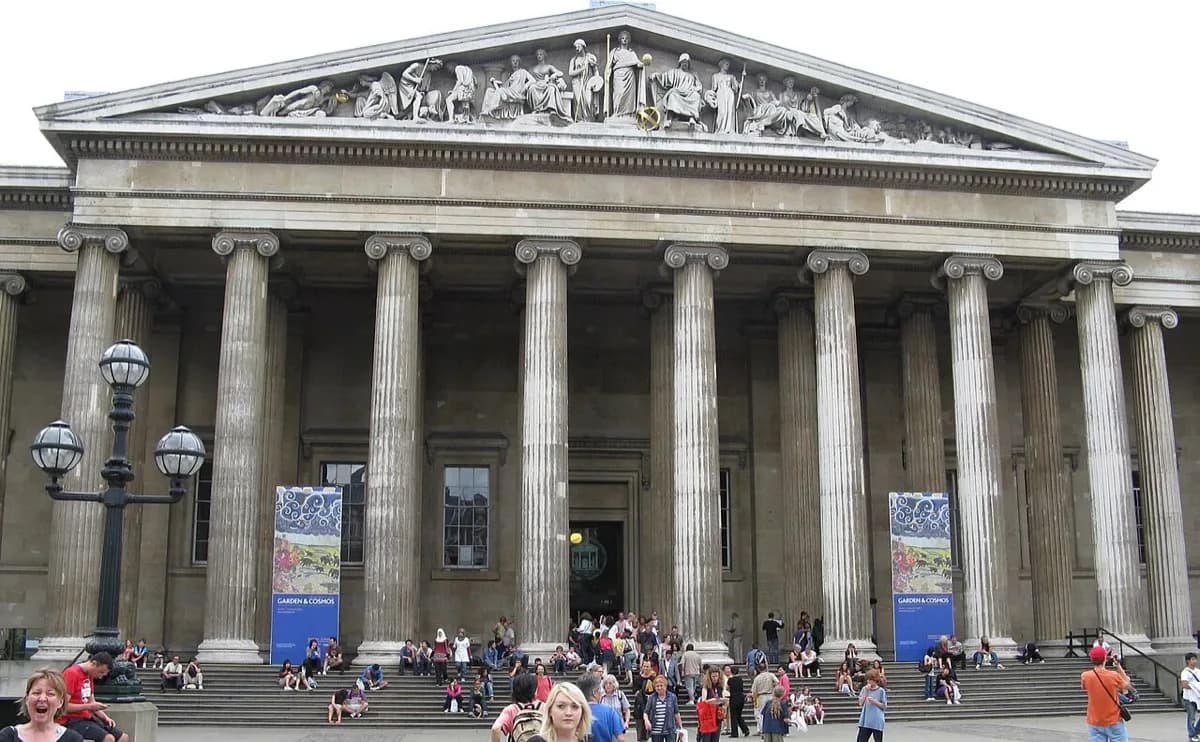
The current building, with its iconic colonnaded facade, was constructed through the 19th century, and the glass-roofed Great Court at its center — Europe's largest covered public square, designed by Norman Foster — opened in 2000 around the original circular Reading Room. Today the collection holds around 8 million objects spanning two million years of human history, of which only a fraction is on display at any time. The best-known pieces — the Rosetta Stone, the Parthenon sculptures (also called the Elgin Marbles), Egyptian mummies, and the Sutton Hoo ship-burial treasure — draw most first-time visitors, but the depth is in the breadth: cultures from nearly every continent under one roof.
Is the British Museum Worth It?
Yes, and the free admission makes it an easier "worth it" call than most giant-name European museums. There's no ticket cost to weigh against your expectations — the risk isn't wasted money, it's wasted time. Visitors who plan around that consistently rate the experience highly: the Egyptian galleries, the Rosetta Stone, and the Great Court itself are reliably described as living up to the hype, and because entry is free you can duck in for an hour and come back another day rather than feeling obligated to "get your money's worth" in one exhausting visit.
Where visitors end up frustrated is almost always about scale and pacing, not the collection itself — trying to see the whole museum in ninety minutes, skipping the free timed-entry booking and queuing outside at midday, or beelining for two or three famous objects and missing everything else the free admission already includes. Go in with a plan — pick two or three galleries, book your slot ahead of time, and treat objects like the Rosetta Stone as one stop among many — and it earns its reputation as one of the world's great museums.
Tickets & Prices 2026 (Including What to Do If They're Sold Out)
Entry to the permanent collection is free for everyone, with no ticket purchase required — though the museum recommends booking a free timed entry slot online in advance, particularly for weekends and school holidays, since walk-up access can mean queuing. Special ticketed exhibitions are a separate cost: prices for major shows typically run in the £18–£25 range for adults, with concessions for students, seniors, and children. The Korea exhibition (1 October 2026 – 31 January 2027) is one of the paid shows on the 2026 calendar; check the museum's official exhibitions and events page (linked below) for what's currently running and its price.
If a special exhibition date shows sold out, check back for released holds and cancellations, which do reappear closer to the date. Weekday and early-morning slots are the first to go for popular shows, so a weekday afternoon or an evening slot on a late-opening Friday is more likely to have availability than a weekend morning. Museum Members get priority and often free access to exhibitions, which is worth weighing if you're planning multiple visits or a longer London trip. Weighing a multi-attraction pass instead? Our breakdown of whether the London Pass is worth it covers whether bundled museum access makes sense for your itinerary.
The permanent collection itself never sells out — "sold out" in practice only applies to paid special shows, not to the free core galleries.
Opening Hours & Best Time to Go
The British Museum is open daily from 10:00 to 17:00, with late-night opening until 20:30 on Fridays. Last entry is 16:45 Saturday through Thursday and 20:15 on Fridays. The museum is closed on 24, 25, and 26 December and on 1 January; confirm current hours on the official Visit page (linked below) before planning around a specific date, since hours can shift around bank holidays.
Early morning right at 10:00 opening, and Friday evenings after 17:00, are consistently the quietest windows — the crowd around the Rosetta Stone and the Egyptian sculpture gallery thins out noticeably once the daytime coach-tour groups have moved on. Midday on weekends and during UK school holidays brings the longest security queues at the Great Russell Street entrance. If you can only pick one slot, a Friday evening is the best trade-off between opening hours and crowd levels.
How Long to Plan
Budget 2 to 3 hours for a focused visit to the highlights — the Rosetta Stone, the Parthenon sculptures, the Egyptian mummies, and the Sutton Hoo treasure. A fuller half-day visit covering several galleries at a comfortable pace runs 4 to 5 hours; with around 8 million objects across dozens of galleries, seeing "everything" in a single visit isn't realistic for most travelers, and isn't really the point. If the British Museum is one stop among several in your London trip, our 2-day London itinerary shows how to fit it in without it eating your whole day.
How to Get There
The museum sits on Great Russell Street in Bloomsbury, postcode WC1B 3DG. Tottenham Court Road station (Central, Northern, and Elizabeth lines) is closest, roughly a 5- to 7-minute walk. Holborn (Central and Piccadilly lines) is about 7 to 10 minutes on foot, and Russell Square (Piccadilly line) is a similar distance with a step-free lift from platform to street. Driving isn't worth it: central London parking is limited and expensive, and the Underground is faster from almost anywhere in the city.
Visit Tips: Queues, Booking & Common Mistakes
Book your free timed entry slot online early, especially for weekends and school holiday dates — it costs nothing and removes the biggest source of queuing frustration. Security screening at the Great Russell Street entrance is airport-style, so travel with minimal bags.
Buy special exhibition tickets only through the official ticketing site; resale sites routinely mark up prices for a museum this well known. The most common mistake is trying to see the entire museum in one pass — pick two or three galleries in advance (Egyptian sculpture, the Enlightenment Gallery, and one regional collection is a solid combination) rather than wandering without a plan across a building this size.
Nearby Attractions
The British Museum sits in Bloomsbury, a short Underground ride from several other major London landmarks worth combining into the same trip. St Paul's Cathedral is a few stops away on the Central line, making a museum-then-cathedral day easy to plan. Westminster Abbey is a short Underground journey south via the Piccadilly or Jubilee line, and pairs well with a Westminster-focused afternoon. For a more easterly extension of the day, Tower of London is a straightforward ride on the Central and District lines and works as a second stop if you start early.
Frequently Asked Questions
Frequently Asked Questions
Is the British Museum worth visiting?
Yes — general admission is free, which makes it an easier "worth it" call than most major European museums. Visitors who plan a focused route through two or three galleries rather than trying to see everything consistently rate the Rosetta Stone, the Egyptian galleries, and the Great Court itself as living up to the reputation.
Is the British Museum really free?
Yes, entry to the permanent collection has been free since the museum opened in 1759, and remains free today, with a recommended (also free) timed entry slot to manage queues. Only special, temporary exhibitions charge a separate ticket price, typically in the £18–£25 range for adults.
What should I do if British Museum exhibition tickets are sold out?
Check the official booking site again over the next day or two, since cancellations and released holds do reappear. A weekday afternoon or a Friday evening slot is also more likely to have availability than a weekend morning. Museum Members typically get priority or free access to exhibitions as well.
How long does it take to visit the British Museum?
Budget 2 to 3 hours for a focused visit to the highlights, including the Rosetta Stone, the Parthenon sculptures, and the Egyptian mummies. A fuller half-day visit covering several galleries runs 4 to 5 hours; seeing the entire collection of around 8 million objects in one visit isn't realistic for most travelers.
Can I visit the British Museum without a guided tour?
Yes. Standard free admission is self-guided entry — no live tour is required, and the museum provides floor plans and gallery numbering so you can navigate on your own. A guided tour adds a human guide's commentary but isn't necessary to visit or appreciate the collection.
The British Museum earns its reputation, and the free admission removes most of the risk in deciding whether to go — the real planning work is picking a route through a genuinely huge building rather than wandering it end to end. The honest caveats are booking your free timed slot ahead of a busy date, choosing two or three galleries before you arrive, and accepting that "seeing everything" was never realistic even with a full day.
Book your free slot as early as the window allows for busy dates, aim for an opening-hour or Friday-evening visit in 2026, and plan on 2 to 3 focused hours at minimum. Do that, and the British Museum delivers on the hype without costing you a ticket.
For current official information, see the British Museum's official Visit page and its exhibitions and events page for current 2026 special exhibition prices.