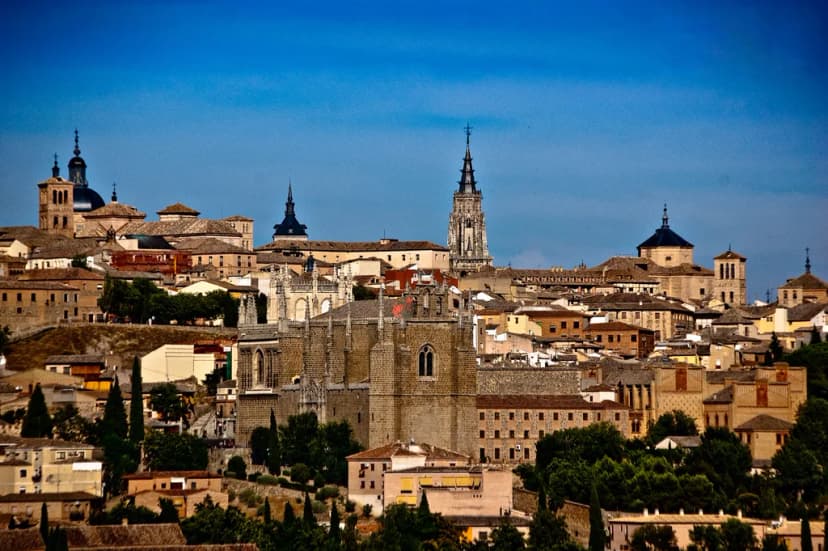
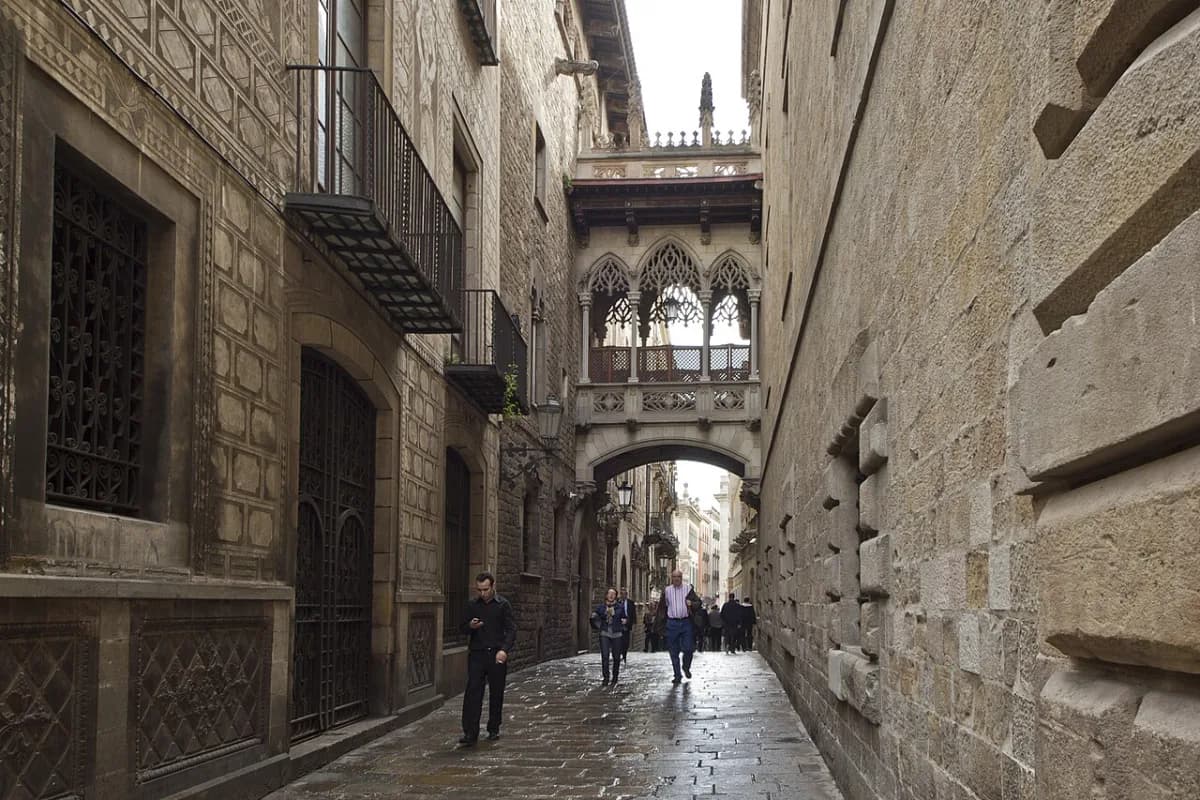
The Barcelona Gothic Quarter itself has no entry fee and no opening hours — it's a living neighborhood of public streets, and you can wander it any hour of the day or night. What actually costs money is everything layered on top of it: a guided walking tour typically runs €20–35 per person, a free tip-based walking tour takes about 2.5 hours, and the individual paid sights inside the quarter — Barcelona Cathedral (cultural-visit tickets from around €16) and the Museu d'Història de Barcelona at Plaça del Rei (€7) among them — each sell their own separate ticket.
This guide breaks down exactly what "Gothic Quarter tickets" actually means in 2026, what a guided or self-guided visit costs, when to go, how long to budget, and the mistakes that trip up first-time visitors to Barcelona's old town. It's part of our full Barcelona attractions guide.
What Is the Barcelona Gothic Quarter?
The Gothic Quarter (Barri Gòtic in Catalan) is the medieval core of Barcelona's old town, a dense maze of narrow stone streets built over the Roman settlement of Barcino, founded around 15 BC. The Roman-era grid still shows through in places — Carrer del Bisbe and Carrer Llibreteria roughly trace the original Cardo and Decumanus, the two main streets of the Roman city, and fragments of the old Roman wall are still visible near Plaça Nova and Plaça Ramon Berenguer.
Through the medieval period the quarter became Barcelona's political and religious center, and it still is: Plaça de Sant Jaume, at the heart of the neighborhood, holds both the Palau de la Generalitat (the seat of the Catalan government) and Barcelona's City Hall, facing each other across the same small square. Barcelona Cathedral anchors the quarter's northern side, and Plaça del Rei — a 14th-century royal square lined with Gothic palace facades — sits just behind it. Much of what stands today is genuine medieval construction, though some facades were restored in the early 20th century as part of a push to romanticize the old city for tourism. Away from the three main squares, the quietest lanes reward slow wandering — see our guide to hidden gems in Barcelona for corners worth seeking out.
Tickets & Prices 2026
There's no admission ticket for the Gothic Quarter itself — it's an open, unticketed network of public streets and squares, free to walk through at any hour. Where the "tickets" search term actually leads people is one of three things: paid guided tours, free tip-based tours, or admission to individual sights inside the quarter.
Paid guided walking tours generally run €20–35 per person for a group tour of roughly 2 to 2.5 hours, with operators like GetYourGuide, Viator, and This Is Barcelona (from around €22.65 as of mid-2026) covering the main squares, the cathedral's exterior, and Roman-era remnants with a live guide. Private tours cost more, typically €40 and up per person.
Free walking tours — run by outfits like Runner Bean Tours and Original Free Barcelona Tours — reserve online at no upfront cost, run about 2.5 hours, and work on a tip-what-you-felt-it-was-worth model; some require a small booking deposit, often around €3, to hold your spot.
Individual paid sights inside the quarter sell their own separate tickets. Barcelona Cathedral's cultural-visit ticket starts at around €16 for adults. The Museu d'Història de Barcelona (MUHBA) at Plaça del Rei charges €7 for a combined ticket covering all its spaces, with reduced rates around €5.20 for under-29s, over-65s, and other concession groups, children under 16 free, and free general admission on Sunday afternoons from 3pm and on the first Sunday of every month. Prices are current as of mid-2026 — confirm on each site's official page before booking.
Opening Hours & Best Time to Go
The neighborhood streets are open 24/7 — there's no gate, no closing time, and no season when the quarter is inaccessible. What varies by time of day is the experience. Early morning, roughly 7–9am, the alleys are close to empty, shop shutters are still down, and it's the best window for photos of Plaça del Rei, Plaça Sant Felip Neri, or the narrow stretch of Carrer del Bisbe without a crowd in frame. Shops, cafes, and most paid sights open between 9:30 and 10am.
Daytime, especially late morning through mid-afternoon in June through September, is when the quarter is busiest — cruise-ship arrival days and tour-group clusters around the cathedral and Plaça Reial can make the narrowest lanes feel congested. Evenings bring a different crowd: Plaça Reial and the bars around Carrer Ferran fill up after dark, and the quarter stays lively and well-lit well into the night, though standard city-center caution applies in quieter side streets.
If a specific paid sight is on your list, check its own hours separately — Barcelona Cathedral's cultural-visit hours run Monday–Friday 9:30am–6:30pm, Saturday 9:30am–5:15pm, and a much shorter Sunday window of 2–5pm, and MUHBA is closed on Mondays like most Barcelona museums.
How Long to Plan
Budget at least 2 to 3 hours for a self-guided walk that covers the main squares, the cathedral's exterior, and a wander through the smaller side streets without rushing. A paid or free guided tour runs about 2 to 2.5 hours and covers similar ground with historical context you'd otherwise miss walking on your own.
If you want to go inside Barcelona Cathedral or MUHBA, add 45–90 minutes per stop. A realistic half-day plan — arriving by mid-morning, walking the quarter, and adding one paid interior visit — runs about 4 to 5 hours including a coffee or lunch break. Trying to combine the Gothic Quarter with a full Gaudí-focused day (Sagrada Família, Park Güell) in the same 24 hours is possible but tight — our 2-day Barcelona itinerary shows how to split old-town wandering and Gaudí sights across two days without rushing either one.
How to Get There
The Gothic Quarter sits in the heart of central Barcelona, immediately inland from the harbor and directly east of La Rambla. The two closest metro stops are Jaume I (L4, yellow line), which drops you almost directly into the quarter's eastern edge near Plaça de l'Àngel, and Liceu (L3, green line), on La Rambla's edge, about a 5–8 minute walk into the quarter's western streets. Catalunya (L1/L3) is a slightly longer walk in from the north but works well if you're combining the visit with Passeig de Gràcia.
Several bus routes run along Via Laietana on the quarter's eastern border. Driving isn't practical — most interior streets are pedestrian-only or heavily restricted to residents, and there's no useful on-site parking; the nearest public garages sit a few blocks out on Via Laietana or near Plaça Catalunya.
Visit Tips: Queues, Booking & Mistakes
Book a guided walking tour a day or two ahead in peak season (June–September and around Easter), particularly for the popular free tours, which cap group size and fill up fast in summer. There's no ticket queue for the neighborhood itself, but individual sights like the cathedral do get walk-up lines — booking those tickets online in advance saves real time.
Pickpocketing, not violent crime, is the main practical risk. The Gothic Quarter is generally safe, but crowded stretches — particularly around Plaça Reial, the lanes closest to La Rambla, and busy squares at night — see regular phone and bag theft. Keep bags zipped and to the front, and don't leave a phone visible on a café table.
The most common planning mistake is assuming "Gothic Quarter tickets" means one ticket for the whole neighborhood — it doesn't, and searching for a single all-access pass wastes time. A related mistake is wearing the wrong shoes: the streets are cobblestone and can be uneven or worn smooth, so flat, closed shoes make the walk considerably more comfortable than sandals or heels. Finally, budget extra time in summer afternoons — the narrow streets trap heat, and shade is inconsistent.
Nearby Attractions
The Picasso Museum is a genuine walk from the Gothic Quarter's eastern edge, just across Via Laietana in the neighboring El Born district, and pairs naturally with a morning spent wandering the old town. For a Gaudí-focused extension of the day, both Sagrada Família and Casa Batlló are an easy metro ride from Jaume I or Liceu, and combine into a full day if you're not trying to squeeze everything into a single old-town visit.
Frequently Asked Questions
Frequently Asked Questions
Do you need tickets to visit the Barcelona Gothic Quarter?
No. The Gothic Quarter is a free, open neighborhood of public streets and squares with no admission ticket and no closing time. "Tickets" only apply if you book a paid guided walking tour (typically €20–35) or visit individual sights inside the quarter, such as Barcelona Cathedral or the Museu d'Història de Barcelona, which sell their own separate tickets.
How much does a Gothic Quarter walking tour cost?
A paid guided walking tour of the Gothic Quarter generally costs €20–35 per person for a 2 to 2.5-hour group tour, with private or small-group options running €40 and up. Free tip-based walking tours are also widely available, running about 2.5 hours with no fixed price — you pay what you felt the tour was worth at the end, though some operators charge a small booking deposit around €3.
What are the opening hours of the Barcelona Gothic Quarter?
The neighborhood's streets and squares are open 24 hours a day, every day — there's no gate or closing time for the quarter itself. Individual paid sights inside it keep their own hours; Barcelona Cathedral's cultural-visit hours, for example, run Monday–Friday 9:30am–6:30pm, Saturday 9:30am–5:15pm, and Sunday 2–5pm.
Is the Barcelona Gothic Quarter safe to visit at night?
Generally yes — the quarter stays lively and well-lit well into the evening, especially around Plaça Reial and the bars near Carrer Ferran. The main risk is pickpocketing rather than violent crime, so keep bags zipped and phones out of sight in crowded stretches, particularly around Plaça Reial and the lanes closest to La Rambla.
The Barcelona Gothic Quarter is one of the few major Barcelona sights where the honest answer to "how much are tickets" is: none, unless you want one. The neighborhood itself costs nothing and never closes — what you're really pricing out is a guided tour and whichever paid sights inside it you choose to add.
Arrive early on a weekday if you want the squares to yourself, budget €20–35 if a guided tour is on your list, and treat Barcelona Cathedral and MUHBA as separate line items with their own hours and tickets for your 2026 trip.
For current official information, see Barcelona Turisme's official Gothic Quarter guide and Barcelona Cathedral's official visiting hours.